On This Page
Description
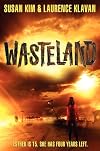
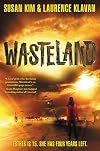
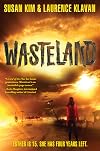
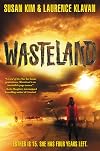
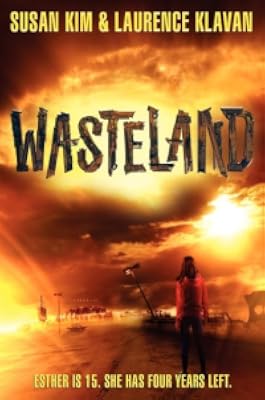
Fans of the Divergent and Hunger Games series will love Wasteland, the first installment of the Wasteland trilogy, by five-time Emmy Award-nominated writer Susan Kim and Edgar Award-winning Laurence Klavan. With heart-pounding thrills, this harrowing survival story is alive with action and intrigue. Welcome to the Wasteland, a post-apocalyptic U.S. where no one lives past the age of 19. But an early death isn't the only doom waiting around the corner: Everyone is forced to live under the show more looming threat of rampant disease and brutal attacks by the variants--hermaphroditic outcasts that live on the outskirts of Prin. Esther doesn't care that her best friend, a variant, is considered "the enemy." She doesn't care that Levi, who controls the Source, is the real enemy and might send his Taser boys after her if she makes one wrong move. Then she meets Caleb, and just possibly, she might have a chance at salvation. show lessTags
Recommendations
Member Reviews
I like to begin my reviews with the good stuff about a book in most cases, before transitioning into my criticisms. Well, here's what I can offer about Wasteland: it's an easy read. The fairly simple sentences are quick to plow through. Also, it's mostly boring, which actually ended up being a sort of good thing, since, when it isn't boring, unfortunate things are generally happening. Be warned that there will be spoilers toward the end of this review.
The World Building
The foundation of this post-apocalyptic world is shaky at best. Having finished, I have little to no idea what happened to the world or how long ago. There are a couple of vague references to some sort of climactic changes, violent earthquakes and so forth, but that's not show more really enough. I want to know why the rain makes people sick and how the Variants came to be. The sun shines hotter and more damaging, presumably a result of a further decreased ozone layer. While I understand that the characters might not know much, authors generally can find a way to give the readers a bit more than that.
What made me so determined to really know what had happened was a desire to figure out how things had gotten this way, because everything seemed inconsistent. The events can't have been THAT long ago or I doubt the kids would still be surviving off of supplies from the industrial age. There's even one building still using gas for power. If it hasn't been that long, then why is every single adult dead? It sounds like people die young because of how hard life is or because of how easy it is to stumble into infected water and become diseased, but a few adults should still be around, right? Yet, it seems that no one can live past the age of nineteen. WHY? You can't just set a specific age like that and not explain it!
About the supplies, Wasteland differs from every other post-apocalyptic novel I've read in that regard. See, usually, humans, at least in the years following the disaster, survive largely off of canned goods while figuring out how to subsistence farm. Here, though, the kids don't try to learn farming or hunting of animals (survivalists, they are not) and live ONLY off of supplies left from before the whatever-the-fuck smashed society. Plus, apparently all of the canned goods have spoiled and only the dry goods are edible. I was puzzled by this reversal of what I'd read before, so I went to look in my pantry. The canned goods definitely have letter expiration dates and are less vulnerable to bugs and other animals. Everything about this was just weird to me.
So these kids, right? They live in this town of rotted buildings they call Prin. The oldest ones are around 18. At the age of five, they start work. They have three jobs: Gleaning (???), Harvesting (searching far and wide for more stuff in houses and cars), and Excavation (digging). This does not make for survival, people. Even once you learn the bad guy's plans, it's only a short term solution. This whole "society" is TSTL. Any time after twelve, they start partnering off, which is basically getting married. Am I the only one who thinks it's weird that they're all settling down into monogamous relationships. It's weird if you don't, and I don't feel like that's not the most natural pattern for a bunch of teenagers to fall into, even if they would supposedly be more mature do to the brief lifespan and early age at which they begin "work."
Moving on, we're to the point where I have to talk about the last big element of the world building: the Variants. So, for no reason that is apparent, there are these Variants, insultingly known as "mutants" who are hermaphroditic, and get to choose their own gender when they come of age. They're wild and sort of live off the land, at least more than the "norms" do. I was concerned about this as soon as I read the blurb, but I really try to give authors the benefit of the doubt. I mean, WHY would you put that in for no reason? Well, I don't know, but that sure seems to be the case.
So, the Variants, for one thing, are almost NEVER actually referred to by that term, instead called "mutants" pretty much always. They're portrayed as feral and wild and lesser, but, hey, that's from the perspective of the people of Prin and they might learn something, right? Plus, Esther is friends with a variant named Skar, so surely their friendship will be the bond that helps them come to terms! Not so much. Instead, the Variants cease being peaceful and begin attacking Prin all at the behest of the bad guy (which is sort of a spoiler, but it's so damn obvious that I really don't care). When this is finally figured out by a townsperson, this happens:
For one bright, shining second there, it seems as though the light is dawning and someone has learned how horrific they've been this whole time. Then it all comes crashing down. Great, the hermaphrodites aren't evil monsters after all; they're just "poor and pathetic." That's so much better. Actually, no. Needless though this should be to say, I'll say it clearly: I find this egregiously offensive.
On the other hand, I will say that the Variants do seem much more suited to life in this world and that they have a much more intelligent speech pattern than the norms, who mostly speak in dialect. How the Variants ended up better-educated is another mystery, but we'll let that go. These things make me think that, in the end, this is intended to be a positive depiction, but it doesn't go anywhere near counteracting everything else.
Worse, the Variants hardly appear in the story, and, when they do, they take on the role of villain or pawn. Even once a shaky alliance is formed, they're compared to the Native Americans with the norms taking on the role of the more "civilized" settlers. This comparison is perhaps meant to be touching, but I find it seriously upsetting, considering how that turned out in history and the fact that the Variants aren't even invited to the meal they provided. Nor was there ever ANY reason for the Variants to be hermaphroditic, which makes everything even worse.
The Writing
I don't usually mention this, but Wasteland has a heck of a lot of telling. The only emotions I felt as I flipped through were irritation, anger and disgust, caused by the offensive nature of the world and the hackneyed romance. I should have felt fear for the characters and hope for the romance, but there's no effort made to show us how these kids really are. Everything is delineated. Esther does not fit in. Caleb is strong but tortured. They're in love now. Umm, okay. The telling is to the extent that scenes that might have been interesting are completely skipped, and the reader starts a new chapter with no idea how the characters got to where they are and has to read a short infodump to explain what was missed. None of those sections included twists or had any plot reason to be skipped. So far as I could tell, they happened solely to avoid showing things.
Kim and Klavan also made the questionable decision to use third person limited with rotating POVs. Of course, this storytelling method can be used quite effectively, but Wasteland is a good example of what not to do. The point of using a limited third person perspective is to allow for a closeness to the characters, while still being restricted to their knowledge. The characters all remain quite distant, perhaps because of how often the POV shifts. The POV moves almost at random, going into most of the named characters' heads at one time or another, and even some who don't even merit names. Several POVs show up only once, which is almost always a terrible authorial move, and certainly is here.
The Characters
As you probably expect by this juncture in the review, I was not impressed with Kim and Klavan's characterization either. The only character who is even remotely dynamic is Esther, who still remains flat and unreal. All of the others have but one motivation driving their existence and lack the complexities that make a character written on a page come to life. It's a sad day when I feel like the most realistic character is the baby, because at least they don't really have personalities yet anyway. Oh, and they all have Biblical names, even though there's nothing else said about the Bible or any reason why a bunch of teens on their own would just happen to choose Biblical names for their offspring.
The Plot
Every single bit of Wasteland felt like I had read it before, and where the book was headed always felt glaringly obvious. Now, to be fair, I've read about 150 dystopian and post-apocalyptic stories at this point, so I've got a bit more experience under my belt than the average reader. Still, I expect more from my books, and am not impressed when I read a post-apocalyptic novel that feels like it's cobbled together from pieces of what came before, a blundering Frankenstein monster of a book.
On the plus side, the plot does not focus on the romance, though it might as well have, since Kim and Klavan do not take the time to set the romance they felt compelled to include effectively and there wasn't a whole hell of a lot going on anyway. The plot consists almost entirely of the town needing to figure out that Levi, the obvious bad guy, is evil, and then figure out a way to throw off his rule. In the meantime, he hires the Variants to attack and they worry about that. Mostly, Esther runs around and thinks about how she doesn't fit in.
Then Caleb comes to town, defeats some Variants, proving what a sexy badass he is. He and Esther do not like each other on their first two encounters. On the third, they are suddenly inexplicably drawn to one another. Within the course of a handful of meetings, in which they don't do much talking or bonding, they fall in love and partner. As I mentioned before, we're told how in love they are, not made to feel it:
What makes this even more upsetting for me is that Caleb was actually partnered before, his wife murdered and child kidnapped. His sole motivation is finding his son and revenging himself on whoever did that to his family. Yet we never learn anything about his bond with his partner or even what her name was. We're told he loved Nameless but that he feels even more strongly about Esther in a matter of days. Everything about their relationship is rushed and unbelievable. Telling the reader something is true doesn't make it believable. This is lazy writing, and I'm getting really tired of seeing it in young adult fiction.
I am also getting sick of these idealized sex scenes. Caleb and Esther have kissed once, when they find each other after a worrisome separation and partner. Once they're partnered, conditions are right for making love obviously. Here's how that goes, according to Kim and Klavan: "Soon, they were moving together, awkwardly, then expertly, bright with sweat" (239-240 of the ARC). Now, I do appreciate the nod to awkwardness, but I'm seriously supposed to believe Esther and Caleb are having expert-level sex not just on their first time, but Esther's first time ever. This is not a realistic expectation to be giving to teen readers, and it's not like adding expertly to the description makes the scene any sexier, since that was the whole of it.
Then, there's the bad guy, Levi. He lives in fear of the sun and the water, never leaving the Source, his fortress. He's skinny, pale, dark-haired, and weak, but possessed of a might intellect and can make people work for him. He turns out to be driven solely by the desire to destroy the life of his brotherCaleb (SHOCK!) , because their parents didn't want the sickly kid and got rid of Levi. What is with this trend of the evil characters in dystopian/post-apocalyptic lit being related to one of the MCs? It's not surprising anymore, so can we stop? What really takes the cake is that, at the end, Levi is easily defeated by Caleb, while Esther runs off with Caleb's baby because gender roles, and commits suicide, so that Caleb doesn't have to get his hands dirty by killing anyone, except maybe some Variants at the beginning, but they hardly count. Fuck this shit. I'm done.
In Conclusion
It's not often that I say this, but I recommend Wasteland to absolutely no one. It's sole redeeming quality is that it's an easy, fast read, by nature of the simple sentences, which is no reason to read something. Every element in here has been done better elsewhere. Do yourself a favor: go read [b:Blood Red Road|9917938|Blood Red Road (Dust Lands, #1)|Moira Young|http://d.gr-assets.com/books/1293651959s/9917938.jpg|14692536] or [b:Ashfall|9644151|Ashfall (Ashfall, #1)|Mike Mullin|http://d.gr-assets.com/books/1301592315s/9644151.jpg|14531613] instead. show less
The World Building
The foundation of this post-apocalyptic world is shaky at best. Having finished, I have little to no idea what happened to the world or how long ago. There are a couple of vague references to some sort of climactic changes, violent earthquakes and so forth, but that's not show more really enough. I want to know why the rain makes people sick and how the Variants came to be. The sun shines hotter and more damaging, presumably a result of a further decreased ozone layer. While I understand that the characters might not know much, authors generally can find a way to give the readers a bit more than that.
What made me so determined to really know what had happened was a desire to figure out how things had gotten this way, because everything seemed inconsistent. The events can't have been THAT long ago or I doubt the kids would still be surviving off of supplies from the industrial age. There's even one building still using gas for power. If it hasn't been that long, then why is every single adult dead? It sounds like people die young because of how hard life is or because of how easy it is to stumble into infected water and become diseased, but a few adults should still be around, right? Yet, it seems that no one can live past the age of nineteen. WHY? You can't just set a specific age like that and not explain it!
About the supplies, Wasteland differs from every other post-apocalyptic novel I've read in that regard. See, usually, humans, at least in the years following the disaster, survive largely off of canned goods while figuring out how to subsistence farm. Here, though, the kids don't try to learn farming or hunting of animals (survivalists, they are not) and live ONLY off of supplies left from before the whatever-the-fuck smashed society. Plus, apparently all of the canned goods have spoiled and only the dry goods are edible. I was puzzled by this reversal of what I'd read before, so I went to look in my pantry. The canned goods definitely have letter expiration dates and are less vulnerable to bugs and other animals. Everything about this was just weird to me.
So these kids, right? They live in this town of rotted buildings they call Prin. The oldest ones are around 18. At the age of five, they start work. They have three jobs: Gleaning (???), Harvesting (searching far and wide for more stuff in houses and cars), and Excavation (digging). This does not make for survival, people. Even once you learn the bad guy's plans, it's only a short term solution. This whole "society" is TSTL. Any time after twelve, they start partnering off, which is basically getting married. Am I the only one who thinks it's weird that they're all settling down into monogamous relationships. It's weird if you don't, and I don't feel like that's not the most natural pattern for a bunch of teenagers to fall into, even if they would supposedly be more mature do to the brief lifespan and early age at which they begin "work."
Moving on, we're to the point where I have to talk about the last big element of the world building: the Variants. So, for no reason that is apparent, there are these Variants, insultingly known as "mutants" who are hermaphroditic, and get to choose their own gender when they come of age. They're wild and sort of live off the land, at least more than the "norms" do. I was concerned about this as soon as I read the blurb, but I really try to give authors the benefit of the doubt. I mean, WHY would you put that in for no reason? Well, I don't know, but that sure seems to be the case.
So, the Variants, for one thing, are almost NEVER actually referred to by that term, instead called "mutants" pretty much always. They're portrayed as feral and wild and lesser, but, hey, that's from the perspective of the people of Prin and they might learn something, right? Plus, Esther is friends with a variant named Skar, so surely their friendship will be the bond that helps them come to terms! Not so much. Instead, the Variants cease being peaceful and begin attacking Prin all at the behest of the bad guy (which is sort of a spoiler, but it's so damn obvious that I really don't care). When this is finally figured out by a townsperson, this happens:
"Mutants.
For the first time, Caleb thought of the ugly word, one he had used a thousand times without thinking, and he winced, for they, the variants, were nothing but pawns, poor and pathetic."
- Page 193 of the ARC; note that quotes could change in the finished copy
For one bright, shining second there, it seems as though the light is dawning and someone has learned how horrific they've been this whole time. Then it all comes crashing down. Great, the hermaphrodites aren't evil monsters after all; they're just "poor and pathetic." That's so much better. Actually, no. Needless though this should be to say, I'll say it clearly: I find this egregiously offensive.
On the other hand, I will say that the Variants do seem much more suited to life in this world and that they have a much more intelligent speech pattern than the norms, who mostly speak in dialect. How the Variants ended up better-educated is another mystery, but we'll let that go. These things make me think that, in the end, this is intended to be a positive depiction, but it doesn't go anywhere near counteracting everything else.
Worse, the Variants hardly appear in the story, and, when they do, they take on the role of villain or pawn. Even once a shaky alliance is formed, they're compared to the Native Americans with the norms taking on the role of the more "civilized" settlers. This comparison is perhaps meant to be touching, but I find it seriously upsetting, considering how that turned out in history and the fact that the Variants aren't even invited to the meal they provided. Nor was there ever ANY reason for the Variants to be hermaphroditic, which makes everything even worse.
The Writing
I don't usually mention this, but Wasteland has a heck of a lot of telling. The only emotions I felt as I flipped through were irritation, anger and disgust, caused by the offensive nature of the world and the hackneyed romance. I should have felt fear for the characters and hope for the romance, but there's no effort made to show us how these kids really are. Everything is delineated. Esther does not fit in. Caleb is strong but tortured. They're in love now. Umm, okay. The telling is to the extent that scenes that might have been interesting are completely skipped, and the reader starts a new chapter with no idea how the characters got to where they are and has to read a short infodump to explain what was missed. None of those sections included twists or had any plot reason to be skipped. So far as I could tell, they happened solely to avoid showing things.
Kim and Klavan also made the questionable decision to use third person limited with rotating POVs. Of course, this storytelling method can be used quite effectively, but Wasteland is a good example of what not to do. The point of using a limited third person perspective is to allow for a closeness to the characters, while still being restricted to their knowledge. The characters all remain quite distant, perhaps because of how often the POV shifts. The POV moves almost at random, going into most of the named characters' heads at one time or another, and even some who don't even merit names. Several POVs show up only once, which is almost always a terrible authorial move, and certainly is here.
The Characters
As you probably expect by this juncture in the review, I was not impressed with Kim and Klavan's characterization either. The only character who is even remotely dynamic is Esther, who still remains flat and unreal. All of the others have but one motivation driving their existence and lack the complexities that make a character written on a page come to life. It's a sad day when I feel like the most realistic character is the baby, because at least they don't really have personalities yet anyway. Oh, and they all have Biblical names, even though there's nothing else said about the Bible or any reason why a bunch of teens on their own would just happen to choose Biblical names for their offspring.
The Plot
Every single bit of Wasteland felt like I had read it before, and where the book was headed always felt glaringly obvious. Now, to be fair, I've read about 150 dystopian and post-apocalyptic stories at this point, so I've got a bit more experience under my belt than the average reader. Still, I expect more from my books, and am not impressed when I read a post-apocalyptic novel that feels like it's cobbled together from pieces of what came before, a blundering Frankenstein monster of a book.
On the plus side, the plot does not focus on the romance, though it might as well have, since Kim and Klavan do not take the time to set the romance they felt compelled to include effectively and there wasn't a whole hell of a lot going on anyway. The plot consists almost entirely of the town needing to figure out that Levi, the obvious bad guy, is evil, and then figure out a way to throw off his rule. In the meantime, he hires the Variants to attack and they worry about that. Mostly, Esther runs around and thinks about how she doesn't fit in.
Then Caleb comes to town, defeats some Variants, proving what a sexy badass he is. He and Esther do not like each other on their first two encounters. On the third, they are suddenly inexplicably drawn to one another. Within the course of a handful of meetings, in which they don't do much talking or bonding, they fall in love and partner. As I mentioned before, we're told how in love they are, not made to feel it:
"But something had shifted inside her, a strange new emotion moving into the other. Her desire to ease Caleb's suffering had been joined with another desire, one even more powerful, like two streams meeting and converging in a riverbed, mingling in a current against which she had no strength.
She had never known this feeling before."
- Page 199 of the ARC; note that quotes could change in the finished copy
What makes this even more upsetting for me is that Caleb was actually partnered before, his wife murdered and child kidnapped. His sole motivation is finding his son and revenging himself on whoever did that to his family. Yet we never learn anything about his bond with his partner or even what her name was. We're told he loved Nameless but that he feels even more strongly about Esther in a matter of days. Everything about their relationship is rushed and unbelievable. Telling the reader something is true doesn't make it believable. This is lazy writing, and I'm getting really tired of seeing it in young adult fiction.
I am also getting sick of these idealized sex scenes. Caleb and Esther have kissed once, when they find each other after a worrisome separation and partner. Once they're partnered, conditions are right for making love obviously. Here's how that goes, according to Kim and Klavan: "Soon, they were moving together, awkwardly, then expertly, bright with sweat" (239-240 of the ARC). Now, I do appreciate the nod to awkwardness, but I'm seriously supposed to believe Esther and Caleb are having expert-level sex not just on their first time, but Esther's first time ever. This is not a realistic expectation to be giving to teen readers, and it's not like adding expertly to the description makes the scene any sexier, since that was the whole of it.
Then, there's the bad guy, Levi. He lives in fear of the sun and the water, never leaving the Source, his fortress. He's skinny, pale, dark-haired, and weak, but possessed of a might intellect and can make people work for him. He turns out to be driven solely by the desire to destroy the life of his brother
In Conclusion
It's not often that I say this, but I recommend Wasteland to absolutely no one. It's sole redeeming quality is that it's an easy, fast read, by nature of the simple sentences, which is no reason to read something. Every element in here has been done better elsewhere. Do yourself a favor: go read [b:Blood Red Road|9917938|Blood Red Road (Dust Lands, #1)|Moira Young|http://d.gr-assets.com/books/1293651959s/9917938.jpg|14692536] or [b:Ashfall|9644151|Ashfall (Ashfall, #1)|Mike Mullin|http://d.gr-assets.com/books/1301592315s/9644151.jpg|14531613] instead. show less
This is GONE and The RAIN put together. In the future rain is poisonous and causes you to die if you drink it. In the future you only live to 19. In the future, you are married at 15 and if you are lucky, you can have a healthy baby human; a norm. If not, you will give birth to a genetically modified human - a variant. Esther is a human. She is 15 and she rebels against the rules of her town Prin. She does not want to forage for petrol, nor dig for underground water - instead she wants to play with her variant/mutant friend Skar and feed Joseph, a loner on the outskirts of Prin who lives with 10 cats in an old hotel. She does not care for Levi and his plans of dominating the town, nor Rafe the "town leader" who's main job seems to be to show more kowtow to Levi. She also argues profusely with her older sister Sarah who wants her to tow the town line.
Then, into Prin comes Caleb - a man who has had his wife killed and his son kidnapped by variants - and Esther falls instantly in love with him!
This is a great story with lots of characters and twists and turns. My only criticism is that we don't hear more about what the variants are thinking - especially Esther's friend Skar. I loved how the power game was played out amongst Levi and Caleb and Rafe and the leader of the variants. A great book for fans of Gone and the Joseph twist (SPOILER ALERT : He has worked out he is 26 years old when everyone else dies at 19 is fascinating!) Can't wait for the next one. show less
Then, into Prin comes Caleb - a man who has had his wife killed and his son kidnapped by variants - and Esther falls instantly in love with him!
This is a great story with lots of characters and twists and turns. My only criticism is that we don't hear more about what the variants are thinking - especially Esther's friend Skar. I loved how the power game was played out amongst Levi and Caleb and Rafe and the leader of the variants. A great book for fans of Gone and the Joseph twist (SPOILER ALERT : He has worked out he is 26 years old when everyone else dies at 19 is fascinating!) Can't wait for the next one. show less
This got off to a bit of a rocky start with me. I really liked that Ester was different, and seeing her friendship with Skar made me know that she didn't just blindly follow orders. She had a friend from the "enemy camp" according to her village. I liked her point of view, even while in the third person, I got a good feel for her, and that she really had a good heart.
But when it switched to the other villagers, I kinda lost a little steam. I can see why it would be important to get other views, but it just didn't work well in my opinion. Maybe if it would've focused on one other person instead of groups. I did get used to it, but I like the places where it was Ester or Caleb's point of view.
I was intrigued at Levi and his ingenuity, show more working out the trade system, and I wanted to see what his heart really was like when Sarah, Ester's sister went to see him. Levi set up a place that stockpiled water, supplies and such, and the villagers of Prin traded fuel for these things. That is one of the main jobs in Prin, is to go out and search for gas. And while out searching, there is the danger of running into the Variants, like Skar. I was curious at their motivations for the attacks, because they usually went after buildings, although they would hurt humans that got in their way. Which is another reason I was curious about the friendship between Ester and Skar. Skar teaches her their ways, like how to climb and move about. But Ester didn't seem to know at first why they were attacking, or if so, we as readers didn't know that.
I didn't know who to trust, and what was going to happen next. There were a few things that were revealed and I couldn't believe it, but I could all at the same time.
I liked Caleb. When he entered, I couldn't wait to see how he and Ester interacted, and how their relationship would form, and most of all what Caleb's mysteries and shady past would bring to the story. His story really broke my heart, and everything he did made me admire him even more.
The world building was decent, and they depicted quite a dangerous and grim world. Most die before 19, 3 out of 4 babies die before 3 months of age, the rain causes you to get deathly ill and when that happens you are Shunned-sent away from the community to die. The pacing was pretty good, despite my dislike of the pov that wasn't Caleb or Ester. I thought it was neat using a lot of biblical names and then incorporating the gleaning, harvesting words used in Ruth and the old testament. Don't get me wrong, this is NOT a religious book, but I just found tidbit interesting.
There are still a few questions that I want to know, and I of course want to see more of Caleb and Ester's relationship so I will most likely pick up the next books when they come out.
The ending and some of the twists are enough to break your heart. Wasteland is action packed, but it also features a lot of character growth and emotion.
Bottom Line: Well written dark world with surprising twists at every turn.
My question to you, my lovely readers:
Do you think you would want to try to have a partner and have a baby in a world like this, or prefer to be alone? show less
But when it switched to the other villagers, I kinda lost a little steam. I can see why it would be important to get other views, but it just didn't work well in my opinion. Maybe if it would've focused on one other person instead of groups. I did get used to it, but I like the places where it was Ester or Caleb's point of view.
I was intrigued at Levi and his ingenuity, show more working out the trade system, and I wanted to see what his heart really was like when Sarah, Ester's sister went to see him. Levi set up a place that stockpiled water, supplies and such, and the villagers of Prin traded fuel for these things. That is one of the main jobs in Prin, is to go out and search for gas. And while out searching, there is the danger of running into the Variants, like Skar. I was curious at their motivations for the attacks, because they usually went after buildings, although they would hurt humans that got in their way. Which is another reason I was curious about the friendship between Ester and Skar. Skar teaches her their ways, like how to climb and move about. But Ester didn't seem to know at first why they were attacking, or if so, we as readers didn't know that.
I didn't know who to trust, and what was going to happen next. There were a few things that were revealed and I couldn't believe it, but I could all at the same time.
I liked Caleb. When he entered, I couldn't wait to see how he and Ester interacted, and how their relationship would form, and most of all what Caleb's mysteries and shady past would bring to the story. His story really broke my heart, and everything he did made me admire him even more.
The world building was decent, and they depicted quite a dangerous and grim world. Most die before 19, 3 out of 4 babies die before 3 months of age, the rain causes you to get deathly ill and when that happens you are Shunned-sent away from the community to die. The pacing was pretty good, despite my dislike of the pov that wasn't Caleb or Ester. I thought it was neat using a lot of biblical names and then incorporating the gleaning, harvesting words used in Ruth and the old testament. Don't get me wrong, this is NOT a religious book, but I just found tidbit interesting.
There are still a few questions that I want to know, and I of course want to see more of Caleb and Ester's relationship so I will most likely pick up the next books when they come out.
The ending and some of the twists are enough to break your heart. Wasteland is action packed, but it also features a lot of character growth and emotion.
Bottom Line: Well written dark world with surprising twists at every turn.
My question to you, my lovely readers:
Do you think you would want to try to have a partner and have a baby in a world like this, or prefer to be alone? show less
A dystopian at its best with vivid world-building, I’m thrilled that I read this story.
A new world for the reader to explore like no other. And of course the fight for power is struggle that is starting a battle. I really loved the plot. Built up beautifully with so much power in the words and world that is built, I found myself in the wasteland trying to survive. Learning the tricks and trades to survival, there are several new elements in the story that I particularly enjoyed.
With all that is going on in the plot, I didn’t see the romance. There are friendships and business aspects done, but the romance certainly sneaked up on me. I like it. Despite the harsh world that Esther lived in, she found love where she least expects it. show more It gives her the strength to fight for the love she found and the friends she lost.
What really intrigued me an kept me in the story is why do they die at such young age. And what exactly are people killing and searching for? As I continued to travel in the world, each chapter lead me deeper into more secrets. When all the secrets were revealed, I’m astonished I didn’t see it sooner. The authors did a great job in keeping the reader out of the loop, along with the characters so that everything you read you discover together.
A great story that can capture any readers imagination, Wasteland is fantastic. It’s gritty and dark, compiling a primitive the search for life , Wasteland is awesome. show less
A new world for the reader to explore like no other. And of course the fight for power is struggle that is starting a battle. I really loved the plot. Built up beautifully with so much power in the words and world that is built, I found myself in the wasteland trying to survive. Learning the tricks and trades to survival, there are several new elements in the story that I particularly enjoyed.
With all that is going on in the plot, I didn’t see the romance. There are friendships and business aspects done, but the romance certainly sneaked up on me. I like it. Despite the harsh world that Esther lived in, she found love where she least expects it. show more It gives her the strength to fight for the love she found and the friends she lost.
What really intrigued me an kept me in the story is why do they die at such young age. And what exactly are people killing and searching for? As I continued to travel in the world, each chapter lead me deeper into more secrets. When all the secrets were revealed, I’m astonished I didn’t see it sooner. The authors did a great job in keeping the reader out of the loop, along with the characters so that everything you read you discover together.
A great story that can capture any readers imagination, Wasteland is fantastic. It’s gritty and dark, compiling a primitive the search for life , Wasteland is awesome. show less
In this post apocalyptic novel every day is a struggle for survival. Water is no longer safe to drink, food is scarce, the rain is poison like acid, and the sun's rays can kill. This is the world that 15-year-old Esther lives in. This is the only world she has ever know. Kids and teenagers now make up civilization, if you can call it that. Practically all are illiterate, with the exception of a very few. Esther can read a little. Her older sister Sarah, who is 17 and reads very well, taught her. Unfortunately, it isn't a skill that is regarded as necessary in the world anymore. Children are partnered (what we would considered married), by the time they are 15 at the oldest. Very few are able to conceive, and for those that do, only 1 show more out of every 5 babies manage to survive. Then they have the issues of the sickness, and if someone gets that, they are immediately shunned and sent out to die. There are also the Variants to deal with, and Esther's best friend Skar just happens to be one. Variants are hermaphroditic beings that decide their sex at the age of 10. They are also partnered after that. Though they look nothing like the humans, they talk, have feelings, etc. and really, inside aren't that different.
Unfortunately, the humans want nothing to do with the Variants, and the Variants want nothing to do with the humans, except for Skar and Esther that is. In fact, the Variants have been attacking the town of Prin where Esther and the other humans live and work, gleaning, searching for anything left of use to trade for water and food, which is kept at "The Source," a large complex run by another boy Levi and his soldiers. Sarah taught Levi to read when he was younger, and he has used that along with his natural abilities to become a leader, and can be a very manipulative one at that.
When a strange new boy comes into town one day, everything changes. Caleb, who knows how to fight the variants, is recruited after saving one of the townspeople in the hopes of teaching them what he knows about fighting. Caleb is on his own quest though, determined to find the cause of his family's death, and little does he know many answers lie within the boundaries of Prin. One thing he did not expect to find in Prin was love, which he finds with Esther, something she wasn't looking for either, but when troubles escalates and threats and danger increase, will Esther, Caleb and the townspeople of Prin be able to survive?
Wasteland is a dystopian novel that has some interesting premises. I enjoyed the beginning of the book and the friendship that Esther and Skar shared, and I did like Esther's character. Esther was more interested in having fun than working, and most of the time she did just that. I enjoyed Caleb's character also. The other townspeople were not very impressive though, and the parts of the story where Esther had dealings with them tended to be a little slow for my taste. I would have liked to have seen a little more time spent on the relationship between Esther and Caleb. One day they meet and then they are partnering before you know it, which seemed a little too rushed, missing the opportunity for some great character building, which I think would enable the reader to connect with the hero and heroine on a deeper level. I would have liked to know more about how the world got into the shape it was in also.
Wasteland did have it's exciting and surprising moments to, and the ending felt satisfying. I wasn't overly impressed with this book, but it wasn't awful either, and if you are a fan of dystopia then you may want to check this out. show less
Unfortunately, the humans want nothing to do with the Variants, and the Variants want nothing to do with the humans, except for Skar and Esther that is. In fact, the Variants have been attacking the town of Prin where Esther and the other humans live and work, gleaning, searching for anything left of use to trade for water and food, which is kept at "The Source," a large complex run by another boy Levi and his soldiers. Sarah taught Levi to read when he was younger, and he has used that along with his natural abilities to become a leader, and can be a very manipulative one at that.
When a strange new boy comes into town one day, everything changes. Caleb, who knows how to fight the variants, is recruited after saving one of the townspeople in the hopes of teaching them what he knows about fighting. Caleb is on his own quest though, determined to find the cause of his family's death, and little does he know many answers lie within the boundaries of Prin. One thing he did not expect to find in Prin was love, which he finds with Esther, something she wasn't looking for either, but when troubles escalates and threats and danger increase, will Esther, Caleb and the townspeople of Prin be able to survive?
Wasteland is a dystopian novel that has some interesting premises. I enjoyed the beginning of the book and the friendship that Esther and Skar shared, and I did like Esther's character. Esther was more interested in having fun than working, and most of the time she did just that. I enjoyed Caleb's character also. The other townspeople were not very impressive though, and the parts of the story where Esther had dealings with them tended to be a little slow for my taste. I would have liked to have seen a little more time spent on the relationship between Esther and Caleb. One day they meet and then they are partnering before you know it, which seemed a little too rushed, missing the opportunity for some great character building, which I think would enable the reader to connect with the hero and heroine on a deeper level. I would have liked to know more about how the world got into the shape it was in also.
Wasteland did have it's exciting and surprising moments to, and the ending felt satisfying. I wasn't overly impressed with this book, but it wasn't awful either, and if you are a fan of dystopia then you may want to check this out. show less
This is a guarded 4 stars for middle school aged readers only. This book is about a future world in which no one lives beyond the age of 20ish for health reasons that are not fully explained. This book is trying to be a teen version of Mad Max or The Road in which the kids must forage to survive. One kid controls a large cache of supplies and everyone is dependent on him. The most valuable commodity is gasoline which never apparently gets stale in this world. So there is a lot of siphoning going on. There is no one who says "Do you think we should grow things for the future/" There are your two obligatory "rebels" who meet and fall in love but nothing too graphic. Why 4 stars? Well the book reads easily and is fast paced if you don't show more read it with a critical mind would probably be enjoyable. It is the first of a three part series. show less
This book has a lot of action throughout it and there were a lot of twists to it. It also had many questions that needed to be answered. 4Q4P The cover art is okay and I'd recommend this to high school students and adults. I chose to read this book because I read the description and thought it sounded good. WilliamH
Members
- Recently Added By
Author Information

8+ Works 869 Members
16 Works 666 Members
Series

Common Knowledge
- Canonical title
- Wasteland
- Original publication date
- 2013-03-16
Classifications
Statistics
- Members
- 139
- Popularity
- 233,535
- Reviews
- 8
- Rating
- (3.09)
- Languages
- English
- Media
- Paper, Audiobook, Ebook
- ISBNs
- 5
- ASINs
- 2