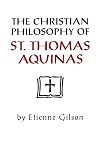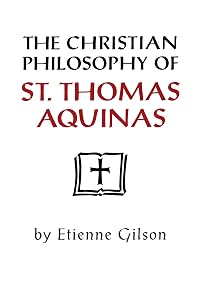
The Christian Philosophy of St. Thomas Aquinas
by Étienne Gilson
On This Page
Description
In this final edition of his classic study of St. Thomas Aquinas, Etienne Gilson presents the sweeping range and organic unity of Thomistic philosophical thought. The philosophical thinking of Aquinas is the result of reason being challenged to relate to many theological conceptions of the Christian tradition. Gilson carefully reviews how Aquinas grapples with the relation itself of faith and reason and continuing through the existence and nature of God and His creation, the world and its show more creatures, especially human beings with their power of intellect, will, and moral life. He concludes this study by discussing the life of people in society, along with their purpose and final destiny. Gilson demonstrates that Aquinas drew from a wide spectrum of sources in the development of his thought-from the speculations of the ancient Greeks such as Aristotle, to the Arabic and Jewish philosophers of his time, as well as from Christian writers and scripture. The Christian Philosophy of St. Thomas Aquinas offers students of philosophy and medieval studies an insightful introduction to the thought of Aquinas and the Scholastic philosophy of the Middles Ages, insights that are still revelant for today. show lessTags
Recommendations













Member Reviews
Sounds crazy, but this is one of the most enjoyable books I've ever read.
An authorized translation from "Le Thomisme" by Etienne Gilson. The revival of interest in the name and work of St. Thomas Aquinas is a fact which is bound to impress even the most superficial observer.
CATALOGUE OF ST. THOMAS'S WORKS BY I. T. ESCHMANN; NOTES; ANALYTICAL INDEX; INDEX OF PROPER NAMES
INDEX, NOTES FOR CHAPTERS
Ratings
Members
- Recently Added By
Lists

Books translated from Romance Languages into English
102 works; 7 members
Author Information

150+ Works 5,021 Members
Born in Paris, Etienne Gilson was educated at the University of Paris. He became professor of medieval philosophy at the Sorbonne in 1921, and in 1932 was appointed to the chair in medieval philosophy at the College de France. In 1929 he cooperated with the members of the Congregation of Priests of St. Basil, in Toronto, Canada, to found the show more Pontifical Institute of Medieval Studies in association with St. Michael's College at the University of Toronto. Gilson served as professor and director of studies at the institute. Like his fellow countryman Jacques Maritain, Etienne Gilson was a neo-Thomist for whom Christian revelation is an indispensable auxiliary to reason, and on faith he accepted Christian doctrine as advocated by the Roman Catholic church. At the same time, like St. Thomas Aquinas, he accorded reason a wide compass of operation, maintaining that it could demonstrate the existence of God and the necessity of revelation, with which he considered it compatible. Why anything exists is a question that science cannot answer and may even deem senseless. Gilson found the answer to be that "each and every particular existing thing depends for its existence on a pure Act of existence." God is the supreme Act of existing. An authority on the Christian philosophy of the Middle Ages, Gilson lectured widely on theology, art, the history of ideas, and the medieval world. (Bowker Author Biography) show less
Series
Belongs to Publisher Series
Common Knowledge
- Canonical title
- The Christian Philosophy of St. Thomas Aquinas
- Original title
- Le thomisme
- Alternate titles
- The Philosophy of St. Thomas Aquinas
- Original publication date
- 1919; 1965 (6th ed.) (6th ed.)
- People/Characters
- Aquinas, Thomas, 1225-1274; Aristotle, 384-322
- Original language
- French
- Disambiguation notice
- English equivalent of Introduction a l'etude de saint Augustin, 2 ed., Paris, Vrin 1943.
Classifications
- Genres
- Philosophy, Nonfiction, Religion & Spirituality, History
- DDC/MDS
- 189.4 — Philosophy & psychology Ancient, medieval & eastern philosophy Medieval western philosophy Scholastic: Scotus, Aquinas, Anselm, Abelard
- LCC
- B765 .T54 .G5 — Philosophy, Psychology and Religion Philosophy (General) By period Medieval
- BISAC
Statistics
- Members
- 773
- Popularity
- 36,362
- Reviews
- 5
- Rating
- (4.05)
- Languages
- 5 — English, French, Farsi/Persian, Polish, Spanish
- Media
- Paper, Ebook
- ISBNs
- 20
- UPCs
- 1
- ASINs
- 21