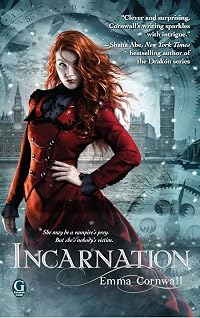
Incarnation
by Emma Cornwall
On This Page
Description
"Lucy Weston, from Bram Stoker's Dracula, hunts down the ancient vampire who turned her in order to regain her humanity"--Tags
Recommendations

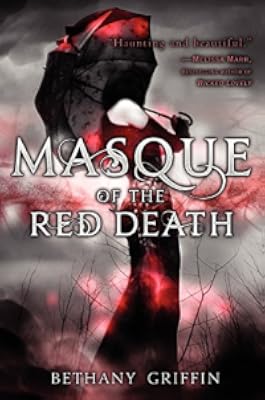
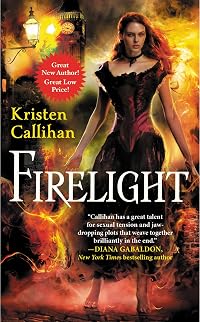
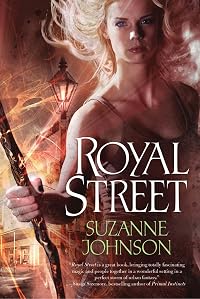
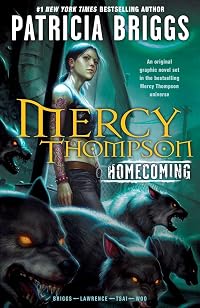
Member Reviews
After reading Dracula this past summer, I have been intrigued with any tales playing off those original characters. So, the idea of this book, telling more of Lucy's story - especially considering her death in the original book - was especially exciting. And I wasn't disappointed. Cornwall does an excellent job of building up the world that allows Lucy to exist, creating her backstory and fables and just interweaving different legends. The story also felt like Stoker's writing and had the same feel to it. This is billed as a steampunk book but the steampunk elements were hardly noticeable. I'm curious as to whether or not Cornwall plans any further books featuring Lucy. Anybody know?
I received a copy of this book for free from Edelweiss, in exchange for an honest review. This review is also posted on my blog, Rinn Reads.
Wow. When I requested this book from Edelweiss, I thought it looked good - pretty cover, interesting sounding plot - but I didn't think I'd enjoy it as much as I did, particularly as it was my first steampunk novel. As it is labelled as a Young Adult book, I was expecting the writing style to be fairly basic, as it tends to be in YA fiction. Cornwall, however, goes all out and writes the novel as if she herself was writing in nineteenth century England.
Where YA novels tend to base most of their description around characters (particularly of the male persuasion), this book contains many beautiful show more descriptions of the environment: the dark, eerie Yorkshire moors; the dingy alleyways of Victorian London. I don't know if it helped that I've visited Whitby and the Yorkshire moors myself, so I can imagine them more vividly, but I think even without visiting them Cornwall's descriptions do them justice. The writing flowed so well, and I think it is the use of words and diction contemporary with the setting of the story that really lifts it above all those other paranormal YA novels out there.
Rather than being a straight retelling of the Dracula story by Bram Stoker, Cornwall instead chooses to directly involve Stoker himself, which works really well. I find that when historical or famous figures are included in stories, as long as they are not too out of character, it makes the story more relatable, by presenting the reader with characters they are already familiar with. For example, we also get to meet William Gladstone, former Prime Minister, and Queen Victoria.
Speaking of characters, Lucy as a character is a wonderful protagonist, particularly as a female lead in a YA paranormal novel. She is strong, and barely phased by her transformation. She just gets on with it, she doesn't moan, whine or cry. Although there is some romance, it doesn't completely consume her and she never gets soppy. She's smart, quick-witted and generally a strong character all round, and manages to avoid cliches. We need more female protagonists like her.
Now as for the downsides of the book: I managed to guess one character's secret very early on into the story, which made the big reveal much less of an impact - I feel that perhaps Cornwall left too many clues for that one. I have to say, the ending was a bit of an anti-climax and over rather soon - but I felt the rest of the story kept it up at a five-star rating. There were also quite a few spelling and grammar mistakes, but as I read an ARC I'm hoping that they'll all be corrected in the final edition.
I highly recommend this one, even if you haven't read Dracula! (I haven't... better get on it.) It is beautifully written, and a fun read - especially if you want a more 'intelligent' feeling YA novel. If the steampunk element is putting you off, I would say don't let it - steampunk is only a very light part of the novel. show less
Wow. When I requested this book from Edelweiss, I thought it looked good - pretty cover, interesting sounding plot - but I didn't think I'd enjoy it as much as I did, particularly as it was my first steampunk novel. As it is labelled as a Young Adult book, I was expecting the writing style to be fairly basic, as it tends to be in YA fiction. Cornwall, however, goes all out and writes the novel as if she herself was writing in nineteenth century England.
Where YA novels tend to base most of their description around characters (particularly of the male persuasion), this book contains many beautiful show more descriptions of the environment: the dark, eerie Yorkshire moors; the dingy alleyways of Victorian London. I don't know if it helped that I've visited Whitby and the Yorkshire moors myself, so I can imagine them more vividly, but I think even without visiting them Cornwall's descriptions do them justice. The writing flowed so well, and I think it is the use of words and diction contemporary with the setting of the story that really lifts it above all those other paranormal YA novels out there.
Rather than being a straight retelling of the Dracula story by Bram Stoker, Cornwall instead chooses to directly involve Stoker himself, which works really well. I find that when historical or famous figures are included in stories, as long as they are not too out of character, it makes the story more relatable, by presenting the reader with characters they are already familiar with. For example, we also get to meet William Gladstone, former Prime Minister, and Queen Victoria.
Speaking of characters, Lucy as a character is a wonderful protagonist, particularly as a female lead in a YA paranormal novel. She is strong, and barely phased by her transformation. She just gets on with it, she doesn't moan, whine or cry. Although there is some romance, it doesn't completely consume her and she never gets soppy. She's smart, quick-witted and generally a strong character all round, and manages to avoid cliches. We need more female protagonists like her.
Now as for the downsides of the book: I managed to guess one character's secret very early on into the story, which made the big reveal much less of an impact - I feel that perhaps Cornwall left too many clues for that one. I have to say, the ending was a bit of an anti-climax and over rather soon - but I felt the rest of the story kept it up at a five-star rating. There were also quite a few spelling and grammar mistakes, but as I read an ARC I'm hoping that they'll all be corrected in the final edition.
I highly recommend this one, even if you haven't read Dracula! (I haven't... better get on it.) It is beautifully written, and a fun read - especially if you want a more 'intelligent' feeling YA novel. If the steampunk element is putting you off, I would say don't let it - steampunk is only a very light part of the novel. show less
Review courtesy of All Things Urban Fantasy.
allthingsuf.com
A beautiful melding of time period and myth, INCARNATION drifts through the misty streets of an imagined London. Without bogging down in accent or details, Cornwall creates a new mythology of the Slayer, vampires, and werewolves, as well as the city itself. Lucy awakens to her second life alone and confused, but it is immediately clear that the usual rules that govern vampires do not apply to her.
INCARNATION is the story of Lucy finding her way in this new reality. Awakened with only hints of her past, Cornwall returned Lucy’s memories to her slowly. Lucy discovers the truths of her human past and her vampiric nature at the same time, which interwove nicely with details of the show more current plot. I never got the sense that Lucy’s experience with vampirism is meant to represent all vampires, but it did seem that her moments of emotional remoteness and calculation were due to her vampiric side. Though Cornwall balanced that with some human warmth, for much of the book Lucy is inscrutable (to herself as well as to the reader). All of Cornwall’s world is one of tantalizing hints. Some advanced technology and alternate history, hints of vampire and werewolf mythology, secret societies and mad scientists, all mixed together in a foggy, Gothic world. INCARNATION struck the perfect balance between teasing details and leaving me wanting more.
Lucy is muted and restrained, but relentless in pursuit of answers. I found myself not so much invested in her present state as in the possibilities of what she could become. From a sheltered young woman constrained by parents and society to a solitary, powerful creature with infinite possibilities at her feet, Cornwall has recreated Lucy Westonra to wonderful effect. In INCARNATION we see Lucy find her feet and navigate the immediate dangers of her world, and though not currently listed as a series, I would love to see where another book would take her.
Sexual Content: References to sex and attempted rape. show less
allthingsuf.com
A beautiful melding of time period and myth, INCARNATION drifts through the misty streets of an imagined London. Without bogging down in accent or details, Cornwall creates a new mythology of the Slayer, vampires, and werewolves, as well as the city itself. Lucy awakens to her second life alone and confused, but it is immediately clear that the usual rules that govern vampires do not apply to her.
INCARNATION is the story of Lucy finding her way in this new reality. Awakened with only hints of her past, Cornwall returned Lucy’s memories to her slowly. Lucy discovers the truths of her human past and her vampiric nature at the same time, which interwove nicely with details of the show more current plot. I never got the sense that Lucy’s experience with vampirism is meant to represent all vampires, but it did seem that her moments of emotional remoteness and calculation were due to her vampiric side. Though Cornwall balanced that with some human warmth, for much of the book Lucy is inscrutable (to herself as well as to the reader). All of Cornwall’s world is one of tantalizing hints. Some advanced technology and alternate history, hints of vampire and werewolf mythology, secret societies and mad scientists, all mixed together in a foggy, Gothic world. INCARNATION struck the perfect balance between teasing details and leaving me wanting more.
Lucy is muted and restrained, but relentless in pursuit of answers. I found myself not so much invested in her present state as in the possibilities of what she could become. From a sheltered young woman constrained by parents and society to a solitary, powerful creature with infinite possibilities at her feet, Cornwall has recreated Lucy Westonra to wonderful effect. In INCARNATION we see Lucy find her feet and navigate the immediate dangers of her world, and though not currently listed as a series, I would love to see where another book would take her.
Sexual Content: References to sex and attempted rape. show less
I have been entering Goodreads giveaways for awhile, and this morning I was pretty excited to wake up and find out that I had won a copy of this!!! I can't wait for it to arrive......
9/18: I decided to wait a bit before I posted my review, because I wanted to think about what I wanted to say. Ultimately, I did enjoy this book, however that comes with some caveats...if I had not won this book in the First Reads giveaway, I might have decided within the first few pages to give up, because the beginning is very confusing. I'm glad I pushed through, but I suspect that some people will just be turned off and quit.
In retrospect, it's possible that the confusion is intentional, because the main character, Lucy, who is also the first-person show more narrator is also confused. It was also a little bit boring, because it was all background, background, background, and then FINALLY. We get to London and it gets interesting.
It was a very interesting take on vampires, and the like, and as I said, it was glad to have pushed through, and will definitely read other works in this universe, which I assume will be forthcoming based on the way the book ended. show less
9/18: I decided to wait a bit before I posted my review, because I wanted to think about what I wanted to say. Ultimately, I did enjoy this book, however that comes with some caveats...if I had not won this book in the First Reads giveaway, I might have decided within the first few pages to give up, because the beginning is very confusing. I'm glad I pushed through, but I suspect that some people will just be turned off and quit.
In retrospect, it's possible that the confusion is intentional, because the main character, Lucy, who is also the first-person show more narrator is also confused. It was also a little bit boring, because it was all background, background, background, and then FINALLY. We get to London and it gets interesting.
It was a very interesting take on vampires, and the like, and as I said, it was glad to have pushed through, and will definitely read other works in this universe, which I assume will be forthcoming based on the way the book ended. show less
Egalley thanks to Gallery Books
Beautiful storytelling which very much reminded me of Gardella Vampires by Colleen Gleason.
Rich, vibrant and really engrossing.
This is not a YA and neither it is a paranormal romance, more like a paranormal historical adventure with slight steampunkish elements. I wouldn't even call it steampunk, because although some interesting technological advances are mentioned they are not used by any of the characters.
Lucy is a very intelligent, courageous girl who is turned suddenly by an ancient vampire, and wakes up in her own grave with a stake in her chest. Confused and disorientated, she literally claws her way out and spends few months feeding on animal blood and living in the cave until a distant call from show more her creator forces her to go searching for him.
When she thinks of him it's all very Gothic, hazy and luminescent but not romantic. She accepts him like some kind of irresistible force.
She finds her family country house deserted and day by day recovers more of her humanity back. In the same house she discovers a book by Bram Stoker where a heroine with a very similar name Lucy Westera instead of Lucy Weston is seduced and turned into a vampire by Dracula. Enraged by the author twisting the truth, she is determined to come to London and ask Bram how he knew what happened to her and why he distorted the truth.
However, in London our young vampire quickly becomes entangled in Lady Blanche's, an ambitious vampire, struggle for power with a sinister intent to openly dominate humanity, and only Lucy's own maker might be able to stop her.
Joining forces with a mysterious Protector, Marco di Orsini Lucy needs to use her unique link to her creator to find him before it's too late, defend the Queen and country and fulfil her destiny, - the reason she was incarnated.
Fabulous story, very entertaining, with a smart resourceful heroine and a powerful and enigmatic hero. Nothing is simple in Incarnation, oh, and did I mention a brilliant mad geneticist who is just as evil as Lady Blanche? I guess I just did.
Read it! Fans of Kristen Callihan and Bec MacMaster especially, will love this. show less
Beautiful storytelling which very much reminded me of Gardella Vampires by Colleen Gleason.
Rich, vibrant and really engrossing.
This is not a YA and neither it is a paranormal romance, more like a paranormal historical adventure with slight steampunkish elements. I wouldn't even call it steampunk, because although some interesting technological advances are mentioned they are not used by any of the characters.
Lucy is a very intelligent, courageous girl who is turned suddenly by an ancient vampire, and wakes up in her own grave with a stake in her chest. Confused and disorientated, she literally claws her way out and spends few months feeding on animal blood and living in the cave until a distant call from show more her creator forces her to go searching for him.
When she thinks of him it's all very Gothic, hazy and luminescent but not romantic. She accepts him like some kind of irresistible force.
She finds her family country house deserted and day by day recovers more of her humanity back. In the same house she discovers a book by Bram Stoker where a heroine with a very similar name Lucy Westera instead of Lucy Weston is seduced and turned into a vampire by Dracula. Enraged by the author twisting the truth, she is determined to come to London and ask Bram how he knew what happened to her and why he distorted the truth.
However, in London our young vampire quickly becomes entangled in Lady Blanche's, an ambitious vampire, struggle for power with a sinister intent to openly dominate humanity, and only Lucy's own maker might be able to stop her.
Joining forces with a mysterious Protector, Marco di Orsini Lucy needs to use her unique link to her creator to find him before it's too late, defend the Queen and country and fulfil her destiny, - the reason she was incarnated.
Fabulous story, very entertaining, with a smart resourceful heroine and a powerful and enigmatic hero. Nothing is simple in Incarnation, oh, and did I mention a brilliant mad geneticist who is just as evil as Lady Blanche? I guess I just did.
Read it! Fans of Kristen Callihan and Bec MacMaster especially, will love this. show less
Incarnation by Emma Cornwall is a spin-of/sequel to Bram Stoker's Dracula. Story is narrated and told in a first person point of view by Lucy Weston, side character and one of Dracula's victims in Bram Stoker's novel.
If you have read Dracula by Bram Stoker (or watched the movie) you know how the story ends for poor Lucy - Dracula seduces her and transforms her into a vampire but she is almost immediately killed/destroyed by Professor Abraham Van Helsing. Incarnation by Emma Cornwall continues story from that point. Lucy wakes up buried in a coffin with a wooden stake trough her heart and no memories of her life before the transformation (or, to use the term from book, incarnation).
We follow Lucy as she tries to find out what happened to show more her. She accidentally finds book Dracula by Bram Stoker and is outraged because the story in the novel is not true. Lucy finds Bram Stoker in London and he points her to elite vampire club The Bagatelle. It's interesting getting a view of vampire's decadent society trough Lucy's (naive) eyes.
Unfortunately sometimes the story just gets lost. It feels like Emma Cornwall tried to cover too many genres, if she just stopped at some point Incarnation would have been much better novel. We have historical Victorian setting, vampires, werewolves, magicians, secret societies, forbidden-love type of romance and even a little bit of Arthurian mythology.
Romance in the book is just... flat. I could not feel any depth of emotion between Marco and Lucy. I can excuse Marco because of the customs of that time-period, but Lucy is the narrator. All her descriptions of him were very good but cold. There were no butterflies/chemistry/whatever-you-wanna-call-it.
As for promised steam-punk, all we got was occasional glimpse of zeppelin/dirigible in the sky. Very disappointing. Steampunk element is not necessary for the story and I would not even complain that it is missing, but book summary promised us "steampunk world". So where is it?
Another thing - although this is a stand alone novel it has a little bit open and unresolved ending, especially regarding the love side of story. It is obvious that author plans (if book is popular) to write sequel. This additionally adds to my feeling that Incarnation is not the story that needed to be told, but that it is written to milk the success of current genre trends.
I recommend this book to fans of: vampires or paranormal novels in Victorian setting.
Disclaimer: I was given a free eBook by the publisher via Edelweiss in exchange for a honest review. This text is also posted on Amazon and my blog. show less
If you have read Dracula by Bram Stoker (or watched the movie) you know how the story ends for poor Lucy - Dracula seduces her and transforms her into a vampire but she is almost immediately killed/destroyed by Professor Abraham Van Helsing. Incarnation by Emma Cornwall continues story from that point. Lucy wakes up buried in a coffin with a wooden stake trough her heart and no memories of her life before the transformation (or, to use the term from book, incarnation).
We follow Lucy as she tries to find out what happened to show more her. She accidentally finds book Dracula by Bram Stoker and is outraged because the story in the novel is not true. Lucy finds Bram Stoker in London and he points her to elite vampire club The Bagatelle. It's interesting getting a view of vampire's decadent society trough Lucy's (naive) eyes.
Unfortunately sometimes the story just gets lost. It feels like Emma Cornwall tried to cover too many genres, if she just stopped at some point Incarnation would have been much better novel. We have historical Victorian setting, vampires, werewolves, magicians, secret societies, forbidden-love type of romance and even a little bit of Arthurian mythology.
Romance in the book is just... flat. I could not feel any depth of emotion between Marco and Lucy. I can excuse Marco because of the customs of that time-period, but Lucy is the narrator. All her descriptions of him were very good but cold. There were no butterflies/chemistry/whatever-you-wanna-call-it.
As for promised steam-punk, all we got was occasional glimpse of zeppelin/dirigible in the sky. Very disappointing. Steampunk element is not necessary for the story and I would not even complain that it is missing, but book summary promised us "steampunk world". So where is it?
Another thing - although this is a stand alone novel it has a little bit open and unresolved ending, especially regarding the love side of story. It is obvious that author plans (if book is popular) to write sequel. This additionally adds to my feeling that Incarnation is not the story that needed to be told, but that it is written to milk the success of current genre trends.
I recommend this book to fans of: vampires or paranormal novels in Victorian setting.
Disclaimer: I was given a free eBook by the publisher via Edelweiss in exchange for a honest review. This text is also posted on Amazon and my blog. show less
The Good: I love the alternative history of why how and why Dracula was written. I also loved how the legend of King Arthur is incorporated into the story. The men in this novel were very interesting, and became more important to the story that the main character in my opinion. I especially loved reading about Marco and Mordred.
The Bad: The steampunk aspects of this book are referenced but never really explained, at all. One must just sort of infer what the author is envisioning without any real help from the author herself. Beyond that, Lucy just isn't very likeable. You get to know her, understand her motives, but are never very driven to care whether she succeeds or not.
The Bad: The steampunk aspects of this book are referenced but never really explained, at all. One must just sort of infer what the author is envisioning without any real help from the author herself. Beyond that, Lucy just isn't very likeable. You get to know her, understand her motives, but are never very driven to care whether she succeeds or not.
Members
- Recently Added By
Author Information
1 Work 141 Members
Common Knowledge
- People/Characters
- Lucy Weston; Marco di Orsini; Amanda Weston; Bram Stoker; Victoria, Queen of the United Kingdom; William Ewart Gladstone (show all 9); Mordred; Nicholas di Orsini; Felix Deschamps
- Important places
- London, England, UK
- Important events
- Jubilee Year
- Epigraph
- Listen to them-the children of the night. What music they make. -Bram Stoker, Dracula
- First words
- On the stage of London's Royal Opera House, Verdi's Aida was approaching its dramatic conclusion.
- Last words
- (Click to show. Warning: May contain spoilers.)All around me the hidden rippled and stirred, drawing me deeper into it. Welcoming me home.
Classifications
Statistics
- Members
- 141
- Popularity
- 233,026
- Reviews
- 13
- Rating
- (3.63)
- Languages
- English
- Media
- Paper, Ebook
- ISBNs
- 2
- ASINs
- 2