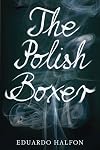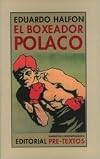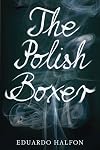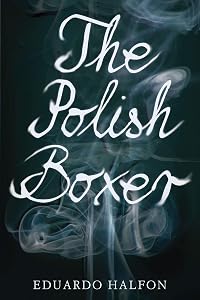
The Polish Boxer
by Eduardo Halfon
On This Page
Description
"Covers a vast landscape of human experience while enfolding a search for origins: a grandson tries to make sense of his Polish grandfather's past and the story behind his numbered tattoo; a Serbian classical pianist longs for his forbidden heritage; a Mayan poet is torn between his studies and filial obligations; a striking young Israeli woman seeks answers in Central America; a university professor yearns for knowledge that he can't find in books and discovers something unexpected at a show more Mark Twain conference. Drawn to what lies beyond the range of reason, they all reach for the beautiful and fleeting, whether through humor, music, poetry, or unspoken words. Across his encounters with each of them, the narrator--a Guatemalan literature professor and writer named Eduardo Halfon--pursues his most enigmatic subject: himself."--Back cover. show lessTags
Recommendations









Member Reviews
The first novel by Eduarado Halfon to be published in English, it is the third novel by him that I have read. Like Monastery and Canción, the book is a series of interconnected stories that take place all over the world and are the experiences of a semi-autobiographical narrator also named Eduardo Halfon. (Fittingly the epigraph is: "I have moved the typewriter into the next room where I can see myself in the mirror as I write."—Henry Miller.)
The novel opens with the story of Eduardo teaching literature to college students (the author attended college in the US, but returned to Guatemala to teach literature for eight years). Although most of the students are mediocre, one stands out as exceptional. This was my favorite section of the show more book.
The next chapter is about the author's experience attending a conference (a common theme in his books), this time on Mark Twain in Durham, North Carolina. I love this passage:
"Look, how tragic, Lewis said, pointing to a dead deer on the road. Real common said the driver, to see deer run over around these parts. It occurred to me then, as a limousine carrying a Guatemalan and a Mormon rumbled past deer carcasses toward an academic conference on Mark Twain, that I was in the wrong place. Sometimes, just briefly, I forget who I am."
Several of the chapters feature Milan Rakić, a Serbian pianist who wants to reconnect with his Gypsy roots. The title story is from a conversation Eduardo had with his grandfather, the first time he told him about his experience in the Sachsenhausen concentration camp. Although each story is seemingly separate, they are held together by the common narrator and themes such as identity in a global world, a search for meaning, and, as Eduardo says, the fact that "there's always more than one truth to everything."
I love Halfon's writing, which is personal yet universal, and often with a sardonic humor. I will happily read anything else by Halfon that is translated into English. show less
The novel opens with the story of Eduardo teaching literature to college students (the author attended college in the US, but returned to Guatemala to teach literature for eight years). Although most of the students are mediocre, one stands out as exceptional. This was my favorite section of the show more book.
The next chapter is about the author's experience attending a conference (a common theme in his books), this time on Mark Twain in Durham, North Carolina. I love this passage:
"Look, how tragic, Lewis said, pointing to a dead deer on the road. Real common said the driver, to see deer run over around these parts. It occurred to me then, as a limousine carrying a Guatemalan and a Mormon rumbled past deer carcasses toward an academic conference on Mark Twain, that I was in the wrong place. Sometimes, just briefly, I forget who I am."
Several of the chapters feature Milan Rakić, a Serbian pianist who wants to reconnect with his Gypsy roots. The title story is from a conversation Eduardo had with his grandfather, the first time he told him about his experience in the Sachsenhausen concentration camp. Although each story is seemingly separate, they are held together by the common narrator and themes such as identity in a global world, a search for meaning, and, as Eduardo says, the fact that "there's always more than one truth to everything."
I love Halfon's writing, which is personal yet universal, and often with a sardonic humor. I will happily read anything else by Halfon that is translated into English. show less
This book started off with short stories which totally engaged me. Then I realized these were not short stories at all, but part of a novel. However, I subsequently realized that this book was neither short stories nor a novel but somewhere in between. It's the story of a Guatamalan man named Eduardo Halfon. Yes, that is also the author's name. In the end, I realized that this book was all about identity. Was this book about a fictitious character or about the author? Was this book a short story or a novel? Who knows?
Then there is the component of the characters having multiple ethnicities or roles. A student of Eduardo Halfon, who was a college literature professor in Guatamala, was a member of an indigenous tribe in Guatamala. Eduardo show more Halfon himself had a grandfather who had been a Jewish Holocaust survivor. So did that make the author or the protagonist Jewish? How about the acqaintance of the professor, a Serbian pianist by the name of Milan Rakić. Did this musician discard his Serbian identity to take up his Gypsy roots?
If all of this sounds confusing, it is not. It's all woven into a beautifully written story. I especially liked it because I've been to Guatemala and to Yugoslavia (the part that is now Serbia), and remembered with joy the people and culture of those two vastly different countries. Some of the scenes in this story were about Judaism, but those made me deeply sad. After reading this story, you will know why.
This is such an interesting novel with information slipped in from many categories, such as music, geography, literature, culture, food, and language. I took the opportunity while reading this book to learn more about all of these topics in depth in order to better understand what Halfon was trying to say.
There was also the theme of what is reality and what is story. Were the tattooed numbers on grandfather’s arm his phone number or his tattoo from his imprisonment in Auschwitz? Did he escape his imprisonment there because a Polish Boxer told him what to say, or was it because he had been a carpenter? How much of one’s identity is truth and how much is fiction? There’s lots to think about here.
I see this book as an exploration of identities. There were different ethnicities, different locations, different names, different countries of origin, different religions, different languages, different social statuses, and different professions or roles. And yet, these differences locked together in such an interesting and amazing story! I just loved it all. show less
Then there is the component of the characters having multiple ethnicities or roles. A student of Eduardo Halfon, who was a college literature professor in Guatamala, was a member of an indigenous tribe in Guatamala. Eduardo show more Halfon himself had a grandfather who had been a Jewish Holocaust survivor. So did that make the author or the protagonist Jewish? How about the acqaintance of the professor, a Serbian pianist by the name of Milan Rakić. Did this musician discard his Serbian identity to take up his Gypsy roots?
If all of this sounds confusing, it is not. It's all woven into a beautifully written story. I especially liked it because I've been to Guatemala and to Yugoslavia (the part that is now Serbia), and remembered with joy the people and culture of those two vastly different countries. Some of the scenes in this story were about Judaism, but those made me deeply sad. After reading this story, you will know why.
This is such an interesting novel with information slipped in from many categories, such as music, geography, literature, culture, food, and language. I took the opportunity while reading this book to learn more about all of these topics in depth in order to better understand what Halfon was trying to say.
There was also the theme of what is reality and what is story. Were the tattooed numbers on grandfather’s arm his phone number or his tattoo from his imprisonment in Auschwitz? Did he escape his imprisonment there because a Polish Boxer told him what to say, or was it because he had been a carpenter? How much of one’s identity is truth and how much is fiction? There’s lots to think about here.
I see this book as an exploration of identities. There were different ethnicities, different locations, different names, different countries of origin, different religions, different languages, different social statuses, and different professions or roles. And yet, these differences locked together in such an interesting and amazing story! I just loved it all. show less
50. The Polish Boxer by Eduardo Halfon
translation: from Spanish by Thomas Bunstead, Lisa Dillman, Daniel Hahn, Anne McLean, & Ollie Brock (2012)
OPD: 2008
format: 181-page paperback
acquired: November from City Lights in San Francisco read: Sep 20-22 time reading: 6:32, 2.2 mpp
rating: 4½
genre/style: contemporary fiction theme: TBR
locations: Guatemala, North Carolina, and Belgrade, Serbia (roughly 2003)
about the author: Guatemala-born Jewish author who went to school, from age 10, in South Florida and later taught literature in Guatemala. (born 1971)
I loved this. Literature and life and a dizzying kaleidoscope of cultural clashes and mishmashes. And many beautifully quirky lines. Halfon is a Jewish-born Guatemalan grandson of a Polish show more Holocaust survivor and here writes about himself fictionally or metafictionally, occasionally holding the seams up for us to see.
2023
https://www.librarything.com/topic/351556#8243739 show less
translation: from Spanish by Thomas Bunstead, Lisa Dillman, Daniel Hahn, Anne McLean, & Ollie Brock (2012)
OPD: 2008
format: 181-page paperback
acquired: November from City Lights in San Francisco read: Sep 20-22 time reading: 6:32, 2.2 mpp
rating: 4½
genre/style: contemporary fiction theme: TBR
locations: Guatemala, North Carolina, and Belgrade, Serbia (roughly 2003)
about the author: Guatemala-born Jewish author who went to school, from age 10, in South Florida and later taught literature in Guatemala. (born 1971)
I loved this. Literature and life and a dizzying kaleidoscope of cultural clashes and mishmashes. And many beautifully quirky lines. Halfon is a Jewish-born Guatemalan grandson of a Polish show more Holocaust survivor and here writes about himself fictionally or metafictionally, occasionally holding the seams up for us to see.
2023
https://www.librarything.com/topic/351556#8243739 show less
The Polish Boxer is like nothing else I've ever read. It is sometimes meta-fiction; the narrator, Eduardo Halfon, has the name of the author and reflects on a story that he has written about his grandfather's life with details that his grandfather changes when he tells his story to a newspaper. The characters are artists; there are painters and a pianist, but the narrator is a teacher of American literature in Guatemala. They talk about their art and its limitations; he works on a speech for a conference about how literature tears reality. People come and go and send postcards. For a short little book, it's full to overflowing with the nature of reality or the reality that each person makes. (There's a story that the natives didn't see show more Christopher Columbus arrive because the concept of a such a big ship was so far from their reality that they couldn't acknowledge it.) Eduardo is always open to life, and if he's searching for something, he is willing to take what he finds along the way. What he finds along the way is often loss.
The writing is exquisite although I found the first chapter feeling very much like a translation. After that, it was lovely. I started by trying to mark particularly apposite turns of phrase and quickly realized that I would be marking everything. It is also surprisingly funny. In Belgrade a guide tells him, "I like Garcia Marquez.... And also Cantinflas. Once,... I slept with a girl from Ecuador, which is almost like saying Guatemala, right?"
This is a book to reread. I should have reread it before trying to write a review, but the nature of my beast is that I move on for now. Thank you, Early Readers, for an experience that I wouldn't have found on my own! show less
The writing is exquisite although I found the first chapter feeling very much like a translation. After that, it was lovely. I started by trying to mark particularly apposite turns of phrase and quickly realized that I would be marking everything. It is also surprisingly funny. In Belgrade a guide tells him, "I like Garcia Marquez.... And also Cantinflas. Once,... I slept with a girl from Ecuador, which is almost like saying Guatemala, right?"
This is a book to reread. I should have reread it before trying to write a review, but the nature of my beast is that I move on for now. Thank you, Early Readers, for an experience that I wouldn't have found on my own! show less
 This review was written for LibraryThing Early Reviewers.
I found this a marvelous read.
Halfon took a short story he had written about his grandfather's tattoo from Auschwitz and tied it together with other stories to fashion a novel. So often, short stories become awkward when they are expanded into books. They sit like lumps amidst ill-fitting connective tissue, their origins obvious. That is not the case here. Halfon has used the interrupted nature as the fundamental fabric of the novel, telling it through a set of chapters that are highly episodic yet, somehow, coherent around questions of identity, legacy and reality.
This is a story where the journey, not the destination, is what is in focus. In fact, we never reach the various conclusions to the story lines. The true history of his show more grandfather's Auschwitz tattoo; the fate of the pianist, Milan Rakić; the future the poet Juan Kalel learned from the fortune teller; all remain obscure like things seen through the clouds of cigarette smoke that pervade the story. We don't even know if Eduardo Halfon, the character, is Eduardo Halfon, the author…is this memoir or fiction? Halfon seems to be telling us that life is full of gaps and holes, that continuity of narrative isn't real, and that fiction, both written and what we tell ourselves, is what we use to weave it together into a unified structure.
And the language is gorgeous. Since Halfon is, himself, fluent in English, we must assume he ensured that his translators captured what he meant to say. The result is beautifully evocative and absorbing. show less
Halfon took a short story he had written about his grandfather's tattoo from Auschwitz and tied it together with other stories to fashion a novel. So often, short stories become awkward when they are expanded into books. They sit like lumps amidst ill-fitting connective tissue, their origins obvious. That is not the case here. Halfon has used the interrupted nature as the fundamental fabric of the novel, telling it through a set of chapters that are highly episodic yet, somehow, coherent around questions of identity, legacy and reality.
This is a story where the journey, not the destination, is what is in focus. In fact, we never reach the various conclusions to the story lines. The true history of his show more grandfather's Auschwitz tattoo; the fate of the pianist, Milan Rakić; the future the poet Juan Kalel learned from the fortune teller; all remain obscure like things seen through the clouds of cigarette smoke that pervade the story. We don't even know if Eduardo Halfon, the character, is Eduardo Halfon, the author…is this memoir or fiction? Halfon seems to be telling us that life is full of gaps and holes, that continuity of narrative isn't real, and that fiction, both written and what we tell ourselves, is what we use to weave it together into a unified structure.
And the language is gorgeous. Since Halfon is, himself, fluent in English, we must assume he ensured that his translators captured what he meant to say. The result is beautifully evocative and absorbing. show less
This review was written for LibraryThing Early Reviewers.Memories, the stories we tell, are the oral literature of families, communities, peoples. Are they always real and true? What happens when we try to put them in writing? Is reality torn, even shredded, and then put back together?
After reading the first few chapters of this book, it seemed to be a collection of linked stories, one of my favorite literary forms. As it continued, some of the links were a bit weak, but the stories were interesting and well told. In addition, there were stories within the stories, another device I love. Finally, I realized these are not stand-alone stories. It is a novel with a definite theme, not fully revealed until the final chapters.
This is a delightful exploration of translating reality into show more literature, and how our stories become mysterious and mythical in their telling and retelling.
I received this book from the publisher as an extra when I won another book (Monastery) by the same author in a LibraryThing Early Reviewers giveaway. I read this one first because it was the first published. I can’t wait to start the other book. I hope it is as good as this one. show less
After reading the first few chapters of this book, it seemed to be a collection of linked stories, one of my favorite literary forms. As it continued, some of the links were a bit weak, but the stories were interesting and well told. In addition, there were stories within the stories, another device I love. Finally, I realized these are not stand-alone stories. It is a novel with a definite theme, not fully revealed until the final chapters.
This is a delightful exploration of translating reality into show more literature, and how our stories become mysterious and mythical in their telling and retelling.
I received this book from the publisher as an extra when I won another book (Monastery) by the same author in a LibraryThing Early Reviewers giveaway. I read this one first because it was the first published. I can’t wait to start the other book. I hope it is as good as this one. show less
I'm in two, or maybe even several, minds about The Polish Boxer. On the one hand it is very clever, for another the writing, mostly, is better than good and sometimes better than excellent, yet, it is also, a bit too clever about this idea of the interface, overlapping or what-have-you of reality and fiction. In the beginning I felt bombarded with the message: "there's more to this book than meets the eye" later, I felt it was something of an excuse for cramming in related ideas (say, Halfon's quest to understand his own roots sublimated into the quest for his Gypsy (maybe) friend) and in the end bludgeoned by the whole idea that we make up our past as it recedes. And yet. Just when I felt fed up along came this paragraph (Halfon is show more snowed inside in Belgrade while on his quest for his friend): "I spent the rest of the day shut inside, smoking and eating the supplies I'd bought and reading a bit and listening to a few pieces by Melodious {his nickname for Thelonius} and watching Venezuelan soaps dubbed into Serbian, and Russian films dubbed into Serbian, and American cartoons dubbed into Serbian, and taking short naps without dreaming or at least dreaming very little, and it was one day less, one day lost, one day further from everything and close to nothing, while the hours didn't pass so much as suddenly become one single hour, one single static hour like a bedsheet with no creases, one goddamn shitty and unbelievably eternal hour, so dark and so lonely and tasting of dead birds." Whatever its flaws, or what I think might be flaws, it is well worth reading. **** show less
Members
- Recently Added By
Published Reviews
ThingScore 100
“These are the stories of life . . . the question of survival (of both people and cultures) and the way the fictional makes the real bearable and intelligible.”
added by blpbooks
Lists

2014 to read.
20 works; 1 member
Author Information

24+ Works 729 Members
All Editions
Some Editions
Awards and Honors
Notable Lists
Common Knowledge
- Canonical title
- The Polish Boxer
- Original title
- El boxeador polaco
- Original publication date
- 2012 (English) (English)
- People/Characters
- Eduardo Halfon; Oitze; Juan Kalel; Milan Rackić
- Important places
- Guatemala; Auschwitz concentration camp; Belgrade, Serbia; Auschwitz concentration camp, Oświęcim, Lesser Poland, Poland; North Carolina, USA
- Epigraph
- "I have moved the typewriter into the next room where I can see myself in the mirror as I write."—Henry Miller
- First words
- I was pacing among them, moving up and down between the rows of desks as if trying to find my way out of a labyrinth. We were reading from a Ricardo Piglia essay. We read about the dual nature of the short story, and it didnâ... (show all)€™t surprise me, as I looked out, to be met with a sea of faces covered in acne and heartfelt bewilderment.
- Quotations
- Guatemalan place names never cease to amaze me. They can be like gentle waterfalls, or beautiful cats purring erotically or itinerant jokes—it all depends.
My father died in the field, he said, and that was all he said. There was nothing else to say, I suppose. But the image of his father dying in an orchard, on land he tended that was not his, stayed with me.
There was a strange stone fish next to us, spitting water vertically, halfheartedly, as if gargling.
Her hands looked too small to me. Then they looked like two muddy starfish. Then like two sad, puffed-up tarántulas locked in a territorial contest neither was ever going to win.
Milan began serving himself generous spoonfuls of pepián and caquic, and I, considering him brave to attempt such a mixture, could only think about how some people flee their ancestors, while others yearn for them, almost vi... (show all)scerally; how a few run from their fathers’ world, while others clamor for it, cry out for it; how I couldn't get far enough away from Judaism, while Milan would never be close enough to the Gypsies.
I live in the capital, I told her in Spanish, to show that I wasn’t an American, and she admitted that she was confused because she hadn’t imagined there were any Jewish Guatemalans. I’m not Jewish anymore, I said, smil... (show all)ing at her, I retired. What do you mean you’re not? That’s impossible she yelled in that way Israelis have of yelling.
To the Serbs I’ve always been a piece of shit Gypsy, a filthy good-for-nothing Gypsy. And to the Gypsies I’ve always been a piece-of-shit gadje, a piece of shit non-Gypsy. My mother’s family rejected us. My father... (show all)’s family rejected us. I’m a Gypsy who can’t be a Gypsy and a Serb who can’t be a Serb. What’s a boy to do, Eduardito, when he’s excluded by one group and excluded by the other, and detested by both? - Last words
- (Click to show. Warning: May contain spoilers.)In de verte lagen de bergen van Jordanië, nog altijd grijs en kalm.
(Click to show. Warning: May contain spoilers.)I felt like crying and I started backing away from the vague little shape that had been my grandfather and ran out of the room and out of the house, and outside, already a long way from it all, I finally took off the white skullcap and threw it in a garbage can. - Publisher's editor
- Goldman, Erika
- Blurbers
- Alarcon, Daniel; Merrill, Christopher; Ramirez, Sergio; Goldman, Francisco
Classifications
- Genres
- General Fiction, Fiction and Literature
- DDC/MDS
- 863.7 — Literature & rhetoric Spanish Literature Spanish fiction 21st Century
- LCC
- PQ7499.3 .H35 .B6913 — Language and Literature French, Italian, Spanish and Portuguese literatures Spanish literature Provincial, local, colonial, etc. Spanish America
- BISAC
Statistics
- Members
- 274
- Popularity
- 118,090
- Reviews
- 42
- Rating
- (3.86)
- Languages
- 8 — Dutch, English, French, German, Italian, Mayan languages, Portuguese, Spanish
- Media
- Paper, Audiobook, Ebook
- ISBNs
- 24
- ASINs
- 7