
Daniel Hahn
Author of The Ultimate Teen Book Guide
About the Author
Daniel Hahn is a writer, researcher, translator and editor who lives in London
Works by Daniel Hahn
The Tower Menagerie: The Amazing 600-Year History of the Royal Collection of Wild and Ferocious Beasts Kept at the Tower of London (2003) 161 copies, 5 reviews
Lunatics, Lovers and Poets: Twelve Stories after Cervantes and Shakespeare (2016) — Editor — 37 copies
The Ultimate First Book Guide: Over 500 Great Books for 0-7s (Ultimate Book Guides) (2008) 24 copies
Wie mit hilfe von empowerment ein Mobilitätstraining in Werkstätten für behinderte Menschen möglich ist (2015) 2 copies
Staatszielbestimmungen im integrierten Bundesstaat Normative Bedeutung und Divergenzen (2010) 2 copies
Resistance 1 copy
The Refuge 1 copy
Associated Works
Start with a Teapot: An Unexpected Guide to the Art of Drawing (2025) — Translator, some editions — 4 copies
Tagged
Common Knowledge
- Canonical name
- Hahn, Daniel
- Birthdate
- 1973-11-26
- Gender
- male
- Occupations
- author
editor
translator - Organizations
- Translators Association of the Society of Authors
The British Centre for Literary Translation
Society of Authors
English PEN (Pinter prize judge|2022) - Awards and honors
- The Independent Foreign Fiction Prize (2007)
- Short biography
- A British writer, editor and translator, Daniel Hahn is the author of a number of works of non-fiction, including biographies, history, and reading guides and for children and teenagers.
His translation of The Book of Chameleons by José Eduardo Agualusa won the Independent Foreign Fiction Prize in 2007. He is also the translator of Pelé's autobiography, and of work by novelists José Luís Peixoto, Philippe Claudel, María Dueñas, José Saramago, Eduardo Halfon, Gonçalo M. Tavares and others.
A former chair of the Translators Association and national programme director of the British Centre for Literary Translation, he is currently chair of the Society of Authors and on the board of trustees of a number of organisations working with literature, literacy and free expression, including English PEN. He is one of the judges for the 2017 Man Booker International Prize.
adapted from Wikipedia. - Nationality
- UK
- Associated Place (for map)
- UK
Members
Reviews
Real Rating: 4.8* of five
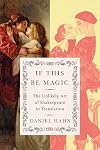
The Publisher Says: How does Shakespeare remain Shakespeare when every word is changed? In this playful, meditative exploration of translating the world’s most beloved playwright, Daniel Hahn guides us through the magic of bringing the Bard to a global audience.
Shakespeare may have breathed the air of sixteenth-century England, but today, all the world is his stage. Every year, millions of people, from Bogotá to Borneo, read Hamlet for the first time, thanks to show more the tireless work of translators. Drawing on the work of the very best of them, Hahn dives into the infinitesimally complicated ways the great playwright is reinvented and yet sounds, somehow, like himself—in Chinese, Dutch, Turkish, and more than a hundred other languages.
From word order, puns, and punctuation to metaphor, accent, and song, Shakespeare’s variety of genius presents an endless set of conundrums, among them: How does Romeo and Juliet’s love story unfold if their dialogue cannot form a sonnet (nor rhyme), as it does in the original? How can you form wordplay around the letter “I” and its sound if its meanings are not shared in other languages? These are just two out of millions of issues facing translators tasked with bringing Shakespeare to non-English languages, non-Shakespearean eras and cultures. To attempt such a feat, they must cut and add beats, maintain rhymes, adapt names and locations, and preserve meaning while not unilaterally prioritizing it, all while knowing that for each word, line, or scene they construct, another option is yet to be discovered.
Traveling the world, Hahn speaks to writers and actors engaging with Shakespeare’s work, sharing stories of his own. Hahn, whose great-grandfather produced one of Brazil’s earliest Shakespeare translations, emerges as a wise and enthusiastic guide, teacher, and sleuth. If This Be Magic does not require knowledge of any other language or more than a passing acquaintance with the Bard’s canon, but it draws out fascinating insights on both. As nerdy as they come (there is a chapter on commas), supremely readable, and funny throughout, this is a book for everyone and a fitting tribute to the Globe’s Bard.
I RECEIVED A DRC FROM THE PUBLISHER VIA NETGALLEY. THANK YOU.
My Review: Translating words between languages, even ones that swim in the same linguistic rivers and in generally the same direction, is an exacting, laborious practice of alchemy. It recombines elements of the original material at specific temperatures (states of emotion) and adds/subtracts new substances (words in the translator's own language) and anneals the result in the great body of water that is the translation's target culture. What shape the new thing has, what its properties are, is now set and there for everyone to see.
Does it still resemble the original ideas put forth by William Shakespeare? Can it? Every word is new. Every sound is not early-modern English. But it's meant to be a work by Shakespeare available to someone from a culture the Bard of Stratford-on-Avon would not remotely recognize. Is it Shakespeare?
I was fascinated by the idea of this effort to contextualize the art of translation by viewing it through this very specific lens. A translator takes on a huge task every time they opt to make another artist's work over into words the original artist does not know. The decisions, the word-by-word consideration of connotations, denotations, cultural nuance, generational nuance...and that's just the words themselves, not the way these basic units of meaning interact with the plot, lead to possible subtexts that aren't in the original but certainly work in the gestalt of the particular story....
Why would you choose to do that work, let alone do it for a writer of international superstardom and with legions of self-appointed guardians of His Sacred Words/Ideas/Intentions? And then there's the small matter of how incredibly linguistically inventive, how unnervingly acutely emotionally observant the writer was...how to make that available in a tongue like German that's close to our English let alone, say Swahili?
I read this collection of case files Author Hahn, with his ancestral connection to a Shakespeare translator, created for us, in one sitting. It was a long day, interrupted for water coming in and going out and two sandwiches. It's not necessary to do that. It's not even particularly advisable as I came away with a distinctly overloaded spirit trying too hard to consolidate my feelings into my insights to be anything but restless for hours while trying to get to sleep. I dreamed of reading "A Midsummer Night's Dream" and its transformations, its miscommunications, its shape-shifting between farcical comedy and subtle elucidation of desire compressed into a sentence that seems to be more about etiquette violated than courtly power flouted...in Croatian (in the dream I understood it but in life not at all). It was still Shakespeare, only not in English that honestly needs footnotes and a glossary for my midcentury American brain to get the whole of it.
And then there's the end use of the translation. Sure, some will simply read it as texts, able to easily stop to find a dictionary, to indulge the idle whim of looking up a play's local-culture history. But lots more people will hear this translation enacted into a play. An actor, professional or amateur, will speak the translator's/Shakespeare's words. If you don't already know how very very different spoken words are from those marks on a page, read this sentence aloud. Does it still feel the same, is it easier to understand, harder to understand, are the words themselves familiar or weird, do you know from the look of the sentence how to say it out loud....
All these details are part of the art that a translator signs up to give their audience. It is even more difficult than writing one's own work! I kept wanting to know why these underpaid geniuses undertook such an immense task, knowing success will be not receiving death threats from Shakespeare stans. I don't really feel I got a satisfying answer though, most people just seem to think "well of course I'm going to climb Everest in these Jimmy Choos while wearing a ballgown from Gone with the Wind and carrying these kettlebells. Cat fur to make kitten britches!" So no full-five from me, but close, because the topic of translation is oddly greatly broadened by Author Hahn considering so deeply the ramifications of this extremely specific use of it. I might not feel I know why but I sure as hell know what the point of this labor is.
Spread the love. Share the joy. Commit to the communication of Art to everyone you can reach.
Author Hahn, I totally, bone deep, relate. show less
The Publisher Says: How does Shakespeare remain Shakespeare when every word is changed? In this playful, meditative exploration of translating the world’s most beloved playwright, Daniel Hahn guides us through the magic of bringing the Bard to a global audience.
Shakespeare may have breathed the air of sixteenth-century England, but today, all the world is his stage. Every year, millions of people, from Bogotá to Borneo, read Hamlet for the first time, thanks to show more the tireless work of translators. Drawing on the work of the very best of them, Hahn dives into the infinitesimally complicated ways the great playwright is reinvented and yet sounds, somehow, like himself—in Chinese, Dutch, Turkish, and more than a hundred other languages.
From word order, puns, and punctuation to metaphor, accent, and song, Shakespeare’s variety of genius presents an endless set of conundrums, among them: How does Romeo and Juliet’s love story unfold if their dialogue cannot form a sonnet (nor rhyme), as it does in the original? How can you form wordplay around the letter “I” and its sound if its meanings are not shared in other languages? These are just two out of millions of issues facing translators tasked with bringing Shakespeare to non-English languages, non-Shakespearean eras and cultures. To attempt such a feat, they must cut and add beats, maintain rhymes, adapt names and locations, and preserve meaning while not unilaterally prioritizing it, all while knowing that for each word, line, or scene they construct, another option is yet to be discovered.
Traveling the world, Hahn speaks to writers and actors engaging with Shakespeare’s work, sharing stories of his own. Hahn, whose great-grandfather produced one of Brazil’s earliest Shakespeare translations, emerges as a wise and enthusiastic guide, teacher, and sleuth. If This Be Magic does not require knowledge of any other language or more than a passing acquaintance with the Bard’s canon, but it draws out fascinating insights on both. As nerdy as they come (there is a chapter on commas), supremely readable, and funny throughout, this is a book for everyone and a fitting tribute to the Globe’s Bard.
I RECEIVED A DRC FROM THE PUBLISHER VIA NETGALLEY. THANK YOU.
My Review: Translating words between languages, even ones that swim in the same linguistic rivers and in generally the same direction, is an exacting, laborious practice of alchemy. It recombines elements of the original material at specific temperatures (states of emotion) and adds/subtracts new substances (words in the translator's own language) and anneals the result in the great body of water that is the translation's target culture. What shape the new thing has, what its properties are, is now set and there for everyone to see.
Does it still resemble the original ideas put forth by William Shakespeare? Can it? Every word is new. Every sound is not early-modern English. But it's meant to be a work by Shakespeare available to someone from a culture the Bard of Stratford-on-Avon would not remotely recognize. Is it Shakespeare?
I was fascinated by the idea of this effort to contextualize the art of translation by viewing it through this very specific lens. A translator takes on a huge task every time they opt to make another artist's work over into words the original artist does not know. The decisions, the word-by-word consideration of connotations, denotations, cultural nuance, generational nuance...and that's just the words themselves, not the way these basic units of meaning interact with the plot, lead to possible subtexts that aren't in the original but certainly work in the gestalt of the particular story....
Why would you choose to do that work, let alone do it for a writer of international superstardom and with legions of self-appointed guardians of His Sacred Words/Ideas/Intentions? And then there's the small matter of how incredibly linguistically inventive, how unnervingly acutely emotionally observant the writer was...how to make that available in a tongue like German that's close to our English let alone, say Swahili?
I read this collection of case files Author Hahn, with his ancestral connection to a Shakespeare translator, created for us, in one sitting. It was a long day, interrupted for water coming in and going out and two sandwiches. It's not necessary to do that. It's not even particularly advisable as I came away with a distinctly overloaded spirit trying too hard to consolidate my feelings into my insights to be anything but restless for hours while trying to get to sleep. I dreamed of reading "A Midsummer Night's Dream" and its transformations, its miscommunications, its shape-shifting between farcical comedy and subtle elucidation of desire compressed into a sentence that seems to be more about etiquette violated than courtly power flouted...in Croatian (in the dream I understood it but in life not at all). It was still Shakespeare, only not in English that honestly needs footnotes and a glossary for my midcentury American brain to get the whole of it.
And then there's the end use of the translation. Sure, some will simply read it as texts, able to easily stop to find a dictionary, to indulge the idle whim of looking up a play's local-culture history. But lots more people will hear this translation enacted into a play. An actor, professional or amateur, will speak the translator's/Shakespeare's words. If you don't already know how very very different spoken words are from those marks on a page, read this sentence aloud. Does it still feel the same, is it easier to understand, harder to understand, are the words themselves familiar or weird, do you know from the look of the sentence how to say it out loud....
All these details are part of the art that a translator signs up to give their audience. It is even more difficult than writing one's own work! I kept wanting to know why these underpaid geniuses undertook such an immense task, knowing success will be not receiving death threats from Shakespeare stans. I don't really feel I got a satisfying answer though, most people just seem to think "well of course I'm going to climb Everest in these Jimmy Choos while wearing a ballgown from Gone with the Wind and carrying these kettlebells. Cat fur to make kitten britches!" So no full-five from me, but close, because the topic of translation is oddly greatly broadened by Author Hahn considering so deeply the ramifications of this extremely specific use of it. I might not feel I know why but I sure as hell know what the point of this labor is.
Spread the love. Share the joy. Commit to the communication of Art to everyone you can reach.
Author Hahn, I totally, bone deep, relate. show less
I can see people saying translation must be a labor of love (though not lost), but I’ve always maintained that if you love what you’re doing, most of it isn’t “labor”. I admit that the work can be laborious, but … okay, I’m quibbling over word definitions. Which is just one of the challenges translators face. And if the work is literature, the scale increases.
The author says, “Nobody reads more closely than a translator. If you're translating a literary text that you think show more worthwhile, you will consider all of it, you'll be aware of every comma, every little unstressed syllable.”
And when that literary text is so well known, is so performed, is so studied and analyzed as The Bard?
“A translator of Shakespeare must be a rigorous, almost obsessively analytical reader of the text (and context, of course), seeking to identify what Shakespeare is doing with each line besides conveying semantic data: giving us clues about the speaker, telling an actor where to breathe, making an almost unnoticeable (but revealing) tweak to the default regular metre, subtly prefiguring an image that will be reignited a couple of scenes hence, making an audience laugh.”
Mr. Hahn, himself a translator, has put together his own labor of love here. Thirty nine chapters addressing complexities those of us who are single-language only probably never think about. Though, those of us who make a study of languages, yet are still trapped being only able to speak one, might well think about translation into languages without gender, with word orders foreign to our normal speech, languages with far smaller a vocabulary. The things we might take for granted loom large for the translator: pronouns, rhyme and meter, geography, culture, … definitions, humor. And then there is context, intent.
“Underlying this focus on precision in our translators' work is a simple enough idea: language is not merely a delivery mechanism for basic dictionary-limited meaning. If you speak a word, what that word 'means' is not the only thing that's happening.”
I read Shakespeare. I go to performances (some of the best have been Shakespeares in the Park.) And I struggle with Shakespeare. I can follow a play if I have the text to read alongside, but on my own, well, my brain doesn’t work the way it needs to to understand, though I do appreciate without always understanding. That’s why I like accessible analyses, preferably more than one to balance biases. And I appreciate the publisher sending me a copy of this. More tools, especially tools from a unique perspective.
I think the bottom line message in this book is
“In a good piece of writing, every word might have a dozen different functions - the better the writing, the more precise, and perhaps the more subtle, will be the roles each word fulfils. It will operate syntactically, it will convey information, it will have a distinctive shape, texture and sound, resonating with other words, precisely influencing the rhythm of a sentence. No word operates without context. So the translator is trying to find words in his own language that deliver all of those dozen things, not to mention preserving several simultaneous formal features of the writing (a fixed verse pattern, sounds that rhyme when spoken aloud on a stage, etc.). Impossible? No matter.”
Because
‘I’m not making a transcription of Shakespeare’s rhythm,’ he [Lawrence Flores Pereira] says, ‘I just want to understand how it works, to give me a platform to reshape that in a different way, to produce effects.’”
Mr. Hahn says that translation is mechanical (this is with reference to AI… more in a moment). But with literature, great literature, it isn’t.
“When translating a writer I believe to be a really good writer, one of my starting assumptions is that their choices have reasons behind them.”
And there it is. These translators not only have to consider vocabulary, grammar, form… beyond definitions they need to understand the work as a whole and what the author was trying to say, and then do their best to be true to the work and the artist.
On AI, Mr. Hahn says that his original analysis for that chapter was instantly outdated, because in one year’s time, AI had gotten better from repeating and/or synthesizing existing translations. But if you know anything about AI (and he does), the software reflects and responds to input. Refine the request, better results. So he allows that some degree of nuance is creeping in instead of verbatim word translation. Is AI helpful or a threat? Depends on how it is used.
Excellent book on a subject I’ve not explored much, and on a specific subject of that subject that I rarely understand, but as I said, I do appreciate. show less
The author says, “Nobody reads more closely than a translator. If you're translating a literary text that you think show more worthwhile, you will consider all of it, you'll be aware of every comma, every little unstressed syllable.”
And when that literary text is so well known, is so performed, is so studied and analyzed as The Bard?
“A translator of Shakespeare must be a rigorous, almost obsessively analytical reader of the text (and context, of course), seeking to identify what Shakespeare is doing with each line besides conveying semantic data: giving us clues about the speaker, telling an actor where to breathe, making an almost unnoticeable (but revealing) tweak to the default regular metre, subtly prefiguring an image that will be reignited a couple of scenes hence, making an audience laugh.”
Mr. Hahn, himself a translator, has put together his own labor of love here. Thirty nine chapters addressing complexities those of us who are single-language only probably never think about. Though, those of us who make a study of languages, yet are still trapped being only able to speak one, might well think about translation into languages without gender, with word orders foreign to our normal speech, languages with far smaller a vocabulary. The things we might take for granted loom large for the translator: pronouns, rhyme and meter, geography, culture, … definitions, humor. And then there is context, intent.
“Underlying this focus on precision in our translators' work is a simple enough idea: language is not merely a delivery mechanism for basic dictionary-limited meaning. If you speak a word, what that word 'means' is not the only thing that's happening.”
I read Shakespeare. I go to performances (some of the best have been Shakespeares in the Park.) And I struggle with Shakespeare. I can follow a play if I have the text to read alongside, but on my own, well, my brain doesn’t work the way it needs to to understand, though I do appreciate without always understanding. That’s why I like accessible analyses, preferably more than one to balance biases. And I appreciate the publisher sending me a copy of this. More tools, especially tools from a unique perspective.
I think the bottom line message in this book is
“In a good piece of writing, every word might have a dozen different functions - the better the writing, the more precise, and perhaps the more subtle, will be the roles each word fulfils. It will operate syntactically, it will convey information, it will have a distinctive shape, texture and sound, resonating with other words, precisely influencing the rhythm of a sentence. No word operates without context. So the translator is trying to find words in his own language that deliver all of those dozen things, not to mention preserving several simultaneous formal features of the writing (a fixed verse pattern, sounds that rhyme when spoken aloud on a stage, etc.). Impossible? No matter.”
Because
‘I’m not making a transcription of Shakespeare’s rhythm,’ he [Lawrence Flores Pereira] says, ‘I just want to understand how it works, to give me a platform to reshape that in a different way, to produce effects.’”
Mr. Hahn says that translation is mechanical (this is with reference to AI… more in a moment). But with literature, great literature, it isn’t.
“When translating a writer I believe to be a really good writer, one of my starting assumptions is that their choices have reasons behind them.”
And there it is. These translators not only have to consider vocabulary, grammar, form… beyond definitions they need to understand the work as a whole and what the author was trying to say, and then do their best to be true to the work and the artist.
On AI, Mr. Hahn says that his original analysis for that chapter was instantly outdated, because in one year’s time, AI had gotten better from repeating and/or synthesizing existing translations. But if you know anything about AI (and he does), the software reflects and responds to input. Refine the request, better results. So he allows that some degree of nuance is creeping in instead of verbatim word translation. Is AI helpful or a threat? Depends on how it is used.
Excellent book on a subject I’ve not explored much, and on a specific subject of that subject that I rarely understand, but as I said, I do appreciate. show less
The Naked Translator
Review of the Charco Press paperback (April 2022) based on the original online diary (January - May 2021)
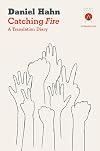
Catching Fire is translator Daniel Hahn's observations recorded during his translation process of Chilean writer Diamela Eltit's novel Jamás el fuego nunca (2013) (the original Spanish title literally translates as Never the Fire Never) published later as Never Did the Fire (April 2022). It reveals all the uncertainties and possible inaccuracies of the translation process with Hahn being open enough to even display his own initial efforts where not all issues can be solved immediately, but for which many require additional research.
See photograph at https://images.squarespace-cdn.com/content/v1/583cb891be659429d113b712/161167034...
Title page of Daniel Hahn's rough draft translation of Diamela Eltit's "Never Did the Fire". Image sourced from Charco Press.
This research can entail everything from understanding the different possible usages and meanings of words in their original language (Spanish in this case) and then the nuances or possible idiomatic character of the locality (Chile in this case). It involves spotting areas where certain features of a writer's style become a recurring feature in a book and also where a particular word or phrase perhaps echoes throughout the book. It then requires turning all of that into a different language which perhaps does not share all of those usages and definitions, but for which you still have to make a decision on a best compromise.
I found this book to be completely intriguing. Partially this is because I dabble in translation myself, from my heritage language of Estonian into English. My experience is not extensive, it is mostly from poems or song lyrics and the occasional afterword, biography, or CD booklet note. There were still many recognizable aspects of the translation process which made me love Hahn's diary all the more. I think many readers of translations, and especially of Spanish to English translations, will be just as intrigued by it.
I read Catching Fire through my subscription to the Charco Press 2022 Bundle. Catching Fire is part of Charco Press' Untranslated series, a recent addition of original works in English alongside its base catalogue of translations of Latin American literature and its source language publications of Originales. show less
Review of the Charco Press paperback (April 2022) based on the original online diary (January - May 2021)
Doing that one chapter with much more care than my usual first drafts allowed me to learn things about the intensity of the writing, about the rhythms and repetitions and the precisions of the writing, which will help me to make my decisions as I go on. Well-written books teach you how to read them. How to translate them, too, I think.show more
[...]
One of the difficulties (as
so often) is coming up with something that is helpfully familiar to the reader, so they understand the weight of what you're talking about, but also which isn't loaded with associations that are in fact un-helpful and potentially distracting.
Catching Fire is translator Daniel Hahn's observations recorded during his translation process of Chilean writer Diamela Eltit's novel Jamás el fuego nunca (2013) (the original Spanish title literally translates as Never the Fire Never) published later as Never Did the Fire (April 2022). It reveals all the uncertainties and possible inaccuracies of the translation process with Hahn being open enough to even display his own initial efforts where not all issues can be solved immediately, but for which many require additional research.
See photograph at https://images.squarespace-cdn.com/content/v1/583cb891be659429d113b712/161167034...
Title page of Daniel Hahn's rough draft translation of Diamela Eltit's "Never Did the Fire". Image sourced from Charco Press.
This research can entail everything from understanding the different possible usages and meanings of words in their original language (Spanish in this case) and then the nuances or possible idiomatic character of the locality (Chile in this case). It involves spotting areas where certain features of a writer's style become a recurring feature in a book and also where a particular word or phrase perhaps echoes throughout the book. It then requires turning all of that into a different language which perhaps does not share all of those usages and definitions, but for which you still have to make a decision on a best compromise.
I found this book to be completely intriguing. Partially this is because I dabble in translation myself, from my heritage language of Estonian into English. My experience is not extensive, it is mostly from poems or song lyrics and the occasional afterword, biography, or CD booklet note. There were still many recognizable aspects of the translation process which made me love Hahn's diary all the more. I think many readers of translations, and especially of Spanish to English translations, will be just as intrigued by it.
I read Catching Fire through my subscription to the Charco Press 2022 Bundle. Catching Fire is part of Charco Press' Untranslated series, a recent addition of original works in English alongside its base catalogue of translations of Latin American literature and its source language publications of Originales. show less
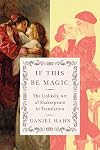
How does Shakespeare remain Shakespeare when every word has changed? That is the question this book sets out to answer. And it does so. In depth, and with a sense of humor.
The humor is appreciated, as is the way the book is organized. Each chapter takes on a different question about translation. One chapter deals with rhyming for example - how do you convey Shakespeare’s rhymes when the words you would translate to don’t rhyme? For that matter, how do you handle the iambic pentameter show more Shakespeare uses, a poetic structure unique to English that audiences who speak other languages won’t be familiar with?
And how does a translator deal with gendered languages like Spanish, or languages that have more specific words than English for relationships, like uncles (of which there are many in Shakespeare’s plays).
For lovers of the English language there is a lot to like in Hahn’s book, as it highlights some of the idiosyncrasies of our native tongue as viewed through translation to other languages, revealing things about English we wouldn't normally think of.
If the book were more tightly paced it would have worked better for me. I do not come from a world of literary figures or have depth of knowledge on Shakespeare’s plays. Those who do will appreciate Hahn’s stories interspersed with the discussions of translation, stories that I struggled with.
I felt that I’d bit off more than I could chew with this book. When I hit the chapter on “Latinate vocabulary” I was way outside my comfort zone, and I confess I began to skim.
So, sorry to say, it’s a tepid review summary from me — Read it if you have a love of the English language, a literary bent, and a working knowledge of Shakespeare’s plays. In that case, I think you’ll appreciate the author’s humor and stories more than I.
RATING: Two and a Half Stars ⭐⭐🌠 show less
The humor is appreciated, as is the way the book is organized. Each chapter takes on a different question about translation. One chapter deals with rhyming for example - how do you convey Shakespeare’s rhymes when the words you would translate to don’t rhyme? For that matter, how do you handle the iambic pentameter show more Shakespeare uses, a poetic structure unique to English that audiences who speak other languages won’t be familiar with?
And how does a translator deal with gendered languages like Spanish, or languages that have more specific words than English for relationships, like uncles (of which there are many in Shakespeare’s plays).
For lovers of the English language there is a lot to like in Hahn’s book, as it highlights some of the idiosyncrasies of our native tongue as viewed through translation to other languages, revealing things about English we wouldn't normally think of.
If the book were more tightly paced it would have worked better for me. I do not come from a world of literary figures or have depth of knowledge on Shakespeare’s plays. Those who do will appreciate Hahn’s stories interspersed with the discussions of translation, stories that I struggled with.
I felt that I’d bit off more than I could chew with this book. When I hit the chapter on “Latinate vocabulary” I was way outside my comfort zone, and I confess I began to skim.
So, sorry to say, it’s a tepid review summary from me — Read it if you have a love of the English language, a literary bent, and a working knowledge of Shakespeare’s plays. In that case, I think you’ll appreciate the author’s humor and stories more than I.
RATING: Two and a Half Stars ⭐⭐🌠 show less
Lists
Awards


You May Also Like


Associated Authors
Statistics
- Works
- 20
- Also by
- 29
- Members
- 754
- Popularity
- #33,728
- Rating
- 3.8
- Reviews
- 40
- ISBNs
- 37
- Languages
- 3
