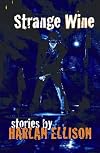
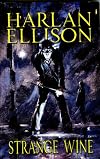
Strange Wine
by Harlan Ellison
On This Page
Description
From "one of the great . . . American short story writers," comes a collection of dark fantastical fiction (The Washington Post). In the Locus Award-winning "Croatoan," a man descends into the sewers of New York City to confront the detritus of his irresponsibility. An "Emissary from Hamelin" presents humanity with an ultimatum, or everyone on Earth will have a dear price to pay the piper. And in the title story--famously written by the author in the storefront window of a Santa show more Monica bookshop--Willis Kaw is convinced that he is an alien trapped inside an Earthman's body, only to discover his suffering serves a purpose. Strange Wine includes these three stories and a dozen more unique visions from the writer the Washington Post hails as a "lyric poet, satirist, explorer of odd psychological corners, and purveyor of pure horror and black comedy." Includes: "Croatoan," "Working With the Little People," "Killing Bernstein," "Mom," "In Fear of K," "Hitler Painted Roses," "The Wine Has Been Left Open Too Long and the Memory Has Gone Flat," "From A to Z, in the Chocolate Alphabet," "Lonely Women Are the Vessels of Time," "Emissary from Hamelin," "The New York Review of Bird Seeing," "The Boulevard of Broken Dreams," "Strange Wine," "The Diagnosis of Dr. D'arqueAngel" show lessTags
Recommendations


















Member Reviews
Harlan Ellison is a very skilled and very bold author. This short story collection puts that on display in fifteen shorts, all of which were enjoyable, yet gross in the best way possible.
For example, the first story is about a man who sleeps around, forces women to get abortions, and then comes face to face with all of the fetuses in a sewer. Science fiction is the perfect genre for this because it allows the wildly unhinged thoughts of Ellison to come to life. In another story, he writes for nearly forty pages about an author killing a ton of people in the publishing industry for screwing him over, clearly writing this with himself in mind.
To cap it off, all of the stories have introductions. They will either be some background about show more the story, some clearing up of misunderstandings surrounding him and his other stories, or just him talking about random stuff for a page or two. And while most of the intro's contribute to the understanding of the story, even the ones that don't are entertaining in their own right. Ellison has opened the science fiction door for me, and I will be looking into that in the future. show less
For example, the first story is about a man who sleeps around, forces women to get abortions, and then comes face to face with all of the fetuses in a sewer. Science fiction is the perfect genre for this because it allows the wildly unhinged thoughts of Ellison to come to life. In another story, he writes for nearly forty pages about an author killing a ton of people in the publishing industry for screwing him over, clearly writing this with himself in mind.
To cap it off, all of the stories have introductions. They will either be some background about show more the story, some clearing up of misunderstandings surrounding him and his other stories, or just him talking about random stuff for a page or two. And while most of the intro's contribute to the understanding of the story, even the ones that don't are entertaining in their own right. Ellison has opened the science fiction door for me, and I will be looking into that in the future. show less
Harlan Ellison has written a lot of great short fiction. Often stories that have scared me one way or another. Sometimes stories that made me laugh. Typically stories that forced me to look at something familiar in a new way. I’ve read quite a few of his stories, and count him among my favorite authors.
Of course, with an author so prolific, you know you won’t like everything, but I’ve generally admired the fearless risk taking behind even the stories that I haven’t particularly liked. Reading the fifteen stories in Strange Wine made me think that, somewhere along the line, he went from an author that writes stories that speak to me in a powerful way to an author who writes stories about what a great author he is. (Note that, show more from the plethora of laudatory quotes on the cover and within, there were obviously plenty of reviewers who didn’t feel that way about the book.)
None of these stories were great. Almost half of the fifteen stories in the collection were decent enough that I gave them a 6 out of 10 rating: “Working with the Little People,” “Killing Bernstein,” “In Fear of K,” “The Wine Has Been Left Open Too Long and the Memory Has Gone Flat,” “Seeing,” “Strange Wine,” and “The Diagnosis of Dr. D’arqueAngel”
A little more than half, then, left me disappointed enough to rate them a 5 out of 10 or less. I thought that “The New York Review of Bird,” a story about an avenging literary superhero who takes on the Publishing Establishment, was truly awful (and that a shared storywriting game that I participated in a couple of years back which touched on the same topic was in fact funnier, more creative, and more satisfying). “Mom,” a story about a recently deceased Jewish mother who comes back to haunt her son in a stereotypically nagging manner, was an utter waste of time. “From A to Z in the Chocolate Alphabet” did nothing for me, and wasn’t a story at all.
I would probably have liked this book more without the story introductions. I don’t really care whether he wrote a story after a adulterously impregnating a woman who had told him she was on the Pill, or sitting inside a bookstore window, or during a live radio broadcast, or at a Chinese restaurant, or winning a race with two other respected science fiction authors. I care about whether the story itself works for me, and more often than not, these didn’t.
One of the relatively decent stories in this collection, “Working with the Little People,” tells of an amazingly talented young writer of science fiction and fantasy who suddenly finds his creative genius has run dry. Looking at the stories in this volume, I can’t help thinking that Harlan Ellison was speaking from personal experience. show less
Of course, with an author so prolific, you know you won’t like everything, but I’ve generally admired the fearless risk taking behind even the stories that I haven’t particularly liked. Reading the fifteen stories in Strange Wine made me think that, somewhere along the line, he went from an author that writes stories that speak to me in a powerful way to an author who writes stories about what a great author he is. (Note that, show more from the plethora of laudatory quotes on the cover and within, there were obviously plenty of reviewers who didn’t feel that way about the book.)
None of these stories were great. Almost half of the fifteen stories in the collection were decent enough that I gave them a 6 out of 10 rating: “Working with the Little People,” “Killing Bernstein,” “In Fear of K,” “The Wine Has Been Left Open Too Long and the Memory Has Gone Flat,” “Seeing,” “Strange Wine,” and “The Diagnosis of Dr. D’arqueAngel”
A little more than half, then, left me disappointed enough to rate them a 5 out of 10 or less. I thought that “The New York Review of Bird,” a story about an avenging literary superhero who takes on the Publishing Establishment, was truly awful (and that a shared storywriting game that I participated in a couple of years back which touched on the same topic was in fact funnier, more creative, and more satisfying). “Mom,” a story about a recently deceased Jewish mother who comes back to haunt her son in a stereotypically nagging manner, was an utter waste of time. “From A to Z in the Chocolate Alphabet” did nothing for me, and wasn’t a story at all.
I would probably have liked this book more without the story introductions. I don’t really care whether he wrote a story after a adulterously impregnating a woman who had told him she was on the Pill, or sitting inside a bookstore window, or during a live radio broadcast, or at a Chinese restaurant, or winning a race with two other respected science fiction authors. I care about whether the story itself works for me, and more often than not, these didn’t.
One of the relatively decent stories in this collection, “Working with the Little People,” tells of an amazingly talented young writer of science fiction and fantasy who suddenly finds his creative genius has run dry. Looking at the stories in this volume, I can’t help thinking that Harlan Ellison was speaking from personal experience. show less
“And reading is the drinking of strange wine.”
“Drinking strange wine pours strength into the imagination.”
“The dinosaurs had no strange wine.”
All the above quotes are from the Introduction, which is mostly about the evils of television, something I wholeheartedly agree with! And most of the author's introductions to each short story are pretty on-the-mark as well!
As for the stories...
This collection starts off well! I liked the first four stories right away, and five of the first six! "Killing Bernstein" may be my favorite of them! Then my enjoyment fell precipitously! Maybe four of the final nine held any entertainment value for me, with "Emissary From Hamelin" being the best of those four. The more sci-fi the stories show more became, the less I enjoyed them. But make no mistake, Ellison is an excellent writer! And he included one of may favorite quotes by Jack Kerouac in here, from "The Dharma Bums" -
“But there was a wisdom in it all, as you'll see if you take a walk some night on a suburban street and pass house after house on both sides of the street each with the lamplight of the living room, shining golden, and inside the little blue square of the television, each living family riveting its attention on probably one show; nobody talking; silence in the yards; dogs barking at you because you pass on human feet instead of on wheels. You'll see what I mean, when it begins to appear like everybody in the world is soon going to be thinking the same way and the Zen Lunatics have long joined dust, laughter on their dust lips.” show less
“Drinking strange wine pours strength into the imagination.”
“The dinosaurs had no strange wine.”
All the above quotes are from the Introduction, which is mostly about the evils of television, something I wholeheartedly agree with! And most of the author's introductions to each short story are pretty on-the-mark as well!
As for the stories...
This collection starts off well! I liked the first four stories right away, and five of the first six! "Killing Bernstein" may be my favorite of them! Then my enjoyment fell precipitously! Maybe four of the final nine held any entertainment value for me, with "Emissary From Hamelin" being the best of those four. The more sci-fi the stories show more became, the less I enjoyed them. But make no mistake, Ellison is an excellent writer! And he included one of may favorite quotes by Jack Kerouac in here, from "The Dharma Bums" -
“But there was a wisdom in it all, as you'll see if you take a walk some night on a suburban street and pass house after house on both sides of the street each with the lamplight of the living room, shining golden, and inside the little blue square of the television, each living family riveting its attention on probably one show; nobody talking; silence in the yards; dogs barking at you because you pass on human feet instead of on wheels. You'll see what I mean, when it begins to appear like everybody in the world is soon going to be thinking the same way and the Zen Lunatics have long joined dust, laughter on their dust lips.” show less
As most short story collections, this one is no exception in being uneven. There are some stories in here that feel quite dated, and other that just didn't resonate with me, while others are fabulous. The real saving grace is the essay introductions to each story, which were almost more engaging at time than the stories themselves.
A few ratings and my two cents:
* "Croatoan" 4/5 - Creepy and weird. Cool ending.
* "Working With the Little People" 4/5 Highly enjoyable.
* "Killing Bernstein" 1.5 / 5 - Stupid and mysogynistic.
* "Mom" 3/5 - Entertaining, but didn't do a lot for me.
* "In Fear of K" 4/5 - Weird and cool.
* "Hitler Painted Roses" 5/5 - Odd and cool, with some fabulous ideas about morality, blame and the court of public opinion
* show more "The Wine Has Been Left Open Too Long and the Memory Has Gone Flat" 1/5 - Didn't hold my attention at all.
* "From A to Z, in the Chocolate Alphabet" 5/5 - Crazy full of weird, strange and engaging ideas!
* "The New York Review of Bird" 4/5 - Entertaining jaunt through pseudonym fantasy.
* "Strange Wine" 3/5 A bit more needed to happen with this concept.
* "The Diagnosis of Dr. D'arqueAngel" 3/5 - Again some misogynistic vibes, but some comeuppance. Cool idea. Apparently Ellison and Frank Herbert and Ray Bradbury came up with the idea, and all vowed to write the story, but Ellison got there first. I'd love to see what the other two came up with. show less
A few ratings and my two cents:
* "Croatoan" 4/5 - Creepy and weird. Cool ending.
* "Working With the Little People" 4/5 Highly enjoyable.
* "Killing Bernstein" 1.5 / 5 - Stupid and mysogynistic.
* "Mom" 3/5 - Entertaining, but didn't do a lot for me.
* "In Fear of K" 4/5 - Weird and cool.
* "Hitler Painted Roses" 5/5 - Odd and cool, with some fabulous ideas about morality, blame and the court of public opinion
* show more "The Wine Has Been Left Open Too Long and the Memory Has Gone Flat" 1/5 - Didn't hold my attention at all.
* "From A to Z, in the Chocolate Alphabet" 5/5 - Crazy full of weird, strange and engaging ideas!
* "The New York Review of Bird" 4/5 - Entertaining jaunt through pseudonym fantasy.
* "Strange Wine" 3/5 A bit more needed to happen with this concept.
* "The Diagnosis of Dr. D'arqueAngel" 3/5 - Again some misogynistic vibes, but some comeuppance. Cool idea. Apparently Ellison and Frank Herbert and Ray Bradbury came up with the idea, and all vowed to write the story, but Ellison got there first. I'd love to see what the other two came up with. show less
I always think it's funny when I read a collection of "all new" stories only to learn I've read over half of them already, but them's the breaks. :)
Maybe I shouldn't have been so dedicated in reading as many Harlan Ellison stories, huh!? Ah well, that's okay. He writes great shorts.
My Favorites were "From A to Z, In the Chocolate Alphabet" - Super short stories for each letter of the alphabet.
"The New York Review of Bird" - a wonderful tribute (or otherwise) to Cordwainer Smith.
and especially "Seeing" - a pretty hard SF tribute to perception in all it's glories. :)
I might have enjoyed this collection better if I hadn't already read most. But again that's okay! It comes with the territory of shorts!
Maybe I shouldn't have been so dedicated in reading as many Harlan Ellison stories, huh!? Ah well, that's okay. He writes great shorts.
My Favorites were "From A to Z, In the Chocolate Alphabet" - Super short stories for each letter of the alphabet.
"The New York Review of Bird" - a wonderful tribute (or otherwise) to Cordwainer Smith.
and especially "Seeing" - a pretty hard SF tribute to perception in all it's glories. :)
I might have enjoyed this collection better if I hadn't already read most. But again that's okay! It comes with the territory of shorts!
Like most short story collections, this one runs a bit hot and cold. If you are a fan of science fiction or fantasy, Ellison is a founding father. Most of what he does here has been done better by other authors since, but if you are at all interested in the roots of some of the primary ideas in the genre, Ellison is a must-read, an influence for an entire generation, from William Gibson to Stephen King. More even that the stories themselves, which run from didactic to entertaining to outstanding, Ellison's introductions to the stories are fascinating insights into everything from his writing process to the state of the 20th century publishing industry.
(Original Review, 1980-11-07)
I was reading a book by the name of 'Strange Wine' by Harlan Ellison recently. The book is very good, but that is not what I want to talk about. He has an introduction titled "Revealed at Last! What Killed the Dinosaurs! And You Don't Look So Terrific Yourself." I would like to tell you a few things from this introduction. According to an HEW study, only 8% of the American population buy books (I wonder what those numbers are in Portugal). Furthermore, only 2% buy more than one book per year. Harlan once said, in front of a university audience, that he had thought up the words that Spock had said in a Star-Trek episode. A student jumped to his feet, with tears in his eyes, screaming that Harlan was a liar. show more The average American watches between 3-8 hours of TV PER DAY. In some of the lectures he gives at Universities, Harlan found this to be true in University audiences as well. Harlan tells about a friend of his who is a High School media teacher. She had students who would not read books because they were 'not real'. TV was considered real. She had normal 17 year old students who could not tell the difference between a TV dramatization and real life. She found that if she turned a TV monitor on in an unruly classroom, WITH NOTHING BUT SNOW ON THE SCREEN, that the entire class would quiet down and watch the screen. He tells about an experiment where a monitor was set up one side of a lecture hall and the lecturer stood on the other. The monitor carried a picture of the lecturer. Everyone watched the monitor. He tells about a case where a mother was being raped and her 7 year old child walked in. The rapist told the child to go watch TV. The child watched TV for 6 hours while his mother screamed repeatedly. I highly suggest reading the book, or at least the introduction. Perhaps the 'glass teat' is worse than we think.
[2018 EDIT: This review was written at the time as I was running my own personal BBS server. Much of the language of this and other reviews written in 1980 reflect a very particular kind of language: what I call now in retrospect a “BBS language”.] show less
I was reading a book by the name of 'Strange Wine' by Harlan Ellison recently. The book is very good, but that is not what I want to talk about. He has an introduction titled "Revealed at Last! What Killed the Dinosaurs! And You Don't Look So Terrific Yourself." I would like to tell you a few things from this introduction. According to an HEW study, only 8% of the American population buy books (I wonder what those numbers are in Portugal). Furthermore, only 2% buy more than one book per year. Harlan once said, in front of a university audience, that he had thought up the words that Spock had said in a Star-Trek episode. A student jumped to his feet, with tears in his eyes, screaming that Harlan was a liar. show more The average American watches between 3-8 hours of TV PER DAY. In some of the lectures he gives at Universities, Harlan found this to be true in University audiences as well. Harlan tells about a friend of his who is a High School media teacher. She had students who would not read books because they were 'not real'. TV was considered real. She had normal 17 year old students who could not tell the difference between a TV dramatization and real life. She found that if she turned a TV monitor on in an unruly classroom, WITH NOTHING BUT SNOW ON THE SCREEN, that the entire class would quiet down and watch the screen. He tells about an experiment where a monitor was set up one side of a lecture hall and the lecturer stood on the other. The monitor carried a picture of the lecturer. Everyone watched the monitor. He tells about a case where a mother was being raped and her 7 year old child walked in. The rapist told the child to go watch TV. The child watched TV for 6 hours while his mother screamed repeatedly. I highly suggest reading the book, or at least the introduction. Perhaps the 'glass teat' is worse than we think.
[2018 EDIT: This review was written at the time as I was running my own personal BBS server. Much of the language of this and other reviews written in 1980 reflect a very particular kind of language: what I call now in retrospect a “BBS language”.] show less
Members
- Recently Added By
Lists

Stephen King's Biggest Influences
46 works; 3 members

Stephen King's 'Danse Macabre' reading list
111 works; 25 members

Stephen King Danse Macabre Appendix Starred List
53 works; 1 member
Stephen King's Danse Macabre Full Appendix List
110 works; 2 members
Author Information

585+ Works 30,547 Members
Harlan Ellison was born in Cleveland, Ohio on May 27, 1934. He was the author of numerous short story collections including Strange Wine; The Beast that Shouted Love at the Heart of the World; Harlan Ellison's Watching; Deathbird Stories; Repent Harlequin! Said the Ticktockman; I Have No Mouth and I Must Scream; and Stalking the Nightmare: Stories show more and Essays. He received numerous awards including the Hugo Award, the Nebula Award, the Bram Stoker Award, the Lifetime Achievement Award from the Horror Writer's Association, the Edgar Allen Poe Award, and the Grand Master Award for lifetime achievement from the Science Fiction and Fantasy Writers of America. He was inducted into the Science Fiction Hall of Fame in 2011. He published two collections of his columns on television for the Los Angeles Free Press entitled The Glass Teat and The Other Glass Teat. He edited several anthologies including Dangerous Visions: 33 Original Stories and Medea: Harlan's World. He received the Milford Award for Lifetime Achievement in Editing. He also wrote scripts for TV series including Burke's Law, The Alfred Hitchcock Hour, Voyage to the Bottom of the Sea, and The Man from U.N.C.L.E. He served as creative consultant on the new version of The Twilight Zone in the 1980s and as conceptual consultant on Babylon 5. He won the Writer's Guild of America's Award for Most Outstanding Teleplay four times. He died on June 27, 2018 at the age of 84. (Bowker Author Biography) show less
Some Editions
Series
Belongs to Publisher Series
Work Relationships
Contains
Common Knowledge
- Canonical title*
- Hitler peignait des roses : Quinze nouvelles venues de la face nocturne de l'univers
- Original title
- Strange Wine: fifteen new stories from the nightside of the world
- Original publication date
- 1978
- Epigraph
- All men dream ... but not equally. They who dream by night in the dusty recesses of their minds wake in the day to find that it is vanity; but the dreamers of the day are dangerous men, for they act their dream with open eyes... (show all), to make it possible.
T. E. Lawrence
Only fantasy has
eternal youth.
What happened nowhere
and never can never
age.
Schiller
GROTESQUE:
"...the expression in a moment, by a series of symbols thrown together in bold and fearless connection, of truth..."
JOHN RUSKIN
GROTESQUE IN THE CLASSIC SENSE:
"anticke figures"
I write of things which I have neither seen nor learned of from another, things which are not and never could have been, and therefore my readers should by no means believe them.
Lucian of Samosata
I sing of places I've never seen, of people I've never been. But savor my songs, because they're free.
Peter Allen
Better the illusions that exalt us then ten thousand truths.
Alexander Pushkin - Dedication
- This one, with love,
for my friends,
SHERYL AND TERRY
and
TERRY AND SHERYL - First words
- It's all about drinking strange wine. (Introduction)
*Some information comes from Common Knowledge in other languages. Click "Edit" for more information.
Classifications
Statistics
- Members
- 816
- Popularity
- 33,796
- Reviews
- 12
- Rating
- (3.96)
- Languages
- English, French, Hebrew
- Media
- Paper, Ebook
- ISBNs
- 13
- ASINs
- 9