
Leo Dillon (1933–2012)
Author of Ashanti to Zulu: African Traditions
About the Author
Leo Dillon was born in Brooklyn, New York on March 2, 1933. He attended Parsons School of Design in New York City, where he met his wife Diane (Sorber) Dillon. They graduated in 1956, married in 1957, and soon became a husband and wife team of illustrators. During his lifetime, they published over show more 40 children's books including Hakon of Rogen's Saga by Eric Hagard, The Ring in the Prairie by John Bierhorst, The People Could Fly: American Black Folktales by Virginia Hamilton, and If Kids Ran the World. They won the Caldecott Medal in 1976 for Why Mosquitoes Buzz in People's Ears by Verna Aardema and in 1977 for Ashanti to Zulu: African Traditions by Margaret Musgrove. They also won a Coretta Scott King Award and five Coretta Scott King Honors. In 2002, they published the first picture book they wrote themselves, Rap a Tap Tap: Here's Bojangles-Think of That! They also created cover designs for adult science fiction books. He died from complications of lung surgery on May 26, 2012 at the age of 79. (Bowker Author Biography) show less
Disambiguation Notice:
Although most of Leo Dillon's illustrations were collaborations with his wife Diane, a few early works are by Leo only.
Works by Leo Dillon
The Horn Book Magazine 1 copy
IF KIDS RUN THE WORLD 1 copy
Associated Works
The Lion, the Witch and the Wardrobe (1950) — Cover artist, some editions — 54,156 copies, 855 reviews
Twenty Thousand Leagues Under the Sea (1869) — Cover artist, some editions — 21,439 copies, 283 reviews
The Complete Short Stories of Mark Twain (1957) — Cover artist, some editions — 2,915 copies, 15 reviews
I Have No Mouth and I Must Scream: Stories (1967) — Cover artist, some editions — 2,212 copies, 71 reviews
King Solomon's Ring: New Light on Animals' Ways (1949) — Cover artist, some editions — 1,905 copies, 13 reviews
Creative Visualization: Use the Power of Your Imagination to Create What You Want in Your Life (1978) — Cover artist, some editions — 1,740 copies, 17 reviews
The Beast that Shouted Love at the Heart of the World (1969) — Cover artist, some editions — 845 copies, 11 reviews
The Reason Why: The Story of the Fatal Charge of the Light Brigade (1953) — Cover artist — 821 copies, 19 reviews
From Sea to Shining Sea: A Treasury of American Folklore and Folk Songs (1993) — Illustrator — 812 copies, 2 reviews
I Have a Dream: Writings and Speeches That Changed the World (1992) — Illustrator, some editions — 724 copies, 2 reviews
The New Milton Cross' Complete Stories of the Great Operas (1947) — Cover artist, some editions — 708 copies, 3 reviews
The Essential Ellison: A 35 Year Retrospective (1987) — Cover artist, some editions — 679 copies, 4 reviews
Her Stories: African American Folktales, Fairy Tales, and True Tales (1995) — Illustrator, some editions — 643 copies, 17 reviews
Many Thousand Gone: African Americans from Slavery to Freedom (1993) — Illustrator — 572 copies, 2 reviews
The Essential Ellison: A 50 Year Retrospective (2001) — Cover artist, some editions — 496 copies, 5 reviews
Medieval Russia's Epics, Chronicles, and Tales (1963) — Cover artist, some editions — 493 copies, 2 reviews
The Preserving Machine and Other Stories (1952) — Cover artist, some editions — 456 copies, 3 reviews
The Boys in the Band: A Play in Two Acts (1968) — Cover artist, some editions — 347 copies, 6 reviews
Gentleman Junkie and Other Stories of the Hung-Up Generation (1961) — Cover artist, some editions — 338 copies, 3 reviews
Our Children Can Soar: A Celebration of Rosa, Barack, and the Pioneers of Change (2009) — Illustrator — 255 copies, 17 reviews
Days of Jubilee: The End of Slavery in the United States (2003) — Illustrator — 199 copies, 2 reviews
San Diego Lightfoot Sue and Other Stories (1974) — Cover artist, some editions — 189 copies, 2 reviews
Kiss Sleeping Beauty Goodbye: Breaking the Spell of Feminine Myths and Models (1979) — Cover artist, some editions — 139 copies
L. Ron Hubbard Presents Writers of the Future, Volume 4 (1988) — Illustrator, some editions — 106 copies, 1 review
On the Wings of Peace: Writers and Illustrators Speak Out for Peace, in Memory of Hiroshima and Nagasaki (1995) — Cover artist — 105 copies, 1 review
The Jewel in the Lotus: A Historical Survey of the Sexual Culture of the East (1959) — Cover artist, some editions — 96 copies
Claymore and Kilt: Tales of Scottish Kings and Castles (1967) — Illustrator, some editions — 56 copies
Between Heaven and Earth: Bird Tales from Around the World (2004) — Illustrator — 55 copies, 3 reviews
Two Queens of Heaven: Aphrodite and Demeter (Greek Myths) (1974) — Cover artist, some editions — 54 copies, 2 reviews
Behind the Back of the Mountain: Black Folktales from Southern Africa (1973) — Illustrator — 32 copies, 1 review
Two Sought Adventure : Exploits of Fafhrd and the Gray Mouser (1957) — Cover artist, some editions — 28 copies
Skyline; a reporter's reminiscence of the 1920s (1961) — Cover artist, some editions — 25 copies, 2 reviews
In Praise of Our Fathers and Our Mothers: A Black Family Treasury by Outstanding Authors and Artists (1997) — Cover artist — 24 copies
Whirlwind Is a Spirit Dancing: Poems Based on Traditional American Indian Songs and Stories (1974) — Illustrator — 23 copies, 1 review
The Making Of An Afro-american: Martin Robison Delany, 1812-1885 (1971) — Cover artist, some editions — 20 copies
A Hornbook for Witches: Stories and Poems for Halloween (1976) — Cover artist, some editions — 4 copies
Voyages: The 25th World Fantasy Convention — Cover artist — 2 copies
The Gent, April 1959 (Vol. 3, No. 4) — Illustrator — 1 copy
Tagged
Common Knowledge
- Legal name
- Dillon, Lionel John
- Birthdate
- 1933-03-02
- Date of death
- 2012-05-26
- Gender
- male
- Education
- Parsons School of Design
- Occupations
- children's book author
Children's Book Illustrator
Cover Artist - Awards and honors
- Society of Illustrators Lifetime Achievement Award (Contemporary ∙ 2008)
Caldecott Medal (1977)
Caldecott Medal (1976) - Relationships
- Dillon, Diane (wife, collaborator)
Dillon, Lee (son, collaborator) - Short biography
- Leo Dillon was a celebrated African-American magazine and book-cover artist, and a children's book author and illustrator. The vast majority of his work was done collaboratively with his wife, Diane Dillon, with whom he won his many awards, although a few early titles were solo projects.
Born in Brooklyn in 1933, Lionel John Dillon was the son of Trinidadian immigrants, and was educated at the Parsons School of Design, after serving in the US Navy for three years. Here he met Diane Sorber, who was initially a fierce artistic competitor. Eventually the two married, and commenced a fifty-year collaborative career that produced over one hundred speculative fiction book and magazine covers, and numerous picture-book illustrations. They were jointly awarded the Caldecott Medal in 1976 and 1977, the only artists to be so honored twice in a row. The Dillons had one son, Lee Dillon, who also became an artist, and with whom they collaborated on Nancy Willard's Pish, Posh, Said Hieronymus Bosch. Dillon died of lung cancer in 2012. - Cause of death
- lung cancer
- Nationality
- USA
- Birthplace
- Brooklyn, New York, USA
- Places of residence
- Brooklyn, New York, USA
- Place of death
- Brooklyn, New York, USA
- Map Location
- New York, USA
- Disambiguation notice
- Although most of Leo Dillon's illustrations were collaborations with his wife Diane, a few early works are by Leo only.
Members
Discussions
Gloriah's 2013 Category Picks in 2013 Category Challenge (July 2013)
Reviews
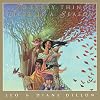
I loved reading through this book of verse from ecclesiastes as the illustrations brought in a unique perspective for a popular verse. The beautiful illustrations from around the world on each line of contrast pulled me in to keep going through to see how else the words would be painted. The verses match beautifully with the illustrations as you could see exactly what was being spoken in the various cultural styles depicted. What truly made this book magnificent is the section in the back show more about the illustrations themselves. It shares historical and cultural information regarding each illustration for the reader to further understand how the cultural illustration helped to depict the verse it was paired with. show less
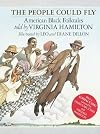
This is absolutely a book that belongs on every child's shelf, regardless of their skin color. I remember hearing about this book on television (I think Reading Rainbow?) and wanting to read more.
As an adult, I look back and these stories have even more meaning, given what I have studied about slavery and civil rights. A+++
As an adult, I look back and these stories have even more meaning, given what I have studied about slavery and civil rights. A+++

When an unknown monster calling itself "The Long One" takes over her home, Rabbit isn't sure how to get rid of him. A series of animals offer their solutions, all of which turn out to be as destructive as they are helpful, until finally Rabbit turns to Frog, whose help she refused at the beginning.
Originally published as The Long One in Aardema's 1969 collection, Tales for the Third Ear, this Masai folktale is illustrated by the marvelous Leo and Diane Dillon, who worked with Aardema on the show more Caldecott Medal-winning Why Mosquitos Buzz in People's Ears. The Dillons' artwork make the Masai context clear, as they present the story as a play, performed by people wearing animal masks. I understand that this format is quite appealing to young readers, although I found it somewhat distracting. I found myself wondering why the illustrators would choose to use masks that are not part of the Masai tradition, in order to retell a traditional Masai story. However that may be, the artwork was still gorgeous (as always), and the story engaging. show less
Originally published as The Long One in Aardema's 1969 collection, Tales for the Third Ear, this Masai folktale is illustrated by the marvelous Leo and Diane Dillon, who worked with Aardema on the show more Caldecott Medal-winning Why Mosquitos Buzz in People's Ears. The Dillons' artwork make the Masai context clear, as they present the story as a play, performed by people wearing animal masks. I understand that this format is quite appealing to young readers, although I found it somewhat distracting. I found myself wondering why the illustrators would choose to use masks that are not part of the Masai tradition, in order to retell a traditional Masai story. However that may be, the artwork was still gorgeous (as always), and the story engaging. show less
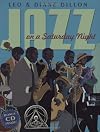
Jazz On A Saturday Night is a children's book that describe the dream of a young boy where he gets the meet all of his favorite Jazz musicians. I thoroughly enjoyed this book. I thought that the plot was excellent. The main character Bryan falls asleep and has a dream about being in a Jazz Club where all of his favorite Jazz artists are preforming. The book then goes into detail about who each artiest is and what their contribution to Jazz has been. I thought the plot was original, show more informative and creative. I saw it as a fun and interesting way to introduce the world of Jazz to a reader without making it boring or only informational. Another reason why I liked this book was because of the illustrations. I found the illustrations awesome. Jazz is a lively and powerful music. The illustrations in this children's book truly help bring the music and the feel of jazz to life. The pictures contained screaming fans, notes floating out of instruments and Bryan constantly smiling. Overall, this book was amazing. show less
Lists
Awards


You May Also Like


Associated Authors
Statistics
- Works
- 13
- Also by
- 282
- Members
- 6,518
- Popularity
- #3,767
- Rating
- 4.0
- Reviews
- 278
- ISBNs
- 100
- Languages
- 3
- Favorited
- 2