
Florence Parry Heide (1919–2011)
Author of The Day of Ahmed's Secret
About the Author
Florence Parry Heide was born in Pittsburgh, Pennsylvania on February 27, 1919. She studied at Wilson College before transferring to the University of California at Los Angeles, where she received a B.A. in English. She worked in advertising and public relations in New York City before returning to show more Pittsburgh during World War II. She moved to Wisconsin with her husband after the war and started writing books at the age of 48. She wrote or co-wrote over 100 children's books including the Treehorn series, Princess Hyacinth: The Surprising Tale of a Girl who Floated, and The One and Only Marigold. She also wrote under the pseudonyms Alex B. Allen and Jamie McDonald. Heide received numerous awards and honors including having The Shrinking of Treehorn named by the New York Times as the Best Illustrated Children's Book of 1971 and winning the Jugendbuchpreis for the Best Children's Book of Germany in 1977; The Day of Ahmed's Secret received the Editors' Choice Award from Booklist in 1991, and Sami and the Time of the Troubles received the Editors' Choice Award from Booklist in 1992. She died on October 24, 2011 at the age of 92. (Bowker Author Biography) show less
Series
Works by Florence Parry Heide
The Treehorn Trilogy: The Shrinking of Treehorn, Treehorn's Treasure, and Treehorn's Wish (1971) 186 copies, 21 reviews
Oh, Grow Up!: Poems to Help You Survive Parents, Chores, School, and Other Afflictions (1996) 49 copies, 6 reviews
Sebastian 2 copies
Maximilian 2 copies
How to Be a Hero 1 copy
Quando Teodoro Encolheu 1 copy
Schorschis Wunsch 1 copy
Associated Works
Never Take a Pig to Lunch: And Other Poems About the Fun of Eating (1994) — Contributor — 348 copies, 12 reviews
Cricket Magazine, Vol. 12, No. 7, March 1985 — Author — 1 copy
Tagged
Common Knowledge
- Canonical name
- Heide, Florence Parry
- Birthdate
- 1919-02-27
- Date of death
- 2011-10-23
- Gender
- female
- Education
- Wilson College
University of California, Los Angeles - Occupations
- children's book author
- Organizations
- Pittsburgh Playhouse
- Awards and honors
- Carthage College (DLitt, honorary)
- Relationships
- Gilliland, Judith Heide (daughter)
- Nationality
- USA
- Birthplace
- Pittsburgh, Pennsylvania, USA
- Places of residence
- Punxsutawney, Pennsylvania, USA
New York, New York, USA
Pittsburgh, Pennsylvania, USA
Kenosha, Wisconsin, USA - Place of death
- Kenosha, Wisconsin, USA
- Associated Place (for map)
- USA
Members
Discussions
Children's book that featured a board game that made you shrink in Name that Book (November 2016)
Reviews

Gideon had a very nice life - nice parents, a nice home, nice toys - but he wanted something more. He wanted to be a hero. Unfortunately, all of the fairy-tales he had read - stories like Rapunzel, Sleeping Beauty, and Cinderella - had heroes who simply showed up at the right time and place, without doing anything particularly remarkable. So what made a hero, and how could he become one...?
I'm bemused to note that some online reviewers of How To Be a Hero have deplored its message, arguing show more that it reinforces masculine and white privilege, when I think one of the central ideas in the text is how ill-served young boys are by many traditional tales. Plenty of people complain about stories like Cinderella and the messages they send to young girls - the passivity of the heroine, the idea of finding one's prince being the ultimate end-goal, etc. - without ever thinking about the poor messages they send young boys. As Gideon reflects about what it takes to be a hero, the qualities he'd like to emulate - strength, bravery, cleverness - don't seem to be required, leaving him at something of a loss. His determination to be mindful is admirable, but humorously undercut by his obliviousness in the final scenes, in which he doesn't notice a baby in need of saving. Here perhaps, in the artwork, we can see where the above mentioned critiques might have some justification, although I think the critics may have missed the fact that the artist is deliberately creating a satirical counter-narrative to the text in his illustrations, and that the artwork itself may be a commentary on the issues they have raised. I'd be curious to know illustrator Chuck Groenink's thought process, in expanding upon author Florence Parry Heide's text. I'd also be interested in Heide's reaction, although that won't be forthcoming, since this one was published posthumously.
Leaving aside questions of messages, implicit or otherwise, How To Be a Hero struck me as a quirky and amusing book, although I'm not sure the younger picture-book set will be able to appreciate some of the irony it employs. show less
I'm bemused to note that some online reviewers of How To Be a Hero have deplored its message, arguing show more that it reinforces masculine and white privilege, when I think one of the central ideas in the text is how ill-served young boys are by many traditional tales. Plenty of people complain about stories like Cinderella and the messages they send to young girls - the passivity of the heroine, the idea of finding one's prince being the ultimate end-goal, etc. - without ever thinking about the poor messages they send young boys. As Gideon reflects about what it takes to be a hero, the qualities he'd like to emulate - strength, bravery, cleverness - don't seem to be required, leaving him at something of a loss. His determination to be mindful is admirable, but humorously undercut by his obliviousness in the final scenes, in which he doesn't notice a baby in need of saving. Here perhaps, in the artwork, we can see where the above mentioned critiques might have some justification, although I think the critics may have missed the fact that the artist is deliberately creating a satirical counter-narrative to the text in his illustrations, and that the artwork itself may be a commentary on the issues they have raised. I'd be curious to know illustrator Chuck Groenink's thought process, in expanding upon author Florence Parry Heide's text. I'd also be interested in Heide's reaction, although that won't be forthcoming, since this one was published posthumously.
Leaving aside questions of messages, implicit or otherwise, How To Be a Hero struck me as a quirky and amusing book, although I'm not sure the younger picture-book set will be able to appreciate some of the irony it employs. show less

This miniature book, illustrated by Edward Gorey, is a pure delight punctuated with laugh-out-loud moments. An interview with the author enriches the story: "And because I had been looking for an idea for a new book, I thought what about a mother who keeps saying That's nice, dear, no matter what's happening." And later, upon seeing a neighbor boy she hadn't seen in a while: "Oh, for heaven's sake, of COURSE he's grown, don't sound so surprised. Surprised would be if he'd grown smaller."
A show more boy named Treehorn is shrinking, but the adults around him - parents, bus driver, teacher, principal - either ignore or deny his predicament or don't take him seriously. When Treehorn discovers a way to reverse his shrinking (a board game he'd sent away for from the back of a cereal box), everyone is relieved - so when he turns green, he decides, "I don't think I'll tell anyone...If I don't say anything, they won't notice."
See also: Imogene's Antlers by David Small
"Guess they couldn't think of any other name, once they thought of Treehorn." (bus driver, 38) show less
A show more boy named Treehorn is shrinking, but the adults around him - parents, bus driver, teacher, principal - either ignore or deny his predicament or don't take him seriously. When Treehorn discovers a way to reverse his shrinking (a board game he'd sent away for from the back of a cereal box), everyone is relieved - so when he turns green, he decides, "I don't think I'll tell anyone...If I don't say anything, they won't notice."
See also: Imogene's Antlers by David Small
"Guess they couldn't think of any other name, once they thought of Treehorn." (bus driver, 38) show less
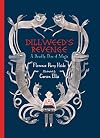
Dillweed's parents are always going on adventures without him, leaving him, and his creepy dragon/dog-like pet Skorped, all alone with the Butler and the Maid. They proceed to throw lavish parties, forcing Dillweed to perform menial tasks, such as mowing the lawn and doing the dishes, until Dillweed exacts his revenge. This sounds rather charming and a classic tale of comeuppance, however, in reality, Dillweed's revenge leaves the adults in his life dead, rather than receiving their just show more rewards. The illustrations, with their dark palette, spindly lines, and exaggerated angles of the characters, only add to the unsettling nature of the book. It is rather disconcerting that this book is geared towards grades 2-5, when it is so gruesome and somewhat terrifying. Perhaps this book would be better geared towards adults who understand the subtleties of the story. show less
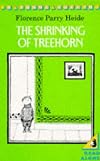
Brilliant, and funny for grown-ups too. It was an important book to me as a child and I have to wonder just how much it's unconsciously affected me. I'm a civil servant and the problems Treehorn faces are very much like mine. If you point out a problem you get a set of responses very much like Treehorn gets, and eventually, if you want something done, you have to do it yourself (though in real life sometimes they try to stop you). It grinds you down. I am literally fourteen inches shorter show more than when I started 9 years ago. I've reached the stage now where if everything turned green I wouldn't bother mentioning it. show less
Lists
1970s (1)
Princess Tales (1)
Awards


You May Also Like


Associated Authors
Statistics
- Works
- 95
- Also by
- 6
- Members
- 5,320
- Popularity
- #4,678
- Rating
- 4.0
- Reviews
- 177
- ISBNs
- 239
- Languages
- 8
- Favorited
- 5
