The Office of Mercy
by Ariel Djanikian
On This Page
Description
"Twenty-four-year-old Natasha Wiley lives in America-Five, a high-tech, underground, utopian settlement where hunger and money do not exist, everyone has a job, and all basic needs are met. But when her mentor and colleague, Jeffrey, selects her to join a special team to venture Outside for the first time, Natasha's allegiances to home, society, and above all to Jeffrey are tested. She is forced to make a choice that may put the people she loves most in grave danger and change the world as show more she knows it"--Amazon.com show lessTags
Recommendations
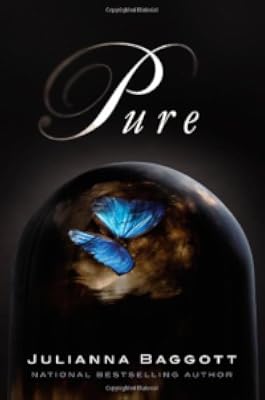
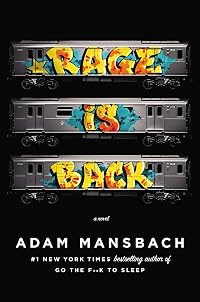
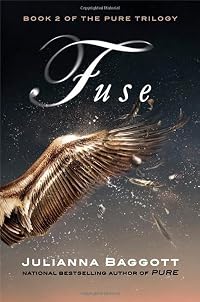


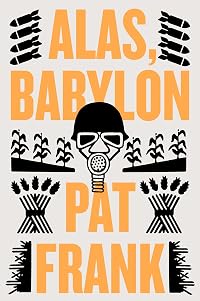














Member Reviews
It's been a long time since I've read a book I hated this much! This book takes an interesting premise but fails to follow through. The central moral question is very Philosophy 101, and a lot of things about the world created here don't make a lot of sense. The protagonist, Natalie, is very passive and wishy-washy, and it's hard to understand her motivations or feelings. The main love interest is her boss and father figure, and the relationship they have is so skeevy, but it's not portrayed as a problem for this woman to start banging the guy who has doted on her since early childhood who is also her boss. None of the other characters are fleshed out at all.
As for the ending (spoilers ahead), I absolutely appreciate books that don't show more end on a triumphant, good-guys-save-the-day note. But this ending fell flat. The Alphas' handling of the mini-rebellion makes absolutely no sense, and Natalie's conversion from compassionate sympathizer to emotionless killer seems too easy. They show her the thoughts of a trapped man in pain and... she stops empathizing with the tribes entirely? And then, after all of that, to have Jeffery be the one to leave when he's shown almost no sign of internal struggle before, is just weird. To have this manipulative and hypocritical mansplainer who had sex with his employee and daughter-figure turn out to be the real hero made me want to barf.
There are so many better books in this genre out there - Office of Mercy isn't worth your time. show less
As for the ending (spoilers ahead), I absolutely appreciate books that don't show more end on a triumphant, good-guys-save-the-day note. But this ending fell flat. The Alphas' handling of the mini-rebellion makes absolutely no sense, and Natalie's conversion from compassionate sympathizer to emotionless killer seems too easy. They show her the thoughts of a trapped man in pain and... she stops empathizing with the tribes entirely? And then, after all of that, to have Jeffery be the one to leave when he's shown almost no sign of internal struggle before, is just weird. To have this manipulative and hypocritical mansplainer who had sex with his employee and daughter-figure turn out to be the real hero made me want to barf.
There are so many better books in this genre out there - Office of Mercy isn't worth your time. show less
The setting is the mostly depopulated eastern portion of North America a few centuries from the present in a bunker/city known as America-Five. Other Americas are said to exist, but they do not factor into the story.
The backstory, revealed appropriately in bits of conversation and introspection, suggests that most of humanity was intentionally exterminated by the Yangs, the group that originally built and populated the America bunker cities, and perhaps other places. Who exactly the Yangs were, a bunch of ultra-rich survivalists, a governmental hierarchy, a religious cult, or something else, is left vague. Their intent was apparently to kill all of the people on the planet other than themselves, and their justification for this seems to show more be that the population had become unsustainable and civilization was on the verge of collapse. People were killing one another in conflicts over resources. Others were dying of starvation. Exterminating them all would end their pointless suffering. It would be merciful.
The Yangs failed in this. Some small populations of humanity survived and went on to create the ‘tribes.’ The Yangs themselves were overthrown by the Alphas, who may have been a faction or the children of the original Yangs. So much for the backstory.
The main character of the book, Natasha, is a resident of America-Five. She works in the Office of Mercy. Their job is to locate and ‘sweep’ any tribes entering the area around their bunker city. The preferred method is to use a ‘nova’ (assumed to be something like a tactical nuke) to exterminate whole tribes at a time, although manual sweeps using Office of Mercy ground troops with small arms are also done when necessary.
Natasha comes to question what she is doing, about the rightness of it, which leads her to take actions and make discoveries, some of which are unexpected.
This book is technically well-written. The prose is professional. There is no dump of information to relate the backstory in a prologue or in lengthy exposition. The writing is good, but the story isn’t. I didn’t find it so, in any case. I read fiction primarily for enjoyment, and in that regard, this book fails for reasons both large and small.
Apart from being depressingly dark and dismal, the book contains no characters I could force myself to care about. None of them is admirable. None tries to achieve anything that I felt worthy of succeeding. None captured my sympathy. None was even especially likeable.
I found the backstory implausible. Although no one can accurately foresee the future, the one that preceded the ‘Storm’ (the attempted global extermination) left far too many questions as to how it came about. To me, it seemed so unlikely I could not suspend disbelief enough to accept it for the sake of a story that had no characters or goals I could care about.
The philosophical questions it seems to ask are: Is mercy killing of people ethical? Is it ever justifiable? Can genocide ever be seen as an unfortunate necessity? This story takes no clear stand, but seems to lean toward a ‘yes’ to all of these. Maybe the point is that sometimes things are so bad there are no ethical choices. I’m not prepared to say this is true, but this is a work of fiction. Sometimes fiction can reveal deep truths using events that never have and never will happen. This does not do that.
There are also some little, niggling things. Two especially struck me as strange. America-Five grows its children in vats. They grow replacement organs for their citizens the same way. Okay. Not a problem. This is a plausible future tech. But America-Five also keeps livestock. Why aren’t they growing their meat in vats? It’s the same technology. The other minor logical disconnect was that they have something like tactical nukes and satellites, but they rely on security cameras mounted in trees to monitor the tribes. Why no spy satellites? Why no surveillance drones? They obviously have the technology for these, but they leave themselves blind to the movements of the tribes they both fear and wish to ‘help’ by killing them mercifully.
I expect this book will appeal to some readers. Dark, dystopian novels do have a following, which is why I suppose traditional publishers keep publishing them. This is just another of that type. It did not appeal to me, however, and I cannot recommend it. show less
The backstory, revealed appropriately in bits of conversation and introspection, suggests that most of humanity was intentionally exterminated by the Yangs, the group that originally built and populated the America bunker cities, and perhaps other places. Who exactly the Yangs were, a bunch of ultra-rich survivalists, a governmental hierarchy, a religious cult, or something else, is left vague. Their intent was apparently to kill all of the people on the planet other than themselves, and their justification for this seems to show more be that the population had become unsustainable and civilization was on the verge of collapse. People were killing one another in conflicts over resources. Others were dying of starvation. Exterminating them all would end their pointless suffering. It would be merciful.
The Yangs failed in this. Some small populations of humanity survived and went on to create the ‘tribes.’ The Yangs themselves were overthrown by the Alphas, who may have been a faction or the children of the original Yangs. So much for the backstory.
The main character of the book, Natasha, is a resident of America-Five. She works in the Office of Mercy. Their job is to locate and ‘sweep’ any tribes entering the area around their bunker city. The preferred method is to use a ‘nova’ (assumed to be something like a tactical nuke) to exterminate whole tribes at a time, although manual sweeps using Office of Mercy ground troops with small arms are also done when necessary.
Natasha comes to question what she is doing, about the rightness of it, which leads her to take actions and make discoveries, some of which are unexpected.
This book is technically well-written. The prose is professional. There is no dump of information to relate the backstory in a prologue or in lengthy exposition. The writing is good, but the story isn’t. I didn’t find it so, in any case. I read fiction primarily for enjoyment, and in that regard, this book fails for reasons both large and small.
Apart from being depressingly dark and dismal, the book contains no characters I could force myself to care about. None of them is admirable. None tries to achieve anything that I felt worthy of succeeding. None captured my sympathy. None was even especially likeable.
I found the backstory implausible. Although no one can accurately foresee the future, the one that preceded the ‘Storm’ (the attempted global extermination) left far too many questions as to how it came about. To me, it seemed so unlikely I could not suspend disbelief enough to accept it for the sake of a story that had no characters or goals I could care about.
The philosophical questions it seems to ask are: Is mercy killing of people ethical? Is it ever justifiable? Can genocide ever be seen as an unfortunate necessity? This story takes no clear stand, but seems to lean toward a ‘yes’ to all of these. Maybe the point is that sometimes things are so bad there are no ethical choices. I’m not prepared to say this is true, but this is a work of fiction. Sometimes fiction can reveal deep truths using events that never have and never will happen. This does not do that.
There are also some little, niggling things. Two especially struck me as strange. America-Five grows its children in vats. They grow replacement organs for their citizens the same way. Okay. Not a problem. This is a plausible future tech. But America-Five also keeps livestock. Why aren’t they growing their meat in vats? It’s the same technology. The other minor logical disconnect was that they have something like tactical nukes and satellites, but they rely on security cameras mounted in trees to monitor the tribes. Why no spy satellites? Why no surveillance drones? They obviously have the technology for these, but they leave themselves blind to the movements of the tribes they both fear and wish to ‘help’ by killing them mercifully.
I expect this book will appeal to some readers. Dark, dystopian novels do have a following, which is why I suppose traditional publishers keep publishing them. This is just another of that type. It did not appeal to me, however, and I cannot recommend it. show less
Natasha grew up in America-5, one of many glass domes that shelters survivors of a mysterious apocalyptic event referred to as the Storm, 300 hundred years after it happened. The community is composed of multiple generations of humans that have been bioengineered and cultivated by the initial survivors, and they have lived for so long through strives in bioreplacement, making them nearly immortal.
It all seems reasonable, except Natasha works in The Office of Mercy, a group of workers whose job it is to search out "tribespeople," or people who live outside of the dome, and eradicate them. The people of America-5 live under a strict ethical code, and part of that code is a twisted concept of eliminating the suffering of others, primarily show more through killing anyone who doesn't live as comfortably as they do.
What follows is a surprisingly philosophical read. If you can't guess the obvious from the synopsis, Natasha begins to question just how ethical her actions are when a large group of tribespeople is on the verge of being wiped out, and though the book is still very plot-driven, it still offers a lot of depth that so many dystonia novels lack. This isn't a pretty apocalypse where the situation is dire but a teen protagonist does nice things and kisses boys. It puts characters in brutal situations where there is no "right" choice, with actual repercussions.
Admittedly, the plot suffers at times to drive that point home. About 2/3rds of the way through the book I felt the characters were behaving irrationally to move the plot a long, and right after the big climactic action scene towards the end there is a 20-30+ page passage that feels a bit dense and dry, but I don't mind sacrificing plot for a few cerebral meanderings.
Overall, I really enjoyed The Office of Mercy! show less
It all seems reasonable, except Natasha works in The Office of Mercy, a group of workers whose job it is to search out "tribespeople," or people who live outside of the dome, and eradicate them. The people of America-5 live under a strict ethical code, and part of that code is a twisted concept of eliminating the suffering of others, primarily show more through killing anyone who doesn't live as comfortably as they do.
What follows is a surprisingly philosophical read. If you can't guess the obvious from the synopsis, Natasha begins to question just how ethical her actions are when a large group of tribespeople is on the verge of being wiped out, and though the book is still very plot-driven, it still offers a lot of depth that so many dystonia novels lack. This isn't a pretty apocalypse where the situation is dire but a teen protagonist does nice things and kisses boys. It puts characters in brutal situations where there is no "right" choice, with actual repercussions.
Admittedly, the plot suffers at times to drive that point home. About 2/3rds of the way through the book I felt the characters were behaving irrationally to move the plot a long, and right after the big climactic action scene towards the end there is a 20-30+ page passage that feels a bit dense and dry, but I don't mind sacrificing plot for a few cerebral meanderings.
Overall, I really enjoyed The Office of Mercy! show less
Do not go in waiting for a non stop action book where someone fights the big bad and comes out victories, because good always wins. No, this book was different, more thinking, more slow, more grey.
It's the perfect society, everyone is happy. The oldest people, The Alphas are over 300 years old. You can live forever as they grow new organs. Babies are grown, not made. Sex is better had in "The Pretend". Everything is very logical, and clean.
Does this make it better, no. They live in their bubble ever since the world ended. Some people survived on the outside but those are being swiped tribe by tribe. They are so caught up in the philosophy and logical thinking that they do think their way is right. Their way of killing the tribes because show more they are suffering, they are hungry, always on the move, what kind of life is that? Not to mention they die fast. I did get this whole concept, yes everything is better in the safe haven, killing others are merciful. But also truly evil, just go out and invite them in and give them meds and be happy. But that would not be logical, that would mean less for those inside. There is where the conflict is. Natasha the lead character comes in contact with the tribes after a sweep and starts to think that this does seem pretty messed up.
I liked it because I understood their way of thinking, and I hated their way of thinking. It was an interesting world. show less
It's the perfect society, everyone is happy. The oldest people, The Alphas are over 300 years old. You can live forever as they grow new organs. Babies are grown, not made. Sex is better had in "The Pretend". Everything is very logical, and clean.
Does this make it better, no. They live in their bubble ever since the world ended. Some people survived on the outside but those are being swiped tribe by tribe. They are so caught up in the philosophy and logical thinking that they do think their way is right. Their way of killing the tribes because show more they are suffering, they are hungry, always on the move, what kind of life is that? Not to mention they die fast. I did get this whole concept, yes everything is better in the safe haven, killing others are merciful. But also truly evil, just go out and invite them in and give them meds and be happy. But that would not be logical, that would mean less for those inside. There is where the conflict is. Natasha the lead character comes in contact with the tribes after a sweep and starts to think that this does seem pretty messed up.
I liked it because I understood their way of thinking, and I hated their way of thinking. It was an interesting world. show less
In a future America, a few centuries after a mysterious "Storm" has wiped out most human life on Earth, Natasha works the Office of Mercy, which is charged with euthanizing any humans our animals Outside to spare them the suffering of being alive.
This is an interesting first novel from Ariel Djanikian. It's a quick, entertaining read that can't decide whether it wants to be YA or adult fiction. Some of the content seems too mature for teens, but the story itself is a bit too slender for an adult audience. The story is set in a futuristic dystopia (with a domed underground city--love those) and takes on issues like euthanasia and genocide. Although taught since childhood the dubious ethics of her society, Natasha begins to question them show more when she goes Outside on a clean-up mission and encounters some of the people they have been targeting.
I had a few issues with the book. There are some troublesome point of view switches, and the ending seems forced to me, so it could have used some more editing. I am not worrying about the hand-waving over the futuristic science, which I am accustomed to in dystopias. The tech is there to serve the overall concept, and like many dystopias, it is not intended to be realistic so much as a representation of a society taken to its extremes in order to examine issues of morality and ethics. Overall, though, I found the story to be entertaining and thought-provoking, but not too deep. As a character, Natasha makes choices, takes action, and is sometimes wrong, which makes her seem more human. I am rating this as an older young adult read, rather than adult fiction, and for that audience, the quality is better than many similar books I have read.
I will be watching this author, as I think she shows a lot of promise. show less
This is an interesting first novel from Ariel Djanikian. It's a quick, entertaining read that can't decide whether it wants to be YA or adult fiction. Some of the content seems too mature for teens, but the story itself is a bit too slender for an adult audience. The story is set in a futuristic dystopia (with a domed underground city--love those) and takes on issues like euthanasia and genocide. Although taught since childhood the dubious ethics of her society, Natasha begins to question them show more when she goes Outside on a clean-up mission and encounters some of the people they have been targeting.
I had a few issues with the book. There are some troublesome point of view switches, and the ending seems forced to me, so it could have used some more editing. I am not worrying about the hand-waving over the futuristic science, which I am accustomed to in dystopias. The tech is there to serve the overall concept, and like many dystopias, it is not intended to be realistic so much as a representation of a society taken to its extremes in order to examine issues of morality and ethics. Overall, though, I found the story to be entertaining and thought-provoking, but not too deep. As a character, Natasha makes choices, takes action, and is sometimes wrong, which makes her seem more human. I am rating this as an older young adult read, rather than adult fiction, and for that audience, the quality is better than many similar books I have read.
I will be watching this author, as I think she shows a lot of promise. show less
Natasha Wiley, 24, works in the “Office of Mercy” in America-Five, one of 158 dome-capped settlements that were constructed to withstand the “storms” some 305 years prior launched by “The Alphas” inside them. The storms eliminated from existence the “fifty-nine billion suffering souls” left outside of the domes. Now each dome’s Office of Mercy executes [sic] periodic “sweeps” to clean up any remaining survivors, thanks to which an eight million additional beings have received “relief” from their suffering on the outside. The Alphas, who are still in power thanks to bio-enhancements, feel it is their ethical duty to make up for their failings in the original Storm by not killing everyone. Good sweeps are show more celebrated with parties inside the domes.
In her department, Natasha is a favorite of Jeffrey, 43, who is in a position of authority and who is currently a hero for singlehandedly putting in the motion the latest sweep. Jeffrey constantly exhorts Natasha to remember the “Ethical Code” which teaches them how merciful these sweeps are because they end the inevitable pain of those on the outside. He encourages her to make sure her emotional “wall” is in place, so she can do her job satisfactorily. He also wants her to be able to help with the actions taken after the sweeps, when operatives actually leave the dome and go into the field to make sure there are no survivors by shooting all the bodies in the back of the head.
But Natasha has doubts, and wants to see these tribal people for herself. What she learns surprises her, and provides her with an opportunity to change things for the entire earth.
Discussion: While there is a fair amount of suspense as the plot develops, its force is abated by the predictability of pretty much every aspect of it. (And like other books of this ilk, there are the usual propaganda slogans; I particularly enjoyed “The road to peace is always paved with corpses.” Not quite as sophisticated, however, as Thomas Jefferson’s take on that idea: “The tree of liberty must be refreshed from time to time with the blood of patriots and tyrants. It is it’s natural manure.”)
The only unpredictable element - the actions of the character Tezo, didn’t make any sense whatsoever.
One very weird aspect of this book is the romance between the two protagonists, the male being not only twice the age of the female, but having served in a father role for her. This Woody-Allen-esque plot element receives only a whisper of meta-commentary from either the author or the other characters.
Evaluation: This adult dystopia is not badly written, but is extremely derivative and predictable. If you have read 1984, Never Let Me Go, and/or Dave Egger’s The Circle, you probably don’t need to read the same plot yet again. show less
In her department, Natasha is a favorite of Jeffrey, 43, who is in a position of authority and who is currently a hero for singlehandedly putting in the motion the latest sweep. Jeffrey constantly exhorts Natasha to remember the “Ethical Code” which teaches them how merciful these sweeps are because they end the inevitable pain of those on the outside. He encourages her to make sure her emotional “wall” is in place, so she can do her job satisfactorily. He also wants her to be able to help with the actions taken after the sweeps, when operatives actually leave the dome and go into the field to make sure there are no survivors by shooting all the bodies in the back of the head.
But Natasha has doubts, and wants to see these tribal people for herself. What she learns surprises her, and provides her with an opportunity to change things for the entire earth.
Discussion: While there is a fair amount of suspense as the plot develops, its force is abated by the predictability of pretty much every aspect of it. (And like other books of this ilk, there are the usual propaganda slogans; I particularly enjoyed “The road to peace is always paved with corpses.” Not quite as sophisticated, however, as Thomas Jefferson’s take on that idea: “The tree of liberty must be refreshed from time to time with the blood of patriots and tyrants. It is it’s natural manure.”)
The only unpredictable element - the actions of the character Tezo, didn’t make any sense whatsoever.
One very weird aspect of this book is the romance between the two protagonists, the male being not only twice the age of the female, but having served in a father role for her. This Woody-Allen-esque plot element receives only a whisper of meta-commentary from either the author or the other characters.
Evaluation: This adult dystopia is not badly written, but is extremely derivative and predictable. If you have read 1984, Never Let Me Go, and/or Dave Egger’s The Circle, you probably don’t need to read the same plot yet again. show less
I don't think this book will change anyone's minds about mercy, about justice, about right and wrong - but we've gotten too easy on our sci-fi writers, especially those writing dystopias. Yes, we're all afraid of the modern world taking us into some totalitarian/faux-egalitarian/generally-messed-up future - but it isn't enough to just give us a bad scenario and put people acting 'good' inside of it. You need to think a bit harder and see how the people in those future scenarios would honestly behave. Because it isn't going to be like we behave today. That's the glorious thing about classic dystopic novels and it's what makes this one a worthy successor to those talents.
More to come at RB: show more target="_top">http://ragingbiblioholism.com/2014/04/23/the-office-of-mercy/ show less
More to come at RB: show more target="_top">http://ragingbiblioholism.com/2014/04/23/the-office-of-mercy/ show less
Members
- Recently Added By
Lists

Dystopian and Apocalyptic Literature
350 works; 74 members

Female Protagonist
1,056 works; 57 members

Books Read in 2014
2,343 works; 89 members

Books Read in 2016
4,666 works; 199 members

Novels Set Underground
28 works; 7 members

Novels Set on Future Earth
5 works; 1 member
Author Information

4+ Works 327 Members
Some Editions
Common Knowledge
- Canonical title
- The Office of Mercy
- Original publication date
- 2013-02-21
- People/Characters
- Natasha Wiley; Jeffrey Montague; Eric Johansson; Raj Radhakrishnan; Axel; Claudia Kim (show all 8); Raul; Tezo
- Important places
- America-Five
- Dedication
- For Phil,
in every possible world - First words
- The sun sank behind the trees, and the blue-black shadows of the forest encroached farther down the sloping beach.
- Last words
- (Click to show. Warning: May contain spoilers.)He would exit the settlement, leaving Natasha and all the citizens of America-Five to continue (as neither Natasha nor Jeffrey would dare to describe it) the deferment of that hovering hour when they, too, would face their reward or their punishment.
- Publisher's editor
- Lorentzen, Allison
- Blurbers
- Harkness, Deborah; Yu, Charles; Kasischke, Laura; Shepard, Jim; Straub, Emma
Classifications
Statistics
- Members
- 187
- Popularity
- 174,993
- Reviews
- 19
- Rating
- (3.17)
- Languages
- English
- Media
- Paper, Audiobook, Ebook
- ISBNs
- 8
- ASINs
- 2