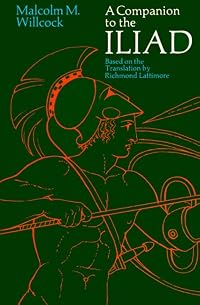
A Companion to the Iliad: Based on the Translation by Richmond Lattimore
by Malcolm M. Willcock
On This Page
Description
Those who are able to read Homer in Greek have ample recourse to commentaries, but the vast majority who read the Iliad in translation have not been so well served-the many available translations contain few, if any, notes. For these readers, Malcolm M. Willcock provides a line-by-line commentary that explains the many factual details, mythological allusions, and Homeric conventions that a student or general reader could not be expected to bring to an initial encounter with the Iliad. The show more notes, which always relate to particular lines in the text, have as their prime aim the simple, factual explanation of things the inexperienced reader would be unlikely to have at his or her command (What is a hecatomb? Who is Atreus' son?). Second, they enhance an appreciation of the Iliad by illuminating epic style, Homer's methods of composition, the structure of the work, and the characterization of the major heroes. The "Homeric Question," concerning the origin and authorship of the Iliad, is also discussed. Professor Willcock's commentary is based on Richmond Lattimore's translation-regarded by many as the outstanding translation of the present generation-but it may be used profitably with other versions as well. This clearly written commentary, which includes an excellent select bibliography, will make one of the touchstones of Western literature accessible to a wider audience. show lessTags
Recommendations





Member Reviews
THE companion to Richmond Lattimore's translation of The 'Iliad': the late Malcolm Willock didn't miss much out. Necessary volume for a classical student's shelf.
"2012-10-26 12:00:00"
Ratings
Members
- Recently Added By
Author Information

8+ Works 478 Members
Work Relationships
Common Knowledge
- Canonical title
- A Companion to the Iliad: Based on the Translation by Richmond Lattimore
- Original publication date
- 1976
- People/Characters
- Homer; Achilles; Agamemnon; Pallas Athena; Hector; Odysseus
- First words
- The reader of Homer's Iliad in Greek has a choice of commentaries to help him understand the text.
- Last words
- (Click to show. Warning: May contain spoilers.)Speculative though these considerations are, they are also important, for they bring us close to Homer himself, the poet of the Iliad; and they also show something of the method of the oral poet: composing by thematic association, in the way that his "Muse" directed him.
Classifications
- Genres
- Literature Studies and Criticism, Fiction and Literature
- DDC/MDS
- 883.01 — Literature & rhetoric Classical & modern Greek literatures Classical Greek epic poetry and fiction Pseudo-Callisthenes
- LCC
- PA4037 .W734 — Language and Literature Greek language and literature. Latin language and literature Greek literature Individual authors Homer
- BISAC
Statistics
- Members
- 441
- Popularity
- 69,390
- Reviews
- 3
- Rating
- (3.85)
- Languages
- English
- Media
- Paper, Ebook
- ISBNs
- 3
- ASINs
- 3