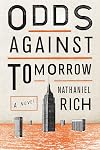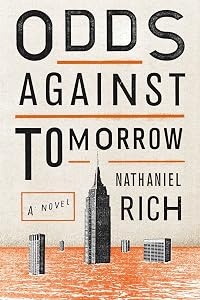
Odds against Tomorrow
by Nathaniel Rich
On This Page
Description
Fiction. Literature. Suspense. Thriller. New York City, the near future: Mitchell Zukor, a gifted young mathematician, is hired by a mysterious new financial consulting firm, FutureWorld. The business operates out of an empty office in the Empire State Building; Mitchell is employee number two. He is asked to calculate worst-case scenarios in the most intricate detail, and his schemes are sold to corporations to indemnify them against any future disasters. This is the cutting edge of show more corporate irresponsibility, and business is booming. As Mitchell immerses himself in the mathematics of catastrophe-ecological collapse, war games, natural disasters-he becomes obsessed by a culture's fears. Yet he also loses touch with his last connection to reality: Elsa Bruner, a friend with her own apocalyptic secret, who has started a commune in Maine. Then, just as Mitchell's predictions reach a nightmarish crescendo, an actual worst-case scenario overtakes Manhattan. Mitchell realizes he is uniquely prepared to profit. But at what cost? At once an all-too-plausible literary thriller, an unexpected love story, and a philosophically searching inquiry into the nature of fear, Nathaniel Rich's Odds Against Tomorrow poses the ultimate questions of imagination and civilization. The future is not quite what it used to be. show lessTags
Recommendations
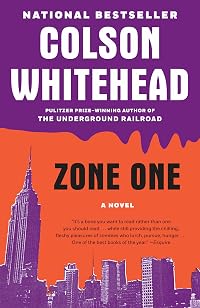
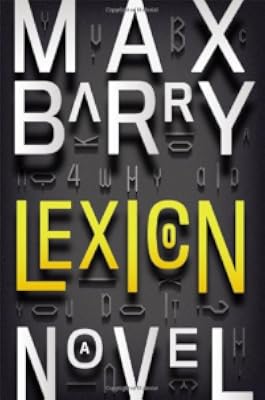
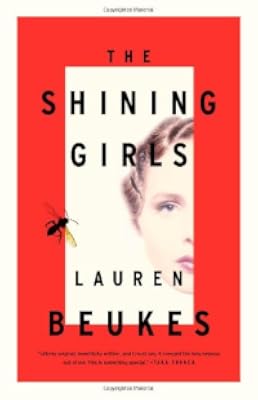
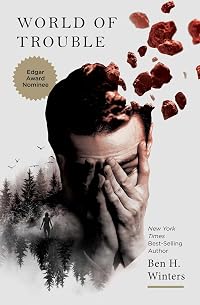







Member Recommendations
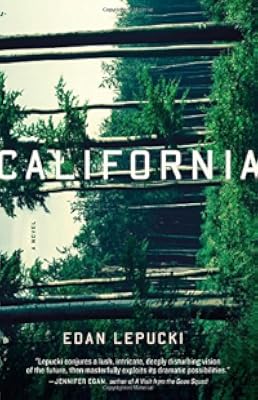
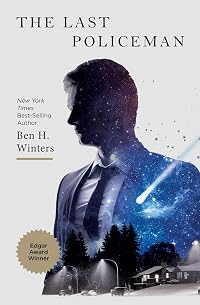
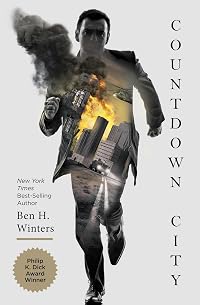
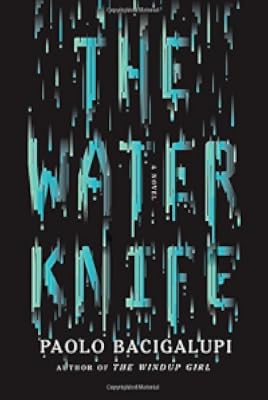
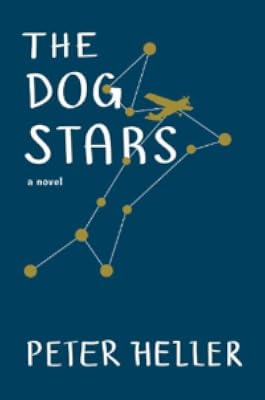
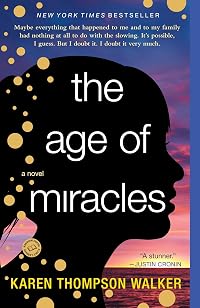
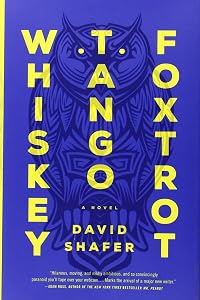
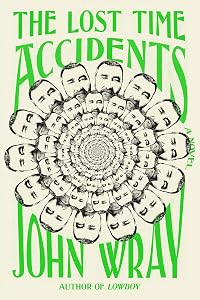
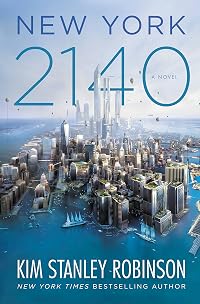
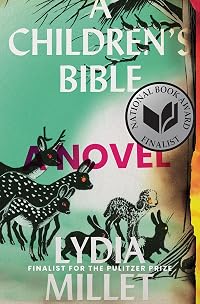
sturlington Climate change, destroyed cities
sturlington Visions of climate change
Member Reviews
This is a pretty great book for the culture of weather-paranoia that grips so many people today. The main character is absolutely terrified of every potential disaster remotely imaginable, and he has a pretty vivid imagination so he is magnificently paranoid. Unlike the jabbering slack-jawed morons that populate your television screen (often confused with meteorologists) Mitchell Zukor actually has an ounce of intelligence, he is a mathematician and constantly calculates the odds of any given disaster actually happening, which lends credence to the story and sets it apart some of the more manic environmental novels out there today.
This is why I liked reading Odds Against Tomorrow so much. With so many disaster and apocalypse novels show more being written right now, an author has to do something really unique to stand out from the crowd. Fortunately, Nathaniel Rich has done just that! There is a lot of depth here, and I think the book would be an amazing choice for a book club because it opens up numerous avenues of discussion and could be interpreted in so many different ways. Even if you are reading it alone though, it's beautifully written and the plot moves along nicely. It's really a very well-rounded novel.
What minor complaints I can come up with are hardly worth mentioning when you take the whole book in perspective. Yeah, fine, so she turned the TV off, then turned back and started watching it as if she never turned if off in the first place. Big deal! It's a wonderful novel, so go read it. show less
This is why I liked reading Odds Against Tomorrow so much. With so many disaster and apocalypse novels show more being written right now, an author has to do something really unique to stand out from the crowd. Fortunately, Nathaniel Rich has done just that! There is a lot of depth here, and I think the book would be an amazing choice for a book club because it opens up numerous avenues of discussion and could be interpreted in so many different ways. Even if you are reading it alone though, it's beautifully written and the plot moves along nicely. It's really a very well-rounded novel.
What minor complaints I can come up with are hardly worth mentioning when you take the whole book in perspective. Yeah, fine, so she turned the TV off, then turned back and started watching it as if she never turned if off in the first place. Big deal! It's a wonderful novel, so go read it. show less
I don't usually post quotes from books, but I was hooked from the very first line so I feel the need to share it:
The way other people fantasize about surprise inheritances, first-glance love, and endless white empyreal pastures, Mitchell dreamed of an erupting supervolcano that would bury North America under a foot of hot ash.
Mitchell Zukor is obsessed with worst-case scenarios. They absolutely terrify him; everything from blizzards, tsunamis, and asteroid strikes to financial collapse, nuclear war, and world-wide pandemic. He deals with his fear by spending hours researching disaster and calculating the odds of its occurrence. His neuroses only intensify when, shortly before he graduates from U. of Chicago, the city of Seattle is show more demolished by a giant earthquake. A few months after college he is hired by an unusual consulting start-up in New York City devoted entirely to advising large corporations on potential disasters and what can be done to minimize damage. (If corporations can prove they tried to minimize damage then they can't be held liable.) Mitchell gets such a thrill (almost unhealthy) out of his job, and actually starts to feel happy and relaxed and safe. But what will happen to him if disaster actually does strike?
There are a lot of themes going on through this book - obsession, fear, disaster, life in a cubicle vs. living off the land, New York City, Hurricane Katrina, etc. (The author used to live in NYC and now lives in New Orleans.) However, each theme is wrapped snugly around the main plot and there aren't too many tangents. I was engrossed from the beginning and never lost that feeling.
The *only* thing I didn't enjoy about this book is that it was a little too "I heart NY" for me, if you know what I mean. Lots of name-dropping neighborhoods and streets that doesn't mean anything to me as a non-New Yorker. But this is definitely a book *about* New York and so I accept the "I heart New York"ness. I probably sound equally obnoxious when I talk about my city, but no one writes cool books about my city.
The writing in Odds Against Tomorrow is great; intelligent but engrossing. The characters are practically tangible (including the City herself). The blend of literary fiction and speculative fiction is perfect. It's not a harsh mash-up, more like a river flowing smoothly into an ocean.
Highly recommended. show less
The way other people fantasize about surprise inheritances, first-glance love, and endless white empyreal pastures, Mitchell dreamed of an erupting supervolcano that would bury North America under a foot of hot ash.
Mitchell Zukor is obsessed with worst-case scenarios. They absolutely terrify him; everything from blizzards, tsunamis, and asteroid strikes to financial collapse, nuclear war, and world-wide pandemic. He deals with his fear by spending hours researching disaster and calculating the odds of its occurrence. His neuroses only intensify when, shortly before he graduates from U. of Chicago, the city of Seattle is show more demolished by a giant earthquake. A few months after college he is hired by an unusual consulting start-up in New York City devoted entirely to advising large corporations on potential disasters and what can be done to minimize damage. (If corporations can prove they tried to minimize damage then they can't be held liable.) Mitchell gets such a thrill (almost unhealthy) out of his job, and actually starts to feel happy and relaxed and safe. But what will happen to him if disaster actually does strike?
There are a lot of themes going on through this book - obsession, fear, disaster, life in a cubicle vs. living off the land, New York City, Hurricane Katrina, etc. (The author used to live in NYC and now lives in New Orleans.) However, each theme is wrapped snugly around the main plot and there aren't too many tangents. I was engrossed from the beginning and never lost that feeling.
The *only* thing I didn't enjoy about this book is that it was a little too "I heart NY" for me, if you know what I mean. Lots of name-dropping neighborhoods and streets that doesn't mean anything to me as a non-New Yorker. But this is definitely a book *about* New York and so I accept the "I heart New York"ness. I probably sound equally obnoxious when I talk about my city, but no one writes cool books about my city.
The writing in Odds Against Tomorrow is great; intelligent but engrossing. The characters are practically tangible (including the City herself). The blend of literary fiction and speculative fiction is perfect. It's not a harsh mash-up, more like a river flowing smoothly into an ocean.
Highly recommended. show less
Mitchell Zukor is terrified of the worst case scenarios he imagines, and copes by calculating probabilities. Mere mention of any conceivable event, asteroid or epidemic or nuclear attack, sets off obsessive research into precedent and prevention. After college and a stint at a cubicle job, he is recruited by consulting firm FutureWorld, which exploits a legal loophole: a business that has prepared for disaster cannot be held financially responsible, and FutureWorld is protected by a limited liability clause. Mitchell’s visceral and expressive fear persuades business executives to pay for advice, whereas his boss is too obviously in it for the money. Meanwhile, he corresponds by snail mail with Elsa, a college acquaintance who has gone show more off the grid in New England, and wonders how she can remain serene when her medical condition could kill her at any random moment. Then an actual disaster strikes, a Katrina-like storm and flood in New York. Mitchell and his colleague Jane navigate the city by canoe, and head north to find Elsa.
I was drawn in by the first half, and felt somewhat let down by the second half. Can’t entirely say why. I would’ve preferred more of Elsa (the initial set-up suggested a pervading theme, but follow-through was sporadic) and less of Jane (who appeared suddenly and I didn’t realize for awhile that I should care), but also there was a switch in tone, from satire to drama, and maybe that was the point, neurosis meets reality, but I didn’t quite make the adjustment.
(read 11 Aug 2013) show less
I was drawn in by the first half, and felt somewhat let down by the second half. Can’t entirely say why. I would’ve preferred more of Elsa (the initial set-up suggested a pervading theme, but follow-through was sporadic) and less of Jane (who appeared suddenly and I didn’t realize for awhile that I should care), but also there was a switch in tone, from satire to drama, and maybe that was the point, neurosis meets reality, but I didn’t quite make the adjustment.
(read 11 Aug 2013) show less
This is an interesting literary apocalyptic novel. The main character is a futurist who predicts disasters, and then an actual disaster of extreme magnitude hits New York City. I liked a lot of the ideas here, and the depiction of a flooded, deserted, post-apocalyptic New York, but I'm not sure the author did a good job of tying the themes together or coming to a satisfactory conclusion. Tepid recommendation.
Gosh this was fun. It's been a while since I read a book in one sitting, and this was a great read. The writing is patchy in parts, but it's simply a fun story with creative characters and eerily familiar possibilities for anyone living in New York. Highly recommend for a casual read!
An entirely believable novel detailing a possible future as lived by Mitchell Zukor. Mitchell (does he have Asperger's autism?) has developed a very good livelihood advising businesses how to cope with future disasters. He is a genius at data collection and calculation of low probability events, and sure enough predicts (and lives through) two cataclysms, one in Portland, Or and the second in New York. All the while, he has an excruciatingly painful and interesting personal life which forces you to continue reading to find out what happens.
I liked the book so much that I checked out "The Mayor's Tongue". Hope it as as good.
I liked the book so much that I checked out "The Mayor's Tongue". Hope it as as good.
Rather than head in a more Foundation-esque direction, which would have been awesome, themes veered towards Parable of the Sower meets The Year of the Flood. Pretty good read.
Members
- Recently Added By
Published Reviews
ThingScore 100
This literary novel by Nathaniel Rich offers a fascinating look at the ways we can cope with existential fears. The obvious, of course, are fight or flight; there are also responses of denial, mitigation, intellectualization and preparation. ... Rich’s writing is full and savory; he lets us into Mitchell’s head but doesn’t beat us over the head. He’s also got a way of making death and show more destruction sound thoroughly poetic, and whether this is a good or bad thing is not necessarily easy to decipher. When we quantify disaster, do we take some of the horror out of it, or is that something than cannot be diminished? There are fairly good odds that Mitchell himself would be on the side of the latter rather than the former. show less
added by KelMunger
Lists

Books Set in New York City
127 works; 21 members

Beginner's Guide to Climate Fiction
24 works; 7 members

SFFKit 2018
14 works; 1 member

Books Read in 2013
1,630 works; 51 members

io9 Book Club
70 works; 4 members

Disaster Books
74 works; 19 members

BingoDOG - Scientists in Fiction
111 works; 17 members

Books Read in 2018
4,360 works; 110 members

Books With Time Words in the Title
160 works; 4 members
Author Information

11+ Works 1,071 Members
Some Editions
Awards and Honors
Distinctions
Common Knowledge
- Canonical title
- Odds against Tomorrow
- Original publication date
- 2013-04-02
- People/Characters
- Mitchell Zukor; Elsa Bruner; Alec Charnoble; Jane Eppler
- Important places
- New York, New York, USA
- Epigraph
- New York makes one think about the collapse of civilization, about Sodom and Gomorrah, the end of the world. The end wouldn't come as a surprise here. Many people already bank on it. - Saul Bellow
- Dedication
- For my brother
- First words
- The way other people fantasize about surprise inheritances, first-glance love, and endless white emyreal pastures, Mitchell dreamed of an erupting supervolcano that would bury North America under a foot of hot ash.
- Quotations
- "There was no escaping math, after all. It was everywhere, especially in nature. You could go so as to say that match was nature." (p. 288)
- Last words
- (Click to show. Warning: May contain spoilers.)"I just need to get back to New York. We don't have a lot of time."
- Canonical DDC/MDS
- 813.6
- Canonical LCC
- PS3618.I3334
Classifications
Statistics
- Members
- 334
- Popularity
- 95,137
- Reviews
- 12
- Rating
- (3.36)
- Languages
- 5 — Danish, Dutch, English, French, German
- Media
- Paper, Audiobook, Ebook
- ISBNs
- 13
- ASINs
- 1