On This Page
Description
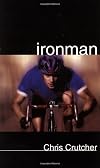
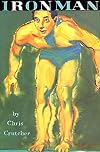
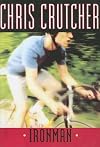
While training for a triathlon, seventeen-year-old Bo attends an anger management group at school which leads him to examine his relationship with his father.Tags
Recommendations









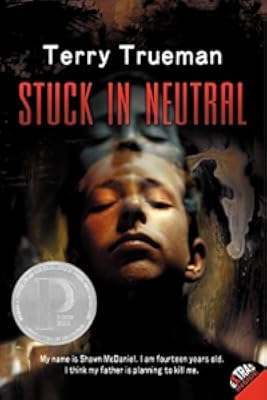
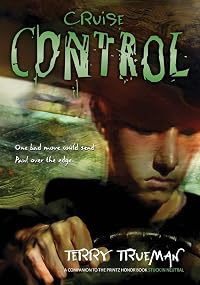


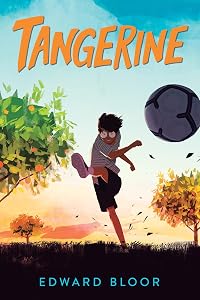
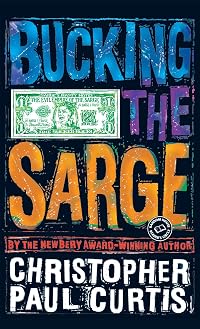



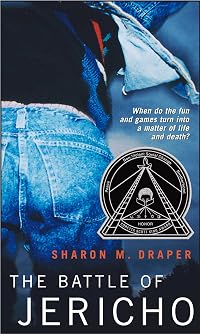
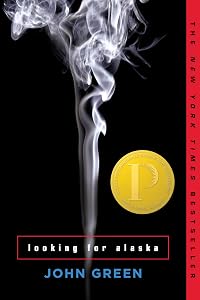
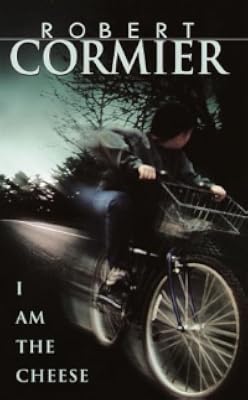
Member Recommendations
Member Reviews
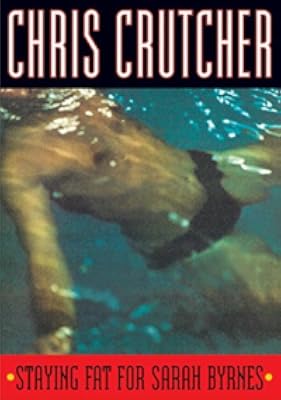
This book has so many similarities with Staying Fat For Sarah Byrnes: a male athlete main character (Bo) who is bright but gets in trouble with various authority figures (in this case, an English teacher and his father); an asshole teacher (aforementioned); a wise and understanding coach and/or teacher (the Lion; Mr. Nak); an understanding mother; a father who is absent or an asshole (and in this case, in cahoots with the awful English teacher); a strong female peer character (Shelly); and other mistreated/abused misfits.
Both books deal directly with (in)justice and (un)fairness; Ironman focuses more on how anger is a mask for fear, and how the path to controlling your anger is understanding your fears. The adolescent characters in show more Crutcher's books have a strong work ethic (especially as this applies to team and/or individual sports) and a strong moral ethic as well. They are also developing their adult identities, and sometimes their parents or teachers are not the best role models. Ironman has two strong mentors: swim coach Lionel Serbousek and anger management coach Mr. Nak.
Unlike Sarah Byrnes, which was narrated solely from Eric's POV, Ironman has a dual narrative structure: it consists mostly of e-mails from Bo to Larry King, but also has sections of third-person narration, which cover scenes outside of Bo's experience and/or show him from a different point of view than his own. (The confessional letter-writing is similar to Charlie's letters to an unnamed recipient in The Perks of Being a Wallflower.)
Overall, I really liked it (though not as much as Sarah Byrnes), and I'll probably read more of his books in the near future.
Quotes
"I understand physical pain; I can control it." (8)
"...guys who can look inside you scare the hell out of me. You never know when they'll come out and say what they see. I can't tell you how much I'm afraid of looking bad....Being uneasy in front of people makes me feel out of control, and when I feel that way I do things I would never do when I'm okay. More than anything, I hate feeling foolish." (38)
"I'm afraid you might have said what most adults say: that teenagers aren't quite done yet, that we're impulsive and adults intervene because we aren't ready to manage our lives." (56)
"Y'all remember that. Self-hate is the worst feelin' of them all. Feelings are real, folks. An' nobody gets to identify yours but you. Now what you do with those feelins is another thing, an' that's why we're here." (62)
Bo feels the frustration of lost justice rising in his chest... (73)
That's how he commands all that power, Bo thinks. He lays back until something's really important, then he comes on full blast. (115)
"I think that saved me, I was devastated...but it was the first time an adult every stood up for me." (141)
"I sit back and watch you now, and know that part of your struggle is developmental - that as an adolescent, you need to separate from your dad to establish who you are." (151)
"It's fear that's crazy in the world, not anger. But the more fear there is, the more anger it takes to cover it. I swear to God, I'm starting to get it." (172)
"If what's comin' from others don't make you feel better about yourself in the world, then it probably ain't good for you. An' if it ain't good for you, it ain't love. That ain't the whole story, but it'll do for a start." (199)
"There is no act of heroism that doesn't include standing up for yourself." (210)
"...my anger is a cover for my fear, and only when I admit to that fear will I get control of my anger, or in fact have no need for it." (221)
When your role in life is to be a smartass for the benefit of all within earshot, he tells himself, it's good to get alone and welcome some seriousness. (247)
"If [you] ever want to see how something works, look at it broken." (254)
"The nature of mercy allows for all things. It excuses nothing, but it allows for all things." (276) show less
Both books deal directly with (in)justice and (un)fairness; Ironman focuses more on how anger is a mask for fear, and how the path to controlling your anger is understanding your fears. The adolescent characters in show more Crutcher's books have a strong work ethic (especially as this applies to team and/or individual sports) and a strong moral ethic as well. They are also developing their adult identities, and sometimes their parents or teachers are not the best role models. Ironman has two strong mentors: swim coach Lionel Serbousek and anger management coach Mr. Nak.
Unlike Sarah Byrnes, which was narrated solely from Eric's POV, Ironman has a dual narrative structure: it consists mostly of e-mails from Bo to Larry King, but also has sections of third-person narration, which cover scenes outside of Bo's experience and/or show him from a different point of view than his own. (The confessional letter-writing is similar to Charlie's letters to an unnamed recipient in The Perks of Being a Wallflower.)
Overall, I really liked it (though not as much as Sarah Byrnes), and I'll probably read more of his books in the near future.
Quotes
"I understand physical pain; I can control it." (8)
"...guys who can look inside you scare the hell out of me. You never know when they'll come out and say what they see. I can't tell you how much I'm afraid of looking bad....Being uneasy in front of people makes me feel out of control, and when I feel that way I do things I would never do when I'm okay. More than anything, I hate feeling foolish." (38)
"I'm afraid you might have said what most adults say: that teenagers aren't quite done yet, that we're impulsive and adults intervene because we aren't ready to manage our lives." (56)
"Y'all remember that. Self-hate is the worst feelin' of them all. Feelings are real, folks. An' nobody gets to identify yours but you. Now what you do with those feelins is another thing, an' that's why we're here." (62)
Bo feels the frustration of lost justice rising in his chest... (73)
That's how he commands all that power, Bo thinks. He lays back until something's really important, then he comes on full blast. (115)
"I think that saved me, I was devastated...but it was the first time an adult every stood up for me." (141)
"I sit back and watch you now, and know that part of your struggle is developmental - that as an adolescent, you need to separate from your dad to establish who you are." (151)
"It's fear that's crazy in the world, not anger. But the more fear there is, the more anger it takes to cover it. I swear to God, I'm starting to get it." (172)
"If what's comin' from others don't make you feel better about yourself in the world, then it probably ain't good for you. An' if it ain't good for you, it ain't love. That ain't the whole story, but it'll do for a start." (199)
"There is no act of heroism that doesn't include standing up for yourself." (210)
"...my anger is a cover for my fear, and only when I admit to that fear will I get control of my anger, or in fact have no need for it." (221)
When your role in life is to be a smartass for the benefit of all within earshot, he tells himself, it's good to get alone and welcome some seriousness. (247)
"If [you] ever want to see how something works, look at it broken." (254)
"The nature of mercy allows for all things. It excuses nothing, but it allows for all things." (276) show less
After an outburst in English class, teen jock Bo is sent to Anger Management classes with the scary bad kids. He finds he fits in better than he expected. Told partly through Bo's letters to Larry King, this books documents a year in Bo's life, the year his battle with his father comes to a head, he gets a girlfriend, and finds friends and support where he least expected it.
I had a hard time getting into this - Bo was so focused on his personal training and Ironman goals, I couldn't find anything in common with him to latch on to. But as I read further, I realised that this is the message I'll take from the book, that you don't have to have something in common with someone to want them to reach their goals, and to care what happens to show more them. As details about Bo's life, and the lives of his fellow Anger Management members are slowly revealed, people's capacity for both empathy and horror comes to the front. There are parents here who are truly evil, and kids who manage to pull kindness out of the most dreadful situations.
I'd give this to people looking for a realistic but hopeful stories about abuse. show less
I had a hard time getting into this - Bo was so focused on his personal training and Ironman goals, I couldn't find anything in common with him to latch on to. But as I read further, I realised that this is the message I'll take from the book, that you don't have to have something in common with someone to want them to reach their goals, and to care what happens to show more them. As details about Bo's life, and the lives of his fellow Anger Management members are slowly revealed, people's capacity for both empathy and horror comes to the front. There are parents here who are truly evil, and kids who manage to pull kindness out of the most dreadful situations.
I'd give this to people looking for a realistic but hopeful stories about abuse. show less
Ironman by Chris Crutcher (2004): Bo is a high school senior who spends all of his free time training for an Ironman competition, until a disagreement with a teacher forces him to add anger management classes to his schedule. But the real sources of his anger may be closer to home.
The frame of Bo’s narrative - a series of letters to Larry King - is at once bizarre, dated, and timeless (like Larry King himself), and allows the reader access to Bo’s personal perspective. Crutcher also uses an omniscient narrator to describe events outside Bo’s perception, but the transitions between narrator can be jarring. Nevertheless, it is easy to get swept up into Bo’s senior year, especially as the drama - on multiple fronts - begins to show more develop. In addition to the father-son dynamic that is at the heart of Bo’s struggle, Crutcher brings difficult issues to life such as bullying, tolerance, the consequences of drunk driving, sexual and emotional abuse, and parentless households. show less
The frame of Bo’s narrative - a series of letters to Larry King - is at once bizarre, dated, and timeless (like Larry King himself), and allows the reader access to Bo’s personal perspective. Crutcher also uses an omniscient narrator to describe events outside Bo’s perception, but the transitions between narrator can be jarring. Nevertheless, it is easy to get swept up into Bo’s senior year, especially as the drama - on multiple fronts - begins to show more develop. In addition to the father-son dynamic that is at the heart of Bo’s struggle, Crutcher brings difficult issues to life such as bullying, tolerance, the consequences of drunk driving, sexual and emotional abuse, and parentless households. show less
after rereading Ironman, i cannot explain why i originally assigned this novel two stars. seems mean and stupid and inaccurate. like, i'm a crutcher fan, so how did i miss how crutcher-y and great this novel is?! i'm glad i reread it, and i'm even more glad (what even is this pollyanna-ass sentence) that i just don't even rate books anymore.
Following an altercation with his football coach seventeen year old Beauregard Brewster find himself in trouble and excluded from school, his only way back is to attend Mr Nakatani's early morning Anger Management classes. We follow Bo's progress both through the third person narrative and in Bo's own words in his letters to talk show host Larry King.
Along the way Bo learns a lot about himself, his strong willed father now separated from his mother, his fellow students in Mr Nak's class (who regard the preppy Bo his as out of place in the class), as well as coming to terms with an unpalatable fact, to Bo, that he learns about his favorite teacher and swimming coach Mr Serbousek. He also finds an unlikely girlfriend.
While attending Mr show more Nak's class Bo is also in training for a marathon triathlon, cycling, running and swimming, and he finds support from surprising sources and apparent disloyalty also from surprising individuals.
This is a good read, Bo's letters to Larry are full of humour and wit, and the story itself is full of wise counsel but never becomes preachy. show less
Along the way Bo learns a lot about himself, his strong willed father now separated from his mother, his fellow students in Mr Nak's class (who regard the preppy Bo his as out of place in the class), as well as coming to terms with an unpalatable fact, to Bo, that he learns about his favorite teacher and swimming coach Mr Serbousek. He also finds an unlikely girlfriend.
While attending Mr show more Nak's class Bo is also in training for a marathon triathlon, cycling, running and swimming, and he finds support from surprising sources and apparent disloyalty also from surprising individuals.
This is a good read, Bo's letters to Larry are full of humour and wit, and the story itself is full of wise counsel but never becomes preachy. show less
Loved this book. Not as much as some of the others, but definately up there with Stotan! and Whale Talk. I was glad that the father and son entered counseling, even if dad was having a hard time sticking with it. Gave me some hope for their future. I loved the Nak Pack and how they worked on their issues. I even liked the writing to Larry King bit, it was a nice element. It was interesting to see Lionel Serbousek again and find out what had happened to him. And I like it that there was an arrogant, annoying jock on the swimming team, usually they're only on the football team in Crutcher's books.
Crutcher's gritty writing brings his real life characters to life. The rich and realistic plot is riverting and the father-son relationship gone bad is captivating. Adolescent both boys and girls will enjoy this book.
Members
- Recently Added By
Author Information

16+ Works 9,101 Members
Chris Crutcher is the critically acclaimed author of seven young adult novels and a collection of short stories, all of which were selected as ALA Best Books for Young Adults. Drawing on his experience as a family therapist and child protection specialist, Crutcher writes honestly about real issues facing teenagers today: making it through school, show more competing in sports, handling rejection and failure, dealing with parents. Chris Crutcher has won two lifetime achievement awards for his work: the Margaret A. Edwards Award for Outstanding Literature for Young Adults, and the ALAN Award for a Significant Contribution to Adolescent Literature. He lives in Spokane, Washington show less
Awards and Honors
Awards
Distinctions
Series

Common Knowledge
- Original publication date
- 1995
- People/Characters
- Bo Brewster; Shelly; Mr. Nak; Lional; Mr. Brewster
- Dedication
- In memory of my mom -
1922-1994 - First words
- Dear Larry, at 4:30 each morning I awaken to your voice.
- Last words
- (Click to show. Warning: May contain spoilers.)But no matter what happens, I'll survive, and I won't lead a desperate life, because the eight months I spent with that posse of ragamuffin Stotans led by an undersize Japanese cowboy gave me the power to let the world be every bit as goddamn crazy as it is.
Classifications
- Genres
- Teen, Fiction and Literature, Young Adult, Children's Books
- DDC/MDS
- 813.54 — Literature & rhetoric American literature in English American fiction in English 1900-1999 1945-1999
- LCC
- PZ7 .C89 .I — Language and Literature Fiction and juvenile belles lettres Fiction and juvenile belles lettres Juvenile belles lettres
- BISAC
Statistics
- Members
- 717
- Popularity
- 39,713
- Reviews
- 18
- Rating
- (3.95)
- Languages
- English, French, Spanish
- Media
- Paper, Audiobook, Ebook
- ISBNs
- 23
- ASINs
- 4