
On This Page
Description
This New York Times bestseller by the author of Blue Highways is "a majestic survey of land and time and people in a single county of the Kansas plains" (Hungry Mind Review). William Least Heat-Moon travels by car and on foot into the core of our continent, focusing on the landscape and history of Chase County--a sparsely populated tallgrass prairie in the Flint Hills of central Kansas--exploring its land, plants, animals, and people until this small place feels as large as the universe. show more Called a "modern-day Walden" by the Chicago Sun-Times, PrairyErth is a journey through a place, through time, and into the human mind from the acclaimed author of Here, There, Elsewhere: Stories from the Road. "A sense of the American grain that will give [PrairyErth] a permanent place in the literature of our country." --Paul Theroux, The New York Times show lessTags
Recommendations






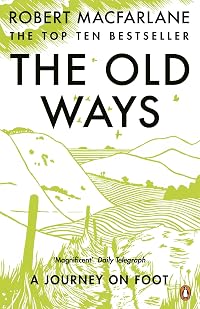
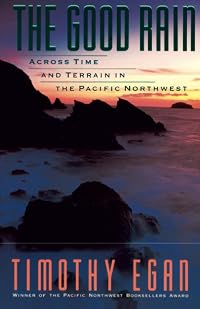
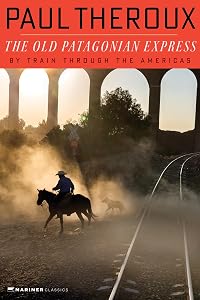
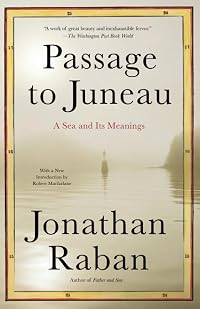


Member Recommendations


Member Reviews
The title PrairyErth is not some coy neologism; it’s from a quote by naturalist John Madson: “In a stroke of scientific shorthand, the soils of our central grasslands are sometimes called simply ‘prairyerths.’” This is a very deep look at one specific place—Chase County, Kansas—and it covers just about everything there is to know about the place: its geology, ecology, economy, and history.
William Least Heat-Moon has a way with words, so what could have been a dry encyclopedic iteration of facts is instead interesting and engaging.
Nevertheless, I found this book rather slow going: There’s only so much Chase County I can digest at a single sitting. The parts that I enjoyed most were descriptions of the tallgrass prairie:
William Least Heat-Moon has a way with words, so what could have been a dry encyclopedic iteration of facts is instead interesting and engaging.
“Boston Corbett, after he shot down John Wilkes Booth in Virginia, came out to Kansas where he would lie on his back, rifle locked toward the sky, and shoot hawks; I’m lying here in hopesshow more
the stars will shoot.”
“The bag he was about to carry across thirty-some miles of the Flint Hills I considered more of a chifforobe than a pack, a thing that can change one’s destination from a place to a hernia.”
Nevertheless, I found this book rather slow going: There’s only so much Chase County I can digest at a single sitting. The parts that I enjoyed most were descriptions of the tallgrass prairie:
“I came to understand that the prairies are nothing but grass as the sea is nothing but water, that most prairie life is within the place: under the stems, below the turf, beneath the stones. The prairie is not a topography that shows its all but rather a vastly exposed place of concealment, like the geodes so abundant in the county, where the splendid lies within the plain cover.”
“Almost everything I see in this place sooner or later brings me back to the grasses; after all, this is the prairie, a topography that so surprised Anglo culture when it began arriving that it found for this grand-beyond no suitable word in its immense vocabulary, and it resorted to the French of illiterate trappers: prairie. Except in accounts of novice travelers, these grasslands have never been meadows, heaths, moors, downs, wolds. A woman in Boston once said to me, Prairie is such a lovely word—and for so grim a place.”
“The thousands of acres that lay encircled around the knob I really didn’t see, not at first. I saw air, and I said, good god, look at all this air, and I recalled a woman saying, Seems the air here hasn’t ever been used before.”
“I was coming to see that facts carry a traveler only so far: at last he must penetrate the land by a different means, for to know a place in any real and lasting way is sooner or later to dream it. That’s how we come to belong to it in the deepest sense.”show less
William Least Heat-Moon explores the idea of the “deep map”, an account of a place that starts with topography, like a conventional map, but then continues into history, botany, anthropology, geography, politics and sociology. The mapped area in this case is Chase County, Kansas, in the Flint Hills; Heat-Moon sets out the USGS quadrangle maps that cover Chase County and walks the rural roads for six years, conversing with the residents and commenting on everything he sees and encounters. It’s really well done, an engaging and easy read but one that rewards contemplation.
Heat-Moon comes across as liberal politically, but understands the local residents; he notes that an attempt to make the Flint Hills a tallgrass prairie national show more park failed because the park advocates came in as experts from the big city and never connected with the locals. Similarly, Heat-Moon is a conservationist, but he goes coyote hunting with one of the locals without condemnation. There is a section that bothers me a little; Heat-Moon talks to a college professor about the future of agriculture and apparently concurs with the view that “we” have to revert to traction animals and “natural” fertilizer to “save the earth”. I ran into a similar thing in Cræft, in which a armchair farmer advocates that “we” do the same thing; the catch, of course, is that I feel the “we” involved will never include the college professors; they won’t be trudging behind an plow team from dawn to dusk in the middle of a Kansas summer. Maybe that chapter is intended as subtle satire; not sure. I stress, though, this is a very minor quibble over what’s otherwise a highly recommended and rewarding book. show less
Heat-Moon comes across as liberal politically, but understands the local residents; he notes that an attempt to make the Flint Hills a tallgrass prairie national show more park failed because the park advocates came in as experts from the big city and never connected with the locals. Similarly, Heat-Moon is a conservationist, but he goes coyote hunting with one of the locals without condemnation. There is a section that bothers me a little; Heat-Moon talks to a college professor about the future of agriculture and apparently concurs with the view that “we” have to revert to traction animals and “natural” fertilizer to “save the earth”. I ran into a similar thing in Cræft, in which a armchair farmer advocates that “we” do the same thing; the catch, of course, is that I feel the “we” involved will never include the college professors; they won’t be trudging behind an plow team from dawn to dusk in the middle of a Kansas summer. Maybe that chapter is intended as subtle satire; not sure. I stress, though, this is a very minor quibble over what’s otherwise a highly recommended and rewarding book. show less
A strange book unlike any I have ever read. The author attempts through interview, exploration, and historical research to fully map Chase county in Kansas not only in space but in time. The result is a dreamlike, lyrical book that one can only read lazily and with great enjoyment. This book is like taking a nap on a cool afternoon, when one wakens tired but happy and full of vivid memory.
I am a Midwesterner, but even I am guilty of considering the prairie fly-over country. This book will make you fall in love with this unnatural landscape that feels almost alien. A place of ghosts, and emptiness.
I am a Midwesterner, but even I am guilty of considering the prairie fly-over country. This book will make you fall in love with this unnatural landscape that feels almost alien. A place of ghosts, and emptiness.
This book was another buddy read with my dad. This has been on my shelves for YEARS, so picking this as a buddy read and reading a chapter a week was the perfect motivator to get through this. This is a deep history/reading/map of Chase County in Kansas. Heat-Moon divides the county with a grid and takes each sector as the focus for a chapter. My dad and I both grew up in Kansas, but neither of us has spent much time in Chase County. Along the way we learned about pack rats, Cottonwood trees, Sam Wood, Knute Rockne, native prairie grasses, and so much more.
Incredibly rewarding. Heat-Moon is a fantastic writer who makes thoughtful and surprising connections, and regularly writes paragraphs that stop me in my tracks. So good.
Incredibly rewarding. Heat-Moon is a fantastic writer who makes thoughtful and surprising connections, and regularly writes paragraphs that stop me in my tracks. So good.
A deep and lasting impression of a prairie county halfway along Highway 50, where the west begins, where the author senses a pervading Americana. I love William Least Heat Moon's books, and I took my time with this one - dipping in and out over months. It is so rich and varied - it has everything. Solid and absorbing, he builds a vivid picture of the characters who live in a place like Chase, Kansas, lived there, built it, worked it, farmed it, hunted it, sold it, crashed in it, and just about every aspect you could imagine.
It truly is a 'deep map'. His writing on nature and the living earth is beautiful. The chapter nearer the end on the last full-blood Kaws was extremely moving and full of sadness. This book is rich with quirky show more interludes and oddities. I feel like I was there with him in every corner of the place. I loved it, and it has a perfect ending. If it had included more photographs It would get 5 stars. Why not? show less
It truly is a 'deep map'. His writing on nature and the living earth is beautiful. The chapter nearer the end on the last full-blood Kaws was extremely moving and full of sadness. This book is rich with quirky show more interludes and oddities. I feel like I was there with him in every corner of the place. I loved it, and it has a perfect ending. If it had included more photographs It would get 5 stars. Why not? show less
I wondered if I would find a 600+ page book about a single county in Kansas able to hold my interest. While it took me awhile to get through, reading only a chapter or two each day, the answer was an emphatic yes. The author so completely immerses you in a sense of the place he is exploring, it was impossible to stop reading it. On occasion, I skimmed through some of the "From the Commonplace Books" chapters of citations from other works about Kansas, but I never skipped through the author's own writings. Particularly recommended for fans of the travel genre.
An epic by WLHM. More whimsical but still a Kaplanesque look at a county in eastern Kansas. Walking all the roads and investigating history, economcs and people in the #heartland" of America. Lyrical and insightfl and full of material I was unfamiliar with. A unique book for sure. Almost a 5.
Members
- Recently Added By
Lists

Books Set in Kansas
19 works; 7 members

Manning's Prairie List
5 works; 1 member
Author Information

20+ Works 6,703 Members
William Least Heat-Moon was born of English-Irish-Osage ancestry in Kansas City, Missouri. He holds a doctorate in English and a bachelor's degree in photojournalism from the University of Missouri.
Awards and Honors
Awards
Distinctions
Series

Common Knowledge
- Canonical title*
- Prateria. Una mappa in profondità
- Original title
- PrairyErth
- Original publication date
- 1991
- Important places
- Kansas, USA; Chase County, Kansas, USA
- Dedication
- FOR LKT;
TO THE PRAIRIE
IN A
DREAMTIME LILAC BUSH - First words
- Sundown: I am standing on Roniger Hill, and I am trying to see myself as if atop a giant map of the United States.
WHAT TO TAKE: Let your trunk, if you have to buy one, be of moderate size and of the strongest make. Test it by throwing it from the top of a three-storied house; if you pick it up uninjured, it will do to go to Kansas. Not o... (show all)therwise.
—James Redpath and Richard Hinton, Hand-Book to Kansas Territory (1859)
[From the Commonplace Book: Crossings, epigraphs which preface the book] - Original language
- English
*Some information comes from Common Knowledge in other languages. Click "Edit" for more information.
Classifications
Statistics
- Members
- 1,088
- Popularity
- 23,440
- Reviews
- 17
- Rating
- (3.96)
- Languages
- English, Italian
- Media
- Paper, Audiobook, Ebook
- ISBNs
- 11
- UPCs
- 2
- ASINs
- 21