On This Page
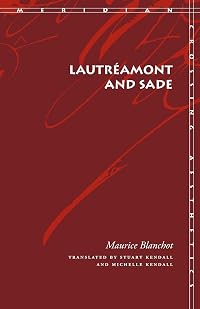
Description
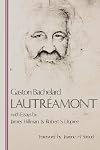
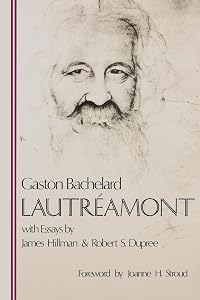
The famous French scientist-psychologist-literary critic provides a virtual bestiary for depth psychology and literary criticism in his study of Isidore Ducasse, known by the pen-name Lautreamont. Includes essays by James Hillman "Bachelard's Lautreamont, or Psychoanalysis without a Patient," and Robert Scott Dupree, "Bachelard as Literary Critic." Bachelard's only book devoted to a single author/poet. 152 pages, indexed. THE BACHELARD TRANSLATIONS are the inspiration of Joanne H. Stroud, show more Director of Publications for The Dallas Institute of Humanities and Culture, who in 1981 contracted with Jose Corti to publish in English the untranslated works of Bachelard on the imagination. Gaston Bachelard is acclaimed as one of the most significant modern French thinkers. From 1929 to 1962 he authored twenty-three books addressing his dual concerns, the philosophy of science and the analysis of the imagination of matter. The influence of his thought can be felt in all disciplines of the humanities - art, architecture, literature, language, poetics, philosophy, and depth psychology. His teaching career included posts at the College de Bar-sur-Aube, the University of Dijon, and from 1940 to 1962 the chair of history and philosophy of science at the Sorbonne. One of the amphitheaters of the Sorbonne is called "L'Amphi Gaston Bachelard," an honor Bachelard shared with Descartes and Richelieu. He received the Grand Prix National Lettres in 1961-one of only three philosophers ever to have achieved this honor. The influence of his thought can be felt in all disciplines of the humanities-art, architecture, literature, poetics, psychology, philosophy, and language." show lessTags
Recommendations











Member Reviews
Never read a literary criticism like this. Reading Bachelard's New Scientific Spirit a long time back, and then knowing more about his adventures in philosophy and arts, I have always wondered what a uniquely enlightening soul he was. His theory of time and theory of art were uniquely in concert with his theory of epistemological rupture. I picked this one up to see how he interweaves his theory of poetry into his beloved bigger picture. Had I read Lautreamont's Maldoror, I would have appreciated it more. It was still a very engaging read but I had to skim parts of it, only to come back later when I read Lautreamont's poems.
Ratings
Members
- Recently Added By
Author Information

66+ Works 5,858 Members
Born in Bar-sur-Aube, France, in 1884, Gaston Bachelard received his doctorate in 1927. He became professor of philosophy at the University of Dijon in 1930, and held the chair in the history and philosophy of science at the University of Paris from 1940 to 1954. In epistemology and the philosophy of science, Bachelard espoused a dialectical show more rationalism, or dialogue between reason and experience. He rejected the Cartesian conception of scientific truths as immutable; he insisted on experiment as well as mathematics in the development of science. Bachelard described the cooperation between the two as a philosophy of saying no, of being ever ready to revise or abandon the established framework of scientific theory to express the new discoveries. In addition to his contributions to the epistemological foundations of science, Bachelard explored the role of reverie and emotion in the expressions of both science and more imaginative thinking. His psychological explanations of the four elements-earth, air, fire, water-illustrate this almost poetic aspect of his philosophy. (Bowker Author Biography) show less
Series

Common Knowledge
- Original publication date
- 1939
- First words
- We know nothing about the inner life of Isidor Ducasse, who remains thoroughly concealed behind his pen name of Lautreamont.
Classifications
- Genres
- Nonfiction, Literature Studies and Criticism, Fiction and Literature
- DDC/MDS
- 841.8 — Literature & rhetoric French Literature French poetry Later 19th century, 1848–1900
- LCC
- PQ2220 .D723 .Z59 — Language and Literature French, Italian, Spanish and Portuguese literatures French literature Modern literature 19th century
- BISAC
Statistics
- Members
- 59
- Popularity
- 523,596
- Reviews
- 1
- Rating
- (4.00)
- Languages
- 5 — English, French, Italian, Portuguese, Spanish
- Media
- Paper
- ISBNs
- 8
- ASINs
- 1