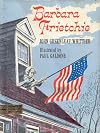
Barbara Frietchie
by John Greenleaf Whittier
On This Page
Description
An illustrated edition of the poem describing Barbara Fritchie's dramatic stand with the Union flag against the rebel troops invading her town.Tags
Recommendations






















Member Reviews
To quote Ogden Nash: "I'm very fond of Barbara Frietchie, I bet she scratched when she was itchy." She certainly inspired me in my life of questioning authority.
The Confederat troops marched through Frederick, Maryland and everybody feared them except a lady named Barbara Frietchie. She raised the American flag even when Stonewall Jackson and his troops shot at it she still raised it proud. When the Confederacy ended Frietchie was a national hero.
Ratings
Members
- Recently Added By
Lists

Rhyming Stories
4 works; 1 member
Author Information

247+ Works 2,020 Members
Whittier, the Quaker poet, was a "man of peace" but also "the poet militant." While his nonconformist religion demanded passive resistance in the physical arena, he was vigorous in opposition to slavery and the enemies of democratic principles. Born near Haverhill, Massachusetts, and educated at local schools, Whittier became editor of several show more country newspapers and in 1831 published his first book, Legends of New England in Prose and Verse. This was followed by a number of volumes of poetry, nearly 20 between 1836 and the outbreak of the Civil War, but a literary life was not uppermost in Whittier's mind during these turbulent years. Having been drawn into the antislavery movement by William Lloyd Garrison and others, Whittier became one of the most effective voices in the fight against slavery through his poetry and other writings. He himself said that he "set a higher value on his name as appended to the Anti-Slavery Declaration in 1833 than on the title page of any book." It has been said that his Voices of Freedom (1846), raised in the cause of abolition, was second only to Uncle Tom's Cabin in influencing the public against slavery. Following the war, Whittier felt free to turn his primary attention from politics to other themes and matters in his poetry, most successfully to the New England folk life that he had known so intimately during his years in rural Massachusetts and which is reflected in Among the Hills (1869). Snow-Bound: A Winter Idyl (1866) is a long poem celebrating those rural values that Whittier had known in his youth but that were now vanishing before the industrial and urban forces that were transforming the American landscape and, some feared, character. In this, one of the most popular poems of nineteenth-century America, Whittier seeks in his personal past, as Robert Penn Warren pointed out, "not only a sense of personal renewal and continuity, but also a sense of the continuity of the new order with the American past." Other poems of high merit from these later years include "Abraham Davenport" (1866), the exquisite "Prelude" to Among the Hills (1868), and "In School-Days" (1870). 020 (Bowker Author Biography) show less
All Editions
Awards and Honors
Work Relationships
Is contained in
A Set of Short Stories (The Concord Hymn, An Excerpt from Self-Reliance, The Last Leaf, Old Ironsides, The Batte Hymn of the Republic, The Children's Hour, Paul Revere's Ride, The Village Blacksmith, Two Excerpts from Walden, Barbara Frietchie, The Barefoot Boy) by Holmes Emerson, Howe, Longfellow, Thoreau and Whittier
Common Knowledge
- People/Characters
- Robert E. Lee
- Important places
- Frederick, Maryland, USA
Classifications
Statistics
- Members
- 57
- Popularity
- 538,312
- Reviews
- 2
- Rating
- (4.00)
- Languages
- English
- Media
- Paper, Audiobook, Ebook
- ISBNs
- 3
- ASINs
- 2