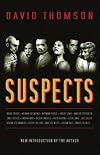
Suspects
by David Thomson
On This Page
Description
Noah Cross, Norma Desmond, Norman Bates, Harry Lime - these are a few of nearly a hundred names that inhabit the mind of the narrator as he starts to compose short biographies of some of the most famous characters in the history of film noir. He sketches in whole lives, lives as intense as the dreams put up on the screen. Then these characters start to meet each other outside the films as if they were real people with real needs and passions. Ultimately an examination on how movies affect show more the way we think and how film not only shapes our perceptions and our memories but in some ways comes to stand in for them, Suspects can be read as an unsettling examination of identity and the construction of self through the medium of narratives, or simply as a fascinating take on movie fandom. show lessTags
Recommendations
















Member Reviews
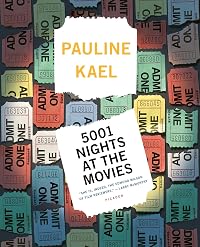
In every generation of film historians and critics there seems to be one who is more...more astute, more talented as a writer, more opinionated, more infuriating at times, and more acute. US critic Pauline Kael was a perfect earlier example but the current heir to her throne is British expatriate David Thomson. No one thinks as he does or writes as he does and Thomson and his works are always interesting, even if one doesn't always go with his opinions (which would surely please him).
He has written many vital and important books on film history but one of his most fascinating is Suspects, a book which wildly and cleverly weaves not just fact and fiction but fact and several fictions into a deceptive whole.
One of the basic ideas upon show more which this book is built is that movies quite often distort the lives of real people with the many purported biographical films Hollywood has made (and, make no mistake, this book is about Hollywood movies), so why wouldn't the movies do the same to fictional characters and their lives?
The book starts off, and proceeds for quite a while, looking like a group of case histories. Each section starts, logically enough, with the character's name, the actor portraying the character in parentheses (and this will become important as the book progresses) and the film in which the character appears. Some entries relate the character's early life, others what happened after the story in the movie ended (fans of Rebel Without a Cause may never get over Thomson's fate for Natalie Wood's character and the future he creates for Diane Keaton's character in The Godfather movies, written long before Godfather III, is very hard to shake).
For a good while it seems as though this book is just a collection of movie related historical fan fiction. However, little by little, it starts to become apparent that there is a singular narrative voice uniting these stories. The voice turns out to belong to a beloved Hollywood film character from a film both light and dark. Also, while some of the stories stand unto themselves, others begin forming a larger story of its own. They storyline of the narrator's film eventually joins with that of a famous mystery film noir and the two stories mesh and climax when joined with a third film, a film starring the actor who played the narrator and was directed by the man responsible for the mystery film. Along the way the narrator also meets up with, or is related to characters from several other films, both classic and more recent (let's just say that he ends up with a jaw-dropping array of children and siblings).
However, there are still other things going within this book. Though it doesn't greatly intrude on the larger story the book is creating, the neo-noir classic Chinatown becomes a very significant marker to the tone and theme of the work. Also, quite significantly, the lives of the actors playing the characters and other roles which these actors have played start to intermingle with the character the chapter initially appears to concern. For example, one character chosen is Laurel Gray, the female lead in the film noir classic In a Lonely Place. While the first part of the chapter deals with the author's take on the events of the film, the second co-ops major details from the life of actress Gloria Grahame, the character's protrayer (and those details couldn't have been made up). By the same token, the characters played by Marlene Dietrich in Morocco and Edward G Robinson and Fred MacMurray in Double Indemnity morph into other characters the actors played at other points in time. The mash ups aren't too convincing in and of themselves but the real point is that the actors' careers could encompass all of these roles and imprint all of the characters on the minds of the audience members.
In some sense this book is a bit of a parlor game with smart cinephiles identifying films, roles, actors. However, Thomson is also making a big point about that and the very fact of watching as opposed to doing. In fact, the author sets a trap for that type of reader which is sprung near the end of the book with the chapter involving Judy Barton from Alfred Hitchcock's classic Vertigo (if that chapter bothers the reader, then that reader has been good and caught).
Perhaps this book is preaching to the choir in some senses. If one doesn't know the films and the characters and actors who are contained in them, the book might not be of interest (though quite well written). However, the author also seems to take such readers with something of a grain of salt. However, if the reader is in the target range for this book's target readership, it's a great (if sometimes very dark) ride. show less
He has written many vital and important books on film history but one of his most fascinating is Suspects, a book which wildly and cleverly weaves not just fact and fiction but fact and several fictions into a deceptive whole.
One of the basic ideas upon show more which this book is built is that movies quite often distort the lives of real people with the many purported biographical films Hollywood has made (and, make no mistake, this book is about Hollywood movies), so why wouldn't the movies do the same to fictional characters and their lives?
The book starts off, and proceeds for quite a while, looking like a group of case histories. Each section starts, logically enough, with the character's name, the actor portraying the character in parentheses (and this will become important as the book progresses) and the film in which the character appears. Some entries relate the character's early life, others what happened after the story in the movie ended (fans of Rebel Without a Cause may never get over Thomson's fate for Natalie Wood's character and the future he creates for Diane Keaton's character in The Godfather movies, written long before Godfather III, is very hard to shake).
For a good while it seems as though this book is just a collection of movie related historical fan fiction. However, little by little, it starts to become apparent that there is a singular narrative voice uniting these stories. The voice turns out to belong to a beloved Hollywood film character from a film both light and dark. Also, while some of the stories stand unto themselves, others begin forming a larger story of its own. They storyline of the narrator's film eventually joins with that of a famous mystery film noir and the two stories mesh and climax when joined with a third film, a film starring the actor who played the narrator and was directed by the man responsible for the mystery film. Along the way the narrator also meets up with, or is related to characters from several other films, both classic and more recent (let's just say that he ends up with a jaw-dropping array of children and siblings).
However, there are still other things going within this book. Though it doesn't greatly intrude on the larger story the book is creating, the neo-noir classic Chinatown becomes a very significant marker to the tone and theme of the work. Also, quite significantly, the lives of the actors playing the characters and other roles which these actors have played start to intermingle with the character the chapter initially appears to concern. For example, one character chosen is Laurel Gray, the female lead in the film noir classic In a Lonely Place. While the first part of the chapter deals with the author's take on the events of the film, the second co-ops major details from the life of actress Gloria Grahame, the character's protrayer (and those details couldn't have been made up). By the same token, the characters played by Marlene Dietrich in Morocco and Edward G Robinson and Fred MacMurray in Double Indemnity morph into other characters the actors played at other points in time. The mash ups aren't too convincing in and of themselves but the real point is that the actors' careers could encompass all of these roles and imprint all of the characters on the minds of the audience members.
In some sense this book is a bit of a parlor game with smart cinephiles identifying films, roles, actors. However, Thomson is also making a big point about that and the very fact of watching as opposed to doing. In fact, the author sets a trap for that type of reader which is sprung near the end of the book with the chapter involving Judy Barton from Alfred Hitchcock's classic Vertigo (if that chapter bothers the reader, then that reader has been good and caught).
Perhaps this book is preaching to the choir in some senses. If one doesn't know the films and the characters and actors who are contained in them, the book might not be of interest (though quite well written). However, the author also seems to take such readers with something of a grain of salt. However, if the reader is in the target range for this book's target readership, it's a great (if sometimes very dark) ride. show less
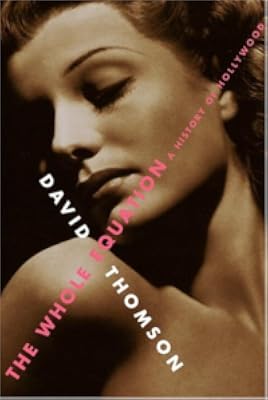
Last year, David Thomson wrote a fantastic book called The Whole Equation, A History Of Hollywood. This time, he delves headlong into uncertain territory with a 'novel' which is essentially biographies of characters from famous films, all weaved together and inhabiting the same fictional world. Unfortunately, the cleverness of it hangs on whether you have seen all the films he references. Mr Thomson clearly has, but how many other readers can boast the same? The narrative device which no doubt sounded unique and compelling in 'pitch' form has the effect of hamstringing any sense of pace or story in favour of film-geekiness. As a curiosity - fine. As a serious piece of work...I'd ask him to stick to criticism.
Ratings
Members
- Recently Added By
Lists

Sight and Sound's Best Film Books
34 works; 1 member

Film
114 works; 1 member
Author Information

58+ Works 3,693 Members
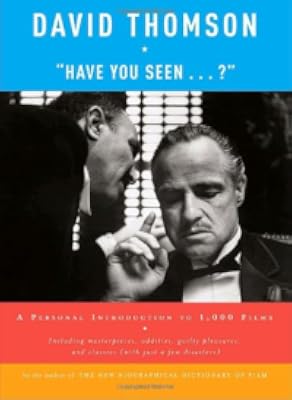
David Thomson is the author of The New Biographical Dictionary of Film, now in its fifth edition. His recent books include a biography of Nicole Kidman and The Whole Equation: A History of Hollywood, and Have You Seen ?: A Personal Introduction to 1,000 Films. Born in London, he now lives in San Francisco.
Awards and Honors
Common Knowledge
- Canonical title*
- Sospechosos
- Original title
- Suspects
- Original publication date
- 1985
- People/Characters
- George Bailey
- Important places
- Bedford Falls, New York, USA (fictional)
- Original language*
- Inglés
*Some information comes from Common Knowledge in other languages. Click "Edit" for more information.
Classifications
Statistics
- Members
- 155
- Popularity
- 208,811
- Reviews
- 2
- Rating
- (3.60)
- Languages
- English, Spanish
- Media
- Paper, Ebook
- ISBNs
- 10
- ASINs
- 2