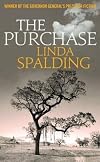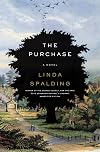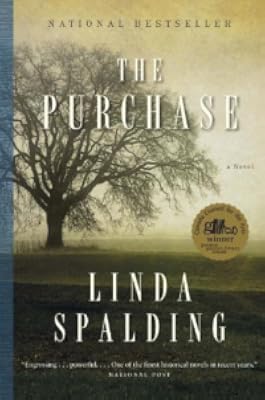
The Purchase
by Linda Spalding
On This Page
Description
Shunned by his Quaker community for marrying a servant girl, Daniel Dickinson pursues a new life on the Virginia frontier, where his family's values are tested by the challenges of homestead life and the moral dilemma of slave ownership.Tags
Recommendations











Member Reviews
The humanity and hypocrisy of pioneer life in early America
The year is 1798. Daniel Dickenson, the father of five children is a Quaker living in Pennsylvania. His wife has just died a few months after giving birth to his youngest son. He has taken on a young woman, Ruth Boyd, an orphan and a Methodist, on a bond of indenture to help with the family during this time. Rather than return her to the almshouse as the Elders insist he feels obligated to keep her. This results in him being banished.
He packs up his family along with Ruth Boyd whom he marries and undertakes a journey to Virginia to start a new life.
The story that unfolds in The Purchase by Linda Spalding is an authentic depiction of what life was like as a pioneer in early show more America and embraces religion, family, morality and slavery. It is a story of hypocrisy as well as humanity.
The title, The Purchase, refers to the protagonist’s inadvertent purchase of a young boy as a slave. Dickenson, being a Quaker, is an abolitionist, and struggles with this moral dilemma throughout the story. He acts like a slave owner, albeit an enlightened one and he benefits from slave labour, yet considers himself against slavery. This ambivalence is endemic in his character and impacts on his relationships with his family and his community.
Spalding has a population of characters and yet this reader was able to discern each one and while their motivations were complex they all were believable.
This book is seamlessly plotted and powerfully written with sparse yet elegant prose and though it works on many levels they’re all expertly woven together in an intricate mosaic.
Though a remarkable accomplishment it fell short of five stars for me because I couldn’t relate to any of the characters. The time, the society, the circumstances were just too unfamiliar. show less
The year is 1798. Daniel Dickenson, the father of five children is a Quaker living in Pennsylvania. His wife has just died a few months after giving birth to his youngest son. He has taken on a young woman, Ruth Boyd, an orphan and a Methodist, on a bond of indenture to help with the family during this time. Rather than return her to the almshouse as the Elders insist he feels obligated to keep her. This results in him being banished.
He packs up his family along with Ruth Boyd whom he marries and undertakes a journey to Virginia to start a new life.
The story that unfolds in The Purchase by Linda Spalding is an authentic depiction of what life was like as a pioneer in early show more America and embraces religion, family, morality and slavery. It is a story of hypocrisy as well as humanity.
The title, The Purchase, refers to the protagonist’s inadvertent purchase of a young boy as a slave. Dickenson, being a Quaker, is an abolitionist, and struggles with this moral dilemma throughout the story. He acts like a slave owner, albeit an enlightened one and he benefits from slave labour, yet considers himself against slavery. This ambivalence is endemic in his character and impacts on his relationships with his family and his community.
Spalding has a population of characters and yet this reader was able to discern each one and while their motivations were complex they all were believable.
This book is seamlessly plotted and powerfully written with sparse yet elegant prose and though it works on many levels they’re all expertly woven together in an intricate mosaic.
Though a remarkable accomplishment it fell short of five stars for me because I couldn’t relate to any of the characters. The time, the society, the circumstances were just too unfamiliar. show less
Historically, The Purchase is fascinating as it combines several different elements of the country’s unique background. Daniel’s world is as unfamiliar to him as it is to modern readers, but it is Ms. Spalding’s succinct descriptions that allow readers to adapt and learn about this unfamiliar setting and lifestyle. The vastness of the world without towns, roads, or even neighbors plays in stark contrast to Daniel’s former life among the Quakers. The sheer number of issues Daniel faces upon his arrival at his new homestead emphasizes those differences. It is a world that is simultaneously very broad and yet very narrow and intriguing in both its possibilities and its limitations.
Daniel’s adoption of his new location provides show more readers with plenty of opportunities to learn about life on the Kentucky frontier and the hard-scrabble life that accompanies it. Surprisingly, Daniel has a fairly large number of neighbors, so the isolation that one associates with pioneering is not quite the issue it might have been. Then again, it is the interactions with these neighbors that cause a majority of the tension. Alongside frontier living is the element of slavery. Of particular interest is the idea that most of Daniel’s neighbors own slaves because of necessity and not because of any firm belief in the practice. With few inhabitants in the area and a constant battle for survival against a wilderness that does not want to be tamed, one or two slaves can make all the difference between eking out a living or total failure. While there is no excuse for the enslavement of any human, Ms. Spalding does an excellent job showing how easy it is for someone to become inured to the practice and even become involved in it in some fashion.
While the story revolves around Daniel Dickinson, he is more anti-hero than hero. He is stubborn, too passive in an aggressive environment, convinced of his superior intelligence among his family and neighbors, and incapable of compromise. Daniel’s Quaker beliefs clash with the unwritten rules of life on the frontier, not to mention the abolitionist tenets of the Quaker faith up against the nonchalant acceptance of the institution among Daniel’s new peers. He may accidentally purchase Onesimus and keep him as a slave, but his adamant insistence on maintaining all aspects of his belief system provides huge wells of guilt that keep him weak in a world where the weak just cannot survive. The rest of the characters are equally flawed and oh-so-very human. Their realistic attributes will generate a myriad of emotions within a reader – everything from frustration to disgust to pride to resignation – as they all make good and very poor choices that will continue to haunt them all.
While a reader can guess what some of the inevitable clashes will be from Daniel’s accidental purchase of Onesimus, it is the surprising arcs the story takes that keeps a reader’s interest. The compromise of Daniel’s beliefs so early in the story results in a profound stubbornness that does more harm than good. Combined with his Quaker passivity, the two traits, along with his initial actions upon arrival in the country, do more to cause the resultant scenes than anything else. Onesimus is a mere victim of Daniel’s belief system.
Given its subject matter, The Purchase is not the cheeriest of novels. The first-person account of slavery is as rough and disturbing as one would expect, while the characters and all their faults do little to nothing to ease a reader’s angst. Throughout the story, the overwhelming feelings of distress among all the characters, free and slave, serve to emphasize the arduousness of life on the frontier. Much like its frontier setting, it is stark and brutal and not for the easily distressed. show less
Daniel’s adoption of his new location provides show more readers with plenty of opportunities to learn about life on the Kentucky frontier and the hard-scrabble life that accompanies it. Surprisingly, Daniel has a fairly large number of neighbors, so the isolation that one associates with pioneering is not quite the issue it might have been. Then again, it is the interactions with these neighbors that cause a majority of the tension. Alongside frontier living is the element of slavery. Of particular interest is the idea that most of Daniel’s neighbors own slaves because of necessity and not because of any firm belief in the practice. With few inhabitants in the area and a constant battle for survival against a wilderness that does not want to be tamed, one or two slaves can make all the difference between eking out a living or total failure. While there is no excuse for the enslavement of any human, Ms. Spalding does an excellent job showing how easy it is for someone to become inured to the practice and even become involved in it in some fashion.
While the story revolves around Daniel Dickinson, he is more anti-hero than hero. He is stubborn, too passive in an aggressive environment, convinced of his superior intelligence among his family and neighbors, and incapable of compromise. Daniel’s Quaker beliefs clash with the unwritten rules of life on the frontier, not to mention the abolitionist tenets of the Quaker faith up against the nonchalant acceptance of the institution among Daniel’s new peers. He may accidentally purchase Onesimus and keep him as a slave, but his adamant insistence on maintaining all aspects of his belief system provides huge wells of guilt that keep him weak in a world where the weak just cannot survive. The rest of the characters are equally flawed and oh-so-very human. Their realistic attributes will generate a myriad of emotions within a reader – everything from frustration to disgust to pride to resignation – as they all make good and very poor choices that will continue to haunt them all.
While a reader can guess what some of the inevitable clashes will be from Daniel’s accidental purchase of Onesimus, it is the surprising arcs the story takes that keeps a reader’s interest. The compromise of Daniel’s beliefs so early in the story results in a profound stubbornness that does more harm than good. Combined with his Quaker passivity, the two traits, along with his initial actions upon arrival in the country, do more to cause the resultant scenes than anything else. Onesimus is a mere victim of Daniel’s belief system.
Given its subject matter, The Purchase is not the cheeriest of novels. The first-person account of slavery is as rough and disturbing as one would expect, while the characters and all their faults do little to nothing to ease a reader’s angst. Throughout the story, the overwhelming feelings of distress among all the characters, free and slave, serve to emphasize the arduousness of life on the frontier. Much like its frontier setting, it is stark and brutal and not for the easily distressed. show less
What happens when you are faced with betraying your principles and beliefs? Can it destroy your entire life? In Linda Spalding's The Purchase, her main character, Daniel, is a Quaker who mistakenly buys a slave after having his whole life already thrown into turmoil. But his purchase of another human being marks his life and all the future decisions in it like nothing else.
Opening with Daniel Dickinson, his new, young wife, and his five children leaving the Quaker settlement they call home after Daniel's shunning by the community for marrying his young servant after his wife's untimely death, the family leaves behind all that anchors them in life and sets out on a hard journey to a new home they must carve out of the western Virginia show more wilderness for themselves. That they are completely unequipped for this new life and will make mistake after mistake in this new place is immediately evident in the narrative. Daniel knows nothing about the woods around them; he is no farmer, and in fact seems fairly unskilled and uniformed about the hardships he's going to put his family and himself through. It is a fool's errand on which he has embarked and one that will spawn unrelenting misery and tragedy after tragedy. Daniel's poor choices are only compounded when he takes the only cash he has to a farm implement auction and instead of buying tools, ends up buying a slave named Onesimus, having to forfeit his favorite mare, a horse that was to help him establish his farm in order to pay for the slave he doesn't want. His intention of eventually earning enough money to buy back his horse and to free Onesimus, while morally righteous, is a plan even less well-conceived, given his general ineptitude for this harsh life, than his plan to move the family into the wilderness in the first place.
Unfolding slowly over a number of years, the narrative is told by a rotating cast of characters. It is hard to tell which character is intended to carry the story as just when the mind and motivation of the character narrating starts to come into focus, the novel changes perspective and moves on in time. Add to this the fact that none of the characters are particularly appealing, every last one of them accepts being a doormat at each turn, perhaps nurtured by patriarch Daniel's weak and frustrating passivity. He wants to hold onto his dearly held Quaker beliefs but instead of lending him a strength and stature, he becomes a pitiful mockery of a principled person, leading not only the other characters to be frustrated by him but also the reader as well. Certainly the life that the family leads is a hard, brutal, and uncivilized one but the tone of the entire novel is relentlessly grim and unbending. Daniel's flaws help to explain and justify his children's attraction and allure to violence at odds with his half-hearted teachings and make the resulting tragedies inevitable. But over all, the book does a good job showing the soul-destroying power of the frontier and the difficult life that anyone choosing to try and tame it would have faced. Historically the novel seems mostly accurate although one bit that was glaringly wrong to me and made me shake my fist at the sloppiness of the passage has a large green log being thrown onto a fire and immediately blazing with flame. This does not happen with green wood. Seasoned and aged? If the fire is hot enough to sustain a round log, sure. Green wood? Not a chance in this world. And while complaining about a detail like this might seem to be nitpicking, this is a time and a place where wood fires are vital to survival and so it's not an insignificant error. This is definitely not a novel for anyone looking for a story of redemption or hope and glimmers of humor or even contentment are completely missing as well. It is a depressing and downtrodden tale from first to last. show less
Opening with Daniel Dickinson, his new, young wife, and his five children leaving the Quaker settlement they call home after Daniel's shunning by the community for marrying his young servant after his wife's untimely death, the family leaves behind all that anchors them in life and sets out on a hard journey to a new home they must carve out of the western Virginia show more wilderness for themselves. That they are completely unequipped for this new life and will make mistake after mistake in this new place is immediately evident in the narrative. Daniel knows nothing about the woods around them; he is no farmer, and in fact seems fairly unskilled and uniformed about the hardships he's going to put his family and himself through. It is a fool's errand on which he has embarked and one that will spawn unrelenting misery and tragedy after tragedy. Daniel's poor choices are only compounded when he takes the only cash he has to a farm implement auction and instead of buying tools, ends up buying a slave named Onesimus, having to forfeit his favorite mare, a horse that was to help him establish his farm in order to pay for the slave he doesn't want. His intention of eventually earning enough money to buy back his horse and to free Onesimus, while morally righteous, is a plan even less well-conceived, given his general ineptitude for this harsh life, than his plan to move the family into the wilderness in the first place.
Unfolding slowly over a number of years, the narrative is told by a rotating cast of characters. It is hard to tell which character is intended to carry the story as just when the mind and motivation of the character narrating starts to come into focus, the novel changes perspective and moves on in time. Add to this the fact that none of the characters are particularly appealing, every last one of them accepts being a doormat at each turn, perhaps nurtured by patriarch Daniel's weak and frustrating passivity. He wants to hold onto his dearly held Quaker beliefs but instead of lending him a strength and stature, he becomes a pitiful mockery of a principled person, leading not only the other characters to be frustrated by him but also the reader as well. Certainly the life that the family leads is a hard, brutal, and uncivilized one but the tone of the entire novel is relentlessly grim and unbending. Daniel's flaws help to explain and justify his children's attraction and allure to violence at odds with his half-hearted teachings and make the resulting tragedies inevitable. But over all, the book does a good job showing the soul-destroying power of the frontier and the difficult life that anyone choosing to try and tame it would have faced. Historically the novel seems mostly accurate although one bit that was glaringly wrong to me and made me shake my fist at the sloppiness of the passage has a large green log being thrown onto a fire and immediately blazing with flame. This does not happen with green wood. Seasoned and aged? If the fire is hot enough to sustain a round log, sure. Green wood? Not a chance in this world. And while complaining about a detail like this might seem to be nitpicking, this is a time and a place where wood fires are vital to survival and so it's not an insignificant error. This is definitely not a novel for anyone looking for a story of redemption or hope and glimmers of humor or even contentment are completely missing as well. It is a depressing and downtrodden tale from first to last. show less
This book is beautifully written, but it is indeed very dark. The prose is lyrical, but stripped-down. This is an historical novel written in the manner of Thomas Hardy. It is unrelenting in the sadness and despair that the author portrays. The setting is Virginia at the very beginning of the 19 century. Ms. Hardy has managed to create a world within the confines of the covers of this book. The story is about a young Quaker man who's wife has just died, leaving him with five motherless children. He has brought a young Methodist servant into his house to help him with this brood and decides that he can only protect her and his family if she becomes his wife, even though she is not much older than his oldest child. As a result of this show more decision he is shunned from the Quaker community in Pennsylvania, and decides to set out for Virginia in order to start a farm. Daniel is lost out in the real world, and he makes some rather unfortunate choices as he tries to carve out a life for his family in the harsh Virginia wilderness. Daniel's choices and actions cause repercussions that are to be felt for years after and they rock his little family to the core. This is a harsh and unforgiving land that he settles in and every member of his family has to work against tremendous hardships in order to survive. These characters are so real and so incredibly human and the picture created of pioneer life so realistic, that I felt like I was there living in Southern Virginia, at the edges of the great American frontier. It is not an easy book to read because Ms. Spalding does not stint on the detail of the hardships and degradations that early pioneers had to endure. And the picture that is painted of slavery and of the lives of slaves during this time is unrelenting and sometimes unbearable. This book is a well-deserved winner of the 2012 Governor General's literary award. show less
What struck me about this book is the lengths to which well intentioned people with high morals would go to justify compromising those morals. You see how insidious an evil idea such as slavery can be. The story was so compelling, and how disillusioned I became with the protagonist, Daniel and yet intrigued by the female characters. A good read.
“There were other wagons leaving Pennsylvania and going south and west, but none were so laden with woe as the one that carried the five children and the widower and his new bride.” (4)
The Purchase opens in 1798 Pennsylvania where Daniel Dickinson has been shunned from his Quaker community by Elders for his hasty marriage to a fifteen year old orphan. The recently widowed father of five has married his young house servant, Ruth Boyd, who came to the Dickinsons from an almshouse. Ruth, a child herself, will now mother Daniel’s own orphaned children. So it is that he, his new wife, and his five children, are moving west, headed for Virginia.
Once relocated, Daniel, a firm abolitionist, finds himself the unexpected owner of a young show more slave, Onesimus. The “purchase” sets in motion a chain of events that visits tragedy upon tragedy on the family, and leads ultimately to murder. As the narrative unfolds, Daniel will struggle to hold fast to his beliefs in a changing world. His young, unloved wife, his willful eldest daughter’s relationship with Bett, a runaway slave, his youngest daughter’s impossible love, and the pursuits of his sons will test his Quaker values.
“When his wife died, he’d blamed the doctor, not the Lord. Disowned by his community in Brandywine, he’d decided to pack up his children and go where he might find tolerance. He had driven past the wealthy plantations crowning the hilltops of Tidewater Virginia, moving west to the rugged hand-hewn cabins of the valleys, sure that his character would adapt to the new landscape. He thought now that he should never have wished for such a thing.” (158)
The Purchase is dark, bewitching, and imbued with moral complexity. Spalding’s prose is seductive and magnetic, so much so that this is one I did not want to put down. Her characters, dark and complex and enslaved by their own burdens, are superbly written. She is a Canadian author new to me, but The Purchase is richly deserving of its 2012 Governor General’s Literary Award.
Highly recommended! show less
The Purchase opens in 1798 Pennsylvania where Daniel Dickinson has been shunned from his Quaker community by Elders for his hasty marriage to a fifteen year old orphan. The recently widowed father of five has married his young house servant, Ruth Boyd, who came to the Dickinsons from an almshouse. Ruth, a child herself, will now mother Daniel’s own orphaned children. So it is that he, his new wife, and his five children, are moving west, headed for Virginia.
Once relocated, Daniel, a firm abolitionist, finds himself the unexpected owner of a young show more slave, Onesimus. The “purchase” sets in motion a chain of events that visits tragedy upon tragedy on the family, and leads ultimately to murder. As the narrative unfolds, Daniel will struggle to hold fast to his beliefs in a changing world. His young, unloved wife, his willful eldest daughter’s relationship with Bett, a runaway slave, his youngest daughter’s impossible love, and the pursuits of his sons will test his Quaker values.
“When his wife died, he’d blamed the doctor, not the Lord. Disowned by his community in Brandywine, he’d decided to pack up his children and go where he might find tolerance. He had driven past the wealthy plantations crowning the hilltops of Tidewater Virginia, moving west to the rugged hand-hewn cabins of the valleys, sure that his character would adapt to the new landscape. He thought now that he should never have wished for such a thing.” (158)
The Purchase is dark, bewitching, and imbued with moral complexity. Spalding’s prose is seductive and magnetic, so much so that this is one I did not want to put down. Her characters, dark and complex and enslaved by their own burdens, are superbly written. She is a Canadian author new to me, but The Purchase is richly deserving of its 2012 Governor General’s Literary Award.
Highly recommended! show less
Linda Spalding's new novel The Purchase is a finalist for the Governor General's Literary Award for Fiction. Trust me, it's an absolute must read.
1798. Daniel Dickinson is a devout Quaker. But when his wife dies leaving him with five young children and he quickly marries Ruth, a fifteen year old orphan, he is cast out of the fellowship. With no home and no community, he then packs his family in a wagon and heads to Virginia to homestead. At an auction to buy needed farming tools, Daniel instead ends up with a young slave boy. As an abolitionist, this goes against everything he believes in. This purchase is the catalyst for a series of events that will change the lives of family, friends, enemies and more.
I literally hurtled through the show more first part of The Purchase. Spalding drew me into the lives of the Dickinson family. The characters are exceptionally well drawn. Daniel struggles with his ownership of Onesimus, his marriage to a girl he doesn't even know, his efforts to build a new life for his children in a wilderness that he is ill prepared for and trying to follow his beliefs. His oldest daughter Mary is stubborn, petulant, wilful but also kind and giving. But not to her stepmother. But it is quiet, silent Ruth that I was most drawn to. And to the slave Bett as well. There is a large cast of characters, each bringing a turn in the tale. And all elicit strong emotions and reactions. The interactions between the players sets up an almost tangible sense of foreboding.
I stopped after part one, which ends on a cataclysmic note, to gather my thoughts. Where could the story go from here? I started part two a few days later and didn't put the book down until I turned the last page. And then I sat and thought again.
Spalding's prose are rich, raw, powerful and oh, so evocative. She explores so much in The Purchase - freedom, faith, family, love, loss and more.
On reading the author's notes, I discovered that The Purchase is based on Spalding's own family history. She visited sites and settings that are used in the book. I think the personal connection added so much to the book.
Brilliant. One of my top reads for 2012. Can lit rocks! show less
1798. Daniel Dickinson is a devout Quaker. But when his wife dies leaving him with five young children and he quickly marries Ruth, a fifteen year old orphan, he is cast out of the fellowship. With no home and no community, he then packs his family in a wagon and heads to Virginia to homestead. At an auction to buy needed farming tools, Daniel instead ends up with a young slave boy. As an abolitionist, this goes against everything he believes in. This purchase is the catalyst for a series of events that will change the lives of family, friends, enemies and more.
I literally hurtled through the show more first part of The Purchase. Spalding drew me into the lives of the Dickinson family. The characters are exceptionally well drawn. Daniel struggles with his ownership of Onesimus, his marriage to a girl he doesn't even know, his efforts to build a new life for his children in a wilderness that he is ill prepared for and trying to follow his beliefs. His oldest daughter Mary is stubborn, petulant, wilful but also kind and giving. But not to her stepmother. But it is quiet, silent Ruth that I was most drawn to. And to the slave Bett as well. There is a large cast of characters, each bringing a turn in the tale. And all elicit strong emotions and reactions. The interactions between the players sets up an almost tangible sense of foreboding.
I stopped after part one, which ends on a cataclysmic note, to gather my thoughts. Where could the story go from here? I started part two a few days later and didn't put the book down until I turned the last page. And then I sat and thought again.
Spalding's prose are rich, raw, powerful and oh, so evocative. She explores so much in The Purchase - freedom, faith, family, love, loss and more.
On reading the author's notes, I discovered that The Purchase is based on Spalding's own family history. She visited sites and settings that are used in the book. I think the personal connection added so much to the book.
Brilliant. One of my top reads for 2012. Can lit rocks! show less
Members
- Recently Added By
Published Reviews
ThingScore 83
The Purchase, an eerily compelling novel by Linda Spalding, has been nominated for the Writers’ Trust Fiction Prize and the Governor General's Literary Award for Fiction....Spalding’s omniscient narrator ferries us through time, accruing characters, sidling us in and out of their perspectives. Her descriptive passages are simple lists of images and elements that create their own show more mesmerizing lyricism. Her metaphors can be awkward: It is one thing to compare the way the slaves are treated to the way animals are treated; it is another to compare slaves to animals. She deepens meaning with literary allusions to Virgil and the Bible; this works well, but leads, I think, to a melodramatic climax involving a thwarted interracial love. The most famous slave literature, on the other hand, tends to dramatize the way slavery hinders black people from loving themselves. Still, the novel is memorable. It reads like a disturbing dream imbued with the power of myth. show less
added by vancouverdeb
This school of novel writing also renders great dollops of moody landscapes, and Spalding is not lacking in that respect, either. But The Purchase is more successful than most at carrying off this kind of writing, partly because of Spalding’s ability to blend narrative drive with genuinely evocative scene setting and partly because her historical material — a dark wilderness in a dark era show more — lends itself to Faulknerian exaggeration...The only indisputable good to come out of the adventures of the Dickinson family is that Daniel eventually learns to forgive. It is not a triumph blazoned in glory; it is a small gesture, but it is real. Otherwise readers are free to come to their conclusions. In so doing, they will find themselves immersed in a powerful mood, a feeling of something dark and brooding and yet bracing, in one of the finest historical novels in recent years. show less
added by vancouverdeb
The novel is shot through with religion – much of it focused on the struggle between Quaker humanism and the moral wilderness of the American South at the turn of the 19th century – and Spalding’s biblically rich prose is in heartbreaking harmony with her theme of freedom. What could it possibly mean to be free, the novel asks, if one’s life is so ferociously overdetermined, whether by show more God or the prevailing social order?
Spalding offers a powerful perspective on pains and oppressions that are specific to a time and place, though it reverberates into the present in uncomfortable ways. The immediacy and sense of recognition percolating through The Purchase makes this reader wonder just how long a shadow history casts on the present day. show less
Spalding offers a powerful perspective on pains and oppressions that are specific to a time and place, though it reverberates into the present in uncomfortable ways. The immediacy and sense of recognition percolating through The Purchase makes this reader wonder just how long a shadow history casts on the present day. show less
added by vancouverdeb
Lists

Governor General of Canada's English Fiction Awards
89 works; 3 members

IMPAC Dublin Literary Award 2014 longlist
150 works; 3 members
Author Information

18+ Works 783 Members
Linda Spalding is a Canadian novelist & editor of "Brick." She met Riska Orpa Sari, author of "Riska: Memories of a Dayak Girlhood," in Borneo while doing research for her acclaimed work of nonfiction, "A Dark Place in the Jungle." (Bowker Author Biography)
Awards and Honors
Common Knowledge
- Canonical title
- The Purchase
- Alternate titles
- The Purchase: A Novel
- Original publication date
- 2012-09-25
- People/Characters
- Daniel Dickinson; Ruth Boyd; Onesimus; Mary Dickinson; Bett
- Important places
- Virginia, USA; Pennsylvania, USA; Kentucky, USA
- Dedication
- In memory of my brother Skip, son of Jacob, who was son of Boyd, who was son of Martin, who was son of John, who was son of Daniel Dickinson.
- First words
- Daniel looked over at the daughter who sat where a wife should sit.
- Last words
- (Click to show. Warning: May contain spoilers.)And when he raised his eyes to the darkest branches overhead, a trace of pale moon was waiting to take back the sky.
- Blurbers
- Adamson, Gil; Phillips, Caryl
Classifications
Statistics
- Members
- 229
- Popularity
- 142,267
- Reviews
- 18
- Rating
- (3.56)
- Languages
- English
- Media
- Paper, Audiobook, Ebook
- ISBNs
- 19
- ASINs
- 4