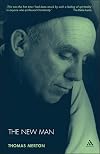
The New Man
by Thomas Merton, Thomas Merton (Author)
On This Page
Description
The New Man shows Thomas Merton at the height of his powers and has as its theme the question of spiritual identity. What must we do to recover possession of our true selves? By way of an answer, Merton discusses how we have become strangers to ourselves by our dependence on outward identity and success, while our real need is for a concern with the image of God in ourselves. At a time of retrieval of our religious traditions, Merton's voice is both intelligent and spiritually show more compelling. Thomas Merton, a Trappist monk, is perhaps the foremost spiritual thinker of the 20th century. His diaries, social commentary, and spiritual writings continue to be widely read after his untimely death in 1968. show lessTags
Recommendations

















Member Reviews
The New Man shows Thomas Merton at the height of his powers and has as its theme the question of spiritual identity. What must we do to recover possession of our true selves? By way of an answer, Merton discusses how we have become strangers to ourselves by our depence on outward identity and success, while our real need is for a concern with the image of God in ourselves. At a time of retrieval of our religious traditions, Merton's voice is both intelligent and spiritually compelling.Thomas Merton, a Trappist monk, is perhaps the foremost spiritual thinker of the twentiethcentury.
A very good and insightful writing on the theme of Christ as the New Adam.
soul self-discovery
Life-changing.
EL HOMBRE NJEVO
El hombre nuevo nos vuelve a traer a un Thomas Merton en la cúspide de su capacidad. Este libro tiene como tema principal la cuestión de nuestra identidad espiritual: ¿qué debemos hacer para recuperar la posesión de nuestro ser genuino? En su respuesta, Thomas Merton discute cómo nos hemos vuelto extraños para nosotros mismos, a causa de nuestra dependencia de la identidad exterior y el éxito mundano, mientras que nuestra necesidad real es preocuparnos por la imagen de Dios que hay en nosotros. “A quienes huyen del tipo acostumbrado de ‘lectura espiritual’ –dijo The Times Literary Supplement-, se les recomienda este libro de Merton. Se encontrarán con una mente vigorosa e inquisitiva, que una y otra vez show more se anticipa a la objeción, la duda e incluso el disgusto.” En una época signada por la necesidad de recuperar nuestras mejores tradiciones religiosas, la voz de Thomas Merton es a la vez inteligente, comprensiva y espiritualmente apremiante. show less
El hombre nuevo nos vuelve a traer a un Thomas Merton en la cúspide de su capacidad. Este libro tiene como tema principal la cuestión de nuestra identidad espiritual: ¿qué debemos hacer para recuperar la posesión de nuestro ser genuino? En su respuesta, Thomas Merton discute cómo nos hemos vuelto extraños para nosotros mismos, a causa de nuestra dependencia de la identidad exterior y el éxito mundano, mientras que nuestra necesidad real es preocuparnos por la imagen de Dios que hay en nosotros. “A quienes huyen del tipo acostumbrado de ‘lectura espiritual’ –dijo The Times Literary Supplement-, se les recomienda este libro de Merton. Se encontrarán con una mente vigorosa e inquisitiva, que una y otra vez show more se anticipa a la objeción, la duda e incluso el disgusto.” En una época signada por la necesidad de recuperar nuestras mejores tradiciones religiosas, la voz de Thomas Merton es a la vez inteligente, comprensiva y espiritualmente apremiante. show less
Aug 13, 2024Spanish
Ratings
Members
- Recently Added By
Author Information

397+ Works 38,236 Members
Born in France, Thomas Merton was the son of an American artist and poet and her New Zealander husband, a painter. Merton lost both parents before he had finished high school, and his younger brother was killed in World War II. Something of the ephemeral character of human endeavor marked all his works, deepening the pathos of his writings and show more drawing him close to Eastern, especially Buddhist, forms of monasticism. After an initial education in the United States, France, and England, he completed his undergraduate degree at Columbia University. His parents, nominally friends, had given him little religious guidance, and in 1938, he converted to Roman Catholicism. The following year he received an M.A. from Columbia University and in 1941, he entered Gethsemani Abbey in Kentucky, where he remained until a short time before his death. His working life was spent as a Trappist monk. At Gethsemani, he wrote his famous autobiography, "The Seven Storey Mountain" (1948); there he labored and prayed through the days and years of a constant regimen that began with daily prayer at 2:00 a.m. As his contemplative life developed, he still maintained contact with the outside world, his many books and articles increasing steadily as the years went by. Reading them, it is hard to think of him as only a "guilty bystander," to use the title of one of his many collections of essays. He was vehement in his opposition to the Vietnam War, to the nuclear arms race, to racial oppression. Having received permission to leave his monastery, he went on a journey to confer with mystics of the Hindu and Buddhist traditions. He was accidentally electrocuted in a hotel in Bangkok, Thailand, on December 10, 1968. (Bowker Author Biography) show less
Common Knowledge
- Original publication date
- 1961
Classifications
Statistics
- Members
- 467
- Popularity
- 65,404
- Reviews
- 5
- Rating
- (3.80)
- Languages
- 5 — English, French, Portuguese, Spanish, Swedish
- Media
- Paper, Ebook
- ISBNs
- 11
- ASINs
- 7