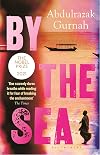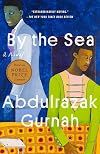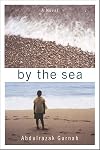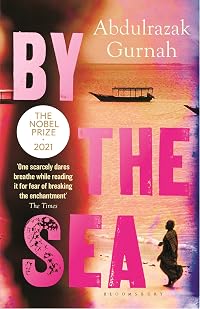
By the Sea
by Abdulrazak Gurnah
On This Page
Description
"On a late November afternoon, Saleh Omar arrives at Gatwick Airport from his native Zanzibar. With him he has a small bag in which lies his most precious possession-a mahogany box containing incense. He used to own a furniture shop, have a house and be a husband and father. Now he is an asylum seeker from paradise, silence his only protection. Meanwhile, Latif Mahmud, a distinguished young professor, lives quietly alone in his London flat. When the two encounter each other in an English show more seaside town, the narratives each carries of their mutual past begin to unravel-revealing an infinitely more fascinating story of love and betrayal, seduction and possession, and of a people desperately trying to find stability amidst the maelstrom of their times"-- show lessTags
Recommendations


















Member Reviews
A man flees his home country to escape persecution. Another one fled years earlier. And then Fate puts them together - twice - once back home on Zanzibar, and now in England. That's the main premise of this short novel - but behind the almost mundane story of refugees and finding one's home, Gurnah manages to tell a story of Zanzibar and a story about the power of memories and perceptions.
Zanzibar is not a locality most people will be familiar with - I suspect the name will be familiar but other from that, it is usually just one of those places that you never think about. The part of this novel which take place there paint a picture which will stay with me for a long time (and which made me wonder again what were the Omanis doing there show more at all) and which may be better than almost any history text you can find about these times. But it is also a personal story - we see the island through the eyes of the two men - both of which fled the island, each for their own reason and yet, they both made the decision to do it. And if it is not enough to remind you about the power of telling a story, the dependence of a narrator when you are told a story, Gurnah reinforces us by having the two men remember the same times and places... and remember them differently. Even if you add them up, you still seem to miss pieces of the puzzle - and that's what this is all about - every story has a lot of sides and when we live through a time, we get one side only.
And that duality and difference is there in everything - in how the two men became refugees, in how they adapted to the changes, in how they keep their memories for home (and what they actually want to keep), even in who they meet when they went away from Zanzibar. It is like one of those carnival mirrors - it seems like it is the same story but in reality, it is 2 different stories - in a sea of separate stories. Being a refugee is not a story in itself; it is part of one's story, changing with the particulars of the individual. And yes, there are the mundane parts of the stories of both men - the stolen box, the German pen-friend, the room in the squalid house - the mundane is as much part of being human as is the exotic and interesting after all.
There had been a lot of books in the last years about refugees and memories of home and finding your place in a new country. This is one of the more memorable ones I've read - even if being a refugee is at the front of the story, it is just part of it, almost getting lost behind the story about what a person tells themselves about their own life.
That is the first novel by Gurnah which I read and I probably would not have picked it up if he had not won the Nobel prize - there are a lot of authors out there and he was not exactly popular (the day the Nobel was announced, my local library had a single copy of a single book by him (this one, the copy I read after waiting for it since the announcement - quite a lot of people beat me to requesting it that day...; the library had added quite a few more since then). I plan to explore what else he had written now - because regardless of how I got to read this novel, I really liked his way of writing. show less
Zanzibar is not a locality most people will be familiar with - I suspect the name will be familiar but other from that, it is usually just one of those places that you never think about. The part of this novel which take place there paint a picture which will stay with me for a long time (and which made me wonder again what were the Omanis doing there show more at all) and which may be better than almost any history text you can find about these times. But it is also a personal story - we see the island through the eyes of the two men - both of which fled the island, each for their own reason and yet, they both made the decision to do it. And if it is not enough to remind you about the power of telling a story, the dependence of a narrator when you are told a story, Gurnah reinforces us by having the two men remember the same times and places... and remember them differently. Even if you add them up, you still seem to miss pieces of the puzzle - and that's what this is all about - every story has a lot of sides and when we live through a time, we get one side only.
And that duality and difference is there in everything - in how the two men became refugees, in how they adapted to the changes, in how they keep their memories for home (and what they actually want to keep), even in who they meet when they went away from Zanzibar. It is like one of those carnival mirrors - it seems like it is the same story but in reality, it is 2 different stories - in a sea of separate stories. Being a refugee is not a story in itself; it is part of one's story, changing with the particulars of the individual. And yes, there are the mundane parts of the stories of both men - the stolen box, the German pen-friend, the room in the squalid house - the mundane is as much part of being human as is the exotic and interesting after all.
There had been a lot of books in the last years about refugees and memories of home and finding your place in a new country. This is one of the more memorable ones I've read - even if being a refugee is at the front of the story, it is just part of it, almost getting lost behind the story about what a person tells themselves about their own life.
That is the first novel by Gurnah which I read and I probably would not have picked it up if he had not won the Nobel prize - there are a lot of authors out there and he was not exactly popular (the day the Nobel was announced, my local library had a single copy of a single book by him (this one, the copy I read after waiting for it since the announcement - quite a lot of people beat me to requesting it that day...; the library had added quite a few more since then). I plan to explore what else he had written now - because regardless of how I got to read this novel, I really liked his way of writing. show less
14. By the Sea by Abdulrazak Gurnah
published: 2001
format: 245-page paperback
acquired: 2009 read: Feb 11-20 time reading: 11:09, 2.7 mpp
rating: 4
genre/style: contemporary fiction theme: TBR
locations: England and Zanzibar
about the author: born 1948 in the Sultanate of Zanzibar. Fled to England after the Zanzibar Revolution in 1968. Now a retired professor of English and postcolonial literature at the University of Kent.
This is my third novel by Gurnah, and I certainly now see patterns. Each book has covered a different era in Tanzania, but this is a sort of hidden feature. We learn about this part of the world, but it's never the focus of the book. Gurnah writes about characters and interactions, within the context of this world of show more Zanzibar and its surrounds. He loves the complicated financial dealings: trading, borrowing, taking risks, the calculations, patience and impatience, the tensions and emotions. And he loves just spending time, wasting time, enjoying wasting time. His novels always make room to sit and enjoy the moment. And the overarching trend is the graceful kindnesses amidst his story tensions. Even when bad characters are doing bad things, intentionally, and they still yet have this cultural overlay, a kind of banter and caring, and it humanizes them in such unexpected ways...in such ways we just don't see in our own lives, but we could.
This is supposed to be a book review. This novel is about an intellectual in England, Latif Mahmud, who confronts a recently arrived refugee from his home country, a refugee using his father's name. The old man he finds, a kindly weak old man, brings him some of his own history, much unpleasant. They meet, they confront, they share tea, and bards, and they tell stories. It's really a beautiful book. And the reader, thinking about these men and their stories, happens to see a window into Tanzania just before and then after independence, a brutal independence.
---
I copied down some quotes.
----
----
Latif to the old man:
----
----
The old man to Latif:
----
2023
https://www.librarything.com/topic/348551#8076709 show less
published: 2001
format: 245-page paperback
acquired: 2009 read: Feb 11-20 time reading: 11:09, 2.7 mpp
rating: 4
genre/style: contemporary fiction theme: TBR
locations: England and Zanzibar
about the author: born 1948 in the Sultanate of Zanzibar. Fled to England after the Zanzibar Revolution in 1968. Now a retired professor of English and postcolonial literature at the University of Kent.
This is my third novel by Gurnah, and I certainly now see patterns. Each book has covered a different era in Tanzania, but this is a sort of hidden feature. We learn about this part of the world, but it's never the focus of the book. Gurnah writes about characters and interactions, within the context of this world of show more Zanzibar and its surrounds. He loves the complicated financial dealings: trading, borrowing, taking risks, the calculations, patience and impatience, the tensions and emotions. And he loves just spending time, wasting time, enjoying wasting time. His novels always make room to sit and enjoy the moment. And the overarching trend is the graceful kindnesses amidst his story tensions. Even when bad characters are doing bad things, intentionally, and they still yet have this cultural overlay, a kind of banter and caring, and it humanizes them in such unexpected ways...in such ways we just don't see in our own lives, but we could.
This is supposed to be a book review. This novel is about an intellectual in England, Latif Mahmud, who confronts a recently arrived refugee from his home country, a refugee using his father's name. The old man he finds, a kindly weak old man, brings him some of his own history, much unpleasant. They meet, they confront, they share tea, and bards, and they tell stories. It's really a beautiful book. And the reader, thinking about these men and their stories, happens to see a window into Tanzania just before and then after independence, a brutal independence.
---
I copied down some quotes.
I want to look forward, but I always find myself looking back, poking about in times so long ago and so diminished by other events since then, tyrant events which loom large over me and dictate every ordinary action. Yet when I look back, I find some objects still gleam with a bright malevolence and every memory draws blood. It’s a dower place, the land of memory, a dim gutted warehouse with rotted planks and rusted ladders where you sometimes spend time rifling through abandoned goods.
----
Oh, I so relished these pointless little exchanges, these little sallies and dances, a small feint here and the subtlest gesture there. Not satisfied with my pointless and valueless life, I still want to relish its gigantic pointlessness
----
Latif to the old man:
"I think I imagined you as a kind of relic, a metaphor of my nativity, and that I would come and examine you while you sat still and dissembling, fuming ineffectually like a jinn raised from infernal depths. Do you mind my talking like this?"
----
Little could be done to lighten those sins, I needed to be shriven of the burden of events and stories which I have never been able to tell, and which by telling would fulfil the craving I feel to be listened to with understanding.
----
The old man to Latif:
"Anyway, you talk too much about words like honour and courtesy and forgiveness. They mean nothing, just words. The most we can expect is a little kindness, I think, if we are in luck. I mean, that is what I think. The big words are just part of a language of duplicity to disguise the nothingness of our lives."
----
2023
https://www.librarything.com/topic/348551#8076709 show less
This is an expertly crafted novel. Two men – one a furnituremaker, business- and family man, the other a poet and professor – find themselves refugees in England and as they tell the story of their lives, a compelling tale emerges. Though they're in a cold and bleak environment in England, the backdrop to their stories is the warm east coast of Africa in Zanzibar – where traders descend seasonally with the musim winds, bringing perfumes, spices and exotic pieces of furniture.
The tales hark back to the oral storytelling tradition, and captivate one from the first pages that draw you in with the masterful storytelling and hold you in its grip, until the final pages as the story draws to a close. Most intriguing is the brilliant show more intertwining of events and the effect it has on each of the men and their families as well as the greater society. The stories tell of realised dreams, friendships forged, love found, passion, seduction, deception, disillusionment and ultimately the unexpected displacement of individuals in a bid to survive.
Gurnah's writing is absorbing and profound. Highly recommended. show less
The tales hark back to the oral storytelling tradition, and captivate one from the first pages that draw you in with the masterful storytelling and hold you in its grip, until the final pages as the story draws to a close. Most intriguing is the brilliant show more intertwining of events and the effect it has on each of the men and their families as well as the greater society. The stories tell of realised dreams, friendships forged, love found, passion, seduction, deception, disillusionment and ultimately the unexpected displacement of individuals in a bid to survive.
Gurnah's writing is absorbing and profound. Highly recommended. show less
Não vou mentir, demorei umas boas dezenas de páginas para pegar no tranco com esse aqui, mas uma vez que o fiz, fiquei apaixonada.
É meu primeiro Gurnah e, cada vez que adentro um solo desconhecido da literatura africana, me encanto mais. Explico. Todo mundo está farto de saber das ambientações em Londres, New York, Paris, Rio de Janeiro... mas adentrar uma ficção em um país que a gente só conhece porque o Fred Mercury nasceu lá é todo um descortinamento que muito aprecio em literatura.
Que fique claro que literatura não tem que ser didática sobre história e cultura do autor, mas é muito gostoso que se dê também uma aprendizagem nesse sentido, que a gente aprenda através do prazer da narrativa e Gurnah faz isso muito show more bem.
Só acho que a TAG deveria ter enviado de brinde de aniversário não uma edição do Werther e sim uma edição do Bartleby para combinar mais com À beira-mar. show less
É meu primeiro Gurnah e, cada vez que adentro um solo desconhecido da literatura africana, me encanto mais. Explico. Todo mundo está farto de saber das ambientações em Londres, New York, Paris, Rio de Janeiro... mas adentrar uma ficção em um país que a gente só conhece porque o Fred Mercury nasceu lá é todo um descortinamento que muito aprecio em literatura.
Que fique claro que literatura não tem que ser didática sobre história e cultura do autor, mas é muito gostoso que se dê também uma aprendizagem nesse sentido, que a gente aprenda através do prazer da narrativa e Gurnah faz isso muito show more bem.
Só acho que a TAG deveria ter enviado de brinde de aniversário não uma edição do Werther e sim uma edição do Bartleby para combinar mais com À beira-mar. show less
I am generally a bit tired of immigration novels, but this is a stand apart piece of writing. Gurnah weaves a complex story with a very male perspective. In this case it made sense as the two main protagonists come from Zanzibar, a Muslim, male dominated culture. Two families lives become intertwined as the spiderweb of connections and history is revealed and unraveled. The two men's lives take them all over Europe and the Middle East. The reader is frequently fed new and surprising tidbits of family history which is as complex as their travels. The main themes include: colonialism, oppression, life in a land changing regimes frequently, immigration and its ugly side. Is it luck and occasional kindness which redeem one's life? Is it show more destiny? Why are humans capable of such denigration of one another? Lots of food for thought in this novel. An outstanding read! show less
Longlisted for the Booker and shortlisted for the Los Angeles Times Book Prize, By the Sea is the sixth novel of Abdulrazak Gurnah, winner of the Nobel Prize in 2021. Like the other novels I have read by this author:
By The Sea (2001) exemplifies the Nobel citation: "for his uncompromising and compassionate penetration of the effects of colonialism and the fates of the refugee in the gulf between cultures and continents...
However, By the Sea also has other elements in common that I identified in my reviews. It is written in a confessional style, but it's not clear whether the narrator has adequate self-knowledge to admit the truth about himself. Coming from a show more postcolonial perspective, he is conflicted about the impact of colonialism because of the venal corruption and oppression that forced him to flee as a refugee in the wake of the British departure. And, when his character is in company with British people in Britain, Gurnah deploys admiring silences to critique assumptions that are made about people of colour. He also depicts the recurring difficulty of communicating meaningfully (or at all) with those left behind. And, significantly IMO, there is no real resolution at the end. Trust and loyalty are in short supply. There were shifting sands in Admiring Silences; issues of (not) belonging in Gravel Heart; and exploitation and duplicity from family and community in Afterlives.
The novel begins with the narrator Saleh Omar's arrival at Gatwick Airport. He has made his way there from Zanzibar with a false passport, in a name that is not his own. He has been advised to pretend not to understand English, though (as we can tell from the narration) he speaks it perfectly well. From the outset, the reader is curious about what it is that will eventually cause him to break his silence and 'fess up. It doesn't happen at Passport Control, not even when the official steals his only precious possession from within the pitiful contents of his backpack. Though he is sorely tempted, it doesn't happen when he is sent to a detention centre in the company of some lively refugees from other places. It is fascinating to see how Rachel, his case worker, persists with her long, complex and circuitous efforts at a one-way conversation that is meant to winkle out the truth of his circumstances. When she finally gives up in the face of his implacable silence, she contacts the third main character, Latif Mahmud. Knowing very little about the countries of Africa, she is confident an academic who is 'familiar with his area', will be able to translate for her. She does not know that Tanzania is a multilingual country and (according to Wikipedia there are 126 languages spoken there).
To read the rest of my review (which unpacks the allusions to Bartleby the Scrivener), please visit https://anzlitlovers.com/2025/06/04/by-the-sea-2001-by-abdulrazak-gurnah/ show less
By The Sea (2001) exemplifies the Nobel citation: "for his uncompromising and compassionate penetration of the effects of colonialism and the fates of the refugee in the gulf between cultures and continents...
However, By the Sea also has other elements in common that I identified in my reviews. It is written in a confessional style, but it's not clear whether the narrator has adequate self-knowledge to admit the truth about himself. Coming from a show more postcolonial perspective, he is conflicted about the impact of colonialism because of the venal corruption and oppression that forced him to flee as a refugee in the wake of the British departure. And, when his character is in company with British people in Britain, Gurnah deploys admiring silences to critique assumptions that are made about people of colour. He also depicts the recurring difficulty of communicating meaningfully (or at all) with those left behind. And, significantly IMO, there is no real resolution at the end. Trust and loyalty are in short supply. There were shifting sands in Admiring Silences; issues of (not) belonging in Gravel Heart; and exploitation and duplicity from family and community in Afterlives.
The novel begins with the narrator Saleh Omar's arrival at Gatwick Airport. He has made his way there from Zanzibar with a false passport, in a name that is not his own. He has been advised to pretend not to understand English, though (as we can tell from the narration) he speaks it perfectly well. From the outset, the reader is curious about what it is that will eventually cause him to break his silence and 'fess up. It doesn't happen at Passport Control, not even when the official steals his only precious possession from within the pitiful contents of his backpack. Though he is sorely tempted, it doesn't happen when he is sent to a detention centre in the company of some lively refugees from other places. It is fascinating to see how Rachel, his case worker, persists with her long, complex and circuitous efforts at a one-way conversation that is meant to winkle out the truth of his circumstances. When she finally gives up in the face of his implacable silence, she contacts the third main character, Latif Mahmud. Knowing very little about the countries of Africa, she is confident an academic who is 'familiar with his area', will be able to translate for her. She does not know that Tanzania is a multilingual country and (according to Wikipedia there are 126 languages spoken there).
To read the rest of my review (which unpacks the allusions to Bartleby the Scrivener), please visit https://anzlitlovers.com/2025/06/04/by-the-sea-2001-by-abdulrazak-gurnah/ show less
This was a clever and engaging story. Well-written (beautifully poetic and evocative) and full of on-point psychological insights about two men who meet in England and who have pasts in Zanzibar that connect them. And as most books I enjoy, this one weaves in historical events. I look forward to reading more from this author.
Members
- Recently Added By
Lists

Best African Books
126 works; 46 members

Favourite Booker Prize contenders
73 works; 21 members
Booker Prize
491 works; 62 members

Man Booker Prize Longlist 2001
24 works; 2 members

Books Read in 2021
5,361 works; 113 members

Books With Water Words in the Title
186 works; 12 members

Schomburg Centennial Reading List
100 works; 4 members
Author Information

18+ Works 3,389 Members
Abdulrazak Gurnah teaches at the University of Kent in England.
Some Editions
Awards and Honors
Common Knowledge
- Canonical title*
- A la vora de la mar
- Original publication date
- 2001
- Important places
- Africa; East Africa; Tanzania; Zanzibar
*Some information comes from Common Knowledge in other languages. Click "Edit" for more information.
Classifications
Statistics
- Members
- 464
- Popularity
- 65,969
- Reviews
- 12
- Rating
- (3.75)
- Languages
- 13 — Catalan, Chinese, Danish, Dutch, English, French, German, Italian, Norwegian (Bokmål), Portuguese, Spanish, Swedish, Turkish
- Media
- Paper, Audiobook, Ebook
- ISBNs
- 36
- UPCs
- 1
- ASINs
- 12