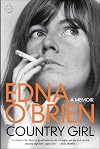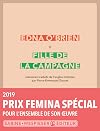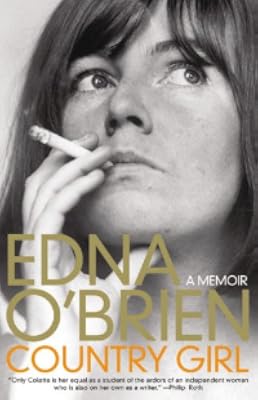
Country Girl
by Edna O'Brien
On This Page
Description
When Edna O'Brien's first novel, The Country Girls, was published in 1960, it so scandalized the O'Briens' local parish that the book was burned by its priest. O'Brien was undeterred and has since created a body of work that bears comparison with the best writing of the twentieth century. Country Girl brings us face-to-face with a life of high drama and contemplation. Starting with O'Brien's birth in a grand but deteriorating house in Ireland, her story moves through convent school to show more elopement, divorce, single-motherhood, the wild parties of the '60s in London, and encounters with Hollywood giants, pop stars, and literary titans. There is love and unrequited love, and the glamour of trips to America as a celebrated writer and the guest of Jackie Onassis and Hillary Clinton. Country Girl is a rich and heady accounting of the events, people, emotions, and landscape that have imprinted upon and enhanced one lifetime. show lessTags
Recommendations








Member Reviews
One night in their [her sons'] bedroom with all their clutter and paraphernalia, painted soldiers laid out on trays for battle yet to be, Paul McCartney entered.
This is just one of the wonderful examples of understated prose found in Edna O'Brien's memoir The Country Girl, published in 2012.
Many lesser writers would have changed the order of words in the anecdote to put the emphasis on McCartney rather than banal domestic details. But such was Edna's life while in Swinging Sixties London; a life so replete with encounters with the great and the good that she can treat individual episodes with nonchalance.
There are many examples of this nature in the middle of the book as famous names from stage, screen and the literary world flit into show more her world and onto the pages. She cooks dinner for Len Deighton, Richard Burton recites Shakespeare in her kitchen, Lee Marvin is a guest at her son's birthday party and she dances with the then-Prime Minister Harold Wilson.
The names are not there to impress. These people were simply part of an ever-extending circle of friends and acquaintances who gravitated to her home in Chelsea and more particularly gravitate to this vivacious young woman from southern Ireland. A party girl she may have been but The Country Girl is no kiss and tell memoir. In fact she is remarkably silent on the identity of some of the men who played a part in her life, including someone who seemed to have been an eminent British politician.
The memoir is instead a warm and frank account of a life that was anything but carefree. O'Brien's early years in County Clare, Ireland were lived in fear of a father who had drunk away the family's wealth and in the stultifying atmosphere of a strict Catholic community serviced by the church and 27 pubs but no library. "There was only one book in the village apart from the Bible — du Maurier's Rebecca," she told an audience at the 2013 Hay Literary Festival. "We used to share it around but you only got one or two pages at a time and they didn't always come in the right order."
It wasn't until she broke away and moved to Dublin to work as an assistant in a pharmacist's shop that she discovered literature along with pierced earrings and men. Finding T. S. Eliot’s “Introducing James Joyce” in a quayside stall marked the beginning of what she calls the “two intensities” of her life — writing and reading. Freedom came at a price — her family tried to kidnap her when they learned of her affair with a married man, forcing the pair to flee the country. In London, married to a poet and the mother of two boys, she began to write. The Country Girls was completed in just three weeks. Her tale of two girls who leave their small Irish village and convent education for the bright lights of Dublin met with critical acclaim everywhere except in Ireland and by everyone except her mother and her husband.
In Ireland it was considered immoral and its publication banned. "Filth" proclaimed the Archbishop and the Minister of Justice. Even the local postmistress in her home village weighed in - she should be made to run naked through the street as a punishment she claimed. O'Brien was summoned to a public meeting in Limerick to defend her book against accusations that it was little more than hard-core pornography.
Her husband's response was more personal:
Yes he had to concede that despite everything, I had done it, and then he said something that was the death-knell of the already-ailing marriage —You can write and I will never forgive you.
What follows is one of the darkest periods of Edna O'Brien's life. Separated from her children, she finds herself portrayed in a custody battle as a harlot, the writer of obnoxious and obscene literature and an uncaring mother.
Country Girl was a book O'Brien swore she would never write. She did so at the age of 78 in order to set the record straight about this and other episodes in her life including a published interview with Gerry Adams the Sinn Fein leader which led to accusations she was promoting the cause of the IRA.
There is a sense though there is much more to this memoir than simply recording the truth for posterity. There is a sense that in turning to the past, she found a reconciliation not just with the land of her birth, the land that never rated her as greatly as Joyce or Yeats and fought her attempts to build a home on its shores, but with herself. After a return visit to her childhood home that is now in ruins behind a screen of ivy and bramble she reflects on
"... for ever the need to go back,the way animals do, the way elephants trudge thousands of miles to return to where the elephant whisperer has lived. We go back for the whisper."
My verdict
Elegaic, moving and funny. A perfect example of how memoirs should be written. show less
This is just one of the wonderful examples of understated prose found in Edna O'Brien's memoir The Country Girl, published in 2012.
Many lesser writers would have changed the order of words in the anecdote to put the emphasis on McCartney rather than banal domestic details. But such was Edna's life while in Swinging Sixties London; a life so replete with encounters with the great and the good that she can treat individual episodes with nonchalance.
There are many examples of this nature in the middle of the book as famous names from stage, screen and the literary world flit into show more her world and onto the pages. She cooks dinner for Len Deighton, Richard Burton recites Shakespeare in her kitchen, Lee Marvin is a guest at her son's birthday party and she dances with the then-Prime Minister Harold Wilson.
The names are not there to impress. These people were simply part of an ever-extending circle of friends and acquaintances who gravitated to her home in Chelsea and more particularly gravitate to this vivacious young woman from southern Ireland. A party girl she may have been but The Country Girl is no kiss and tell memoir. In fact she is remarkably silent on the identity of some of the men who played a part in her life, including someone who seemed to have been an eminent British politician.
The memoir is instead a warm and frank account of a life that was anything but carefree. O'Brien's early years in County Clare, Ireland were lived in fear of a father who had drunk away the family's wealth and in the stultifying atmosphere of a strict Catholic community serviced by the church and 27 pubs but no library. "There was only one book in the village apart from the Bible — du Maurier's Rebecca," she told an audience at the 2013 Hay Literary Festival. "We used to share it around but you only got one or two pages at a time and they didn't always come in the right order."
It wasn't until she broke away and moved to Dublin to work as an assistant in a pharmacist's shop that she discovered literature along with pierced earrings and men. Finding T. S. Eliot’s “Introducing James Joyce” in a quayside stall marked the beginning of what she calls the “two intensities” of her life — writing and reading. Freedom came at a price — her family tried to kidnap her when they learned of her affair with a married man, forcing the pair to flee the country. In London, married to a poet and the mother of two boys, she began to write. The Country Girls was completed in just three weeks. Her tale of two girls who leave their small Irish village and convent education for the bright lights of Dublin met with critical acclaim everywhere except in Ireland and by everyone except her mother and her husband.
In Ireland it was considered immoral and its publication banned. "Filth" proclaimed the Archbishop and the Minister of Justice. Even the local postmistress in her home village weighed in - she should be made to run naked through the street as a punishment she claimed. O'Brien was summoned to a public meeting in Limerick to defend her book against accusations that it was little more than hard-core pornography.
Her husband's response was more personal:
Yes he had to concede that despite everything, I had done it, and then he said something that was the death-knell of the already-ailing marriage —You can write and I will never forgive you.
What follows is one of the darkest periods of Edna O'Brien's life. Separated from her children, she finds herself portrayed in a custody battle as a harlot, the writer of obnoxious and obscene literature and an uncaring mother.
Country Girl was a book O'Brien swore she would never write. She did so at the age of 78 in order to set the record straight about this and other episodes in her life including a published interview with Gerry Adams the Sinn Fein leader which led to accusations she was promoting the cause of the IRA.
There is a sense though there is much more to this memoir than simply recording the truth for posterity. There is a sense that in turning to the past, she found a reconciliation not just with the land of her birth, the land that never rated her as greatly as Joyce or Yeats and fought her attempts to build a home on its shores, but with herself. After a return visit to her childhood home that is now in ruins behind a screen of ivy and bramble she reflects on
"... for ever the need to go back,the way animals do, the way elephants trudge thousands of miles to return to where the elephant whisperer has lived. We go back for the whisper."
My verdict
Elegaic, moving and funny. A perfect example of how memoirs should be written. show less
Down a Blue Road
A review of the Back Bay Books paperback (May 6, 2014) of the Faber & Faber hardcover (October 4, 2012).
I saw the World Premiere of the documentary film Blue Road: The Edna O'Brien Story at the 2024 Toronto International Film Festival and found it to be wonderful encapsulation of the Irish writer's life story. O'Brien did not get to see the completed film but had provided several filmed interviews for it before her final illness and passing on July 27, 2024. I had the book in hand as well, but didn't get a chance to finish it until now.
I previously only knew Edna O'Brien's (1930-2024) writing from her first book The Country Girls (1960). Although it was a breakthrough novel at the time of release, it also met with book show more banning, burning and condemnation in its native Ireland due to its frank depictions of female sexual desire and its mockery of the Catholic Church. Her further success as a writer brought conflict into her marriage with failed novelist Ernest Gébler, eventually leading to their separation and divorce.
Her later independent life in London reads like a whirlwind jaunt through the Swinging Sixties and afterwards. There is a considerable amount of name-checking and funny anecdotes throughout the book about the various celebrities she met and entertained at parties. There are background stories to the later novels and her other writing of plays and screenplays. There is the rather wonderful quirky encounter with later crime & mystery writer Walter Mosley whom O'Brien mentored in a writing course back in the day. Mosley tells the story in the film as well.
See photograph at https://www.irishcentral.com/uploads/article/9673/cropped_edna_obrien___getty.jp...
Edna O'Brien in the early years of her career. Image sourced from IrishCentral.com.
Why not a 5-star? The book perhaps rather fizzles out in the end, stopping in 2012 when O'Brien still had further years of writing ahead. The final section talking about Werner Herzog's film Cave of Forgotten Dreams (2010) didn't provide a proper sense of closure. That impression of non-closure was probably due to my having seen the film which showed O'Brien in her later years and her funeral on Inis Cealtra (Holy Island) off the coast of Ireland.
While on the road in September and October 2024, I also toggled reading the paperback with listening to the audiobook which was read by the author herself.
Trivia and Links
The various obituaries provide an overview of Edna O'Brien's life and career. You can read some of them at The Irish Times, The BBC and The Guardian.
There is a short documentary film about Edna O'Brien's funeral and burial which you can see on YouTube here. show less
A review of the Back Bay Books paperback (May 6, 2014) of the Faber & Faber hardcover (October 4, 2012).
I saw the World Premiere of the documentary film Blue Road: The Edna O'Brien Story at the 2024 Toronto International Film Festival and found it to be wonderful encapsulation of the Irish writer's life story. O'Brien did not get to see the completed film but had provided several filmed interviews for it before her final illness and passing on July 27, 2024. I had the book in hand as well, but didn't get a chance to finish it until now.
I previously only knew Edna O'Brien's (1930-2024) writing from her first book The Country Girls (1960). Although it was a breakthrough novel at the time of release, it also met with book show more banning, burning and condemnation in its native Ireland due to its frank depictions of female sexual desire and its mockery of the Catholic Church. Her further success as a writer brought conflict into her marriage with failed novelist Ernest Gébler, eventually leading to their separation and divorce.
Her later independent life in London reads like a whirlwind jaunt through the Swinging Sixties and afterwards. There is a considerable amount of name-checking and funny anecdotes throughout the book about the various celebrities she met and entertained at parties. There are background stories to the later novels and her other writing of plays and screenplays. There is the rather wonderful quirky encounter with later crime & mystery writer Walter Mosley whom O'Brien mentored in a writing course back in the day. Mosley tells the story in the film as well.
See photograph at https://www.irishcentral.com/uploads/article/9673/cropped_edna_obrien___getty.jp...
Edna O'Brien in the early years of her career. Image sourced from IrishCentral.com.
Why not a 5-star? The book perhaps rather fizzles out in the end, stopping in 2012 when O'Brien still had further years of writing ahead. The final section talking about Werner Herzog's film Cave of Forgotten Dreams (2010) didn't provide a proper sense of closure. That impression of non-closure was probably due to my having seen the film which showed O'Brien in her later years and her funeral on Inis Cealtra (Holy Island) off the coast of Ireland.
While on the road in September and October 2024, I also toggled reading the paperback with listening to the audiobook which was read by the author herself.
Trivia and Links
The various obituaries provide an overview of Edna O'Brien's life and career. You can read some of them at The Irish Times, The BBC and The Guardian.
There is a short documentary film about Edna O'Brien's funeral and burial which you can see on YouTube here. show less
The New York Times book section ran a feature this week on the best memoirs of the past 50 years, and this was one that jumped out at me, so I read it. I will read any ‘60’s London party girl literary memoir, because of the high likelihood of appearances by Richard Burton, Princess Margaret, Roger Vadim, Robert Mitchum, and Harold Pinter. She delivers. Philip Roth and Jacqueline Onassis are bonuses.
Very well written especially the early part about her childhood in rural Ireland though I liked that part the least. The later book that some critics didn't like because they accuse her of name dropping I liked. I like some name dropping, gossip etc. It makes the book come to life.
Because I have never read any of her other books, I am not really sure why I read Edna O'Brien's memoir. It was a mixed experience, I don't enjoy reading about all the famous people memoirists meet at parties as a rule. There were portions of this book that drew me in, though, despite the luminaries mentioned. One charming story was her encounter with Marlon Brando. I also enjoyed her pride in her sons and her successful struggle to gain custody when her marriage failed.
Starts strong (Buccolic childhood in 1930s rural Ireland), ends weak (First World problems of aging author living in London).
And winner of the Arthur Schlesinger prize in memoir-writing for pointless name-dropping.
And winner of the Arthur Schlesinger prize in memoir-writing for pointless name-dropping.
I loved the beginning about her childhood and early marraige. After that, it seemed like an endless litany of name dropping.
Members
- Recently Added By
Lists

Top Five Books of 2014
1,064 works; 398 members
Author Information

91+ Works 10,482 Members
Writer Edna O'Brien was born in Clare County, Ireland, in 1930 and attended Pharmaceutical College in Dublin. O'Brien, winner of the Kingsley Amis Award, the Los Angeles Times Book Price and the European Literature Prize, has written short stories, novels, plays, television plays and screenplays. She has also written for such magazines as show more Cosmopolitan, Ladies Home Journal and The New Yorker. (Bowker Author Biography) Edna O'Brien's previous works of fiction include "Down by the River", "House of Splendid Isolation", "Time & Tide", & "Lantern Slides", which won the Los Angeles Times Book Prize for fiction. Her book about James Joyce was published in 1999 & excerpted in "The New Yorker". An honorary member of the American Academy of Arts & Letters, O'Brien grew up in Ireland & now lives in London. (Publisher Provided) show less
Some Editions
Awards and Honors
Awards
Distinctions
Common Knowledge
- Canonical title
- Country Girl
- Original title
- Country Girl
- Original publication date
- 2012
- People/Characters
- Edna O'Brien
- Important places
- County Clare, Ireland; London, England, UK
- Epigraph
- It was when I got here I really realized–I'm here,
—Tyson Gay, American sprinter, on the eve of the London 2012 Olympics - Dedication
- For my warrior sons, Carlo and Sacher Gébler
For my warrior sons,
Carlo and Sasha Gebler - First words
- It was in a National Health clinic in London and an amiable girl with a mass of brown hair and a foreign accent had tested me for deafness.
I was in a National Health clinic in London, and an amiable girl with a mass of brown hair and a foreign accent had tested me for deafness. - Last words
- (Click to show. Warning: May contain spoilers.)At home, I turned on all the lights, including the red lamp in the upstairs room, and it did not seem empty at all, it was full of light, like a room readying itself for a banquet.
- Blurbers
- Roth, Philip
- Canonical DDC/MDS
- 823.914
- Canonical LCC
- PR6065.B7
Classifications
Statistics
- Members
- 410
- Popularity
- 75,478
- Reviews
- 15
- Rating
- (3.51)
- Languages
- 6 — Dutch, English, Estonian, French, Italian, Spanish
- Media
- Paper, Audiobook, Ebook
- ISBNs
- 20
- ASINs
- 7