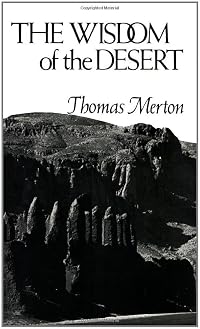
The Wisdom of the Desert (New Directions)
by Thomas Merton (Editor and translator)
On This Page
Description
The personal tones of the translations, the blend of reverence and humor so characteristic of him, show how deeply Merton identified with the legendary authors of these sayings and parables, the fourth-century Christian Fathers who sought solitude and contemplation in the deserts of the Near East. The hermits of Screte who turned their backs on a corrupt society remarkably like our own had much in common with the Zen masters of China and Japan, and Father Merton made his selection from them show more with an eye to the kind of impact produced by the Zen mondo. show lessTags
Recommendations














Member Reviews
20th-century Trappist monk Thomas Merton here provides a collection of translations from the Verba of the "Desert Fathers," who were Egyptian hermits of the early Christian centuries. His aims in presenting these English versions of originally Coptic materials are inspirational rather than historical. But in something of a contrast with the ascetic and mystical expectations that a reader might bring to bear on these texts, they turn out to be full of practical psychology and all-too-human concerns. Nevertheless, I read this short volume while in the midst of Feuerbach's Essence of Christianity, and it actually supports his thesis by demonstrating an impressively pure form of Christianity in its rejection of worldly values in favor of show more subjective strivings for autonomy and power over personal feelings.
The long essay with which Merton prefaces his translations is pleasant and fairly wise. I was quite struck by his quotation from what the body text offers as Saying III: "Therefore, whatever you see your soul desire according to God, do that thing, and you shall keep your heart safe." (c.f. Quid voles illud fac.) Merton comments, "Obviously, such a path could only be traveled by one who was very alert and very sensitive to the landmarks of a trackless wilderness" (7). Reading these sayings put me in mind of my own experience of the psychic difference between the urban and the rural (the suburban being only the worst of both worlds), with an awareness of the way in which Christianity simultaneously denigrates and exalts the former.
Among the 150 sayings are a fair number of interesting and valuable ones concerning the spiritual worth of silence. There is, however, only one saying in the entire book (LXXXIX) which credits a female authority ("Abbess Syncletica of holy memory"), although women figure as sinfully tempting objects in several, and even as a deceitful accuser in the final one. My favorite is probably number CIX, in which an ass provides oracular confirmation of a hermit's priestly vocation. show less
The long essay with which Merton prefaces his translations is pleasant and fairly wise. I was quite struck by his quotation from what the body text offers as Saying III: "Therefore, whatever you see your soul desire according to God, do that thing, and you shall keep your heart safe." (c.f. Quid voles illud fac.) Merton comments, "Obviously, such a path could only be traveled by one who was very alert and very sensitive to the landmarks of a trackless wilderness" (7). Reading these sayings put me in mind of my own experience of the psychic difference between the urban and the rural (the suburban being only the worst of both worlds), with an awareness of the way in which Christianity simultaneously denigrates and exalts the former.
Among the 150 sayings are a fair number of interesting and valuable ones concerning the spiritual worth of silence. There is, however, only one saying in the entire book (LXXXIX) which credits a female authority ("Abbess Syncletica of holy memory"), although women figure as sinfully tempting objects in several, and even as a deceitful accuser in the final one. My favorite is probably number CIX, in which an ass provides oracular confirmation of a hermit's priestly vocation. show less
The Wisdom of the Desert was one of Thomas Merton's favorites among his own books -- surely because he had hoped to spend his last years as a hermit. The personal tone of the translations, the blend of reverence and humor so characteristic of him, show how deeply Merton identified with the legendary authors of these sayings and parables, the fourth-century Christian Fathers who sought solitude and contemplation in the deserts of the Near East.
This is Fr. Merton's contribution to the Desert tradition. The desert fathers were the first Christian monks, and the stories about them are both entertaining and enlightening. Within these stories you see the seeds of grace and love, discipline and challenge, humility and pride, success and failure.
In other words, this is authentic spirituality, and this book brings it to us in a neat and understandable package.
In other words, this is authentic spirituality, and this book brings it to us in a neat and understandable package.
A small collection of Merton's favorite quotations from many of the "desert fathers" of late antiquity.
Merton's introductory essay is compelling, explaining the purpose of the collection and speaking highly of the "desert fathers" in a way that is not hagiographic but in appreciation of the wisdom accrued.
Many of the quotations are humorous, some can be a bit misanthropic, but on the whole there is some good wisdom to be found in many of the quotes. Much can be gained from a passionate pursuit of the ways of Jesus, although it is best in the context of people, as Jesus lived.
Merton's introductory essay is compelling, explaining the purpose of the collection and speaking highly of the "desert fathers" in a way that is not hagiographic but in appreciation of the wisdom accrued.
Many of the quotations are humorous, some can be a bit misanthropic, but on the whole there is some good wisdom to be found in many of the quotes. Much can be gained from a passionate pursuit of the ways of Jesus, although it is best in the context of people, as Jesus lived.
Thomas Merton was a Trappist Monk and wrote this book that contains his favorite quotes from 'Verba Seniorum'. He chooses these for himself and his fellow monks in order to make some of the sayings of the Desert Fathers more accessible. He begins this book with a very well written introduction.
Merton wrote this book not as a history of the early Desert Fathers. What he provides are a selection of extracts from their writings that had proved useful for him in his contemplative life. The book is definitely worth reading. A book you will keep by your night stand.
If you are looking for a book that gives you a history of the Desert Fathers and a wide range of their writings, then this is the wrong book for you.
Merton wrote this book not as a history of the early Desert Fathers. What he provides are a selection of extracts from their writings that had proved useful for him in his contemplative life. The book is definitely worth reading. A book you will keep by your night stand.
If you are looking for a book that gives you a history of the Desert Fathers and a wide range of their writings, then this is the wrong book for you.
The personal tones of the translations, the blend of reverence and humor so characteristic of him, show how deeply Merton identified with the legendary authors of these sayings and parables, the fourth-century Christian Fathers who sought solitude and contemplation in the deserts of the Near East.
The hermits of Screte who turned their backs on a corrupt society remarkably like our own had much in common with the Zen masters of China and Japan, and Father Merton made his selection from them with an eye to the kind of impact produced by the Zen mondo.
The hermits of Screte who turned their backs on a corrupt society remarkably like our own had much in common with the Zen masters of China and Japan, and Father Merton made his selection from them with an eye to the kind of impact produced by the Zen mondo.
Merton translated and compiled the wisdom and advice of monks living a hermit-like life in the desert in the fourth century. It’s an interesting collection with some wonderful bits. I’ve listed some favorites below.
There’s one parable of a man who steals a book from one of the monks. He goes to sell it in the local town. The man he tries to sell it to asks the monk who originally owned it if it was a valuable book. Instead of turning the man in and explaining that it was stolen, the monk just told the buyer that it was valuable. His actions led the man to return the book and ask for forgiveness. Showing mercy was a much greater act of kindness and it reminded me so much of the powerful scene with the priest in Les Miserables. show more
BOTTOM LINE: Incredibly quick read with some great advice.
"Malice will never drive out malice. But if someone does evil to you, you should do good to him, so that by your good work you may destroy his malice."
"Never acquire for yourself anything that you might hesitate to give to your brother if he asks you for it, for thus you would be found as a transgressor of God's command. If anyone asks, give to him, and if anyone wants to borrow from you, do not turn away from him."
“We have thrown down a light burden, which is the reprehending of our own selves, and we have chosen instead to bear a heavy burden, by justifying our own selves and condemning others.” show less
There’s one parable of a man who steals a book from one of the monks. He goes to sell it in the local town. The man he tries to sell it to asks the monk who originally owned it if it was a valuable book. Instead of turning the man in and explaining that it was stolen, the monk just told the buyer that it was valuable. His actions led the man to return the book and ask for forgiveness. Showing mercy was a much greater act of kindness and it reminded me so much of the powerful scene with the priest in Les Miserables. show more
BOTTOM LINE: Incredibly quick read with some great advice.
"Malice will never drive out malice. But if someone does evil to you, you should do good to him, so that by your good work you may destroy his malice."
"Never acquire for yourself anything that you might hesitate to give to your brother if he asks you for it, for thus you would be found as a transgressor of God's command. If anyone asks, give to him, and if anyone wants to borrow from you, do not turn away from him."
“We have thrown down a light burden, which is the reprehending of our own selves, and we have chosen instead to bear a heavy burden, by justifying our own selves and condemning others.” show less
Members
- Recently Added By
Lists

CCE 1000 Good Books List
1,033 works; 12 members

The Essential Western Mystics
66 works; 4 members
Author Information

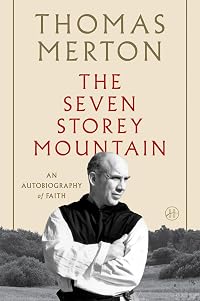
Born in France, Thomas Merton was the son of an American artist and poet and her New Zealander husband, a painter. Merton lost both parents before he had finished high school, and his younger brother was killed in World War II. Something of the ephemeral character of human endeavor marked all his works, deepening the pathos of his writings and show more drawing him close to Eastern, especially Buddhist, forms of monasticism. After an initial education in the United States, France, and England, he completed his undergraduate degree at Columbia University. His parents, nominally friends, had given him little religious guidance, and in 1938, he converted to Roman Catholicism. The following year he received an M.A. from Columbia University and in 1941, he entered Gethsemani Abbey in Kentucky, where he remained until a short time before his death. His working life was spent as a Trappist monk. At Gethsemani, he wrote his famous autobiography, "The Seven Storey Mountain" (1948); there he labored and prayed through the days and years of a constant regimen that began with daily prayer at 2:00 a.m. As his contemplative life developed, he still maintained contact with the outside world, his many books and articles increasing steadily as the years went by. Reading them, it is hard to think of him as only a "guilty bystander," to use the title of one of his many collections of essays. He was vehement in his opposition to the Vietnam War, to the nuclear arms race, to racial oppression. Having received permission to leave his monastery, he went on a journey to confer with mystics of the Hindu and Buddhist traditions. He was accidentally electrocuted in a hotel in Bangkok, Thailand, on December 10, 1968. (Bowker Author Biography) show less
Some Editions
Series
Belongs to Publisher Series
Work Relationships
Common Knowledge
- Original publication date
- 1960
- First words
- In the fourth century A.D. the deserts of Egypt, Palestine, Arabia and Persia were people by a race of men who have left behind them a strange reputation.
- Last words
- (Click to show. Warning: May contain spoilers.)I quickly made off and came to this place. Such was the cause of my coming to this part of the world.
- Blurbers
- Berrigan, Daniel
Classifications
Statistics
- Members
- 1,246
- Popularity
- 19,751
- Reviews
- 14
- Rating
- (3.97)
- Languages
- 5 — English, French, German, Italian, Portuguese (Portugal)
- Media
- Paper, Audiobook, Ebook
- ISBNs
- 16
- ASINs
- 7