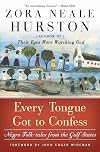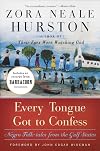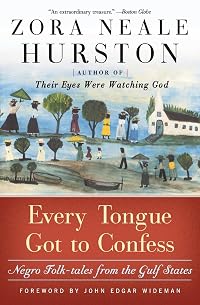
Every Tongue Got to Confess: Negro Folk-tales from the Gulf States
by Zora Neale Hurston
On This Page
Description
African-American folklore was Zora Neale Hurston's first love. Collected in the late 1920's Every Tongue Got to Confess, from the celebrated author of Their Eyes Were Watching God, is published here for the first time, beautifully performed by Ruby Dee and Ossie Davis. Hilarious, bittersweet, and often saucy, these folk-tales provide a verdant slice of African-American life in the rural South at the turn of the twentieth century. They capture the heart and soul of the vital, independent, and show more creative community that so inspired Zora Neale Hurston. In Every Tongue Got to Confess, Hurston records, with uncanny precision, the voices of ordinary people -and no two actors better capture this world than Ruby Dee and Ossie Davis. They pay tribute to the richness of Black vernacular -- its crisp self-awareness, singular wit, and improvisational wordplay. These folk-tales reflect the joys and sorrows of the African-American experience, celebrate the redemptive power of storytelling, and showcase the continuous presence in America of an Afticanized language that flourishes to this day.Performed by Ruby Dee and Ossie Davis. show lessTags
Recommendations













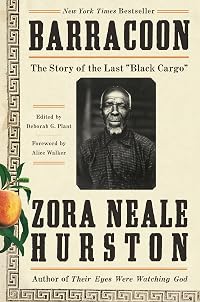
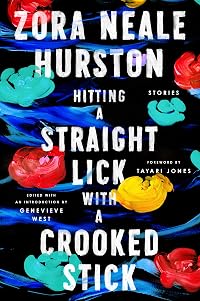
Member Reviews
this is an important historical record of black folk tales from the gulf region. hurston transcribed them right from the mouths of people living in the area, not "correcting" for language, so the flow of the vignettes is directly what she heard from the people telling the stories. (like i found when reading her other books, the creole isn't hard at all to understand.)
this book isn't meant to be read straight through (as i ended up reading it, more or less) because there isn't a narrative flow (there isn't a narrative at all) and nothing hinges on anything else. the tales are loosely grouped by category, with some repetition in the stories when there is overlap. i wonder if she was going to fill out the manuscript and give context to the show more stories or explain minor differences between stories, had she finished. as it is it is just one vignette after another, with only the name of the person who told it to her as reference. some of the stories are familiar, some are variants of other folk tales or published stories. perhaps many are, and i was just unfamiliar with them myself. it's interesting, though, to see the differences in folk tales that have the same foundation, when told from different places in the world.
i was surprised to find that the preacher tales/vignettes are largely (all?) negative or show the preachers cheating/lying/acting poorly. that's not the stereotype i expected this community to project. i was also surprised that a lot of the tales, especially in the dedicated "in slavery time" section, aren't of the black man outwitting the white man, but of the black man doing something to anger the white man and get in more trouble. i was even more surprised about this than the tenor of the preacher stories section. i thought the majority of the stories would be about the black man getting the best of the white man, not the other way around, so it almost seems like they're cautionary tales that white people would tell to keep the black man down. i wouldn't think they'd continue to tell those stories without altering them to come out ahead (either killing the white man, scaring the white man away so they get the land, or winning their freedom from the white man).
useful, from the foreword, about how to read these tales, and about translation in general: "Creole speech is approximated, at best, by any form of written transcription. In this context it is useful to read these folk-tales from the Gulf States as you would foreign poetry translated into English, grateful for a window into another culture, yet always seeing in mind that what you're consuming is vastly distanced from the original. Translation destroys and displaces as much as it restores and renders available." show less
this book isn't meant to be read straight through (as i ended up reading it, more or less) because there isn't a narrative flow (there isn't a narrative at all) and nothing hinges on anything else. the tales are loosely grouped by category, with some repetition in the stories when there is overlap. i wonder if she was going to fill out the manuscript and give context to the show more stories or explain minor differences between stories, had she finished. as it is it is just one vignette after another, with only the name of the person who told it to her as reference. some of the stories are familiar, some are variants of other folk tales or published stories. perhaps many are, and i was just unfamiliar with them myself. it's interesting, though, to see the differences in folk tales that have the same foundation, when told from different places in the world.
i was surprised to find that the preacher tales/vignettes are largely (all?) negative or show the preachers cheating/lying/acting poorly. that's not the stereotype i expected this community to project. i was also surprised that a lot of the tales, especially in the dedicated "in slavery time" section, aren't of the black man outwitting the white man, but of the black man doing something to anger the white man and get in more trouble. i was even more surprised about this than the tenor of the preacher stories section. i thought the majority of the stories would be about the black man getting the best of the white man, not the other way around, so it almost seems like they're cautionary tales that white people would tell to keep the black man down. i wouldn't think they'd continue to tell those stories without altering them to come out ahead (either killing the white man, scaring the white man away so they get the land, or winning their freedom from the white man).
useful, from the foreword, about how to read these tales, and about translation in general: "Creole speech is approximated, at best, by any form of written transcription. In this context it is useful to read these folk-tales from the Gulf States as you would foreign poetry translated into English, grateful for a window into another culture, yet always seeing in mind that what you're consuming is vastly distanced from the original. Translation destroys and displaces as much as it restores and renders available." show less
This was a series of folktales and folk stories, recorded just as told to ZNH, complete with the names of the people who told the stories. The book was divided by subject matter--God tales, Devil tales, Tall tales, etc., plus a fairly large miscellaneous section.
They were great! As usual w/ZNH's stuff, you get a real sense of cadence and speech patterns, which I love. The mood of the stories was all over the place; lots of funny ones, some raunchy ones, some sharp ones, some sad ones. I didn't read the book cover to cover, but I dipped in and read a fair number of them--mainly the shorter ones.
They were great! As usual w/ZNH's stuff, you get a real sense of cadence and speech patterns, which I love. The mood of the stories was all over the place; lots of funny ones, some raunchy ones, some sharp ones, some sad ones. I didn't read the book cover to cover, but I dipped in and read a fair number of them--mainly the shorter ones.
This was a series of folktales and folk stories, recorded just as told to ZNH, complete with the names of the people who told the stories. The book was divided by subject matter--God tales, Devil tales, Tall tales, etc., plus a fairly large miscellaneous section.
They were great! As usual w/ZNH's stuff, you get a real sense of cadence and speech patterns, which I love. The mood of the stories was all over the place; lots of funny ones, some raunchy ones, some sharp ones, some sad ones. I didn't read the book cover to cover, but I dipped in and read a fair number of them--mainly the shorter ones.
They were great! As usual w/ZNH's stuff, you get a real sense of cadence and speech patterns, which I love. The mood of the stories was all over the place; lots of funny ones, some raunchy ones, some sharp ones, some sad ones. I didn't read the book cover to cover, but I dipped in and read a fair number of them--mainly the shorter ones.
Brief and utterly engrossing, I recommend these stories, though I suspect more could be got from them if I paid closer attention. The repetitions worked both for and against. Satisfied but I somehow wanted more...
Ratings
Members
- Recently Added By
Author Information

112+ Works 34,696 Members
Zora Neale Hurston was born in 1901 in Eatonville, Fla. She left home at the age of 17, finished high school in Baltimore, and went on to study at Howard University, Barnard College, and Columbia University before becoming one of the most prolific writers in the Harlem Renaissance. Her works included novels, essays, plays, and studies in folklore show more and anthropology. Her most productive years were the 1930s and early 1940s. It was during those years that she wrote her autobiography Dust Tracks on a Road, worked with the Federal Writers Project in Florida, received a Guggenheim fellowship, and wrote four novels. She is most remembered for her novel Their Eyes Were Watching God, published in 1937. In 2018, her previously unpublished work, Barracoon: The Story of the Last Black Cargo, was published. She died penniless and in obscurity in 1960 and was buried in an unmarked grave. In 1973, her grave was rediscovered and marked and her novels and autobiography have since been reprinted. (Bowker Author Biography) show less
Some Editions
Awards and Honors
Awards
Work Relationships
Is contained in
Common Knowledge
- Canonical title
- Every Tongue Got to Confess: Negro Folk-tales from the Gulf States
- Original title
- Every Tongue Got to Confess: Negro Folk-tales from the Gulf States
- Original publication date
- 2001
- People/Characters
- Zora Neale Hurston
- Important places
- Florida, USA; Haiti; Hispaniola; Louisiana, USA; New Orleans, Louisiana, USA
Classifications
Statistics
- Members
- 424
- Popularity
- 72,538
- Reviews
- 4
- Rating
- (3.98)
- Languages
- English
- Media
- Paper, Audiobook, Ebook
- ISBNs
- 9
- ASINs
- 5