
John Edgar Wideman
Author of Philadelphia Fire
About the Author
Writer John Edgar Wideman was born in Washington, D. C., on June 14, 1941. He graduated from the University of Pennsylvania, studied at Oxford University, and was the second African American to become a Rhodes Scholar. He taught at the University of Pennsylvania and eventually founded and chaired show more the African American studies department. He also taught at the University of Wyoming and the University of Massachusetts at Amherst. Wideman is the author of more than a dozen books. Sent for You Yesterday won a PEN/Faulkner Award in 1984, and Philadelphia Fire received one a decade later. Fatheralong was a finalist for the National Book Award (1994) and Brothers and Keepers was a finalist for the National Book Critics Circle Award (1995). (Bowker Author Biography) show less
Image credit: Photo by Robert Birnbaum (courtesy of the photographer)
Series
Works by John Edgar Wideman
My Soul Has Grown Deep: Classics of Early African American Literature (2001) — Editor — 118 copies, 2 reviews
Weight 1 copy
Identities 1 copy
Associated Works
The Story and Its Writer: An Introduction to Short Fiction (1976) — Contributor — 1,218 copies, 3 reviews
The Scribner Anthology of Contemporary Short Fiction: Fifty North American American Stories Since 1970 (1999) — Contributor — 586 copies, 4 reviews
The Vintage Book of Contemporary American Short Stories (1994) — Contributor — 548 copies, 2 reviews
Every Tongue Got to Confess: Negro Folk-tales from the Gulf States (2001) — Foreword, some editions — 425 copies, 4 reviews
The Art of the Story: An International Anthology of Contemporary Short Stories (1999) — Contributor — 394 copies, 5 reviews
Breaking Ice: An Anthology of Contemporary African-American Fiction (1990) — Preface; Contributor — 304 copies, 1 review
The Norton Anthology of African American Literature {2nd edition} (2003) — Contributor, some editions — 283 copies, 2 reviews
The New Gothic: A Collection of Contemporary Gothic Fiction (1991) — Contributor — 273 copies, 2 reviews
Ready for Revolution: The Life and Struggles of Stokely Carmichael (Kwame Ture) (2003) — Introduction — 218 copies
The Ecco Anthology of Contemporary American Short Fiction (2008) — Contributor — 140 copies, 2 reviews
Children of the Night: The Best Short Stories by Black Writers, 1967 to the Present (1995) — Contributor — 126 copies
Calling the Wind: Twentieth Century African-American Short Stories (1992) — Contributor — 116 copies
Go the Way Your Blood Beats: An Anthology of Lesbian and Gay Fiction by African-American Writers (1996) — Contributor — 92 copies
Bearing Witness: Selections from African-American Autobiography in the Twentieth Century (1991) — Contributor — 74 copies
The O. Henry Prize Stories 2019: 100th Anniversary Edition (2019) — Contributor — 62 copies, 2 reviews
The Other Side of Heaven: Post-War Fiction by Vietnamese and American Writers (1995) — Contributor — 43 copies
The Second Gates of Paradise: The Anthology of Erotic Short Fiction (1997) — Contributor — 38 copies
Tagged
Common Knowledge
- Birthdate
- 1941-06-14
- Gender
- male
- Education
- University of Pennsylvania
University of Oxford - Occupations
- professor
- Organizations
- Brown University
University of Massachusetts, Amherst
American Academy of Arts and Letters (2016) - Awards and honors
- Rhodes Scholar
John Dos Passos Prize (1986)
Lannan Literary Award (Fiction, 1991)
Katherine Anne Porter Award (2008)
Anisfield-Wolf Book Award (Lifetime Achievement, 2011) - Nationality
- USA
- Birthplace
- Washington, D.C., USA
- Places of residence
- Washington, D.C., USA (birth)
Pittsburgh, Pennsylvania, USA
Amherst, Massachusetts, USA - Map Location
- USA
Members
Discussions
AMERICAN AUTHORS CHALLENGE--MAY 2023--JOHN EDGAR WIDEMAN in 75 Books Challenge for 2023 (July 2023)
Reviews
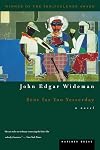
John Edgar Wideman's gift is an honest portrayal of African American life in a small fading Northern town.
In this final book of his trilogy, the background and deepest feelings of many characters are explored and evolve.
While the descriptor that 'Men work; women cook, clean and take care of children' sets the pace,
the fact of no jobs, no careers, no trades - nothing but dependence on white men's stopping at the corner -
destroys that balance, with the resultant poverty, depression, alcohol show more and drug addictions,
and increasing street violence and murders.
Friendships are long-lasting and the author involves us in these, as well as into
simply thinking about Silence. He wants us to pay attention to every little thing,
even repeating them until we get it and can't forget it.
From rainbow soap bubbles, to sounds on the train tracks to the slamming screen door and rocking chair,
multiple memorable images are woven into daily lives often dominated by despair and misery,
yet livened by dialogue like French and Wilkes have.
Great to see John French again and Freeda's love for him, plus her entirely different take on The Great Migration
immigrants and their effects on HOMEWOOD. A contrast with Jacob Lawrence. Mize.
Brother's roles - as lover, as a father who should not have trusted the care of Junebug to anyone but himself,
and his unkind betrayal (or was it the dream?) of Wilkes were a surprise.
(Wandering narrators sometimes hard to follow and sure could have lived without the treatment and murder of Junebug.) show less
In this final book of his trilogy, the background and deepest feelings of many characters are explored and evolve.
While the descriptor that 'Men work; women cook, clean and take care of children' sets the pace,
the fact of no jobs, no careers, no trades - nothing but dependence on white men's stopping at the corner -
destroys that balance, with the resultant poverty, depression, alcohol show more and drug addictions,
and increasing street violence and murders.
Friendships are long-lasting and the author involves us in these, as well as into
simply thinking about Silence. He wants us to pay attention to every little thing,
even repeating them until we get it and can't forget it.
From rainbow soap bubbles, to sounds on the train tracks to the slamming screen door and rocking chair,
multiple memorable images are woven into daily lives often dominated by despair and misery,
yet livened by dialogue like French and Wilkes have.
Great to see John French again and Freeda's love for him, plus her entirely different take on The Great Migration
immigrants and their effects on HOMEWOOD. A contrast with Jacob Lawrence. Mize.
Brother's roles - as lover, as a father who should not have trusted the care of Junebug to anyone but himself,
and his unkind betrayal (or was it the dream?) of Wilkes were a surprise.
(Wandering narrators sometimes hard to follow and sure could have lived without the treatment and murder of Junebug.) show less
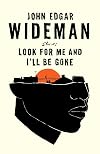
Look for Me and I'll Be Gone is a powerful and nuanced collection of short stories from John Edgar Wideman. If you're familiar with his short fiction you will be delighted with this new collection, if this is your introduction to him, it will serve very nicely.
In any collection of short stories by a single author I fully expect to have some I love, some I don't care for, and most somewhere in the middle. In this collection, the ones that I might say I liked least were still too good in some show more respect for me to say I didn't care for them. Let me explain. There were a few stories that didn't draw me into the scene or narrative, which usually would put them in my lower category. Yet those stories in this case still made me ponder what I was observing and come away with a better understanding. That understanding might have been of the protagonist or of the society that person, and by extension myself, inhabits. Upon rereading those stories I never failed to immerse myself more completely in the story. So this is one of those collections that doesn't, for me, have a truly weak story, just ones that speak to me differently (or in different time frames).
I realize that some readers don't care to put forth the effort to engage with short fiction that doesn't look and sound like every other short story in tone and form. I do understand that, if one is reading just to get from the beginning to the end and not really engage with what lies between then even as short as some of these are they will require too much work. But, if you read primarily to spend time in that space between the beginning and end, then you will enjoy that these reward an active reading rather than a passive one. When a line or word choice trips you up, ask why Wideman may have chosen what he did. Will you know his reason? Probably not, but you will likely come up with possible reasons and each of those will offer you more avenues into and through the story.
I would highly recommend this to readers (and writers) of short fiction. Especially those readers who want to dwell within a story and not simply rack up a page count. Those who study, formally or not, the intersection of various art forms and the larger society within which they are produced and consumed will have a lot here to think about. As an aside, a book I am also finishing up fits very well with this one. Antagonistic Cooperation: Jazz, Collage, Fiction, and the Shaping of African American Culture by Robert G O'Meally.
Reviewed from a copy made available by the publisher via NetGalley. show less
In any collection of short stories by a single author I fully expect to have some I love, some I don't care for, and most somewhere in the middle. In this collection, the ones that I might say I liked least were still too good in some show more respect for me to say I didn't care for them. Let me explain. There were a few stories that didn't draw me into the scene or narrative, which usually would put them in my lower category. Yet those stories in this case still made me ponder what I was observing and come away with a better understanding. That understanding might have been of the protagonist or of the society that person, and by extension myself, inhabits. Upon rereading those stories I never failed to immerse myself more completely in the story. So this is one of those collections that doesn't, for me, have a truly weak story, just ones that speak to me differently (or in different time frames).
I realize that some readers don't care to put forth the effort to engage with short fiction that doesn't look and sound like every other short story in tone and form. I do understand that, if one is reading just to get from the beginning to the end and not really engage with what lies between then even as short as some of these are they will require too much work. But, if you read primarily to spend time in that space between the beginning and end, then you will enjoy that these reward an active reading rather than a passive one. When a line or word choice trips you up, ask why Wideman may have chosen what he did. Will you know his reason? Probably not, but you will likely come up with possible reasons and each of those will offer you more avenues into and through the story.
I would highly recommend this to readers (and writers) of short fiction. Especially those readers who want to dwell within a story and not simply rack up a page count. Those who study, formally or not, the intersection of various art forms and the larger society within which they are produced and consumed will have a lot here to think about. As an aside, a book I am also finishing up fits very well with this one. Antagonistic Cooperation: Jazz, Collage, Fiction, and the Shaping of African American Culture by Robert G O'Meally.
Reviewed from a copy made available by the publisher via NetGalley. show less
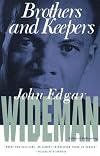
This is the story of John and his brother Robert, aka Robby. Robby was arrested and convicted of murder in the early 1970s and was sentenced to life in prison. John sets out to tell his story and, in doing so, explores the nuances of race and family in the late 20th Century. This is an honorable and moving memoir, one in which John moves fluidly from his own voice to that of Robby, his hip and tough younger brother.
I tried not to read this book through the lens of cool distance and liberal show more curiosity provided by my white privilege. But I can't shed that privilege. So I tried to listen deeply to the experiences that John shares in this memoir. He unapologetically notes that Black men in the 1970s did not have many options; unemployment was high and racism was alive and kicking. But neither does he acquit his brother for his path, a path lined with women and drugs and, ultimately, with murder. John acknowledges that, though he chose a different path than that chosen by Robby, their anger is the same. The sense of disempowerment, the constant awareness of categorization as a "black man" -- the brothers share this experience fully and absolutely. The line between their lives -- that of a Black man who earned a college degree and taught at the college level, and that of a Black man who committed murder in a drug deal gone bad and ended up imprisoned for life -- that line is viciously thin. If nothing else, this is an acknowledgement and exploration of that perilously thin line.
John and Robert grew up in Pittsburgh in a loving family with limited financial resources. John eloquently captures this theme and distinguishes theirs from families where violence and hatred existed. Poor they might have been, but he honors the love and care that his family provided without "whitewashing" the struggles they experienced. Robert was the youngest son and John compassionately explores the impact of the older siblings' success on young Robby's sense of his options. He wanted to be different; he wanted to forge his own path. Unfortunately, this led to disaster and a life sentence in prison.
Robby's voice is so eloquent in this memoir. The fluid way in which John weaves his own voice with that of his brother is pure literature. At times this memoir reads like a mystery novel, gripping and entertaining, and at other times it reads like a... well, like a memoir.
As a white woman of privilege, trying to describe and effectively endorse this memoir is a challenge. But recommending it is easy. I do so, wholeheartedly and without reservation. show less
I tried not to read this book through the lens of cool distance and liberal show more curiosity provided by my white privilege. But I can't shed that privilege. So I tried to listen deeply to the experiences that John shares in this memoir. He unapologetically notes that Black men in the 1970s did not have many options; unemployment was high and racism was alive and kicking. But neither does he acquit his brother for his path, a path lined with women and drugs and, ultimately, with murder. John acknowledges that, though he chose a different path than that chosen by Robby, their anger is the same. The sense of disempowerment, the constant awareness of categorization as a "black man" -- the brothers share this experience fully and absolutely. The line between their lives -- that of a Black man who earned a college degree and taught at the college level, and that of a Black man who committed murder in a drug deal gone bad and ended up imprisoned for life -- that line is viciously thin. If nothing else, this is an acknowledgement and exploration of that perilously thin line.
John and Robert grew up in Pittsburgh in a loving family with limited financial resources. John eloquently captures this theme and distinguishes theirs from families where violence and hatred existed. Poor they might have been, but he honors the love and care that his family provided without "whitewashing" the struggles they experienced. Robert was the youngest son and John compassionately explores the impact of the older siblings' success on young Robby's sense of his options. He wanted to be different; he wanted to forge his own path. Unfortunately, this led to disaster and a life sentence in prison.
Robby's voice is so eloquent in this memoir. The fluid way in which John weaves his own voice with that of his brother is pure literature. At times this memoir reads like a mystery novel, gripping and entertaining, and at other times it reads like a... well, like a memoir.
As a white woman of privilege, trying to describe and effectively endorse this memoir is a challenge. But recommending it is easy. I do so, wholeheartedly and without reservation. show less
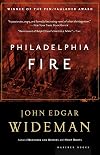
On May 13, 1985, in West Philadelphia, after bullets, water cannon and high explosives had failed to dislodge the occupants of 6221 Osage Avenue, a bomb was dropped from a state police helicopter and exploded atop the beseiged row-house. In the ensuing fire fifty-three houses were destroyed, 262 people left homeless. The occupants of the row-house on Osage were said to be members of an organization called MOVE. Eleven of them, six adults and five children, were killed in the assault that show more commenced when they refused to obey a police order to leave their home. A grand jury subsequently determined that no criminal charges should be brought against the public officials who planned and perpetrated the assault.
The conflagration on Osage Street is the literal fire of Wideman's Phildelphia Fire; it is a metaphor for the destruction of the social fabric that this novel presents. Wideman has elsewhere declared himself a pessimist; the vision he presents in Philadelphia Fire is an extremely dark one.
Cudjoe, the protagonist of much of the novel, is an expatriate African-American novelist, who has lived on Mykonos for several years. Driven into looking for the "story of a fire and a lost boy," he returns to Philadelphia, his hometown. But his quest is also for a city which might allow people to live
in "brotherly love." What he finds are the fragments of civilization: alienation, squalor, violence and the total absenceof innocence -- a city of "brothelly love."
Cudjoe's initial search is for a child, called Simbu Muntu,"the Lion," who supposedly ran, burning, from the house on Osage Street, the lone survivor of the bombing. He interviews a former member of MOVE, Margaret Jones, who recalls the fascinated revulsion she felt for King, John Africa, the leader of the group:
Wasn't like King told me something new. Wasn't like I had a lot to learn. Looked around myself plenty times and said, Got to be more to it than this. Got to be. King said out loud what I been knowing all along. Newspapers said King brainwashing and mind control and drugs and kidnapping people turn them into zombies. Bullshit. Because I been standing on the bank for years. Decided one day to cross over and there he was, the King take my hand and say, Welcome, come right in, we been waiting. Held my breath walking past him and wasn't more than a couple months later I'm holding my breath and praying I can get past the stink when he's raising the covers off his mattress and telling me to lie down with him. By then the stink wasn't really stink no more. Just confusion. A confused idea. An idea from outside the family, outside the teachings causing me to turn my nose up at my own natural self. Felt real ashamed when I realized all of me wasn't inside the family yet. I damned the outside part. Left it standing in the dark and crawled up under the covers with King cause he's right even if he did things wrong sometimes, he's still right cause ain't nothing, nowhere any better.
MOVE offered an Edenic, if dirty, island for one trying to stay alive in a hostile ocean. But the ocean inevitably swept the island away. Margaret knew the people who had been taking care of Simba, nursing him back to health -- Cudjoe thought he had a path to the child, to the story of the fire. But Simba got on a bicycle one day and rode away. No one could find him; he simply disappeared. Another lost fragment.
In the city that Cudjoe returns to, even the possibility of childhood seems to have been lost. The omnipresent graffitispells out “Kid's Krusade. Kaliban's Kiddie Korps. MPT: Money Power Things.” Cudjoe's friend Timbo, the mayor's cultural attaché, translates the message: "Kids today are a bitch....Now they kill anybody, Anything....Ice water in their veins. And ain't this high yet, ain't twelve years old yet....They want to take over, man. Little runty-assed no-hair-on-their-dicks neophytes want to run the city. Yeah. Money Power Things. MPT....Claim the only difference between them and grown-ups is grown-ups hold the money, power and things. Funny, ain't it?
Same shit we wanted back in the sixties." But Timbo also lists the atrocities that "prove adults don't give a fuck about kids."
The system has not only failed children in the schools, courts, hospitals, and streets, but it has ignored them except to exploit their saleability: "lack of legal rights, child abuse, kiddie porn, kid's bodies used to sell shit on TV." This is not a place where childhood can survive or nurturance can be passed on from one generation to the next.
The break in the chain of nurturance which Cudjoe witnesses is reflected in his own life. The house he returns to in Philadelphia is full of the memories of the summer he spent caring for his dying grandmother. "He learned the parts of a woman's body caring for her.... He loved her. Shared her secrets.
If he sat in the rocker keeping watch while she slept, she would not die." But she did die, and her death seems to break the link of responsible caring for Cudjoe.
He is divorced and has no contact with his children. Sam, the editor who nurtured his talent, is dead. He lunches with Timbo, a college classmate, and encounters the younger brother of his childhood friend, Darnell, on a city basketball court. Darnell is in jail for dealing drugs. None of the connections hold. In one segment of the novel, Cudjoe recalls a time he spent teaching when he directed a production of The Tempest. It was an improbable feat. He barely convinced himself that he could pull it off -- teaching black inner-city kids to speak blank verse, to pull together to create a production: "To catch a conscience. To prick pride and dignity and say, Hey, we're alive over here. That was Shakespeare you all just say performed. And we did it."
But they didn't. It rained the two days the production was scheduled for the park, and the sets were washed away. They had to start all over again. But they didn't. And Cudjoe quit teaching -- feeling guilty for not doing enough and knowing he could never do enough. The dreams dissolve.
Wideman's answer to Langston Hughes' haunting question, "What happens to a dream deferred?" is that the dream turns to ashes: ashes in the mouth, ashes in the air, ashes ground into skin of one's being. Both John Africa's dream of a return to a natural paradise and the black mayor's dream of new Philadelphia are consumed by the ashes of the bombing on Osage Street. Darnell Thompson's dream of basketball ends in a jail cell. Timbo's dream of using politics to affect change is consumed by expensive lunches paid for with the perks of office. Cudjoe's dreams of teaching children, of finding the child, Simba Muntu, are discarded. But still he dreams of the child that might have been saved -- a kid hanging from the rim of a basketball hoop, "It's me and every black boy I've ever seen running up and down playing ball.... I don't know how I remember it's just a nightmare and cut him down.... Grateful almost to realize he's just a child. That his body is small and I can bear the weight of it as I back down the ladder."
Cudjoe's nightmare is a reflection of Wideman's own.
Interspersed throughout the novel are Wideman's letters to and conversations with his son Jacob, sentenced to life imprisonment for inexplicably stabbing a friend on a camping trip. Wideman lays bare his own agony, his inexpressible sadness and his frustration in being unable to help his son. At one point he asks, "What is the word for a parent who's lost a child? I have no word, no place to begin." Even with education, material success and escape from the inner city, Wideman was unable to protect his child, or himself, from the curse long ago laid.
J.B., the homeless Job of Philadelphia's streets, is the survivor. He panhandles and feasts on the contents of a MacDonald's dumpster. He survives only because he hoards the scraps of existence and tenaciously hangs on -- hangs on for no particular reason except out of habit. His dreams are haunted with images of men warring against men throughout history and across the globe.
On receiving on an honorary degree from the University of Philadelphia in May, 1986, Wideman said, "And so my notion is not--not that we dream in order to become something, but we dream because when we dream, we are our better selves. And that's why I write--because I have that ideal in front of me.... You need to put your dreams in a pot." Philadelphia Fire is a potful of nightmares
Philadelphia Fire is a difficult book. The narrative is fragmented, and the focus on characters shifts without warning. Wideman's language leaps from lyrical prose to stream of consciousness to the rap of the street, and his style is densely allusive. But it is the questions that Wideman leaves with the reader that are the most difficult. show less
The conflagration on Osage Street is the literal fire of Wideman's Phildelphia Fire; it is a metaphor for the destruction of the social fabric that this novel presents. Wideman has elsewhere declared himself a pessimist; the vision he presents in Philadelphia Fire is an extremely dark one.
Cudjoe, the protagonist of much of the novel, is an expatriate African-American novelist, who has lived on Mykonos for several years. Driven into looking for the "story of a fire and a lost boy," he returns to Philadelphia, his hometown. But his quest is also for a city which might allow people to live
in "brotherly love." What he finds are the fragments of civilization: alienation, squalor, violence and the total absenceof innocence -- a city of "brothelly love."
Cudjoe's initial search is for a child, called Simbu Muntu,"the Lion," who supposedly ran, burning, from the house on Osage Street, the lone survivor of the bombing. He interviews a former member of MOVE, Margaret Jones, who recalls the fascinated revulsion she felt for King, John Africa, the leader of the group:
Wasn't like King told me something new. Wasn't like I had a lot to learn. Looked around myself plenty times and said, Got to be more to it than this. Got to be. King said out loud what I been knowing all along. Newspapers said King brainwashing and mind control and drugs and kidnapping people turn them into zombies. Bullshit. Because I been standing on the bank for years. Decided one day to cross over and there he was, the King take my hand and say, Welcome, come right in, we been waiting. Held my breath walking past him and wasn't more than a couple months later I'm holding my breath and praying I can get past the stink when he's raising the covers off his mattress and telling me to lie down with him. By then the stink wasn't really stink no more. Just confusion. A confused idea. An idea from outside the family, outside the teachings causing me to turn my nose up at my own natural self. Felt real ashamed when I realized all of me wasn't inside the family yet. I damned the outside part. Left it standing in the dark and crawled up under the covers with King cause he's right even if he did things wrong sometimes, he's still right cause ain't nothing, nowhere any better.
MOVE offered an Edenic, if dirty, island for one trying to stay alive in a hostile ocean. But the ocean inevitably swept the island away. Margaret knew the people who had been taking care of Simba, nursing him back to health -- Cudjoe thought he had a path to the child, to the story of the fire. But Simba got on a bicycle one day and rode away. No one could find him; he simply disappeared. Another lost fragment.
In the city that Cudjoe returns to, even the possibility of childhood seems to have been lost. The omnipresent graffitispells out “Kid's Krusade. Kaliban's Kiddie Korps. MPT: Money Power Things.” Cudjoe's friend Timbo, the mayor's cultural attaché, translates the message: "Kids today are a bitch....Now they kill anybody, Anything....Ice water in their veins. And ain't this high yet, ain't twelve years old yet....They want to take over, man. Little runty-assed no-hair-on-their-dicks neophytes want to run the city. Yeah. Money Power Things. MPT....Claim the only difference between them and grown-ups is grown-ups hold the money, power and things. Funny, ain't it?
Same shit we wanted back in the sixties." But Timbo also lists the atrocities that "prove adults don't give a fuck about kids."
The system has not only failed children in the schools, courts, hospitals, and streets, but it has ignored them except to exploit their saleability: "lack of legal rights, child abuse, kiddie porn, kid's bodies used to sell shit on TV." This is not a place where childhood can survive or nurturance can be passed on from one generation to the next.
The break in the chain of nurturance which Cudjoe witnesses is reflected in his own life. The house he returns to in Philadelphia is full of the memories of the summer he spent caring for his dying grandmother. "He learned the parts of a woman's body caring for her.... He loved her. Shared her secrets.
If he sat in the rocker keeping watch while she slept, she would not die." But she did die, and her death seems to break the link of responsible caring for Cudjoe.
He is divorced and has no contact with his children. Sam, the editor who nurtured his talent, is dead. He lunches with Timbo, a college classmate, and encounters the younger brother of his childhood friend, Darnell, on a city basketball court. Darnell is in jail for dealing drugs. None of the connections hold. In one segment of the novel, Cudjoe recalls a time he spent teaching when he directed a production of The Tempest. It was an improbable feat. He barely convinced himself that he could pull it off -- teaching black inner-city kids to speak blank verse, to pull together to create a production: "To catch a conscience. To prick pride and dignity and say, Hey, we're alive over here. That was Shakespeare you all just say performed. And we did it."
But they didn't. It rained the two days the production was scheduled for the park, and the sets were washed away. They had to start all over again. But they didn't. And Cudjoe quit teaching -- feeling guilty for not doing enough and knowing he could never do enough. The dreams dissolve.
Wideman's answer to Langston Hughes' haunting question, "What happens to a dream deferred?" is that the dream turns to ashes: ashes in the mouth, ashes in the air, ashes ground into skin of one's being. Both John Africa's dream of a return to a natural paradise and the black mayor's dream of new Philadelphia are consumed by the ashes of the bombing on Osage Street. Darnell Thompson's dream of basketball ends in a jail cell. Timbo's dream of using politics to affect change is consumed by expensive lunches paid for with the perks of office. Cudjoe's dreams of teaching children, of finding the child, Simba Muntu, are discarded. But still he dreams of the child that might have been saved -- a kid hanging from the rim of a basketball hoop, "It's me and every black boy I've ever seen running up and down playing ball.... I don't know how I remember it's just a nightmare and cut him down.... Grateful almost to realize he's just a child. That his body is small and I can bear the weight of it as I back down the ladder."
Cudjoe's nightmare is a reflection of Wideman's own.
Interspersed throughout the novel are Wideman's letters to and conversations with his son Jacob, sentenced to life imprisonment for inexplicably stabbing a friend on a camping trip. Wideman lays bare his own agony, his inexpressible sadness and his frustration in being unable to help his son. At one point he asks, "What is the word for a parent who's lost a child? I have no word, no place to begin." Even with education, material success and escape from the inner city, Wideman was unable to protect his child, or himself, from the curse long ago laid.
J.B., the homeless Job of Philadelphia's streets, is the survivor. He panhandles and feasts on the contents of a MacDonald's dumpster. He survives only because he hoards the scraps of existence and tenaciously hangs on -- hangs on for no particular reason except out of habit. His dreams are haunted with images of men warring against men throughout history and across the globe.
On receiving on an honorary degree from the University of Philadelphia in May, 1986, Wideman said, "And so my notion is not--not that we dream in order to become something, but we dream because when we dream, we are our better selves. And that's why I write--because I have that ideal in front of me.... You need to put your dreams in a pot." Philadelphia Fire is a potful of nightmares
Philadelphia Fire is a difficult book. The narrative is fragmented, and the focus on characters shifts without warning. Wideman's language leaps from lyrical prose to stream of consciousness to the rap of the street, and his style is densely allusive. But it is the questions that Wideman leaves with the reader that are the most difficult. show less
Lists
Awards


You May Also Like


Associated Authors
Statistics
- Works
- 40
- Also by
- 38
- Members
- 3,293
- Popularity
- #7,771
- Rating
- 3.8
- Reviews
- 36
- ISBNs
- 168
- Languages
- 5
- Favorited
- 5