

Ishmael Reed
Author of Mumbo Jumbo
About the Author
Poet and novelist Ismael Reed was born in Chattanooga, Tennessee, on February 22, 1938 and grew up in Buffalo, New York. After attending the State University of New York at Buffalo, he moved to New York City, where he became a co-founder of the East Village Other, a journal of experimental writing. show more From New York, he moved to Berkeley, California, and started the Yardbird Publishing Company. Reed's fiction draws upon myth, magic, and ritual to produce a literature that attempts to be larger than life. He has been called an ironist, whose explorations of United States history in general and African American history in particular reveal deep scars in the culture that no amount of technology can heal. Reed tries to incorporate multimedia and nonlinear techniques into his writing style. He has defended his eclectic techniques with spirit, however: "Many people call my fiction muddled, crazy, incoherent because I've attempted in fiction the techniques and forms painters, dancers, film makers, musicians in the West have taken for granted for at least 50 years, and the artists of many other cultures, for thousands of years." His other published books include: six collections of poetry, including: New and Collected Poems, 1964-2007; eight collections of essays, most recently Barack Obama and the Jim Crow Media: The Return of the Nigger Breakers (2010); Gethsemane Park; The Reed Reader (2000); Blues City: A Walk in Oakland (2003); and six plays, collected by Dalkey Archive Press as Ishmael Reed, The Plays (2009). (Bowker Author Biography) show less
Image credit: photo:michaelsimon
Works by Ishmael Reed
From Totems to Hip-Hop: A Multicultural Anthology of Poetry Across the Americas 1900-2002 (2002) — Editor; Contributor — 182 copies
Before Columbus Foundation Fiction Anthology: Selections from the American Book Awards 1980-1990 (1992) — Editor — 72 copies
Pow-Wow: Charting the Fault Lines in the American Experience - Short Fiction from Then to Now (2009) 29 copies
God Made Alaska for the Indians: Selected Essays (Critical Studies on Black Life and Culture) (1982) 4 copies
Yardbird reader, Volume 4 2 copies
Y'Bird Magazine 2 copies
Yardbird Reader, Vol. 3 1 copy
I Am a Cowboy in the Boat of Ra (included in The Norton Introduction to Literature - 5th Edition) 1 copy
Neo-Hoodoo Manifesto 1 copy
Mumbo Jumbo 1 copy
Yardbird Reader: Volume 3 1 copy
Yardbird Reader 1 copy
The Man Who Haunted Himself 1 copy
Associated Works
Four Hundred Souls: A Community History of African America, 1619-2019 (2021) — Contributor — 1,165 copies, 25 reviews
Tell My Horse: Voodoo and Life in Haiti and Jamaica (1938) — Foreword, some editions — 909 copies, 13 reviews
Dark Matter: A Century of Speculative Fiction from the African Diaspora (2000) — Contributor — 597 copies, 11 reviews
Breaking Ice: An Anthology of Contemporary African-American Fiction (1990) — Contributor — 306 copies, 1 review
The Norton Anthology of African American Literature {2nd edition} (2003) — Contributor, some editions — 282 copies, 2 reviews
African American Poetry: 250 Years of Struggle and Song (2020) — Contributor — 235 copies, 4 reviews
This Is My Best: Great Writers Share Their Favorite Work (2004) — Contributor — 175 copies, 3 reviews
In Search of Color Everywhere: A Collection of African-American Poetry (1994) — Contributor — 107 copies
Every Shut Eye Ain't Asleep: An Anthology of Poetry by African Americans Since 1945 (1994) — Contributor — 99 copies
Birth of a Nation'hood: Gaze, Script, and Spectacle in the O. J. Simpson Case (1997) — Contributor — 80 copies
The Heath Anthology of American Literature, Concise Edition (2003) — Contributor — 73 copies, 1 review
Angles of Ascent: A Norton Anthology of Contemporary African American Poetry (2013) — Contributor — 49 copies
Rediscoveries II: Important Writers Select Their Favorite Works of Neglected Fiction (1988) — Contributor — 31 copies, 1 review
The Serpent and the Fire: Poetries of the Americas from Origins to Present (2024) — Contributor — 17 copies
West Coast Fiction: Modern Writing from California, Oregon, and Washington (1979) — Contributor — 8 copies, 1 review
New World Journal, Vol. 1, No. 2/3 — Contributor — 1 copy
The Antioch Review: Volume 59, Number 2 (Spring 2001) — Contributor — 1 copy
Tagged
Common Knowledge
- Legal name
- Reed, Ishmael Scott
- Birthdate
- 1938-02-22
- Gender
- male
- Education
- State University of New York, Buffalo
- Occupations
- poet
novelist
essayist
professor
musician - Organizations
- Before Columbus Foundation
University of California, Berkeley - Awards and honors
- Robert Kirsch Award (2003)
MacArthur Fellowship (1998)
Anisfield-Wolf Lifetime Achievement Award (2022) - Relationships
- Blank, Carla (wife)
- Nationality
- USA
- Birthplace
- Chattanooga, Tennessee, USA
- Places of residence
- Chattanooga, Tennessee, USA (birth)
Buffalo, New York, USA
New York, New York, USA
Oakland, California, USA - Associated Place (for map)
- USA
Members
Reviews

There are reports that a strange contagion is sweeping the country, playing hide and seek with the authorities, jumping from one neighborhood to another. Some people think it’s a hoax; others are convinced it is a conspiracy to destroy Western civilization. In Mumbo Jumbo, Ishmael Reed reimagined the past (all the way back) and predicted the future.
Reed drops some clues early as to what he’s getting at. The outbreak (after a fleeting episode in the 1890s) erupts in Congo Square in show more 1920—not coincidentally the year Charlie Parker was born. Infections spread from New Orleans to Chicago then threaten New York. Mumbo Jumbo. The Jazz Age and the Harlem Renaissance ain’t what they seem.
The new plague is a kind of anti-plague, really, one that enlivens rather than kills its host, causing an outbreak of dancing and sensuousness, people wriggling like fish, ‘lusting after relevance,’ ebullient and ecstatic.
Even the sap in the maple trees moves nasty.
In Reed’s multifaceted presentation, black music & dance, poetry & painting—favoring spontaneity, creativity and free expression over the strictures that would shackle the human spirit—were a challenge to the aesthetic order, and a threat to Western civilization more generally. The battle between opposing aesthetics was an early-20th c. American manifestation of an ancient conflict with origins in Egypt (Sun Ra was right!), renewed in late antiquity when the Church drove the rites associated with the pagan gods underground, where they persisted. The only remedy that the Church and the forces of order thenceforward knew was to ‘beat the living shit out of them.’ The 1915 invasion of Haiti by US Marines was intended as a preemptive strike against a Vodoun invasion, and Warren Harding was pushed into the presidency by agents of a secret society determined to thwart the spread of the ass-shaking epidemic. The plan goes off the rails when Harding exposes the Holy War in Haiti and then is spotted at a rent party in Harlem, with music and dancing as cover for a ‘chitterling switch’ to raise money for an anti-lynching campaign. Harding is suspected of speaking in code to blacks (“The Negro should be the Negro and not an imitation White man”) and of hiding his Negro ancestry and thus must be eliminated as Garfield was. Meanwhile, Marcus Garvey and Black Herman are subverting the intentions of the New Negro to assume his place in the established order; the last remnants of the Knights Templar are in hot pursuit of a band of mu’tafikah that is looting museums (‘pirate dens’) in a campaign to return stolen art to its origins; and the ancient rites have resurfaced as samizdat. At their wits’ end, the agents of order are forced to fight fire with fire—publishing a literary magazine as an organ of disinformation, and concocting a plot to impoverish the country so that people cannot afford radios.
A houngan explains that outbreaks of the dancing plague occurred because the mysteries had no text to turn to. A lost liturgy was seeking its litany. The genius of black people in America, says the houngan, is that they were dumped here on their own without the Book to tell them where the spirits were or how to perform the rites to invoke them and so they made up their own. Blues. Ragtime. Jazz. Inadvertently, they preserved and advanced the Work. With Mumbo Jumbo, the Work once more finds its Word.
Remember to feed the loas. show less
Reed drops some clues early as to what he’s getting at. The outbreak (after a fleeting episode in the 1890s) erupts in Congo Square in show more 1920—not coincidentally the year Charlie Parker was born. Infections spread from New Orleans to Chicago then threaten New York. Mumbo Jumbo. The Jazz Age and the Harlem Renaissance ain’t what they seem.
The new plague is a kind of anti-plague, really, one that enlivens rather than kills its host, causing an outbreak of dancing and sensuousness, people wriggling like fish, ‘lusting after relevance,’ ebullient and ecstatic.
Even the sap in the maple trees moves nasty.
In Reed’s multifaceted presentation, black music & dance, poetry & painting—favoring spontaneity, creativity and free expression over the strictures that would shackle the human spirit—were a challenge to the aesthetic order, and a threat to Western civilization more generally. The battle between opposing aesthetics was an early-20th c. American manifestation of an ancient conflict with origins in Egypt (Sun Ra was right!), renewed in late antiquity when the Church drove the rites associated with the pagan gods underground, where they persisted. The only remedy that the Church and the forces of order thenceforward knew was to ‘beat the living shit out of them.’ The 1915 invasion of Haiti by US Marines was intended as a preemptive strike against a Vodoun invasion, and Warren Harding was pushed into the presidency by agents of a secret society determined to thwart the spread of the ass-shaking epidemic. The plan goes off the rails when Harding exposes the Holy War in Haiti and then is spotted at a rent party in Harlem, with music and dancing as cover for a ‘chitterling switch’ to raise money for an anti-lynching campaign. Harding is suspected of speaking in code to blacks (“The Negro should be the Negro and not an imitation White man”) and of hiding his Negro ancestry and thus must be eliminated as Garfield was. Meanwhile, Marcus Garvey and Black Herman are subverting the intentions of the New Negro to assume his place in the established order; the last remnants of the Knights Templar are in hot pursuit of a band of mu’tafikah that is looting museums (‘pirate dens’) in a campaign to return stolen art to its origins; and the ancient rites have resurfaced as samizdat. At their wits’ end, the agents of order are forced to fight fire with fire—publishing a literary magazine as an organ of disinformation, and concocting a plot to impoverish the country so that people cannot afford radios.
A houngan explains that outbreaks of the dancing plague occurred because the mysteries had no text to turn to. A lost liturgy was seeking its litany. The genius of black people in America, says the houngan, is that they were dumped here on their own without the Book to tell them where the spirits were or how to perform the rites to invoke them and so they made up their own. Blues. Ragtime. Jazz. Inadvertently, they preserved and advanced the Work. With Mumbo Jumbo, the Work once more finds its Word.
Remember to feed the loas. show less
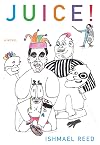
This biting and witty satire about the 1995 O.J. Simpson murder trial and the reaction to it by the U.S. media is narrated by Paul "Bear" Blessings, a middle aged African American cartoonist employed by KCAK, an alternative television station in NYC that has recently been purchased by a new owner and run by his son, who has replaced the station's former progressive programming with hosts who are more appealing to a conservative audience of viewers. Bear is kept on staff mainly to appease the show more station's critics, who accuse the new ownership of discrimination and fanning the flames of hatred against racial and religious minorities and women. The station's most popular program is Nigguz News, which portrays the worst elements of African American culture, to show its viewers what black people are really like.
Bear and his fellow members of the Rhinosphere, a group of African American professional artists, are outraged by the coverage of the trial by the media, particularly its prejudicial treatment and condemnation of O.J. (whose nickname is The Juice), who is portrayed as a rich and uppity black man who has committed two unspeakable crimes: marrying a beautiful white woman (and, even worse, a blonde), and viciously murdering her. In response, Bear draws a satirical cartoon (shown on the book's cover) in which he portrays O.J. as a quarterback about to receive a football from a woman who is meant to represent the U.S. media, to demonstrate that O.J. is running plays for the trial obsessed radio, television and newspaper broadcasters and columnists. However, one of his conservative colleagues at KCAK, a Hispanic woman whose popularity is based on her rants against her fellow Latinos, is aghaist when she first sees it, as she interprets it as O.J. sodomizing a white woman, and Bear is condemned by the new ownership and put on probation.
Bear continues to follow the O.J. murder trial obsessively, as he recognizes that all black men are, in essence, also on trial, and are being held guilty by association with him. His narrative provides an excellent summary of the details of the trial, along with prejudicial comments made by well known members of the media, along with its aftermath after O.J.'s acquittal. Reed makes the case that this post-trial outrage led to the rise and popularity of right wing media outlets such as Fox News, which commenced operations in 1996, and of conservative talk radio personalities such as Rush Limbaugh, Glenn Beck and Sean Hannity, along with the Telecommunications Act of 1996 that allowed companies to own more stations and for some programs to become nationally syndicated and exposed to a wider audience. He also demonstrates that the fallout from the O.J. trial explains the harsh, prejudicial and hypocritical treatment of Barack Obama by the right wing media during his eight years in the White House, who continue to largely ignore and overlook the current president's innumerable moral sins and personal shortcomings.
Juice! is one of the best satirical novels I've ever read, and it is a great introduction to Ishmael Reed. I'm ashamed that it took me this long to get to one of his novels, but I'll read the other books I own by him in the near future, starting with Mumbo Jumbo, his most acclaimed work. show less
Bear and his fellow members of the Rhinosphere, a group of African American professional artists, are outraged by the coverage of the trial by the media, particularly its prejudicial treatment and condemnation of O.J. (whose nickname is The Juice), who is portrayed as a rich and uppity black man who has committed two unspeakable crimes: marrying a beautiful white woman (and, even worse, a blonde), and viciously murdering her. In response, Bear draws a satirical cartoon (shown on the book's cover) in which he portrays O.J. as a quarterback about to receive a football from a woman who is meant to represent the U.S. media, to demonstrate that O.J. is running plays for the trial obsessed radio, television and newspaper broadcasters and columnists. However, one of his conservative colleagues at KCAK, a Hispanic woman whose popularity is based on her rants against her fellow Latinos, is aghaist when she first sees it, as she interprets it as O.J. sodomizing a white woman, and Bear is condemned by the new ownership and put on probation.
Bear continues to follow the O.J. murder trial obsessively, as he recognizes that all black men are, in essence, also on trial, and are being held guilty by association with him. His narrative provides an excellent summary of the details of the trial, along with prejudicial comments made by well known members of the media, along with its aftermath after O.J.'s acquittal. Reed makes the case that this post-trial outrage led to the rise and popularity of right wing media outlets such as Fox News, which commenced operations in 1996, and of conservative talk radio personalities such as Rush Limbaugh, Glenn Beck and Sean Hannity, along with the Telecommunications Act of 1996 that allowed companies to own more stations and for some programs to become nationally syndicated and exposed to a wider audience. He also demonstrates that the fallout from the O.J. trial explains the harsh, prejudicial and hypocritical treatment of Barack Obama by the right wing media during his eight years in the White House, who continue to largely ignore and overlook the current president's innumerable moral sins and personal shortcomings.
Juice! is one of the best satirical novels I've ever read, and it is a great introduction to Ishmael Reed. I'm ashamed that it took me this long to get to one of his novels, but I'll read the other books I own by him in the near future, starting with Mumbo Jumbo, his most acclaimed work. show less

I read Ishmael Reed's The Terrible Twos some twenty years ago, and this sequel to it picks up with very little pause. So I guess I wasn't an ideal reader in this case. This surreal satire, mostly about US politics and religion in the 1990s, written in 1988, is still hilarious. The ways in which Reed fails as a prognosticator are in some measures consoling, and in others alarming. One that particularly stood out for me was the vilification of Ronald Reagan by the Neo-Christian successors to show more the Republican Party, on the grounds that he was a liberal who bargained with the Soviets. In our "real" world, of course, Reagan was a "liberal" according to the standards of 21st-century politics, but he is still the beloved saint/mascot of the ever more reactionary Republicans.
The book is an incredibly fast read, full of thinly-disguised parodies of public figures and clever twists on cultural tropes. It is also, like its predecessor, a Christmas story. Reed points out that the name "Dickens" actually comes from "Nicholas" somehow, and he makes a fair try at redeeming an assortment of characters more vile than Ebeneezer Scrooge. But in the end, things still look to be deep in "the Terribles," i.e. the episodes of public shock that commenced with the assassination of President Kennedy. Aye, they are that. show less
The book is an incredibly fast read, full of thinly-disguised parodies of public figures and clever twists on cultural tropes. It is also, like its predecessor, a Christmas story. Reed points out that the name "Dickens" actually comes from "Nicholas" somehow, and he makes a fair try at redeeming an assortment of characters more vile than Ebeneezer Scrooge. But in the end, things still look to be deep in "the Terribles," i.e. the episodes of public shock that commenced with the assassination of President Kennedy. Aye, they are that. show less

When I was in high school, a critical aside comparing Shea and Wilson's Illuminatus to Ishmael Reed's novel Mumbo Jumbo brought me haphazardly to a public library copy of Reed's first poetry collection Conjure, which excited me to the point of photocopying nearly a third of it -- after resisting the temptation to steal it outright. For about twenty years thereafter, Reed's work motivated myriad unrewarded searches on my part among the poetry shelves in used bookshops across the country. In show more 2006, the volume of Reed's New and Collected Poems 1964-2006 supplied me with the full contents of Conjure, as well as the interim volumes Chattanooga, A Secretary to the Spirits, and Points of View, and a further collection of poetry more extensive than any two of the earlier books combined.
Conjure still includes several of my all-time-favorite short poems: "There's a Whale in my Thigh," "The Piping Down of God," and "Dragon's Blood." According to the author's micro-vita appended to this volume, "Beware: Do Not Read This Poem" is also an all-time-favorite of literature instructors. Perhaps the best and most representative poem of this earliest set is the exquisite "I am a Cowboy in the Boat of Ra," a houngan's brag rebuking Christian tyranny with a mixture of Wild West and ancient Egyptian imagery.
The later materials continue in the same vein, with a tiny bit less anger and a little more sorrow, but Reed's sense of humor is undiminished. Although he no longer foregrounds the blazon of his school of Neo HooDooism, his methods and aims seem quite consistent with what came before. In the later work, his awareness of the (already much-realized) possibility that his poems would serve as musical lyrics more often leads Reed to use repetitive chorus forms and traditional structures, but even in the early pieces, there is a vivid aural sensibility that constantly tempts to reader to declaim them aloud for the benefit of their full force.
Reed insists that his poetry is not theological in its aims, despite its use of various non-Christian and counter-Christian tropes and images: "The key lesson that I do take from Yoruba religion is from the parable in which a traveler finds himself in a strange country, away from his gods, and the only god that he can depend upon is his own mind" (xix). But he makes no such disclaimers regarding politics. A political piece among the more recent work that I found especially striking as an expression of its own time was the 2001 "America United" (362-372). And one that read with eerie irony in the light of current events (police violence in late October 2011) was "Let Oakland Be a City of Civility" from 1999 (341-345).
After the recent poems, the book concludes with an opera libretto Gethsemane Park, and a prose narrative "Snake War" based on a translation of an excerpt from Fungawa's Igbo Olodumare (The Forest of God). The former is a sort of Godspell-like displacement of gospel events into the modern American city, in which Jesus is not a human hero but a discorporate orisha.
In an untitled verse from 1992, Reed wrote: "Ever get the / Feeling that your past / Is a hunter who knows the / Woods better than you" (327). In fact I do, and this four-decades-plus collection goes a way toward demonstrating why Reed might as well. show less
Conjure still includes several of my all-time-favorite short poems: "There's a Whale in my Thigh," "The Piping Down of God," and "Dragon's Blood." According to the author's micro-vita appended to this volume, "Beware: Do Not Read This Poem" is also an all-time-favorite of literature instructors. Perhaps the best and most representative poem of this earliest set is the exquisite "I am a Cowboy in the Boat of Ra," a houngan's brag rebuking Christian tyranny with a mixture of Wild West and ancient Egyptian imagery.
The later materials continue in the same vein, with a tiny bit less anger and a little more sorrow, but Reed's sense of humor is undiminished. Although he no longer foregrounds the blazon of his school of Neo HooDooism, his methods and aims seem quite consistent with what came before. In the later work, his awareness of the (already much-realized) possibility that his poems would serve as musical lyrics more often leads Reed to use repetitive chorus forms and traditional structures, but even in the early pieces, there is a vivid aural sensibility that constantly tempts to reader to declaim them aloud for the benefit of their full force.
Reed insists that his poetry is not theological in its aims, despite its use of various non-Christian and counter-Christian tropes and images: "The key lesson that I do take from Yoruba religion is from the parable in which a traveler finds himself in a strange country, away from his gods, and the only god that he can depend upon is his own mind" (xix). But he makes no such disclaimers regarding politics. A political piece among the more recent work that I found especially striking as an expression of its own time was the 2001 "America United" (362-372). And one that read with eerie irony in the light of current events (police violence in late October 2011) was "Let Oakland Be a City of Civility" from 1999 (341-345).
After the recent poems, the book concludes with an opera libretto Gethsemane Park, and a prose narrative "Snake War" based on a translation of an excerpt from Fungawa's Igbo Olodumare (The Forest of God). The former is a sort of Godspell-like displacement of gospel events into the modern American city, in which Jesus is not a human hero but a discorporate orisha.
In an untitled verse from 1992, Reed wrote: "Ever get the / Feeling that your past / Is a hunter who knows the / Woods better than you" (327). In fact I do, and this four-decades-plus collection goes a way toward demonstrating why Reed might as well. show less
Lists
Cooper (2)
Southern Fiction (1)
Catalog (1)
Books (1)
hopes (1)
Best Beach Reads (1)
Black Authors (1)
Read These Too (1)
Awards


You May Also Like


Associated Authors
Statistics
- Works
- 68
- Also by
- 45
- Members
- 3,952
- Popularity
- #6,393
- Rating
- 3.9
- Reviews
- 43
- ISBNs
- 178
- Languages
- 6
- Favorited
- 16