
David Huddle
Author of The Story of a Million Years
About the Author
David Huddle has taught literature & creative writing at the University of Vermont since 1971. His poetry, fiction, & essays have appeared in "Esquire," "Harper's Magazine," the "New York Times Magazine," "Ploughshares," & "The Best American Short Stories." (Bowker Author Biography)
Image credit: Photo by Chip Riegel
Works by David Huddle
A David Huddle Reader: Selected Prose and Poetry (Bread Loaf Series of Contemporary Writers) (1993) 8 copies
Nature of Yearning, The 1 copy
Summer Lake 1 copy
Associated Works
High Infidelity: 24 Great Short Stories About Adultery by Some of Our Best Contemporary Authors (1997) — Contributor — 33 copies
Tagged
Common Knowledge
- Gender
- male
Members
Reviews
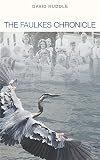
What makes this book unusual and interesting is the narrative mode. Huddle uses the collective "we," the voice of the impossible number of children whose mother is dying of cancer to tell the story of her last few months. It read sometimes like a fantasy of a "good death," sometimes like a paean to the sturdy yeomanry -- which the Faulkes represent--good solid hard-working, no-nonsense people of no interest to anyone but themselves. The point is the ONLY thing about them that isn't ordinary show more is that there are so many of them and, except that now their mother is dying and has become somehow unordinary, beautiful, transcendent and not just in their eyes, but by everyone who sees her. The "we" works I think, the individuality of the children coming through as the "we" shifts to describing and recording individual dialogue and specific descriptions or stories about a particular kid or incident. The writing is smooth and the book flows along, not confusing or hard to read at all. I was tempted to write down all the names of the kids and their ages to see if I could figure out if the "we" voice was a particular one of them and that I could puzzle it out. . . but I let it be. **** show less
So, what if by using microscopic drones, triangulation and a few other clever doodads, you could locate and assassinate anyone from a distance? Untraceable, I'm saying. What would you do with that power? The main characters here start with the wish to make the world a better place. Instead they find themselves in an ethical tangle and at risk of their lives. Huddle doesn't go into the speculative fiction stratosphere, he sticks close to home, imagining what two conscientious and well-meaning show more people might do with this power and what it might do to them. Huddle could maybe have dug deeper, but I don't think that was his aim, he wanted, I think, to keep it at an 'ordinary' believable "this could be you" level. This is a very good novel that hasn't received the attention it deserves. **** show less
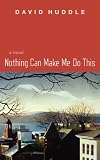
Perhaps the most apt description of [Nothing Can Make Me Do This] would be that Huddle has assembled a collage. You begin by absorbing the separate components , then step back to look at the whole, whereupon you discover another level of correspondences and meaning. The voices are drawn from three generations of a family. Six perspectives in all, three men and three women: the grandparents (born, I think in the mid-30's), their closest lifelong friend, their daughter and son-in-law, and the show more grand-daughter. The relationships described extend beyond simple man/woman into grandparents with their grandchildren, mothers and daughters, brothers. One of the great achievements is that what could be bewildering is put forward in small vignettes that work in harmony: brothers traipsing about a neighborhood at night spying through windows, a boy and a priest (not what you think), a childless older man discovering the joy of helping a child, a woman discovering she can't live with a man who can't care about a dog she loves - the revelations are like fiery peppercorns or sweetness bursting in your mouth. It works because the underlying purpose is steady. Boundaries, trespass, barriers -- might be useful descriptive words - not only the barriers that individuals put up between each other, and that couples use to keep others out, but those of knowing and not knowing, and the inevitability, if you let down your guard of revelation that leads to change: "The Eve Collins theory of self-discovery is that you sometimes just unintentionally break through to what you need to know." Trespass too, serves to describe the events literal and internal that lead to revelation. The granddaughter deciding which room in her grandparents empty house would be the right one in which to lose her virginity. Or the grandfather, when a young professor at his first college campus discovering that a place he likes to walk to and has come to consider 'his' is used once a year for a rite of passage ceremony by the students, one he finds so distasteful and upsetting that he is willing to spend hours cleaning up after it. There is also a close focus on sexuality and the boundaries, barriers and trespasses that define a marriage as well as friendships, and family relationships. So many ways to be, both bewildering and reassuring. I admire how different each of the voices are, and how I was eager to read about all of them - the most successful for me were the grandfather, grand-daughter, and Bill the son-in-law, but all of the characters had 'moments'.
Highly recommended! ****1/2 show less
Highly recommended! ****1/2 show less
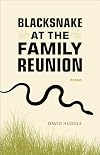
A magnificent voice. These poems read like stories that give an intimate peek into Huddle's life, particularly his growing-up years. He is courageously honest, able to express regret—but instead of shaking my head at him, I shook my head at myself, recognizing my own flaws and my fear of expressing them on paper. There were also nostalgic descriptions of family life that brought me back in time and made me smile recalling my own memories. A poem that made me laugh in the beginning show more ("Obnoxious / boy that I was, / God gave me zits / to keep me meek" or "I know what they say—it was her silence / I married her for . . .") took completely different turns than what I'd expected. Each poem spoke to me deeply and I may have had trouble choosing a favorite if not for his final poem, "Beautiful Aunt." Just when I thought it couldn't get better, he saved the best for last. show less
Awards


You May Also Like


Associated Authors
Statistics
- Works
- 31
- Also by
- 9
- Members
- 397
- Popularity
- #61,077
- Rating
- 3.9
- Reviews
- 11
- ISBNs
- 54
- Languages
- 3