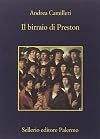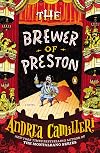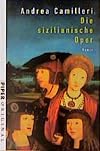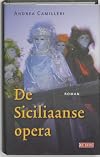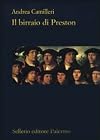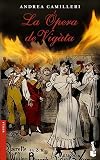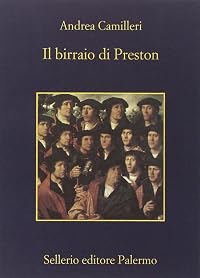
The Brewer of Preston
by Andrea Camilleri
On This Page
Description
"The New York Times bestselling author of the Inspector Montalbano series brings us back to Vigàta in the nineteenth century for a rip-roaring comic novel. 1870s Sicily. Much to the displeasure of Vigàta's stubborn populace, the town has just been unified under the Kingdom of Italy. They're now in the hands of a new government they don't understand, and they definitely don't like. Eugenio Bortuzzi has been named Prefect for Vigàta, a regional representative from the Italian government to show more oversee the town. But the rowdy and unruly Sicilians don't care much for this rather pompous mainlander nor the mediocre opera he's hell-bent on producing in their new municipal theater. The Brewer of Preston, it's called, and the Vigàtese are revving up to wreak havoc on the performance's opening night"-- show lessTags
Recommendations



Member Recommendations

Member Reviews
This was an added extra when I picked up a few of Camilleri's "Inspector Montalbano" books from the local library.
The setting Vigate in the 1870s, and the proposed production of a play - the Brewer of Preston - at the local theatre by the Prefect of Vigata - an event which the townsfolk intend will never happen. What was unexpected was that this writing style differs so much from the "Inspector Montalbano" novels. The chapters, which introduce us to an eclectic and eccentric cast of characters, are presented in no particular order - in fact we are told to read them in whatever order we like! As we slowly read, we pick up little hints as to how each scene and the characters will eventually relate, and the circumstances that bring them show more all together begins to unfold.
" ... how many things in Sicily happened by mistake ..."
The writing is at times sardonic, comedic, tragic, farcical, absurd. Loaded with clever, and often satirical, writing, Camilleri reveals tempestuous political scheming and double crossing, murder, infidelity, police corruption, anarchy, organised crime - and above, the Sicilian style of justice.
One is left wondering ... is the opera being acted out on the stage or in the real lives of the novel's characters... show less
The setting Vigate in the 1870s, and the proposed production of a play - the Brewer of Preston - at the local theatre by the Prefect of Vigata - an event which the townsfolk intend will never happen. What was unexpected was that this writing style differs so much from the "Inspector Montalbano" novels. The chapters, which introduce us to an eclectic and eccentric cast of characters, are presented in no particular order - in fact we are told to read them in whatever order we like! As we slowly read, we pick up little hints as to how each scene and the characters will eventually relate, and the circumstances that bring them show more all together begins to unfold.
" ... how many things in Sicily happened by mistake ..."
The writing is at times sardonic, comedic, tragic, farcical, absurd. Loaded with clever, and often satirical, writing, Camilleri reveals tempestuous political scheming and double crossing, murder, infidelity, police corruption, anarchy, organised crime - and above, the Sicilian style of justice.
One is left wondering ... is the opera being acted out on the stage or in the real lives of the novel's characters... show less
"The Brewer of Preston" is a one-off historical novel by Andrea Camilleri, best known for his Montalbano series. In 19th Century Vigata, Sicily, the new Prefect (or governor) of the region is determined to inaugurate a new opera house with a production of “The Brewer of Preston,” an opera he had seen previously and that just happens to be managed by one of his relatives. The town of Vigata, however, is having none of it, and arson, mayhem and murder soon ensue…. This is a very funny, very bawdy, old-fashioned farce of a novel, one in which (as the author himself notes in an end-note) the reader is told that the order of the chapters is random and the reader is encouraged to rearrange them to one’s own satisfaction. As with the show more Montalbano series, this novel is translated by the talented Stephen Sartarelli; my one quibble in reading this in e-book form is that his always informative notes are awkward to access. Very enjoyable; recommended, but be prepared for some very earthy language! show less
Incommensurabile
Sono contenta di aver iniziato a conoscere Camilleri dalle sue storie "poliziesche" di Montalbano. Ho iniziato a masticare il suo siciliano fiabesco, irreale perchè trova poca rispondenza in quello vero, ma così poetico e visionario, così carnale e sanguigno da rispettare nella sostanza la materia di cui è composto il popolo siculo. Dicevo che sono contenta, perchè il meglio era ancora da venire. I romanzi che prendono le mosse da eterei indizi storici come da cronache dei tempi che furono, sono qualcosa di assolutamente imperdibile. La messa in scena di un'opera lirica (Il birraio di Preston) per l'inaugurazione del nuovo teatro di Vigata è il pretesto per raccontare dinamiche, intrighi, intrecci, speculazioni e show more rapporti di potere realmente fondati e documentati. Molte sere dopo la rappresentazione teatrale, l'edificio va in fiamme, ed ecco che inizia la sfilata dei personaggi, ognuno a raccontar dal proprio punto di vista la genesi di tutta la vicenda. Un esercizio di scrittura notevole ed una padronanza della storia e dei suoi intrecci da lasciare senza fiato. Uno dei più bei libri di questa ambientazione di fine '800. Camilleri patrimonio dell'umanità. L'ho già detto? show less
Sono contenta di aver iniziato a conoscere Camilleri dalle sue storie "poliziesche" di Montalbano. Ho iniziato a masticare il suo siciliano fiabesco, irreale perchè trova poca rispondenza in quello vero, ma così poetico e visionario, così carnale e sanguigno da rispettare nella sostanza la materia di cui è composto il popolo siculo. Dicevo che sono contenta, perchè il meglio era ancora da venire. I romanzi che prendono le mosse da eterei indizi storici come da cronache dei tempi che furono, sono qualcosa di assolutamente imperdibile. La messa in scena di un'opera lirica (Il birraio di Preston) per l'inaugurazione del nuovo teatro di Vigata è il pretesto per raccontare dinamiche, intrighi, intrecci, speculazioni e show more rapporti di potere realmente fondati e documentati. Molte sere dopo la rappresentazione teatrale, l'edificio va in fiamme, ed ecco che inizia la sfilata dei personaggi, ognuno a raccontar dal proprio punto di vista la genesi di tutta la vicenda. Un esercizio di scrittura notevole ed una padronanza della storia e dei suoi intrecci da lasciare senza fiato. Uno dei più bei libri di questa ambientazione di fine '800. Camilleri patrimonio dell'umanità. L'ho già detto? show less
As with cinema, when I’m reading something like a Camilleri novel, it’s always possible to discuss its heightened reality. You concentrate life, as one does in theater. The proscenium arch for film is its syntax. Some thoughts arise, like when discussing reality. Imagine you ask someone who is talking about another person, "What are you doing?" They answer, "Well, I'm trying to tell you this and that, etc.” But you look at them and say, "No...What are you doing?" They get somewhat thrown, or agitated, or confused. Eventually lines are drawn. It's such a simple question. But it is really asking for you to really meditate or think about what this whole process of communication is really up to. What rules are being followed...what show more political system of exchange is really going on? What part of this is really a card shuffling act? What shifts of power are taking place in this exchange? What are you keeping me from noticing? What is being depended on? The question is simple, but the reality of the exchange is buried. There may not be words to describe the real chemistry of the exchange, and there may be issues about the decimation of personality inherent in the query. The many levels of reality that exist do not necessarily lend themselves to what Camilleri desires in his writing. The Italian reality that Camilleri's typing fingers align with, that offer more chance and accident may not inherently bring forth mysteries or truths, or even depths of experience. It's the arrangement of the reality, the artifice of the presentation, the syntax of the language of editing the events which takes place behind the scenes that manifests the gestalt of the experience. I think it was Antonioni who said that if one could explain a film, then it was not a film. Adding more realistic transactions in a design does not promise a quantum leap or realization from the experience. It's the reader, or the film watcher who adds their reality to these set conditions, and ours hearts, conscious and unconscious minds weave pearls of understanding upon them. A book is the launch pad. Whatever reality it contains will always be one of omission. That’s what draws me in to the Camilleri novels. We’re not reading about the “real” Italy (or Sicily to be more precise). What I’m reading is my inner vision of Italy. Nothing else. show less
Camilleri must have had a lot of fun writing this historical farce about the attempt of the new Florentine prefect in Montelusa/Vigata in just unified Italy to impose his will on the local Sicilian population by staging a second-rate opera, "The Brewer of Preston," to inaugurate the new theater he has had built, only to have the theater burn down just after the chaotic opening night. The chapters jump around in time and feature a variety of entertaining characters, including the local police officer, the local Mafiosi, the agitator from Rome, the prefect who nobody likes, various officials and local notables, and many more. Camilleri adapts his chapter titles from the first lines of other books (helpfully pointed out in the notes, as I show more would have recognized only a few of them), and this adds to the fun and satire. Vigata, of course, is where Camillerill's wonderful detective, Inspector Montalbano, will roam a hundred years later, and this book, like Camilleri's previous historical novel, doesn't rise to the level of the Montalbano books, but I nevertheless thoroughly enjoyed it. show less
In a small Sicilian town, shortly after the unification of Italy, a new theatre is being opened with an opera for its first production. The unpopular prefect imposes his choice of a much-detested work in English called The Brewer of Preston. This causes local outrage, so the prefect mobilises all of his resources to force the villagers to accept his choice, no buts.
In telling this story Camilleri presents an opera buffa of his own, with a cavalcade of characters and a voluminous array of incident, plot and subterfuge. The story is told out of chronological order, which muddies the waters for the reader. There are simply too many minor characters flitting in and out of this plot to keep track of, and the end result is confusion. In an show more end-note the author, somewhat disingenuously, suggests that we re-read the story in whatever chapter order takes our fancy. Not a chance. This novel is a mess and I couldn't wait for it to be over. show less
In telling this story Camilleri presents an opera buffa of his own, with a cavalcade of characters and a voluminous array of incident, plot and subterfuge. The story is told out of chronological order, which muddies the waters for the reader. There are simply too many minor characters flitting in and out of this plot to keep track of, and the end result is confusion. In an show more end-note the author, somewhat disingenuously, suggests that we re-read the story in whatever chapter order takes our fancy. Not a chance. This novel is a mess and I couldn't wait for it to be over. show less
A laugh out loud comedy of errors based on the actual events of an 1870's performance of The Brewer of Preston in Sicily. I don't know how much was satire and how much was simply the way things go in Sicily - it is home to La Cosa Nostra after all - but the story of how an opera triggered mayhem and murder was a hoot. The random ordering of the chapters added to the sense of chaos and ending with chapter 1 was the perfect wrap up.
I received this book for free through the Goodreads First Reads program
I received this book for free through the Goodreads First Reads program
Members
- Recently Added By
Published Reviews
ThingScore 50
Ferociously cynical, Camilleri juggles more plot threads in this slim volume than could be found in a bulky trilogy, all of which converge at a gallop in a finale full of Sicilian laughter, horror and tears.
added by lilithcat
Ferociously cynical, Camilleri juggles more plot threads in this slim volume than could be found in a bulky trilogy, all of which converge at a gallop in a finale full of Sicilian laughter, horror and tears
added by lilithcat
Dass sich "Die sizilianische Oper" im Deutschen so seltsam spröde liest, ist darauf zurückzuführen, dass Camilleris Kunst-Sizilianisch, das im Original sogar die Sprache des Erzählers durchsetzt, in der deutschen Übersetzung von Monika Lustig nicht nur keine Entsprechung findet, sondern durch eine Literatursprache ersetzt ist, die sich zwar provokativ Worte wie "Scheiß" und "Arsch" samt show more allen erdenklichen Varianten leistet, aber daneben die italienisch schlichte "signora Hoffer" im Deutschen zur antiquierten "werten Signora Hoffer" oder ein kolloquiales "far soffrire" (leiden lassen) zu "strapazieren" werden lässt. Lustigs Übersetzung, die sie in einem eigenen Nachwort zu rechtfertigen versucht, ist nicht in der Lage, Camilleris Figuren ihre eigene Sprache zu geben, und sie reduziert etwa das italienisch anspielungsreiche "Chiamatemi Emanuele!" - Call me Ishmael! - auf ein irreführendes, literarisch gestelztes "So ruft denn Emanuele!" show less
added by Indy133
Lists

Italian Literature
558 works; 39 members
Author Information

425+ Works 42,014 Members
Andrea Camilleri lives in Italy. Andrea Camilleri was born in Porto Empedocle, Sicily on September 6, 1925. He began his studies at Faculty of Literature in 1944 but never finished. He started to publish poems and short stories. He studied stage and film direction at the Silvio D'Amico Academy of Dramatic Arts from 1948 to 1950 and soon began work show more as a director and screen writer. Andrea Camilleri worked on several TV productions such as Inspector Maigret wirh Gino Cervi. In 1971 he returned to the Academy of Dramatic Arts holding the chair of Movie Direction and keeping it for 20 years. In 1978 he wrote his first novel - The Way Things Go which was followed by A Thread of Smoke in 1980. In 1992 he published The Hunting Season which turned out to be a best seller. In 1994 Andrea Camilleri published the first in a long series of novels - The Shape of Water which features the character Inspector Montalbano - a ficticious Sicilian detective in the police force of Vigata, an imaginary Sicilian town. The TV adaption of this book took off in popularity and Andrea Camilleri's home town was renamed Porto Empedocle Vigata. In 1998 he won the Nino Mortoglio International Book Award. He received an honorary degree from the University of Pisa in 2005. Camilleri has worked as a television and theater director, as well as a screenwriter. In 1978 he wrote his first novel, Il Corso delle Cose. The Montalbano series, featuring the Sicilian detective Inspector Montalbano, is Camilleri's most famous work of fiction, and it has been adapted into a television series. Camilleri had written a few historical novels when, in 1994, he wrote The Shape of Water, the first book starring a Sicilian detective based in the fictional town of Vigata. Camilleri won the Nino Martoglio International Book Award in 1998. He is considered to be one of Italy's greatest contemporary writers. Andrea Camilleri passed away on July 17, 2019 at the age of 93. (Bowker Author Biography) show less
Some Editions
Awards and Honors
Series
Belongs to Publisher Series
La memoria [Sellerio] (331)
Fischer Taschenbuch (19364)
Common Knowledge
- Canonical title
- The Brewer of Preston
- Original title
- Il birraio di Preston
- Original publication date
- 1995
- Important places*
- Vigàta, Sicilia, Italia (fictional); Sicilia, Italia; Italia
- First words
- Era una noche espantosa, verdaderamente pavorosa.
- Last words*
- (Click to show. Warning: May contain spoilers.)Ma di questo episodio, e di altri ancora ignoti, ampiamente parleremo nei capitoli che verranno.
- Original language
- Italian
*Some information comes from Common Knowledge in other languages. Click "Edit" for more information.
Classifications
- Genres
- Fiction and Literature, General Fiction, Historical Fiction
- DDC/MDS
- 853.914 — Literature & rhetoric Italian, Romanian & related literatures Italian fiction 1900- 20th Century 1945-1999
- LCC
- PQ4863 .A3894 .B57 — Language and Literature French, Italian, Spanish and Portuguese literatures Italian literature Individual authors, 1961-2000
- BISAC
Statistics
- Members
- 614
- Popularity
- 47,618
- Reviews
- 18
- Rating
- (3.67)
- Languages
- 9 — Catalan, Dutch, English, French, German, Hungarian, Italian, Portuguese, Spanish
- Media
- Paper, Audiobook, Ebook
- ISBNs
- 46
- ASINs
- 5