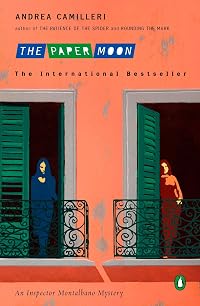
On This Page
Description
With their dark sophistication and dry humor, Andrea Camilleri's classic crime novels continue to win more and more fans in America. The latest installment of the popular mystery series finds the moody Inspector Montalbano further beset by the existential questions that have been plaguing him of late. But he doesn't have much time to wax philosophical before the gruesome murder of a man-shot at point-blank range in the face with his pants down-commands his attention. Add two evasive, show more beautiful women as prime suspects, some dirty cocaine, mysterious computer codes, and a series of threatening letters, and things soon get very complicated at the police headquarters in Vigata. show lessTags
Recommendations







Member Reviews
Please don't ask me what the correct order of this series is, as I've got absolutely no idea. I've never found the need to worry about it as each book works on its own, and each book is one of those little pieces of joy that just make you feel good.
Part of it has got to be Inspector Montalbano who is just so gloriously grumpy and idiosyncratic that he leaps alive from each and every page. Part of it is the setting which is woven into the action so seamlessly that you're just there, in that location, beside that ocean, in those restaurants, with those people. But definitely it's that food, which, frankly, I'm starting to think there should be a law against. You simply cannot read one of these books without constant mental references to show more the decided lack of wonderful meals lurking in your own refrigerator. (Note to self, first sniff of a Lotto win and we're hiring one of those housekeepers that cook like he has!).
Of course, none of the pluses thus far touch on the nature of the plots in these books, which are also extremely good. Almost masterclasses on tight, taut, clever plots in succinct but fully formed stories, decorated brilliantly by all the other aspects.
I dip into this series these days when I want a bit of comfort reading. And when I'm not on a diet.
http://www.austcrimefiction.org/review/paper-moon-andrea-camilleri show less
Part of it has got to be Inspector Montalbano who is just so gloriously grumpy and idiosyncratic that he leaps alive from each and every page. Part of it is the setting which is woven into the action so seamlessly that you're just there, in that location, beside that ocean, in those restaurants, with those people. But definitely it's that food, which, frankly, I'm starting to think there should be a law against. You simply cannot read one of these books without constant mental references to show more the decided lack of wonderful meals lurking in your own refrigerator. (Note to self, first sniff of a Lotto win and we're hiring one of those housekeepers that cook like he has!).
Of course, none of the pluses thus far touch on the nature of the plots in these books, which are also extremely good. Almost masterclasses on tight, taut, clever plots in succinct but fully formed stories, decorated brilliantly by all the other aspects.
I dip into this series these days when I want a bit of comfort reading. And when I'm not on a diet.
http://www.austcrimefiction.org/review/paper-moon-andrea-camilleri show less
Amici di carta
Eh sì... oramai piazzo qua e là parole e slang "Camilleriano" con la naturalezza camaleontica tipica dei meridionali. Perchè non è una posa, uno "sfoggio". Io davvero mi immedesimo in quelle parole, neologismi o meno, tanto musicali e diretti. Salvù è quello che mi dà il buongiorno mentre faccio colazione, prima di andare al lavoro, che mi ci accompagna mentre viaggio in metropolitana, che mi dà la buonanotte la sera con quelle poche righe che riesco a leggere prima di crollare per la stanchezza della giornata. Quando lavoro al computer e devo immettere una qualsiasi password penso a Catarella, alle sue battaglie nel cercare "le guardie ai passi", e mi viene da sorridere. I libri di Camilleri sono gialli perchè show more c'è quasi sempre un omicidio, ma io non li definirei così. Sono qualcosa di più. Il "di più" è qualcosa che ognuno di noi scova dentro di sè. show less
Eh sì... oramai piazzo qua e là parole e slang "Camilleriano" con la naturalezza camaleontica tipica dei meridionali. Perchè non è una posa, uno "sfoggio". Io davvero mi immedesimo in quelle parole, neologismi o meno, tanto musicali e diretti. Salvù è quello che mi dà il buongiorno mentre faccio colazione, prima di andare al lavoro, che mi ci accompagna mentre viaggio in metropolitana, che mi dà la buonanotte la sera con quelle poche righe che riesco a leggere prima di crollare per la stanchezza della giornata. Quando lavoro al computer e devo immettere una qualsiasi password penso a Catarella, alle sue battaglie nel cercare "le guardie ai passi", e mi viene da sorridere. I libri di Camilleri sono gialli perchè show more c'è quasi sempre un omicidio, ma io non li definirei così. Sono qualcosa di più. Il "di più" è qualcosa che ognuno di noi scova dentro di sè. show less
First Line: The alarm rang, as it had done every morning for the past year, at seven-thirty.
The moody Inspector Salvo Montalbano has been plagued by the sense of his own mortality of late. He's trying to dodge all those morbid questions floating around in his mind-- without much success-- so what he needs is a good murder to take his mind off death. This he gets when the body of a man-- shot in the face at point-blank range-- with his pants down around his ankles is found.
Montalbano soon has more than enough to occupy his mind with the victim's beautiful sister, the victim's beautiful girlfriend, cocaine, blackmail letters, and mysterious computer codes all complicating the investigation. Not to fear, though-- allow Montalbano to show more cogitate while digesting an excellent meal, and the killer will soon be in jail.
Although the first book in the series was rather shaky for me, I am so glad that I continued because this is now one of my absolute favorite series. Montalbano and his team of officers are all gems, and Stephen Sartarelli does a perfect job of translating colloquial dialogue. (By the way, my husband is another huge fan of this series.) How Sartarelli manages to imply regional Sicilian speech and yet keep the meaning completely clear for English speakers is beyond me. The man is a master!
The mystery isn't all that difficult to solve, but that's not the point. The point is being able to watch grumpy Inspector Montalbano distracted by two pretty girls. You know that, sooner or later, the pheromones are going to lose their effect, and the wily Sicilian policeman is going to figure everything out. The joy is in watching him do it. show less
The moody Inspector Salvo Montalbano has been plagued by the sense of his own mortality of late. He's trying to dodge all those morbid questions floating around in his mind-- without much success-- so what he needs is a good murder to take his mind off death. This he gets when the body of a man-- shot in the face at point-blank range-- with his pants down around his ankles is found.
Montalbano soon has more than enough to occupy his mind with the victim's beautiful sister, the victim's beautiful girlfriend, cocaine, blackmail letters, and mysterious computer codes all complicating the investigation. Not to fear, though-- allow Montalbano to show more cogitate while digesting an excellent meal, and the killer will soon be in jail.
Although the first book in the series was rather shaky for me, I am so glad that I continued because this is now one of my absolute favorite series. Montalbano and his team of officers are all gems, and Stephen Sartarelli does a perfect job of translating colloquial dialogue. (By the way, my husband is another huge fan of this series.) How Sartarelli manages to imply regional Sicilian speech and yet keep the meaning completely clear for English speakers is beyond me. The man is a master!
The mystery isn't all that difficult to solve, but that's not the point. The point is being able to watch grumpy Inspector Montalbano distracted by two pretty girls. You know that, sooner or later, the pheromones are going to lose their effect, and the wily Sicilian policeman is going to figure everything out. The joy is in watching him do it. show less
Forse il Montalbano migliore dal punto di vista della costruzione psicologica dei personaggi. Il commissario qui pare sprofondato in un film di Almodovar, circondato da donne protagoniste della loro vita e a volte anche di quella degli altri, caratteri forti, seduttive, con la piena coscienza del loro potere. La figura di Michela Pardo ha tutte le caratteristiche per calcare il palcoscenico della tragedia classica, mentre il suo contraltare, Elena, è una figura dei giorni nostri, in cui amore e interesse si miscelano con disinvoltura. Un gran bel libro.
The continuing adventures of Inspector Salvo Montalbano, who is beginning to wonder if he's "getting too old for this", as he commits a couple of what he considers to be very foolish mistakes in investigating the peculiar shooting death of a pharmaceutical representative in a private roof-top sanctuary. There are a couple of disarming, disturbing women involved, which adds to Montalbano's discomfort. This is not the strongest entry in the series. I thought the plot line of this one was stretched a bit thin; as I was fairly sure I had the culprit and the motive pegged early on,I got impatient to be done with it, and getting to the solution wasn't quite as much fun as it often is, although there were a few laughs along the way. As has show more happened before with Montalbano, the perpetrator of the crime does not come to justice in any official sense, but the books are cleared and everyone is satisfied. Almost no food in this one, though, I'm sad to say. show less
Sit down to a three-course meal of comfort food, ideally suited to the chilly weather, accompanied by a quirky Italian aperitif: three chart toppers and a Sicilian mystery make a perfect winter feast.
Paper Moon is Andrea Camilleri’s ninth Inspector Salvo Montalbano mystery, set in the fictitious Sicilian town of Vigata, and engagingly translated by the poet Stephen Sartarelli.
Like American police inspectors of ‘a certain age’, Montalbano is starting to doubt himself – but shows no sign of wanting to suck on a gun, a bottle or a cigarette.
A murdered man, dead politicians, dirty drugs, lovely women – Salvo rises to the challenge. Instead of being mired in the mafia, as befits its location, the plot is personality-driven and show more unpredictable. Different – but definitely rewarding. show less
Paper Moon is Andrea Camilleri’s ninth Inspector Salvo Montalbano mystery, set in the fictitious Sicilian town of Vigata, and engagingly translated by the poet Stephen Sartarelli.
Like American police inspectors of ‘a certain age’, Montalbano is starting to doubt himself – but shows no sign of wanting to suck on a gun, a bottle or a cigarette.
A murdered man, dead politicians, dirty drugs, lovely women – Salvo rises to the challenge. Instead of being mired in the mafia, as befits its location, the plot is personality-driven and show more unpredictable. Different – but definitely rewarding. show less
No. 9 in the Inspector Montalbani series.
Until this installment, Camilleri’s series was—and remains—unique in that its single most outstanding characteristic is a gusto for life. The protagonist, Sicilian Inspector Salvo Montalbano, is moody, as changeable as the weather—passionate, highly moral in his work, a cowardly liar when he feels it necessary in his relationship with his lover Livia, a gourmand and glutton, compassionate jealous, intuitive, sarcastic, protective of his police officers, stubborn, well-read—the list goes on and on. He seems to be larger than life and yet totally believable.
Camilleri takes the same approach with his wonderful cast of recurring characters, although on a more minor scale: Fazio, the show more sergeant, Mimí Augello, Montalbano’s second-in-command, Catarella the foolish, bumbling officer who has his own take on the Italian language and police procedure, Dr. Pasquano the coroner, Livia, Adelina his housekeeper, Nicoló Zito the Communist TV announcer, and many, many others. Vigáta, Montalbano’s headquarters, positively comes alive, as does the Sicilian landscape in general. Throughout the books are running commentaries from Montalbano’s (liberal) point of view on current-day Italian politics. The books vibrate with life and energy.
As well as the recurring characters, the once-off ones are also handled brilliantly.
And the books have been hysterically funny. Camilleri taught stage direction for over 20 years, and it shows, both in the way he sets his scenes and the way he uses comedy. I have read the books in this series at least 3 times, some of them more often, and it makes no difference—I have laughed so hard in my recent rereading, for instance, of Rounding the Mark, that I could barely breathe. His touch just borders on slapstick but does not fall over the line—it’s far more Shakespearean and extremely effective.
To top it all off, the plotting is excellent; for the most part, the stories are engrossing.
Therefore it was a shock to my system when I read The Paper Moon.
The humor is gone. We’re left with Montalbano’s sarcasm with not a shred of his sense of the ridiculous to balance it off. Catarella becomes a computer-obsessed maniac instead of a Shakespearean fool. Food, an important minor part of the series (treated in such a way that you want to move to Sicily immediately), is barely mentioned. Recurring characters, such as Mimí Augello and Fazio are much reduced in presence; Mimí, a new father, is made out to be a nitwit. Livia appears only in brief phone conversations.
Everything, in other words, is subdued, especially Montalbano himself. Instead, the book centers yes, on the plot, which is one of his best, but also on Montalbano’s angst about aging and to a lesser extent, death. While this does not interfere with the story—indeed, it is a crucial part of it—there is almost nothing left of the old Montalbano except his irritation and sarcasm.
Two things save this book: the plot and the handling of the two women who, with Montalbano himself, are the center of attention.
The story begins with the report of a missing person by his sister; the brother turns to have been murdered under embarrassing circumstances. The major suspect is his mistress. Both women are drawn beautifully and powerfully. Other, drug-related deaths, some of them powerful political figures, add to the mix and the pressures on Montalbano to solve the crime become nearly unbearable.
This is the matrix for Montalbano’s introspection over his aging and his inner questioning of whether he himself is really capable of carrying on effectively in his job.
Overall, it feels as if Camilleri is getting tired of this series and is preparing the way out for Montalbano.
A good story, but not up to his usual spectacularly high standard. show less
Until this installment, Camilleri’s series was—and remains—unique in that its single most outstanding characteristic is a gusto for life. The protagonist, Sicilian Inspector Salvo Montalbano, is moody, as changeable as the weather—passionate, highly moral in his work, a cowardly liar when he feels it necessary in his relationship with his lover Livia, a gourmand and glutton, compassionate jealous, intuitive, sarcastic, protective of his police officers, stubborn, well-read—the list goes on and on. He seems to be larger than life and yet totally believable.
Camilleri takes the same approach with his wonderful cast of recurring characters, although on a more minor scale: Fazio, the show more sergeant, Mimí Augello, Montalbano’s second-in-command, Catarella the foolish, bumbling officer who has his own take on the Italian language and police procedure, Dr. Pasquano the coroner, Livia, Adelina his housekeeper, Nicoló Zito the Communist TV announcer, and many, many others. Vigáta, Montalbano’s headquarters, positively comes alive, as does the Sicilian landscape in general. Throughout the books are running commentaries from Montalbano’s (liberal) point of view on current-day Italian politics. The books vibrate with life and energy.
As well as the recurring characters, the once-off ones are also handled brilliantly.
And the books have been hysterically funny. Camilleri taught stage direction for over 20 years, and it shows, both in the way he sets his scenes and the way he uses comedy. I have read the books in this series at least 3 times, some of them more often, and it makes no difference—I have laughed so hard in my recent rereading, for instance, of Rounding the Mark, that I could barely breathe. His touch just borders on slapstick but does not fall over the line—it’s far more Shakespearean and extremely effective.
To top it all off, the plotting is excellent; for the most part, the stories are engrossing.
Therefore it was a shock to my system when I read The Paper Moon.
The humor is gone. We’re left with Montalbano’s sarcasm with not a shred of his sense of the ridiculous to balance it off. Catarella becomes a computer-obsessed maniac instead of a Shakespearean fool. Food, an important minor part of the series (treated in such a way that you want to move to Sicily immediately), is barely mentioned. Recurring characters, such as Mimí Augello and Fazio are much reduced in presence; Mimí, a new father, is made out to be a nitwit. Livia appears only in brief phone conversations.
Everything, in other words, is subdued, especially Montalbano himself. Instead, the book centers yes, on the plot, which is one of his best, but also on Montalbano’s angst about aging and to a lesser extent, death. While this does not interfere with the story—indeed, it is a crucial part of it—there is almost nothing left of the old Montalbano except his irritation and sarcasm.
Two things save this book: the plot and the handling of the two women who, with Montalbano himself, are the center of attention.
The story begins with the report of a missing person by his sister; the brother turns to have been murdered under embarrassing circumstances. The major suspect is his mistress. Both women are drawn beautifully and powerfully. Other, drug-related deaths, some of them powerful political figures, add to the mix and the pressures on Montalbano to solve the crime become nearly unbearable.
This is the matrix for Montalbano’s introspection over his aging and his inner questioning of whether he himself is really capable of carrying on effectively in his job.
Overall, it feels as if Camilleri is getting tired of this series and is preparing the way out for Montalbano.
A good story, but not up to his usual spectacularly high standard. show less
Members
- Recently Added By
Lists

Italian Literature
556 works; 41 members
Author Information

424+ Works 41,972 Members
Andrea Camilleri lives in Italy. Andrea Camilleri was born in Porto Empedocle, Sicily on September 6, 1925. He began his studies at Faculty of Literature in 1944 but never finished. He started to publish poems and short stories. He studied stage and film direction at the Silvio D'Amico Academy of Dramatic Arts from 1948 to 1950 and soon began work show more as a director and screen writer. Andrea Camilleri worked on several TV productions such as Inspector Maigret wirh Gino Cervi. In 1971 he returned to the Academy of Dramatic Arts holding the chair of Movie Direction and keeping it for 20 years. In 1978 he wrote his first novel - The Way Things Go which was followed by A Thread of Smoke in 1980. In 1992 he published The Hunting Season which turned out to be a best seller. In 1994 Andrea Camilleri published the first in a long series of novels - The Shape of Water which features the character Inspector Montalbano - a ficticious Sicilian detective in the police force of Vigata, an imaginary Sicilian town. The TV adaption of this book took off in popularity and Andrea Camilleri's home town was renamed Porto Empedocle Vigata. In 1998 he won the Nino Mortoglio International Book Award. He received an honorary degree from the University of Pisa in 2005. Camilleri has worked as a television and theater director, as well as a screenwriter. In 1978 he wrote his first novel, Il Corso delle Cose. The Montalbano series, featuring the Sicilian detective Inspector Montalbano, is Camilleri's most famous work of fiction, and it has been adapted into a television series. Camilleri had written a few historical novels when, in 1994, he wrote The Shape of Water, the first book starring a Sicilian detective based in the fictional town of Vigata. Camilleri won the Nino Martoglio International Book Award in 1998. He is considered to be one of Italy's greatest contemporary writers. Andrea Camilleri passed away on July 17, 2019 at the age of 93. (Bowker Author Biography) show less
Some Editions
Awards and Honors
Awards
Series

Belongs to Publisher Series
Common Knowledge
- Canonical title
- The Paper Moon
- Original title
- La luna di carta
- Original publication date
- 2005-06-23; 2008 (English: Sartarelli) (English: Sartarelli)
- People/Characters
- Salvo Montalbano; Fazio; Catarella; Mimi Augello; Livia; Angelot Pardo (deceased) (show all 8); Michela Pardo; Elena Sclafani
- Important places
- Vigàta, Sicilia, Italia
- Related movies
- Il commissario Montalbano (1999 | IMDb)
- First words
- The alarm rang, as it had done every morning for the past year, at seven-thirty.
- Last words
- (Click to show. Warning: May contain spoilers.)"Why not?" said Montalbano.
(Click to show. Warning: May contain spoilers.)«Perché no?» disse Montalbano. - Original language
- Italian
Classifications
- Genres
- Fiction and Literature, Mystery
- DDC/MDS
- 853.914 — Literature & rhetoric Italian, Romanian & related literatures Italian fiction 1900- 20th Century 1945-1999
- LCC
- PQ4863 .A3894 .L86 — Language and Literature French, Italian, Spanish and Portuguese literatures Italian literature Individual authors, 1961-2000
- BISAC
Statistics
- Members
- 1,290
- Popularity
- 18,776
- Reviews
- 39
- Rating
- (3.69)
- Languages
- 12 — Catalan, Danish, Dutch, English, Finnish, French, German, Greek, Italian, Polish, Portuguese, Spanish
- Media
- Paper, Audiobook, Ebook
- ISBNs
- 54
- UPCs
- 1
- ASINs
- 17