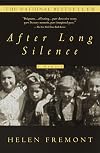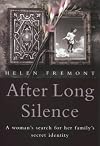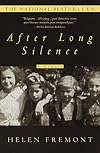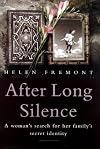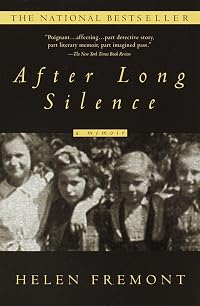
After Long Silence
by Helen Fremont
On This Page
Description
Helen Fremont chronicles her struggle to discover her parents' true religious history and discusses how she felt when she realized that her parents had lied about their Catholic upbringing because of their experiences during the Holocaust.Tags
Recommendations










Member Reviews
I’ve read a lot of stories about the Shoah (the Holocaust), but never one quite like the story of Helen Fremont’s family. Her book, After Long Silence: A Memoir, is truly a blend of genres, regardless of the title.
Fremont is of my generation, but her parents were European refugees who came to the United States after WWII. To everyone outside the family they were a nice Polish-American Catholic family. Inside the nuclear family, they also appeared to be Catholics of Polish ancestry.
The book is about the story Helen discovers when she is an adult. Her parents were actually Jews who had survived the horrors of the Holocaust. They won’t admit it, though–at least not until Helen hounds them for the truth.
From the opening, the main show more question Helen seeks to answer in the book is “What really happened to my parents during the war years?” Eventually that question turns into “Why do they still want to keep the secret?”
Fremont alternates her story with that of both her parents before and during and right after the war. Once the story of her parents’ paths to survival begins in earnest, Fremont has me completely hooked. Those chapters/sections are to me the essence of the book–and they truly would not be memoir if they were not framed within a memoir. They read like a Holocaust biography or novel–gripping and disturbing. What her parents did to survive shows how far the human spirit and personality can stretch and mold.
The sections about Fremont’s parents’ lives are imagined stories based upon Fremont’s research.It makes sense that the stories of her parents overshadows Fremont’s own story since the huge secret her parents imposed on their family overshadowed Fremont’s life. But at the end of the book she feels independent of them. This is important because it means she can differentiate herself as an individual adult. show less
Fremont is of my generation, but her parents were European refugees who came to the United States after WWII. To everyone outside the family they were a nice Polish-American Catholic family. Inside the nuclear family, they also appeared to be Catholics of Polish ancestry.
The book is about the story Helen discovers when she is an adult. Her parents were actually Jews who had survived the horrors of the Holocaust. They won’t admit it, though–at least not until Helen hounds them for the truth.
From the opening, the main show more question Helen seeks to answer in the book is “What really happened to my parents during the war years?” Eventually that question turns into “Why do they still want to keep the secret?”
Fremont alternates her story with that of both her parents before and during and right after the war. Once the story of her parents’ paths to survival begins in earnest, Fremont has me completely hooked. Those chapters/sections are to me the essence of the book–and they truly would not be memoir if they were not framed within a memoir. They read like a Holocaust biography or novel–gripping and disturbing. What her parents did to survive shows how far the human spirit and personality can stretch and mold.
The sections about Fremont’s parents’ lives are imagined stories based upon Fremont’s research.It makes sense that the stories of her parents overshadows Fremont’s own story since the huge secret her parents imposed on their family overshadowed Fremont’s life. But at the end of the book she feels independent of them. This is important because it means she can differentiate herself as an individual adult. show less
Growing up in Michigan in the 1960s and ‘70s, Helen Fremont had no idea that her parents were not Polish Catholic refugees from war-ravaged Europe, but were, in fact, Jewish. In After Long Silence, she interweaves the story of her quest, with her older sister, to discover the truth about their history with a part-factual, part-fictional narrative of her parents’ childhoods in and around Lvov, her mother’s and her aunt’s assumption of new identities to survive and flee from Nazi occupation, and her father’s endurance in and escape from a Siberian prison camp.
Fremont’s goal is ambitious and complex: to find out what really happened and to understand why her parents chose to keep the truth from their children and how this show more secrecy affected her own psychological development. It is complicated by her parents’, especially her mother’s, unwillingness — or inability — to discuss their 50-year-old experiences. As a result, though compellingly and often almost poetically written, particularly in the sections telling the parents’ stories, After Long Silence is ultimately a frustrating book.
Fremont acknowledges in an introductory author’s note that she has imagined certain details, and frequently reiterates that it is not always clear what happened: the reader has no way of knowing which aspects of her parents’ experiences are real, and which are not. It is the very specificity of her descriptions, the details of events and feelings, that make her parents’ stories believable, but it is these that are most likely imaginary. She writes, “History is a card table full of illusions, and we must sort through and pick the ones we wish to believe.” Do we want to believe, or do we want to know the truth, and how much of the truth is historical fact and how much is emotional reality? These questions emerge, but are unanswered.
Troubling also is Fremont’s persistence in investigating her parents’ history in the face of their resistance to her doing so, their desire to keep their secret a secret, their fear and fury and anguish at her digging up long-buried, even forgotten memories. And yet, they also want to know — some of the truth. Her mother, who had begged her own mother to let her stay in Lvov with her family, rather than escape to her married sister in Rome, now begs her daughters to tell her where and when and how her parents were killed. Her father, who wrote his own, unpublished, 600-page memoir of his six years in the Gulag, reveals that he had wanted to tell his daughters they were Jewish when they turned 18, but their mother (and her sister in Rome) refused. Fremont’s right to know her own history collides with her parents’ right to maintain their privacy and the new life they chose.
Why did Fremont’s parents decide to keep up the myths about their lives even after emigrating to America? Without their cooperation, Fremont can only speculate that her mother’s unshakable bond with her sister, whose marriage to an Italian count, through a complicated series of events, saved both sisters in Lvov and gave them, separately, a way to get out of Poland, committed her to maintaining a secret that was also her sister’s secret. She can only imagine that the horrors her mother observed and endured, the stress of taking on false identity after false identity, led her to forget, to repress. Amazingly, to this day, nobody — not her mother, not her aunt, not her father — can remember her mother’s original name.
Finally, it is unclear what being Jewish means to Fremont. She tries attending services but is mystified by the Hebrew. She studies with a rabbi, tells him she is a lesbian, and assumes his disapproval extends to Jews as a whole. In an afterword to the paperback edition, she attends an extended family reunion, complete with bagels, lox, and kugel, after cousins she never knew existed recognized her family’s story when the hardback edition was published and sought her out. Fremont was in her thirties when she unraveled her parents’ past: discovering her Jewish identity did not set her on a new religious path but provided her with emotional answers, psychological comfort. show less
Fremont’s goal is ambitious and complex: to find out what really happened and to understand why her parents chose to keep the truth from their children and how this show more secrecy affected her own psychological development. It is complicated by her parents’, especially her mother’s, unwillingness — or inability — to discuss their 50-year-old experiences. As a result, though compellingly and often almost poetically written, particularly in the sections telling the parents’ stories, After Long Silence is ultimately a frustrating book.
Fremont acknowledges in an introductory author’s note that she has imagined certain details, and frequently reiterates that it is not always clear what happened: the reader has no way of knowing which aspects of her parents’ experiences are real, and which are not. It is the very specificity of her descriptions, the details of events and feelings, that make her parents’ stories believable, but it is these that are most likely imaginary. She writes, “History is a card table full of illusions, and we must sort through and pick the ones we wish to believe.” Do we want to believe, or do we want to know the truth, and how much of the truth is historical fact and how much is emotional reality? These questions emerge, but are unanswered.
Troubling also is Fremont’s persistence in investigating her parents’ history in the face of their resistance to her doing so, their desire to keep their secret a secret, their fear and fury and anguish at her digging up long-buried, even forgotten memories. And yet, they also want to know — some of the truth. Her mother, who had begged her own mother to let her stay in Lvov with her family, rather than escape to her married sister in Rome, now begs her daughters to tell her where and when and how her parents were killed. Her father, who wrote his own, unpublished, 600-page memoir of his six years in the Gulag, reveals that he had wanted to tell his daughters they were Jewish when they turned 18, but their mother (and her sister in Rome) refused. Fremont’s right to know her own history collides with her parents’ right to maintain their privacy and the new life they chose.
Why did Fremont’s parents decide to keep up the myths about their lives even after emigrating to America? Without their cooperation, Fremont can only speculate that her mother’s unshakable bond with her sister, whose marriage to an Italian count, through a complicated series of events, saved both sisters in Lvov and gave them, separately, a way to get out of Poland, committed her to maintaining a secret that was also her sister’s secret. She can only imagine that the horrors her mother observed and endured, the stress of taking on false identity after false identity, led her to forget, to repress. Amazingly, to this day, nobody — not her mother, not her aunt, not her father — can remember her mother’s original name.
Finally, it is unclear what being Jewish means to Fremont. She tries attending services but is mystified by the Hebrew. She studies with a rabbi, tells him she is a lesbian, and assumes his disapproval extends to Jews as a whole. In an afterword to the paperback edition, she attends an extended family reunion, complete with bagels, lox, and kugel, after cousins she never knew existed recognized her family’s story when the hardback edition was published and sought her out. Fremont was in her thirties when she unraveled her parents’ past: discovering her Jewish identity did not set her on a new religious path but provided her with emotional answers, psychological comfort. show less
After Long Silence is a fascinating discourse of discovery that despite being brought up as a gentile you discover you were Jewish. Your father tells a story of growing up under both Gods. Being blessed twice. The father mentions that he hated being Jewish but Jews wouldn’t fight back. The author Helen Fremont, knows this is a stereotype so has to mention this is Poland in the late 1930’s not the Israeli Jews of today. Does the reader need this explained? Each physical trauma (falling into ice) the writer encounters makes her compare these events to her parent’s history of being bludgeoned by Russians, Germans and Ukrainians. There is an odd line “History is a card table full of illusions, and we must sort through and pick the show more ones we wish to believe.” This relates to the stories her parents tell her. I usually like metaphors but at times the author over does it-Italy was a great skillet that sizzled with life. The complications of family secrets are richly explored. The book gives various scenarios as to why the family’s Jewishness was kept hidden fifty years after the end of WW11. An exceptional read. show less
I had read this awhile ago and when her new book (The Escape Artist) came out I reread it before starting her new one. Still a great read. A family in such dysfunction appearing to be normal really made me think of the trauma of many now from abuse or post traumatic stress disorders. So many layers to the survivors lies and identity that one can only begin to understand life during WWII in Poland and Italy.
5637. After Long Silence A Memoir by Helen Fremont (read 5 Jul 2019) This book was published in 1999 and purports to tell the family reaction to learning of the author's research concerning the experiences of her parents during the Holocaust. While one wonders whether the book is literally true I found the account, especially in the latter part of the book, attention-holding and often startlingly poignant. I found myself totally caught up in the story and eager to learn what was related. The author's parents, in trying to stay alive, passed themselves off as Catholics and in the 1990's still attended Mass (though exiting before Communion) and had their daughters, born in the United States, baptized and make their First Communion. One show more has to be amazed by and admire the resilience which the parents exhibited to the overwhelming tragedies they experienced show less
I was intrigued by the description of this book, "I didn't even know my mother's real name", and so I borrowed this book from the library to read on my nook.
all in all, it was an interesting read. The book tells of Helen's family & the secrets Helen's parents kept from her and her sister her whole life, until she somehow finds out she's actually Jewish (the book never really explains to my satisfaction exactly how she discovered she was Jewish & that her mother was lying to her). There's also a lot of past / present back and forth in the book which I'm not a huge fan of, but it was also definitely the best way to write this type of book.
The book's pace was a bit slow to me and there are parts that feel repetitive, but I felt the unique show more nature of this biography offsets the negatives in the book. That being said, why only 3 stars? I feel it was not only cruel, Helen's relentless pursuing of truths her family didn't want revealed, but not only that - she writes a book & publishes it, revealing to the world all of her families dirty secrets. Writing the book I think helped her deal with the truths, which I understand, publishing was still cruel. show less
all in all, it was an interesting read. The book tells of Helen's family & the secrets Helen's parents kept from her and her sister her whole life, until she somehow finds out she's actually Jewish (the book never really explains to my satisfaction exactly how she discovered she was Jewish & that her mother was lying to her). There's also a lot of past / present back and forth in the book which I'm not a huge fan of, but it was also definitely the best way to write this type of book.
The book's pace was a bit slow to me and there are parts that feel repetitive, but I felt the unique show more nature of this biography offsets the negatives in the book. That being said, why only 3 stars? I feel it was not only cruel, Helen's relentless pursuing of truths her family didn't want revealed, but not only that - she writes a book & publishes it, revealing to the world all of her families dirty secrets. Writing the book I think helped her deal with the truths, which I understand, publishing was still cruel. show less
“After Long Silence” is a true story that narrates a daughter’s search for not only her parent’s identity, but hers as well. Helen Fremont is the child of World War II Jewish survivors. She grew up in a home full of secrets and lies. As an adult she began questioning different aspects of her life that did not fit together. She knew that simply asking her parents would not provide her direct answers, so she turned to genealogy to unravel her parent’s past.
The word “Genealogy” is seldom mentioned in this book, but the story is full of the search and conquer that all family historians experience. Helen Fremont’s world blooms with answers she is only able to acquire through typical research methods that seem common to most show more genealogists. The following excerpt explains beautifully her discovery .
“Families are intricate, multi-headed creatures, moving in many directions at once but perhaps with an internal logic. My family is greater than just my parents. My family extends backward in time and space. I want to put them on record, however imperfectly – I want them to be seen and heard. And strangely enough, on the page I begin to recognize myself in my parents – a gesture here, a question there. My attachment to them grows stronger with each sentence that arranges itself before me. Perhaps this is the ultimate irony of my family.”
There are many concepts that may be hard to digest that are incorporated in this story. Not only are detailed accounts of surviving through World War II explored and explained, but homosexuality and dysfunctional families are also introduced.
I honestly found the writing style deplorable at times. If you are looking for a true story based on genealogical research, or if you have an interest in the struggles that were necessary to survive World War II as a Jew, you will find “After Long Silence” a thought provoking and motivating book. show less
The word “Genealogy” is seldom mentioned in this book, but the story is full of the search and conquer that all family historians experience. Helen Fremont’s world blooms with answers she is only able to acquire through typical research methods that seem common to most show more genealogists. The following excerpt explains beautifully her discovery .
“Families are intricate, multi-headed creatures, moving in many directions at once but perhaps with an internal logic. My family is greater than just my parents. My family extends backward in time and space. I want to put them on record, however imperfectly – I want them to be seen and heard. And strangely enough, on the page I begin to recognize myself in my parents – a gesture here, a question there. My attachment to them grows stronger with each sentence that arranges itself before me. Perhaps this is the ultimate irony of my family.”
There are many concepts that may be hard to digest that are incorporated in this story. Not only are detailed accounts of surviving through World War II explored and explained, but homosexuality and dysfunctional families are also introduced.
I honestly found the writing style deplorable at times. If you are looking for a true story based on genealogical research, or if you have an interest in the struggles that were necessary to survive World War II as a Jew, you will find “After Long Silence” a thought provoking and motivating book. show less
Members
- Recently Added By
Author Information
5+ Works 704 Members
Common Knowledge
- Original publication date
- 1999
- People/Characters
- Batya Fremont; Kovik Fremont; Helen Fremont; Lara Fremont
- Important places
- Italy; Siberia, Russia; Poland; Michigan, USA
- Important events
- Holocaust; World War II
- Epigraph
- We loved each other and were ignorant
-W. B. Yeats - Dedication
- For Donna
- First words
- Lara and I were raised Catholic in a small city in the Midwest.
- Quotations
- “To this day, I don't even know what my mother's real name is.”
- Last words
- (Click to show. Warning: May contain spoilers.)Now I tell the story, I suppose, because it is the only way to loosen the knot that has held us captive for so long.
(Click to show. Warning: May contain spoilers.)And so they did. (afterword) - Publisher's editor
- Cantor, Jackie
- Blurbers
- Kehoe, Louise; Baxter, Charles; Ryan, Michael; Rosenbaum, Thane
Classifications
- Genres
- Biography & Memoir, Nonfiction, History, General Nonfiction
- DDC/MDS
- 940.5318092 — History & geography History of Europe History of Europe 1918- World War II, 1939-1945 Social, political, economic history; Holocaust Holocaust Standard subdivisions History, geographic treatment, biography Biography
- LCC
- E184.37 .F74 .A4 — History of the United States United States Elements in the population Afro-Americans
- BISAC
Statistics
- Members
- 622
- Popularity
- 46,818
- Reviews
- 20
- Rating
- (3.59)
- Languages
- English
- Media
- Paper, Audiobook, Ebook
- ISBNs
- 10
- ASINs
- 3