
Martin Goldsmith (3)
Author of The Inextinguishable Symphony: A True Story of Music and Love in Nazi Germany
For other authors named Martin Goldsmith, see the disambiguation page.
About the Author
Martin Goldsmith is Director of classical music programming at XM Satellite Radio in Washington, D.C. From 1989 to 1999, he was the host of National Public Radio's Performance Today. Prior to that he served for a dozen years at WETA-FM, the NPR affiliate in Washington, D.C., as producer, announcer, show more and music director. He lives in Maryland with his wife show less
Works by Martin Goldsmith
The Inextinguishable Symphony: A True Story of Music and Love in Nazi Germany (2000) 522 copies, 8 reviews
Tagged
Common Knowledge
Members
Reviews
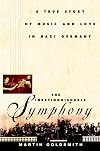
Subtitled "A True Story of Music and Love in Nazi Germany", this is the story of Goldsmith's parents, who as young musicians found employment, a tenuous safety, and each other, performing with the Jewish Kulturbund, the Nazis' highly regulated arts organization for Jews only, which existed from 1933 to 1942, for the purpose of showing the outside world that Germany was "treating its Jews well", and secondarily for giving the Jewish population a hard-to-resist outlet for artists, actors and show more other performers. This resulted in a false hope for "normalcy" among some of the intellectual community, and kept many from considering protest or emigration. Goldsmith's parents were lucky enough to plan their escape in time to make the necessary arrangements before all-out war in Europe closed off their options and the Final Solution went into high gear. His grandparents were not so fortunate. It's hard to remember while reading all this that, in spite of the openly anti-Semitic climate in Germany in the 1930's, no one could realize at the time how horrific the situation was going to become. Many German Jews never gave up hope that "this can't get any worse" until it did and it was too late to do anything to save themselves; others arranged to leave the country but were caught in the nets that spread into places they had assumed to be safe havens, such as France and Holland. It's a fascinating read, both uplifting and frightening. show less
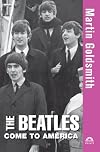
This book has such excellent writing that you have to slow down reading as page after page fly by so quickly. I suppose we are now entering the age which people don't care about what the Beatles did or meant. For that reason this book seems to have been written. A book for the future when all have forgotten what Beatlemania (in America) was and to hear about it from a fan who feels that the four boys from Liverpool have something to say still. The book is divided into 10 short chapters. 9 show more chapters with the Beatles and the final chapter is a kind of summation of, or better, lessons learned from what occurred to America from the Beatles having arrived. The premise is that in the shock of Kennedy's assassination the Beatles came to lift the hope of America's youth-filled dreams and the promise of a artistic and creative Camelot. The climax of the narrative is the appearance on the Ed Sullivan Show. The author argues that the Beatles belong most closely to the Baby Boomers or what he calls the Beatles generation. Somehow, in historical providence, the Beatles were given to this select group for the well-being of the nation as a whole. The Beatles epitomize the burning bright light of the Sixties youth, claims the author. The author does not get too bogged down with Beatles controversial minutia, except for a few instances. There are slight weaknesses to the author's aim. Nothing is said of what the Beatles generation themselves had furthered because of the Beatles except for stadium rock concerts, and merchandising. The Beatles themselves could claim a large share in continuing the dominance of the singer-songwriter tradition, socially conscious art forms, and movement away from classical music formats to pop music trends. Also nothing is said about how the US came to find itself dealing with another Presidential assassination. Apparently the verdict is still out on that count. This book covers a lot of time and material adroitly. The final chapter is the weakest as well as the least biographical. The author claims that the older generation misjudged the Sixties with two glaring examples; the Vietnam War and The Beatles. How could the youth of the day trust their elders on the Vietnam War's life and death decisions when they had earlier deemed The Beatles boring or incomprehensible? (p. 173). Not the tightest logical argument for what united the youth of the Sixties but it does address the emotional disinclination of the time to support anything governmental authorities said without question. This book tries to allot an equal share of space to all four separate Beatles even though the Lennon/McCartney founders will always have precedence. That is probably the greatest compliment one can give to any book about The Beatles. George Martin's contributions suffer from the aforesaid but something has to be sidelined in so short a book. No illustrations, Bibliography, Videography, Index. show less

Mr. Goldsmith, a long time voice on NPR and XM Radio's Classical music station, writes the tale of his parents' survival in the mostly prewar years in Nazi germany. They emigrated to the US in 1941. While in Germany, they performed in the Kulturbund, an all Jewish orchestra and theater group that was maintained at the whim of Goebbels' Ministry of Propaganda. His mother was a violist (not a violinist) and his father played the flute. Along the way, the stories of other family members are show more told, not all of them have happy endings. They were Jews in a country that operated Auschwitz and Treblinka, among other centers of pure horror. The story was touching on several levels, both good and bad, and is one of the most emotional books that I have ever read.
I really doubt that I'll ever understand the depths of hate that sparked the whole holocaust and underpinned the Nazi Party, but it really boils down to money. The German nation had to pay such a huge indemnity after WWI that it bankrupted their economy. Lets blame the Westerners and the Jews, and our own government at that. Hitler rode that tired old horse as far as he could. Luckily for us, he was both an egomaniac and a strategic dolt, but the stain he left on his adopted nation (he was Austrian and at least a quarter Jewish himself) may never be cleansed. show less
I really doubt that I'll ever understand the depths of hate that sparked the whole holocaust and underpinned the Nazi Party, but it really boils down to money. The German nation had to pay such a huge indemnity after WWI that it bankrupted their economy. Lets blame the Westerners and the Jews, and our own government at that. Hitler rode that tired old horse as far as he could. Luckily for us, he was both an egomaniac and a strategic dolt, but the stain he left on his adopted nation (he was Austrian and at least a quarter Jewish himself) may never be cleansed. show less
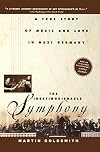
The story was better than the writing. I found a lot of details unnecessary, and there were also other parts of the experience that I wish were more detailed. I'm sure this was a difficult book to write and appreciate learning about the lives of the Goldsmiths.
You May Also Like


Statistics
- Works
- 2
- Members
- 545
- Popularity
- #45,747
- Rating
- 3.8
- Reviews
- 9
- ISBNs
- 79
- Languages
- 3