Errantry: Strange Stories
by Elizabeth Hand
On This Page
Description
Praise for Elizabeth Hand:"Fiercely frightening yet hauntingly beautiful."—Tess Gerritsen, author of The Silent Girl
"A sinful pleasure."—Katherine Dunn, author of Geek Love
No one is innocent, no one unexamined in award-winner Elizabeth Hand's new collection. From the summer isles to the mysterious people next door all the way to the odd guy one cubicle over, Hand teases apart the dark strangenesses of everyday life to show us the impossibilities, broken dreams, and improbable dreams show more that surely can never come true.
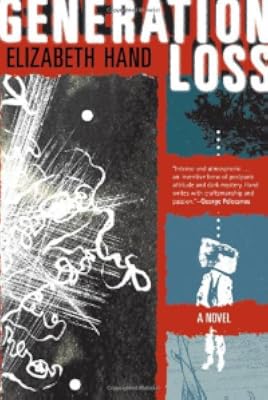
Elizabeth Hand's novels include Shirley Jackson Award–winner Generation Loss, Mortal Love, and Available Dark.
. show less
Tags
Recommendations
Member Recommendations
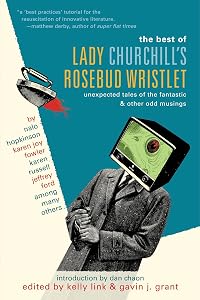
cammykitty Kelly Link is the co-founder of Small Beer Press, the publisher of Errantry.
Member Reviews
An absorbing collection of surreal tales in which anyone is liable to shape-shift or burst through a portal at any time. That makes it sound madcap, but most of the stories are carefully constructed, with strong and sometimes unsettling buildup to a moment of disruption, either internal or external. My two favorites were "Near Zennor", which is very effectively creepy without overdoing it, and "The Return of the Fire Witch", which entertained me greatly by returning to the weird world-building and verbiage of her novel Winterlong, which was my first introduction to Hand's writing back in the '90s. But I also appreciated her deep identification with the landscape of Maine, and the recurring message that a primeval green energy waits to show more burst forth again from the human-blighted earth. show less
The best of these stories are able to hint at horror and fantastical elements without ever making it wholly explicit: you're never sure if maybe the horror you feel creeping up has as much to do with the narrators as it does the experiences they are narrating. "Near Zennor" is a masterpiece of ambiguity, and probably my favorite story in the book. The one I liked least was "The Return of the Fire Witch": engaging with explicitly fantastical tropes removes the feeling of the uncanny that Hand works with so well. It ends up feeling like "The Masque of the Red Death" performed by Adventure Time characters. But the good definitely outweighs the bad in this collection, and I look forward to lending this volume to my friends.
This collection of short stories is "interstitial." "Interstitial" was a small movement within the fantasy/science fiction community about ten years ago. Works that are interstitial often combine genres. They are subtle. The fantasy element may be used more as symbolism than as a plot element. Elizabeth Hand is a well-established science fiction/fantasy writer, and her publisher Small Beer Press is practically the home of interstitial fiction.
This collection is meticulously written, lush with description and symbolism. If you're looking for adventuresome fantasy, this isn't your collection. If you're looking for stories that walk the same ground as poetry, this collection may be for you. Many of the stories centered around show more transformations, death. Most involved middle-aged protagonists. Some of the stories were thought provoking and beautiful, but some of them didn't go beyond the banal or the purely imagistic. I'd recommend this collection for people who like literary fantasy, and don't expect magic to shake the earth. show less
This review was written for LibraryThing Early Reviewers.I'm partial to Elizabeth Hand's writing, and Errantry is no exception. Hand is especially strong at stories where the ordinary collides with the strange, and some moment of transcendence or horror touches everyday life. This collection hits it out of the park, again and again; her writing is just so on-key, always. Particular favorites are "The Maiden Flight of Macaulay's Bellerophon," "Hungerford Bridge," and "Winter's Wife." "The Return of the Fire Witch" was in a very different mode than the others, but has given me a not-at-all-unwelcome "earworm" for "In The Court of the Crimson King" which I probably last heard twenty years ago . . .
I received a copy through the Librarything Early Reviewers program.
This review was written for LibraryThing Early Reviewers.I received a copy of this book through the LibraryThing Early Reviewer program.
"Strange Stories" is an apt subtitle for this collection of ten tales, ranging from the novella-length Hugo-nominated, "The Maiden Flight of McCauley's Bellerophon" to the flash-length "Cruel Up North." Hand has a knack for creating vivid, flawed characters--very normal people--who encounter something extraordinary on the fringe of society. Often these encounters are rather disturbing. "Near Zennor" struck me as the creepiest, evoking the isolated moorlands of Cornwall and beings that drift from the beyond.
That said, I'm not into creepy. I appreciated Hand's realistic characters, but overall the anthology was a disappointment for me. Maybe my expectations show more were too high, as I've heard wonderful things about Elizabeth Hand for years and this was my first time reading her work. There was a pattern to how many of the stories ended: this strange thing happened, and that was that, and I was frustrated by the lack of explanation or finality in some cases. "The Return of the Fire Witch" didn't feel like it belonged in the collection at all; it fit the theme of strangeness, but was a pure fantasy work, not set on Earth like the rest.

I'm glad I read this, just to have read Hand's work, but I think my disappointment came down to personal taste. I would be hesitant to read more of her work in the future. show less
"Strange Stories" is an apt subtitle for this collection of ten tales, ranging from the novella-length Hugo-nominated, "The Maiden Flight of McCauley's Bellerophon" to the flash-length "Cruel Up North." Hand has a knack for creating vivid, flawed characters--very normal people--who encounter something extraordinary on the fringe of society. Often these encounters are rather disturbing. "Near Zennor" struck me as the creepiest, evoking the isolated moorlands of Cornwall and beings that drift from the beyond.
That said, I'm not into creepy. I appreciated Hand's realistic characters, but overall the anthology was a disappointment for me. Maybe my expectations show more were too high, as I've heard wonderful things about Elizabeth Hand for years and this was my first time reading her work. There was a pattern to how many of the stories ended: this strange thing happened, and that was that, and I was frustrated by the lack of explanation or finality in some cases. "The Return of the Fire Witch" didn't feel like it belonged in the collection at all; it fit the theme of strangeness, but was a pure fantasy work, not set on Earth like the rest.
I'm glad I read this, just to have read Hand's work, but I think my disappointment came down to personal taste. I would be hesitant to read more of her work in the future. show less
This review was written for LibraryThing Early Reviewers.Strange stories indeed. Some plain strange, some melancholy, some, well some didn't quite work for me, but that's often what happens with collections of short stories. I really enjoyed "Near Zennor" but I also felt it could be expanded into something more, that there was something just beyond reach that I wanted more of. Although perhaps that was Hand's intent--with her, you can never quite tell and that's one of the reasons I really enjoy her work. I also very much liked "The Far Shore" and how I thought I knew what it was going to be and I was sure it was a retelling of a particular fairy tale but ended up as something rather different. "Winter's Wife" was far and away my favorite though. If you like strange stories, definitely pick show more this one up. show less
This review was written for LibraryThing Early Reviewers.Disclosure: I received this book as part of the LibraryThing Early Reviewers program. Some people think this may bias a reviewer so I am making sure to put this information up front. I don't think it biases my reviews, but I'll let others be the judge of that.
Errantry: Strange Stories is a collection of short fiction by Elizabeth Hand. The dominant theme of the collection seems to be melancholy and regret, and the stories mostly seem to occupy that netherworld that exists right on the edge between fantasy and reality. In many ways the stories in this collection reminded me of the stories from John Collier's Fancies and Goodnights, or perhaps Ray Bradbury's Medicine for Melancholy. The end result is a beautiful collection of strange and show more sad stories.
The opening story is The Maiden Flight of McCauley's Bellerophon, a story about the kind of regret that comes with middle age, when someone realizes that the dreams of their youth have faded to grey while there is still a lot of life left in front of them. The protagonist is a widower raising his son following the untimely death of his spouse. He works a menial job to make ends meet and keeps loosely in touch with a couple of people from his halcyon days working as a security guard at the National Air and Space museum. This meager decades old connection results him setting out on an expedition to North Carolina's outer banks to fly a model of the titular aircraft in honor of a dying woman who worked as a researcher at the museum. The ties between the characters in the story are whisper thin, but they are all any of them has, so they engage in this crazy and quixotic quest. The only trouble with the story is that the fantastical element seems almost pointlessly thrown in and more or less irrelevant to the plot in any substantial way.
Near Zennor also deals with loss and a quest following a wife Anthea's death (a grief further compounded by the fact that their only daughter had previously died as an infant), but this time the protagonist, Jeffrey, goes in search of answers to a mystery that hovered about his spouse. It seems that his deceased wife was a fan of the obscure children's book The Sun Battles by the now disgraced author Robert Bennington. It seems that Bennington's reputation was tarnished by accusations of pedophilia, and his writing career was ruined as a result. But in looking through Anthea's effects, Jeffrey finds that she and three of her friends seem to have contacted the author when they were young girls. Searching deeper, he finds that they went to see him, and a something terrible seems to have happened that Anthea and her friends never spoke about. Jeffrey goes to England to search the area where Bennington lived, and where the mysterious event seems to have happened, and has a series of odd things happen. None of them are odd enough to definitively declare them to be otherworldly, but they do give the story and eerie and haunting quality. The story meanders at times, but the final pages are so creepy and effective that they make up for it.

Hungerford Bridge is a story that seems like it could have been written by John Collier, and it depicts a reality that could be our reality and we would never know it. The story is short, detailing the passing of a beautiful secret from one person to another. It is one of the few stories in the collection that doesn't deal with death and loss, but rather a shared knowledge, but it still manages to be melancholy. More fantastical than Hungerford Bridge, is The Far Shore, a story about an aging ballet instructor who moves into an off-season summer camp after losing his job with the ballet company he has been part of for his entire career. The story contains many themes, most of them about coping with injury, the loss of the dreams of our youth, and the inevitability of age, but it also contains the joy of finding a new love. The only thing that was somewhat disappointing about the story was that having a male ballet dancer turn out to be gay seems so predictable and stereotypical that the protagonist seem almost to be a caricature rather than a well-developed character.
Winter's Wife is a story featuring folk tale elements set in a rural Maine county. Told by a fatherless teenage boy who has struck up something of a foster relationship with a quirky nature-loving man named Winter, the narrative tells of Winter's conflict with a wealthy local named Tierny over a group of ancient trees in a nearby wood. As the title would suggest, Winter's wife, a tiny Icelandic woman who spends much of the story pregnant, features prominently in the plot. The story deals with the arrogance of wealth and how nature might respond if it had the power to do so, with the fate bestowed upon the villainous Tierny being poetic, albeit somewhat gruesome, justice. But the story is also about families, and how the family we choose is just as important as the family we are born into. Following immediately after Winter's Wife is Cruel Up North, the shortest and one of the most mysterious stories in the book. Taking up a mere three pages, the story tells of a woman's exploration through a city block and the odd discovery she makes.
The most perplexing story in the collection is Summerteeth, which seems to be an odd mixture of a mood piece and the first half of a summer horror film. Set on an island retreat frequented by artists and writers and told in punctuated and at times seemingly unrelated vignettes, the whole atmosphere of the story is one of confusion, loneliness, and despair. The story feels almost as if Hand was trying to convey the angst that an artist feels while immersed in the creative process, but layered over this are the hints of a mysterious danger stalking the individuals who sojourn on the island. Like several other stories in the volume there's nothing explicitly supernatural about any of the happenings that take place during the tale, but the odd happenstances give it an unsettling, albeit confusing air.
In contrast to the off-kilter reality of Hungerford Bridge, Near Zennor, and Summerteeth, The Return of the Fire Witch is the most unabashedly fantastical story of the bunch. In the tale a fungus witch named Saloona is roped into helping her neighbor, the fire witch Paytim, in her quest for revenge against the freshly crowned Paeolina of the Crimson Messuage. Paytim has acquired an extraordinarily powerful and lethal charm to accomplish this goal, but she needs Saloona's aid to pull off her objective. Unlike so many of the other stories in the collection which include only a sparing dash of fantasy or science fiction, The Return of the Fire Witch is filled with huge ladles full of magical elements. Both Saloona and Paytim live surrounded by magical charms, magical devices, and magical beasts to such an extent that these surroundings begin to seem almost mundane as the story goes on. Both of the women make their way to the Crimson Messuage, and begin to carry out their plan, although there are a couple complications and a betrayal along the way. In the end, this story seems to be a commentary upon the absurdity of many fantasy tales as well as the pointlessness of revenge.
As with many of the stories in this book, Uncle Lou is focused on the tiredness that comes with age. The titular character is an irascible old bachelor now retired from a long career of writing travel guides aptly named the "By Night" series because they tell people where to find the best night spots around the world. The story is told from the viewpoint of his favorite niece who seems to be a frequently caller upon the old man. Uncle Lou invites his niece to accompany him on a trip to night time benefit for a zoo. This being something of a modern fairy tale, the trip takes an unexpected course, although it seems that the unusual retirement that Uncle Lou enters into is one that he not only anticipated, but prepared for.
Errantry is at the same time the strangest and the most mundane story of the collection. A group of three friends, including a musician named Tommy who is obsessed with a fictional woman named "Estelle", set out on the trail of an unknown person they only know as "the folding man", so named for his proclivity for leaving little folded paper sculptures behind wherever he goes. None of the trio has ever actually seen the folding man, and they only know of him as a result of occasionally finding his creations in local bars and restaurants. The story details their pursuit of the mysterious origami aficionado through several venues until they wind up in an abandoned house in the countryside. Exploring the house only results in more mystery, as it seems that the long gone occupants hoarded everything, and most notably piles and piles of newspapers. Eventually they uncover something even more disturbing than piles of trash, which seems to connect to Tommy's obsession with "Estelle", although not in such a way that would confirm that anything supernatural was taking place. The story is somewhat unnerving, but not because of anything that might be definitely called magic, rather because it seems so close to what reality would be if seen through a distorting lens.
Filled with stories that seem to exist just to the side of reality and laced through with themes of loss, loneliness, sadness, and death, Errantry: Strange Stories is an engaging and sometimes disturbing collection. Every story in the volume is interesting, even if some of them seem simply inexplicably odd, and a few, notably Winter's Wife, Near Zennor, and Errantry, are excellent. Overall, this is a lovely collection of stories that will leave the reader feeling full of melancholy, full of sorrow, and full of wonder.
This review has also been posted to my blog Dreaming About Other Worlds. show less
Errantry: Strange Stories is a collection of short fiction by Elizabeth Hand. The dominant theme of the collection seems to be melancholy and regret, and the stories mostly seem to occupy that netherworld that exists right on the edge between fantasy and reality. In many ways the stories in this collection reminded me of the stories from John Collier's Fancies and Goodnights, or perhaps Ray Bradbury's Medicine for Melancholy. The end result is a beautiful collection of strange and show more sad stories.
The opening story is The Maiden Flight of McCauley's Bellerophon, a story about the kind of regret that comes with middle age, when someone realizes that the dreams of their youth have faded to grey while there is still a lot of life left in front of them. The protagonist is a widower raising his son following the untimely death of his spouse. He works a menial job to make ends meet and keeps loosely in touch with a couple of people from his halcyon days working as a security guard at the National Air and Space museum. This meager decades old connection results him setting out on an expedition to North Carolina's outer banks to fly a model of the titular aircraft in honor of a dying woman who worked as a researcher at the museum. The ties between the characters in the story are whisper thin, but they are all any of them has, so they engage in this crazy and quixotic quest. The only trouble with the story is that the fantastical element seems almost pointlessly thrown in and more or less irrelevant to the plot in any substantial way.
Near Zennor also deals with loss and a quest following a wife Anthea's death (a grief further compounded by the fact that their only daughter had previously died as an infant), but this time the protagonist, Jeffrey, goes in search of answers to a mystery that hovered about his spouse. It seems that his deceased wife was a fan of the obscure children's book The Sun Battles by the now disgraced author Robert Bennington. It seems that Bennington's reputation was tarnished by accusations of pedophilia, and his writing career was ruined as a result. But in looking through Anthea's effects, Jeffrey finds that she and three of her friends seem to have contacted the author when they were young girls. Searching deeper, he finds that they went to see him, and a something terrible seems to have happened that Anthea and her friends never spoke about. Jeffrey goes to England to search the area where Bennington lived, and where the mysterious event seems to have happened, and has a series of odd things happen. None of them are odd enough to definitively declare them to be otherworldly, but they do give the story and eerie and haunting quality. The story meanders at times, but the final pages are so creepy and effective that they make up for it.
Hungerford Bridge is a story that seems like it could have been written by John Collier, and it depicts a reality that could be our reality and we would never know it. The story is short, detailing the passing of a beautiful secret from one person to another. It is one of the few stories in the collection that doesn't deal with death and loss, but rather a shared knowledge, but it still manages to be melancholy. More fantastical than Hungerford Bridge, is The Far Shore, a story about an aging ballet instructor who moves into an off-season summer camp after losing his job with the ballet company he has been part of for his entire career. The story contains many themes, most of them about coping with injury, the loss of the dreams of our youth, and the inevitability of age, but it also contains the joy of finding a new love. The only thing that was somewhat disappointing about the story was that having a male ballet dancer turn out to be gay seems so predictable and stereotypical that the protagonist seem almost to be a caricature rather than a well-developed character.
Winter's Wife is a story featuring folk tale elements set in a rural Maine county. Told by a fatherless teenage boy who has struck up something of a foster relationship with a quirky nature-loving man named Winter, the narrative tells of Winter's conflict with a wealthy local named Tierny over a group of ancient trees in a nearby wood. As the title would suggest, Winter's wife, a tiny Icelandic woman who spends much of the story pregnant, features prominently in the plot. The story deals with the arrogance of wealth and how nature might respond if it had the power to do so, with the fate bestowed upon the villainous Tierny being poetic, albeit somewhat gruesome, justice. But the story is also about families, and how the family we choose is just as important as the family we are born into. Following immediately after Winter's Wife is Cruel Up North, the shortest and one of the most mysterious stories in the book. Taking up a mere three pages, the story tells of a woman's exploration through a city block and the odd discovery she makes.
The most perplexing story in the collection is Summerteeth, which seems to be an odd mixture of a mood piece and the first half of a summer horror film. Set on an island retreat frequented by artists and writers and told in punctuated and at times seemingly unrelated vignettes, the whole atmosphere of the story is one of confusion, loneliness, and despair. The story feels almost as if Hand was trying to convey the angst that an artist feels while immersed in the creative process, but layered over this are the hints of a mysterious danger stalking the individuals who sojourn on the island. Like several other stories in the volume there's nothing explicitly supernatural about any of the happenings that take place during the tale, but the odd happenstances give it an unsettling, albeit confusing air.
In contrast to the off-kilter reality of Hungerford Bridge, Near Zennor, and Summerteeth, The Return of the Fire Witch is the most unabashedly fantastical story of the bunch. In the tale a fungus witch named Saloona is roped into helping her neighbor, the fire witch Paytim, in her quest for revenge against the freshly crowned Paeolina of the Crimson Messuage. Paytim has acquired an extraordinarily powerful and lethal charm to accomplish this goal, but she needs Saloona's aid to pull off her objective. Unlike so many of the other stories in the collection which include only a sparing dash of fantasy or science fiction, The Return of the Fire Witch is filled with huge ladles full of magical elements. Both Saloona and Paytim live surrounded by magical charms, magical devices, and magical beasts to such an extent that these surroundings begin to seem almost mundane as the story goes on. Both of the women make their way to the Crimson Messuage, and begin to carry out their plan, although there are a couple complications and a betrayal along the way. In the end, this story seems to be a commentary upon the absurdity of many fantasy tales as well as the pointlessness of revenge.
As with many of the stories in this book, Uncle Lou is focused on the tiredness that comes with age. The titular character is an irascible old bachelor now retired from a long career of writing travel guides aptly named the "By Night" series because they tell people where to find the best night spots around the world. The story is told from the viewpoint of his favorite niece who seems to be a frequently caller upon the old man. Uncle Lou invites his niece to accompany him on a trip to night time benefit for a zoo. This being something of a modern fairy tale, the trip takes an unexpected course, although it seems that the unusual retirement that Uncle Lou enters into is one that he not only anticipated, but prepared for.
Errantry is at the same time the strangest and the most mundane story of the collection. A group of three friends, including a musician named Tommy who is obsessed with a fictional woman named "Estelle", set out on the trail of an unknown person they only know as "the folding man", so named for his proclivity for leaving little folded paper sculptures behind wherever he goes. None of the trio has ever actually seen the folding man, and they only know of him as a result of occasionally finding his creations in local bars and restaurants. The story details their pursuit of the mysterious origami aficionado through several venues until they wind up in an abandoned house in the countryside. Exploring the house only results in more mystery, as it seems that the long gone occupants hoarded everything, and most notably piles and piles of newspapers. Eventually they uncover something even more disturbing than piles of trash, which seems to connect to Tommy's obsession with "Estelle", although not in such a way that would confirm that anything supernatural was taking place. The story is somewhat unnerving, but not because of anything that might be definitely called magic, rather because it seems so close to what reality would be if seen through a distorting lens.
Filled with stories that seem to exist just to the side of reality and laced through with themes of loss, loneliness, sadness, and death, Errantry: Strange Stories is an engaging and sometimes disturbing collection. Every story in the volume is interesting, even if some of them seem simply inexplicably odd, and a few, notably Winter's Wife, Near Zennor, and Errantry, are excellent. Overall, this is a lovely collection of stories that will leave the reader feeling full of melancholy, full of sorrow, and full of wonder.
This review has also been posted to my blog Dreaming About Other Worlds. show less
This review was written for LibraryThing Early Reviewers.Members
- Recently Added By
Published Reviews
ThingScore 100
Perhaps because it represents a body of work over a relatively short period of time, there are some clear tonal and thematic similarities on display. With one exception, the stories in Errantry are very much of a piece: low-key tales of the fantastical lurking on the edges of the everyday, of marginal or (self-)marginalized figures .. withdrawing from conventional ways of seeing the world, and show more experiencing moments of transcendent shock. show less
added by karenb
Author Information
Awards and Honors
Awards
Work Relationships
Common Knowledge
- Original publication date
- 2012
- Disambiguation notice
- Table of Contents:
The Maiden Flight of McCauley’s Bellerophon
Near Zennor
Hungerford Bridge
The Far Shore
Winter’s Wife
Cruel Up North
Summerteeth
The Return of the Fire Witch
Uncle Lou
... (show all)Errantry
Classifications
Statistics
- Members
- 237
- Popularity
- 136,791
- Reviews
- 19
- Rating
- (3.90)
- Languages
- English
- Media
- Paper, Ebook
- ISBNs
- 2
- ASINs
- 2