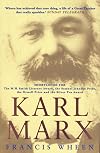
Karl Marx
by Francis Wheen
On This Page
Description
Looks at the life of the father of Communism focusing primarily on the human side of the man rather than his works.Tags
Recommendations













Member Recommendations
Member Reviews
Nem tudom, elgondolkodott-e már valaki azon, mennyire felülreprezentáltak a nyugati civilizáció meghatározó figurái között azok a szakállasok, akiknek a neve „M” betűvel kezdődik. Mózes, Marx, Mikulás…* Wheen a legkönnyebb utat választotta, amikor hármuk közül azt pécézte ki magának, akinek a létezése legkevésbé szorul bizonyításra – viszont ezt fényesen meg is oldotta. Könyve egyszerre pergő humorú életrajz egy izgalmas mozgalmárról (vagy mozgalmas izgalmárról?), és ugyanakkor egy nyomasztó hatású filozófiai-közgazdaságtani életmű közérthető gyorselemzése. Az első szempontnak Wheen hibátlanul megfelel, remekül rajzolja meg a fickót, aki a személyes vita közben sosem riadt show more vissza ellenfele lezsidózásától (egy rabbi leszármazottjától ez meglehetősen derék dolog), Engelstől pénzt kunyerál, gigantikus elméjével földbe döngöl minden elvtársat, aki szembeszáll vele, ugyanakkor még fájdalmas kelései sem akadályozták meg abban, hogy családi körben nagy átéléssel alakítsa a tökéletes nagypapát. Sokszínű fazon, semmiképpen sem az a kannibál, amilyennek konzervatív körökben ábrázolni szokás.
Ami Marx eszmetörténeti munkásságát illeti, itt már érezhető némi elfogultság Wheen részéről – mindenesetre mindent megtesz, hogy megvédje A tőké-t és társait az elhamarkodott ítéletalkotóktól. Az bizonyos, hogy Marx személyében rendkívül eredeti gondolkodóval állunk szemben: mindaz, amit a tőkéről, mint társadalmi viszonyról, a munkaerőről, mint áruba bocsátható termékről, vagy épp a világpiacról és a kapitalizmus ciklikusságáról mond, alapvetően átírta a társadalomtudományi gondolkodást. Amikor kifejti, hogy a burzsujok** önön sírjukat ássák, amikor a városba csábítják a leendő munkaerőt, mert ezzel lehetőséget teremtenek nekik a szervezkedésre, ezáltal arra, hogy megdöntsék őt – hát ez fenemód logikus következtetés. Nem jött be, az igaz, legalábbis ott nem, ahol volt munkásság. Ahol volt, ott a munkások inkább korrigálni igyekeztek a rendszert, nem leönteni benzinnel, aztán pfff… meggyújtani – de hát akkor is: logikus. De ilyen tévedések minden autoriter gondolkodóval előfordulnak, aki nem hajlandó mások aspektusaiból megvizsgálni a problémát, ellenben hajlamos a prófétálásra. Ahogy Wheen tündökletesen jegyzi meg: Marx összetévesztette a kapitalizmus születési fájdalmát az agóniával. Van ez így – velem is gyakran megesik. Vagy az agóniát tévesztem össze a születési fájdalommal? Majd ötven év múlva kiderül.
* Ha Machiavelli szakállt növesztett volna, Jézus pedig felveszi az anyja nevét, még tökéletesebben ülne az elméletem.
** Akikről egyébként Marx meglepő respektussal beszélt – nagyon hálás volt, amiért átvették a hatalmat az impotens arisztokráciától, és felszabadították az emberiség káprázatos teremtő erejét. Más kérdés, hogy mindezt a nyílt kizsákmányolás eszközével tették, így csak átmeneti lehet az uralkodásul. Elméletben. A gyakorlatban viszont a kapitalizmus által alkalmazott nyílt kizsákmányolás fokozatosan egyre kevésbé nyílttá vált, és úgy fest, ezzel ki is fogták a szelet a forradalom vitorlájából. show less
Ami Marx eszmetörténeti munkásságát illeti, itt már érezhető némi elfogultság Wheen részéről – mindenesetre mindent megtesz, hogy megvédje A tőké-t és társait az elhamarkodott ítéletalkotóktól. Az bizonyos, hogy Marx személyében rendkívül eredeti gondolkodóval állunk szemben: mindaz, amit a tőkéről, mint társadalmi viszonyról, a munkaerőről, mint áruba bocsátható termékről, vagy épp a világpiacról és a kapitalizmus ciklikusságáról mond, alapvetően átírta a társadalomtudományi gondolkodást. Amikor kifejti, hogy a burzsujok** önön sírjukat ássák, amikor a városba csábítják a leendő munkaerőt, mert ezzel lehetőséget teremtenek nekik a szervezkedésre, ezáltal arra, hogy megdöntsék őt – hát ez fenemód logikus következtetés. Nem jött be, az igaz, legalábbis ott nem, ahol volt munkásság. Ahol volt, ott a munkások inkább korrigálni igyekeztek a rendszert, nem leönteni benzinnel, aztán pfff… meggyújtani – de hát akkor is: logikus. De ilyen tévedések minden autoriter gondolkodóval előfordulnak, aki nem hajlandó mások aspektusaiból megvizsgálni a problémát, ellenben hajlamos a prófétálásra. Ahogy Wheen tündökletesen jegyzi meg: Marx összetévesztette a kapitalizmus születési fájdalmát az agóniával. Van ez így – velem is gyakran megesik. Vagy az agóniát tévesztem össze a születési fájdalommal? Majd ötven év múlva kiderül.
* Ha Machiavelli szakállt növesztett volna, Jézus pedig felveszi az anyja nevét, még tökéletesebben ülne az elméletem.
** Akikről egyébként Marx meglepő respektussal beszélt – nagyon hálás volt, amiért átvették a hatalmat az impotens arisztokráciától, és felszabadították az emberiség káprázatos teremtő erejét. Más kérdés, hogy mindezt a nyílt kizsákmányolás eszközével tették, így csak átmeneti lehet az uralkodásul. Elméletben. A gyakorlatban viszont a kapitalizmus által alkalmazott nyílt kizsákmányolás fokozatosan egyre kevésbé nyílttá vált, és úgy fest, ezzel ki is fogták a szelet a forradalom vitorlájából. show less
[b:Karl Marx|1097544|Karl Marx|Francis Wheen|https://i.gr-assets.com/images/S/compressed.photo.goodreads.com/books/1396232789l/1097544._SY75_.jpg|50930] was recommended by Paul Preciado in [b:An Apartment on Uranus|52050346|An Apartment on Uranus|Paul B. Preciado|https://i.gr-assets.com/images/S/compressed.photo.goodreads.com/books/1566066105l/52050346._SX50_SY75_.jpg|69236146], where he observed that this biography makes Marx seem happy despite anger, poverty, and illness. This is the first biography of Marx that I've read and I found its irreverent tone very entertaining. Yet it also responds seriously to other biographers. Marx and Engels are depicted as flawed men full of contradictions; their portraits are sympathetic yet show more unvarnished. The tone can be judged by this anecdote about Marx's youthful job as a journalist, in 1842:
Wheen largely examines the generally chaotic context in which Marx wrote, but also comments upon the writing itself:
I was delighted to get an insight into the epic friendship of Marx and Engels. Marx fell out with every other friend and colleague he ever had. Indeed, a comment in one of Proudhon's notebooks describes Marx as 'the tapeworm of socialism'. But his partnership with Engels remained strong until his death. Their letters sound very entertaining:
I don't actually find that hard to parse, as I used to write my teenage diary in the very same multilingual style! When you're studying French, German, and Latin at school, why not use all the best words from each language. Another wonderful discovery was that Engels bankrolled Marx (who never had a steady job) by stealing from his father's cotton mill. What could be more fitting?
Even with this subsidy, Marx's household was constantly broke and indebted, as well as afflicted by illness. Yet it seems that these struggles, and his rage at inequality and injustice, fuelled as well as stymied him:
I found Wheen's book an appealing and informative biography, providing an insight into Marx the man to consider alongside his writing and legacy. As I haven't read any other Marx biographies, I can't tell whether it's doing anything hugely original with the narrative of his life. It's undoubtedly vivid, readable, and often funny, though. show less
Marx composed a grovelling letter assuring His Excellency that the Rheinische Zeitung wished only to echo 'the benedictions which at the present time the whole of Germany conveys to His Majesty the King in his ascendant career'. As Franz Mehring commented many years late, the letter displayed 'a diplomatic caution of which the life of its author offers no other example'.
Wheen largely examines the generally chaotic context in which Marx wrote, but also comments upon the writing itself:
To wish away Marx's stylistic excess is, however, to miss the point. His vices were also his virtues, manifestations of a mind addicted to paradox and inversion, antithesis and chiasmus. Sometimes this dialectical zeal produced empty rhetoric, but more often it led to startling and original insights. He took nothing for granted, turned everything upside down - including society itself.
I was delighted to get an insight into the epic friendship of Marx and Engels. Marx fell out with every other friend and colleague he ever had. Indeed, a comment in one of Proudhon's notebooks describes Marx as 'the tapeworm of socialism'. But his partnership with Engels remained strong until his death. Their letters sound very entertaining:
[Marx and Engels] had no secrets from each other, no taboos: if Marx found a huge boil on his penis he didn't hesitate to supply a full description. Their voluminous correspondence is a gamey stew of history and gossip, political economy and schoolboy smut, high ideals and low intimacies. [...] As stateless cosmopolitans they even evolved their own private language, a weird Anglo-Franco-Latino-German mumbo-jumbo. All other quotations in this book have been translated to spare readers the anguish of puzzling over the Marxian code, but one brief sentence will give an idea of its expressive if incomprehensible syntax: 'Diese excessive technicality of ancient law zeigt Jurisprudenz as feather of the same bird, als d. religiosen Formalitaten z. B. Auguris etc. od. D.. Hokus Pokus des medicine man der savages.' Engels learned to understand this gibberish with ease; more impressively still, he was able to read Marx's handwriting, as was Jenny [Marx's wife].
I don't actually find that hard to parse, as I used to write my teenage diary in the very same multilingual style! When you're studying French, German, and Latin at school, why not use all the best words from each language. Another wonderful discovery was that Engels bankrolled Marx (who never had a steady job) by stealing from his father's cotton mill. What could be more fitting?
[Engels] acted as a kind of secret agent behind enemy lines, sending Marx confidential details of the cotton trade, expert observations on the state of international markets, and - most essentially - a regular consignment of small-denomination banknotes, pilfered from the petty cash box or guilefully prised out of the company's bank account. (As a precaution against mail theft he snipped them in two, posting each half in a separate envelope.) It is a measure of how slackly the office was run that neither his father nor his business partner in Manchester, Peter Ermen, ever noticed anything amiss.
Even with this subsidy, Marx's household was constantly broke and indebted, as well as afflicted by illness. Yet it seems that these struggles, and his rage at inequality and injustice, fuelled as well as stymied him:
Marx was plagued by his usual physical ailments through the winter of 1866-7 but even they could no longer thwart his determination to finish Volume One of Capital. He wrote the last few pages of Volume One standing at his desk when an eruption of boils around the rump made sitting too painful. (Arsenic, the usual anaesthetic, 'dulls my mind too much and I need to keep my wits about me'.) Engels' experienced eye immediately spotted certain passages in the text 'where the carbuncles have left their mark', and Marx agreed that the fever in his groin might have given his prose a rather livid hue. 'At all events, I hope the bourgeoise will remember my carbuncles until their dying day,' he cursed, 'What swine they are!'
I found Wheen's book an appealing and informative biography, providing an insight into Marx the man to consider alongside his writing and legacy. As I haven't read any other Marx biographies, I can't tell whether it's doing anything hugely original with the narrative of his life. It's undoubtedly vivid, readable, and often funny, though. show less
Karl Marx, whose influence on modern times has been compared to that of Jesus Christ, spent most of his lifetime in obscurity. Penniless, exiled in London, estranged from relations, and on the run from most of the police forces of Europe, his ambitions as a revolutionary were frequently thwarted, and his major writings on politics and economics remained unpublished (in some cases until after the Second World War). He has not lacked biographers, but even the most distinguished have been more interested in the evolution of his ideas than any other aspect of his life. Francis Wheen's fresh, lively, and moving biography of Marx considers the whole man--brain, beard, and the rest of his body. Unencumbered by ideological point scoring, this show more is a very readable, humorous, and sympathetic account. Wheen has an ear for juicy gossip and an eye for original detail. Marx comes across as a hell-raising bohemian, an intellectual bully, and a perceptive critic of capitalist chaos, but also a family man of Victorian conformity (personally vetting his daughters' suitors), Victorian ailments (carbuncles above all), and Victorian weaknesses (notably alcohol, tobacco, and, on occasion, his housekeeper). But there is great pathos, too, as Marx witnessed the deaths of four of his six children. For those readers who feel Marxism has given Marx a bad name, this is a rewarding and enlightening book. --Miles Taylor.
"It is time to strip away the mythology," writes Wheen, "and try to rediscover Karl Marx the man." In the first major biography of Marx since the end of the Cold War, Wheen does just that as he looks for the man lurking behind the myths of both enemies and disciples, the misinterpretations and the academic jargon. What he finds is somebody who will suit nobody's purposes - Marx, Wheen argues, lived his life messily. He was neither a clearheaded revolutionary nor an unrepentant hypocrite, but he wasn't the anti-Christ either. More or less incapable of holding down a steady, salaried job, he mooched off of his selfless wife, Jenny (an aristocrat fallen on hard times), and his well-to-do ideological partner, Friedrich Engels, and spent his time obsessively writing difficult, unmarketable economics tracts. He also spent a good deal of time preaching the imminent revolution of the masses (with whom he appears to have had little affinity). Following Marx from his childhood in Trier, Germany, through his exile in London, Wheen, a columnist for the British Guardian, takes readers from hovel to grand house, from the International Working Man's Association to Capital, from obscurity to notoriety and back again. (Only 11 mourners attended Marx's funeral.) The narrative veers unsteadily from scorn to admiration for the bearded philosopher. Wheen begins by jeering at Marx's cantakerousness and ends by lauding him as a prophet and a brave survivor of poverty and exile. show less
"It is time to strip away the mythology," writes Wheen, "and try to rediscover Karl Marx the man." In the first major biography of Marx since the end of the Cold War, Wheen does just that as he looks for the man lurking behind the myths of both enemies and disciples, the misinterpretations and the academic jargon. What he finds is somebody who will suit nobody's purposes - Marx, Wheen argues, lived his life messily. He was neither a clearheaded revolutionary nor an unrepentant hypocrite, but he wasn't the anti-Christ either. More or less incapable of holding down a steady, salaried job, he mooched off of his selfless wife, Jenny (an aristocrat fallen on hard times), and his well-to-do ideological partner, Friedrich Engels, and spent his time obsessively writing difficult, unmarketable economics tracts. He also spent a good deal of time preaching the imminent revolution of the masses (with whom he appears to have had little affinity). Following Marx from his childhood in Trier, Germany, through his exile in London, Wheen, a columnist for the British Guardian, takes readers from hovel to grand house, from the International Working Man's Association to Capital, from obscurity to notoriety and back again. (Only 11 mourners attended Marx's funeral.) The narrative veers unsteadily from scorn to admiration for the bearded philosopher. Wheen begins by jeering at Marx's cantakerousness and ends by lauding him as a prophet and a brave survivor of poverty and exile. show less
Marx is not in the least bit a sympathetic human being - not at least in my reading of Wheen's detailed biography, but one can't help but feel the pain of his life, particularly the children he lost. If anyone is a hero here, it is Marx's long-suffering wife Jenny. If you're looking for insights into Marx's life and works, this is the place. It's certainly easier than trying to read anything Marx wrote!
This biography is focused on Karl Marx the man and his doings in life. Francis Wheen does not dwell too much on Marx's philosophy.
Marx's disordered life, his uncaring (and sometimes downright stupid) attitude to money, the constant illnesses and the domineering personality are all usually unknown aspects of the great man that shed light on his personality.
Marx's disordered life, his uncaring (and sometimes downright stupid) attitude to money, the constant illnesses and the domineering personality are all usually unknown aspects of the great man that shed light on his personality.
I am not a big fan of Marx, but Wheen's biography made me see him in another - almost sympathetic - light. Wheen isn't particularly critical towards him, nor does he idolize him; he describes Marx and his life and times in a realistic and fairly objective manner.
The book is entertaining as well as educating, and opponents and supporters of Marx alike - as well as those who are just interested in 19th century history - may well benefit from reading this book.
The book is entertaining as well as educating, and opponents and supporters of Marx alike - as well as those who are just interested in 19th century history - may well benefit from reading this book.
A frightful hobgoblin stalks through Europe...or, maybe, A spectre is haunting Europe--the spectre of Communism.
Members
- Recently Added By
Published Reviews
ThingScore 75
Wheen ist ein erfreulicher Erzähler - aber mit Bescheidenheit ist er nicht gesegnet: "Kein Marx-Forscher oder -Kritiker hat je darauf aufmerksam gemacht" oder: "eine Entwicklung haben weder Marx noch ich vorausgesehen." Wheen ist eben eine Wanze, eine Klatschbase und ein Kenner zugleich.
added by Indy133
Lists

In Our Time books
4,934 works; 2 members
Author Information

18+ Works 3,074 Members
Francis Wheen is an award-winning columnist for "The Guardian" in London, & the deputy editor of "Private Eye". (Bowker Author Biography)
Awards and Honors
Series
Belongs to Publisher Series
Common Knowledge
- Original title
- Karl Marx
- People/Characters
- Karl Marx
- First words*
- Un treno avanza lentamente lungo la valle della Mosella: grandi abeti, vigneti terrazzati, lindi villaggi, volute di fumo che si levano calme nel cielo invernale.
- Last words*
- (Click to show. Warning: May contain spoilers.)Per un attimo mi parve di aver udito l'eco della disperazione, ma forse era la legge della vita.
*Some information comes from Common Knowledge in other languages. Click "Edit" for more information.
Classifications
- Genres
- Biography & Memoir, Nonfiction, History, General Nonfiction, Philosophy
- DDC/MDS
- 335.4092 — Society, government, & culture Economics Socialism and related systems Marxian systems Marxism History, geographic treatment, biography Biographies
- LCC
- HX39.5 .W484 — Social sciences Socialism. Communism. Anarchism Socialism. Communism. Anarchism
- BISAC
Statistics
- Members
- 834
- Popularity
- 33,118
- Reviews
- 8
- Rating
- (4.07)
- Languages
- 17 — Czech, Danish, Dutch, English, Estonian, Finnish, French, German, Greek, Hungarian, Italian, Norwegian (Bokmål), Polish, Portuguese, Spanish, Swedish, Turkish
- Media
- Paper, Ebook
- ISBNs
- 36
- ASINs
- 4