On This Page
Description
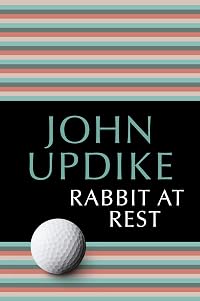
"Ex-basketball player Harry 'Rabbit' Angstrom has acquired heart trouble, a Florida condo and a second grandchild. His son, Nelson, is behaving erratically and his wife, Janice, decides in mid-life to become a working girl. As, through the winter, spring and summer of 1989, Reagan's debt-ridden, AIDS-plagued America yields to that of George Bush, Rabbit explores the bleak terrain of late middle age, looking for reasons to live."Tags
Recommendations










Member Reviews
This was my favorite of the whole quartet, at least from what I can remember of Rabbit, Run. Nelson is still as annoying as he was in Rabbit is Rich (My review here) , but Harry is much less horrible than he was in Rabbit Redux (My review here). In fact, he seemed to mellow out a whole lot more and actually start to stand up for what he thought should happen instead of sitting back and taking it all.
Janice started to redeem herself in my mind in this book, but kind of threw it all away in the latter part of the book. I didn't like her in Redux because she put herself before the welfare of her son, and she was just really, really dumb in Rich. She was still far too indulgent of Nelson and his immaturity, but she actually stood up to him, show more which he needed.
As always, Updike was one of the masters of prose writing. Some of these passages are amazingly brilliant and detailed. Here's an example:
Up, up; the air thins, the barometer registers, the timer begins to tick as the plane snugly bores through the darkness and the pilot chats on the radio while the cockpit lights burn and wink around him and the passengers nod over their drinks in their slots of pastel plastic. This image, like a seed at last breaking its shell in moist soil, awakens in Harry the realization that even now as he lies here in this antiseptic white fog tangled in tubes and ties of blood and marriage he is just like the people he felt so sorry for, falling from the burst-open airplane: he too is falling, helplessly falling, toward death. The fate awaiting him behind this veil of medical attention is as absolute as that which greeted those bodies fallen smack upon the boggy Scottish earth like garbage bags full of water.
I'm still failing to see where this quartet is a "valentine to (Updike's) country" as Joyce Carol Oates said, but I think this is a book, if only for the prose alone, belongs in the American canon of great books.
My rating: 8/10 show less
Janice started to redeem herself in my mind in this book, but kind of threw it all away in the latter part of the book. I didn't like her in Redux because she put herself before the welfare of her son, and she was just really, really dumb in Rich. She was still far too indulgent of Nelson and his immaturity, but she actually stood up to him, show more which he needed.
As always, Updike was one of the masters of prose writing. Some of these passages are amazingly brilliant and detailed. Here's an example:
Up, up; the air thins, the barometer registers, the timer begins to tick as the plane snugly bores through the darkness and the pilot chats on the radio while the cockpit lights burn and wink around him and the passengers nod over their drinks in their slots of pastel plastic. This image, like a seed at last breaking its shell in moist soil, awakens in Harry the realization that even now as he lies here in this antiseptic white fog tangled in tubes and ties of blood and marriage he is just like the people he felt so sorry for, falling from the burst-open airplane: he too is falling, helplessly falling, toward death. The fate awaiting him behind this veil of medical attention is as absolute as that which greeted those bodies fallen smack upon the boggy Scottish earth like garbage bags full of water.
I'm still failing to see where this quartet is a "valentine to (Updike's) country" as Joyce Carol Oates said, but I think this is a book, if only for the prose alone, belongs in the American canon of great books.
My rating: 8/10 show less
I can’t tell if Updike screwed the pooch with this one, the usual Angstrom banality is turned way the fuck up and Updike’s at times awkward prose (he’s one of those writers I have to read for a few pages to really get in tune with, it’s not a particularly smooth transition) stuck out. I’d say there are about two really great events that occur in Rabbit at Rest with the rest slogging along in a quotidian stupor. I suppose someone could probably make a compelling argument that that’s the whole point (a similar, perhaps warranted, response others make to me when I speak of my enervation when reading Kafka) but I don’t know — hasn’t the masochistic-neoliberal-modernity angle been done to death at this point? Nothing is show more written in here, no insight, that couldn’t be gleaned from the other three novels - maybe that’s a positive in that it shows the constancy of Rabbit’s whining, self obsessed character? Eh. Not coming back to this one again, Pru is hot af though. show less
Without a doubt, "Rabbit at Rest" is the best of the series. I did not want it to end.
In the opening scene Harry Angstrom is 55 years old and is feeling tired and used up. He is no longer remembered as Rabbit- champ of the local high school basketball team. In fact, he and Janice are spending the cold winter months in Florida, and it’s a trying challenge for Harry to play a decent golf game with the older Jewish crowd. Harry is overweight, out of shape, and ornery as ever.
Aside from his health issues, Harry is still having family problems. Janice has outlived the chauvinistic rituals and insists on having a career. And 32 year old Nelson? I don’t want to give away the entire plot but will say that Nelson is a mess. He’s running show more the Toyota dealership... that is- running it into the ground. And he is heavily into doing drugs.
"Rabbit at Rest" beautifully reflects the late 1980’s. There are lots of references to current events and cultural norms: the Florida snowbirds, shopping trends for cars, clothing and housing, drug use, and the medical industry.
Harry has a heart attack. His treatment and recovery- told from his own perspective- is both profound and amusing. And I imagine 25 years ago when the book was first published, and the angioplasty was a relatively new procedure, it made for interesting reading.
The most impressive thing about Updike’s writing is the dialogue which encompasses a huge portion of the story. His conversations with his grand-daughter are funny and insightful. They show a very caring, human side to Harry. He really does have a big heart under all his smutty, abrasive observations and the crude arrogant interaction he has with others.
His sexual appetite is the one thing that is consistent throughout the series. Harry is a man of uncontrollable urges and little self control. A lot of Harry’s behavior is shocking and unforgivable. He is so far out of control that it is hopeless to advocate for his redemption. By the end of the series, however, you can almost feel sorry for him.
It was a fascinating experience reading all the intimate details of a man’s personal life.
Looking back on the entire series, the first two books "Rabbit Run" and "Rabbit Redux" offered colorful images, but vague details. It was almost as though the older Rabbit was looking back on his past. The final two books, "Rabbit is Rich" and "Rabbit at Rest" seem to be in the here and now- alive and vibrant- bigger than life. Perhaps that is because Updike’s writing skills improved with each new story. Or maybe Harry Angstrom took on a life of his own… with intensity and passion the plot builds to a crescendo. Harry Rabbit Angstrom is one of the most authentic fictional characters I’ve ever encountered.
Thank you Mr. Updike.
Winner of the Pulitzer Prize for fiction, and the National Book Award. show less
In the opening scene Harry Angstrom is 55 years old and is feeling tired and used up. He is no longer remembered as Rabbit- champ of the local high school basketball team. In fact, he and Janice are spending the cold winter months in Florida, and it’s a trying challenge for Harry to play a decent golf game with the older Jewish crowd. Harry is overweight, out of shape, and ornery as ever.
Aside from his health issues, Harry is still having family problems. Janice has outlived the chauvinistic rituals and insists on having a career. And 32 year old Nelson? I don’t want to give away the entire plot but will say that Nelson is a mess. He’s running show more the Toyota dealership... that is- running it into the ground. And he is heavily into doing drugs.
"Rabbit at Rest" beautifully reflects the late 1980’s. There are lots of references to current events and cultural norms: the Florida snowbirds, shopping trends for cars, clothing and housing, drug use, and the medical industry.
Harry has a heart attack. His treatment and recovery- told from his own perspective- is both profound and amusing. And I imagine 25 years ago when the book was first published, and the angioplasty was a relatively new procedure, it made for interesting reading.
The most impressive thing about Updike’s writing is the dialogue which encompasses a huge portion of the story. His conversations with his grand-daughter are funny and insightful. They show a very caring, human side to Harry. He really does have a big heart under all his smutty, abrasive observations and the crude arrogant interaction he has with others.
His sexual appetite is the one thing that is consistent throughout the series. Harry is a man of uncontrollable urges and little self control. A lot of Harry’s behavior is shocking and unforgivable. He is so far out of control that it is hopeless to advocate for his redemption. By the end of the series, however, you can almost feel sorry for him.
It was a fascinating experience reading all the intimate details of a man’s personal life.
Looking back on the entire series, the first two books "Rabbit Run" and "Rabbit Redux" offered colorful images, but vague details. It was almost as though the older Rabbit was looking back on his past. The final two books, "Rabbit is Rich" and "Rabbit at Rest" seem to be in the here and now- alive and vibrant- bigger than life. Perhaps that is because Updike’s writing skills improved with each new story. Or maybe Harry Angstrom took on a life of his own… with intensity and passion the plot builds to a crescendo. Harry Rabbit Angstrom is one of the most authentic fictional characters I’ve ever encountered.
Thank you Mr. Updike.
Winner of the Pulitzer Prize for fiction, and the National Book Award. show less
the five star rating is linked not to my first 1996 reading but to the [grand, illuminating] 2001 reread. when first I read _Rabbit at Rest_, I was 18, ignorant of Updike, bored and grossed out by contemporary literature (the thing itself and the class English 140/TR 230-345/somewhere on the second floor of Chambers Bldg). but somehow Virginia Smith managed to persuade arrogant me that, insofar as this Updike and/or Rabbit business was concerned, there was something maybe *I* was missing.
four-and-some years later, thousands of miles from University Park PA 16802, I remember and begin the experiment by checking out _Rabbit, Run_. and there in my little room in Oakland CA 94612, I read, one at a time and something like one per 60 days, show more the Rabbit novels. the experiment: do we actually grow in empathy over time, with age? of course I could cry for Septimus Smith or H.H. or Jake or Werther or whoever, but icky ordinary Harry Angstrom?! I did! I did cry; it worked, and all I had to do was read and reread. it's like an episode of How to Become a Better Person Without Doing Anything Difficult (not a real show)!
I will always have a very soft spot for Rabbit and for Updike himself (though not so soft that I feel obligated to finish any of his gazillion other novels). show less
four-and-some years later, thousands of miles from University Park PA 16802, I remember and begin the experiment by checking out _Rabbit, Run_. and there in my little room in Oakland CA 94612, I read, one at a time and something like one per 60 days, show more the Rabbit novels. the experiment: do we actually grow in empathy over time, with age? of course I could cry for Septimus Smith or H.H. or Jake or Werther or whoever, but icky ordinary Harry Angstrom?! I did! I did cry; it worked, and all I had to do was read and reread. it's like an episode of How to Become a Better Person Without Doing Anything Difficult (not a real show)!
I will always have a very soft spot for Rabbit and for Updike himself (though not so soft that I feel obligated to finish any of his gazillion other novels). show less
As the title suggest, Rabbit at Rest is about death. It is obsessed with death, Updike's love song to it. He lovingly details Rabbit's aging and increasing frailty, from his clogged arteries and heart disease, to his decreasing sexual appetite, to his bathroom habits and his nostril hairs. He makes snide remarks about bodily functions practically every other sentence (which would be almost funny if it weren't just kind of sad and pathetic). He harps on such mundane aspects of life as if they had some metaphysical significance---or perhaps to insinuate that nothing does, which comes to the same thing. He writes things like (in this case, describing radio): "We are noisy vermin, crowding even the air." (Updike is basically a misanthrope show more with a flair for turning a phrase.) He writes that all material existence is sad because transitory, and there is no other kind.
While this is all very wrong and unpleasant, there is a kind of internal unity and artistic integrity to it, and in places he seems almost as sincere as he did back at the beginning of the series in Rabbit, Run. Unfortunately, as the series progresses, it becomes increasingly about Rabbit's son Nelson, who is an even less sympathetic character and not nearly as interesting. I spent most of this book just waiting for Rabbit to die. But, if you've made it this far, all the way through Rabbit Redux and Rabbit is Rich, you may as well read this and finish the series off, as this is better than those were (but still not as good as the first). show less
While this is all very wrong and unpleasant, there is a kind of internal unity and artistic integrity to it, and in places he seems almost as sincere as he did back at the beginning of the series in Rabbit, Run. Unfortunately, as the series progresses, it becomes increasingly about Rabbit's son Nelson, who is an even less sympathetic character and not nearly as interesting. I spent most of this book just waiting for Rabbit to die. But, if you've made it this far, all the way through Rabbit Redux and Rabbit is Rich, you may as well read this and finish the series off, as this is better than those were (but still not as good as the first). show less
Since I read the first Rabbit. He is selfish and self- absorbed. He commits selfish betrayals of wife, friends and family, and seems to suffer no remorse. Still,I read on, to complete the unfolding of a despicable character. Spoiler alert: There is no redemption for Harry Angstrom.
How could this series gain so much acclaim? The disgustingly vivid description of bodily functions and mundane observations of life and surroundings did not, in my opinion, warrant the accolades it received. Harry was, until the end a racist and misogynistic fool. Updike threw in many unnecessary details about t.v. shows, radio broadcasts, and other popular culture references to make the book seem relevant when published. These references now seem to make the show more book more dated and out of touch. show less
How could this series gain so much acclaim? The disgustingly vivid description of bodily functions and mundane observations of life and surroundings did not, in my opinion, warrant the accolades it received. Harry was, until the end a racist and misogynistic fool. Updike threw in many unnecessary details about t.v. shows, radio broadcasts, and other popular culture references to make the book seem relevant when published. These references now seem to make the show more book more dated and out of touch. show less
This was a concluding statement about the whole of America based in Updike's writings. I found this was another good book in the tetralogy, much better than the second and a slight downward from the third. The characters here are older, particularly Rabbit, and they are dealing with the denouements and conclusions of their lives and existences. Updike explores social issues through these characters and, ultimately, points the finger back at America for what it has created and for what it has become. It was a good conclusion to the series and I'm glad I read it.
3 stars.
3 stars.
Members
- Recently Added By
Lists

Pulitzer Prize Winners for Fiction
102 works; 54 members

Great American Novels
158 works; 40 members

Novels from The Guardian's Great American Novelist Tournament
148 works; 24 members

20th Century Literature
1,161 works; 54 members

100 New Classics
101 works; 13 members

Pulitzer Prize-Winning Books
42 works; 10 members

1990s
309 works; 17 members

To Read
617 works; 7 members

Lucy's Long List
69 works; 1 member

DigitalDreamDoor top 300
300 works; 4 members
School Made Us Read It
380 works; 196 members
Author Information

342+ Works 53,771 Members
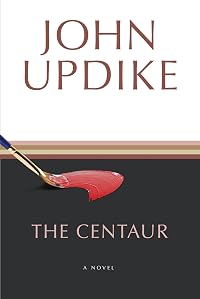
American novelist, poet, and critic John Updike was born in Reading, Pennsylvania on March 18, 1932. He received an A.B. degree from Harvard University, which he attended on a scholarship, in 1954. After graduation, he accepted a one-year fellowship to study painting at the Ruskin School of Drawing and Fine Art in Oxford, England. After returning show more from England in 1955, he worked for two years on the staff of The New Yorker. This marked the beginning of a long relationship with the magazine, during which he has contributed numerous short stories, poems, and book reviews. Although Updike's first published book was a collection of verse, The Carpentered Hen and Other Tame Creatures (1958), his renown as a writer is based on his fiction, beginning with The Poorhouse Fair (1959). During his lifetime, he wrote more than 50 books and primarily focused on middle-class America and their major concerns---marriage, divorce, religion, materialism, and sex. Among his best-known works are the Rabbit tetrology---Rabbit, Run (1960), Rabbit Redux (1971), Rabbit Is Rich (1981), and Rabbit at Rest (1988). Rabbit, Run introduces Harry "Rabbit" Angstrom as a 26-year-old salesman of dime-store gadgets trapped in an unhappy marriage in a dismal Pennsylvania town, looking back wistfully on his days as a high school basketball star. Rabbit Redux takes up the story 10 years later, and Rabbit's relationship with representative figures of the 1960s enables Updike to provide social commentary in a story marked by mellow wisdom and compassion in spite of some shocking jolts. In Rabbit Is Rich, Harry is comfortably middle-aged and complacent, and much of the book seems to satirize the country-club set and the swinging sexual/social life of Rabbit and his friends. Finally, in Rabbit at Rest, Harry arrives at the age where he must confront his mortality. Updike won the Pulitzer Prize for both Rabbit Is Rich and Rabbit at Rest. Updike's other novels range widely in subject and locale, from The Poorhouse Fair, about a home for the aged that seems to be a microcosm for society as a whole, through The Court (1978), about a revolution in Africa, to The Witches of Eastwick (1984), in which Updike tries to write from inside the sensibilities of three witches in contemporary New England. The Centaur (1963) is a subtle, complicated allegorical novel that won Updike the National Book Award in 1964. In addition to his novels, Updike also has written short stories, poems, critical essays, and reviews. Self-Consciousness (1989) is a memoir of his early life, his thoughts on issues such as the Vietnam War, and his attitude toward religion. He was elected to the American Academy of Arts and Letters in 1977. He died of lung cancer on January 27, 2009 at the age of 76. (Bowker Author Biography) John Updike was born in 1932, in Shillington, Pennsylvania. Since 1957 he has lived in Massachusetts. His novels have won the Pulitzer Prize, the National Book Award, the National Book Critics Circle Award, & the Howells Medal. (Publisher Provided) John Updike was born in 1932 and attended Harvard College and the Ruskin School of Drawing and Fine Art in Oxford, England. Form 1955 to 1957 he was a staff member of The New Yorker, which he contributed numerous writings. Updike's art criticism has appeared in publications including Arts and Antiques, The New Republic, The New York Times Book Review, and Realites, among many others. He is the author of such best-selling novels as Rabbit Run and Rabbit is Rich. His many works of fiction, poetry and criticism have been awarded the Pulitzer Prize, the National Book Award, the American Book Award, and the National Book Critics Circle Award. For the past 40 years he has lived in Massachusetts. (Publisher Provided) John Updike is the author of some 50 books, including collections of short stories, poems, & criticism. His novels have won the Pulitzer Prize, the National Book Award, the National Book Critics Circle Award, & the Howells Medal. Born in Shillington, Pennsylvania, in 1932, he has lived in Massachusetts since 1957. (Publisher Provided) show less
Some Editions
Awards and Honors
Awards
Distinctions
Series

Work Relationships
Is contained in
Common Knowledge
- Canonical title
- Rabbit at Rest
- Original title
- Rabbit at Rest
- Original publication date
- 1990
- People/Characters
- Harry "Rabbit" Angstrom
- Important places
- Florida, USA
- Important events
- 1980s; 1988; 1989
- Epigraph
- Rabbit basks above that old remembered world, rich, at rest.
—Rab... (show all)bit Is Rich.
Food to the indolent person is poison, not sustenance.
—Life and ... (show all)Times of Frederick Douglass. - First words
- Standing amid the tan, excited post-Christmas crowd at the Southwest Florida Regional Airport, Rabbit Angstrom has a funny sudden feeling that what he has come to meet, what's floating in unseen about to land, is not his son ... (show all)Nelson and daughter-in-law Pru and their two children but something more ominous and intimately his: his own death, shaped vaguely like an airplane.
- Last words
- (Click to show. Warning: May contain spoilers.)"Well, Nelson," he says, "all I can tell you is, it isn't so bad." Rabbit thinks he should maybe say more, the kid looks wildly expectant, but enough. Maybe. Enough.
- Publisher's editor
- Jones, Judith
Classifications
Statistics
- Members
- 2,714
- Popularity
- 6,841
- Reviews
- 32
- Rating
- (4.00)
- Languages
- 10 — Dutch, English, Finnish, French, German, Hungarian, Italian, Portuguese, Spanish, Swedish
- Media
- Paper, Audiobook, Ebook
- ISBNs
- 37
- UPCs
- 1
- ASINs
- 26