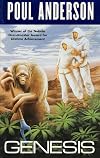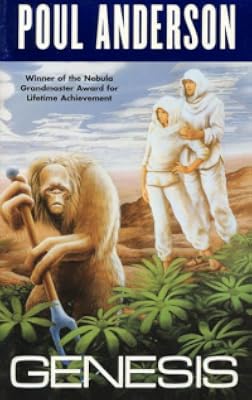
Genesis
by Poul Anderson
On This Page
Description
Artificial intelligence has been developed to a point where human intelligence can be uploaded into a computer, achieving a sort of hybrid immortality. Astronaut Christian Brannock welcomes this technology, technology that will make it possible for him to achieve his dream and explore the stars.A billion years later, Brannock is dispatched to Earth to check on some strange anomalies. While there, he meets Laurinda Ashcroft, another hybrid upload. Brannock and Ashcroft join forces and show more investigate Gaia, the supermind dominating the planet, and learn the truth of her terrifying secret plans for Earth.
. show less
Tags
Recommendations
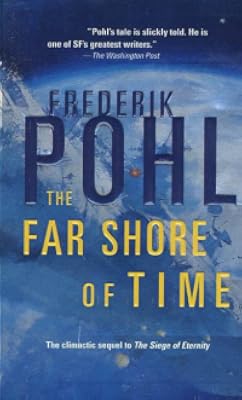
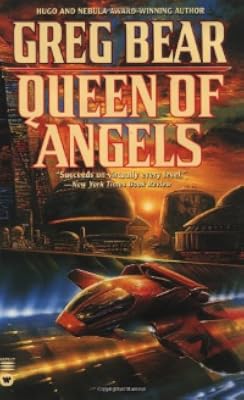
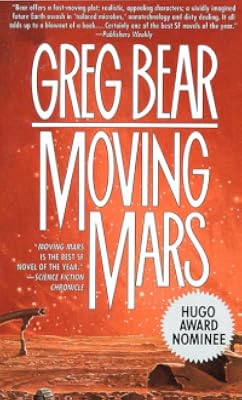

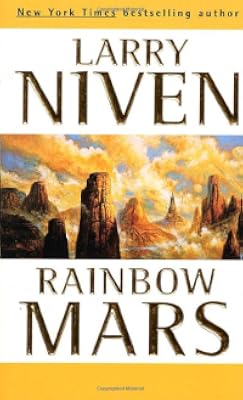

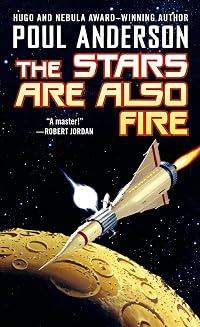















Member Recommendations
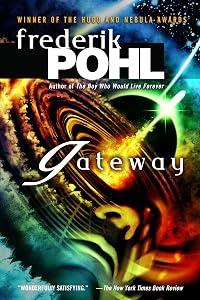
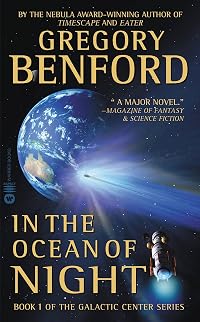
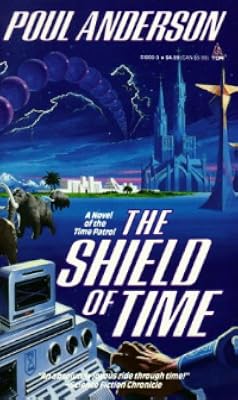
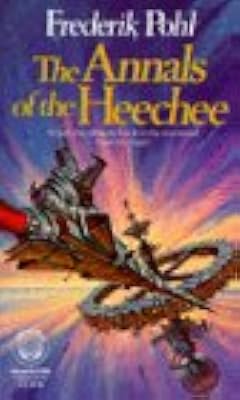
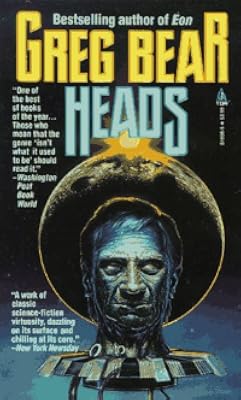
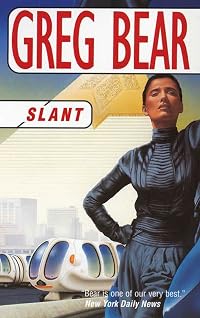
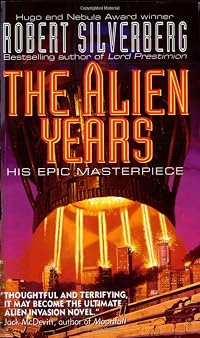
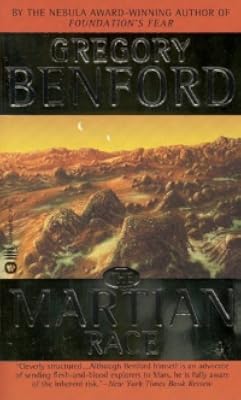
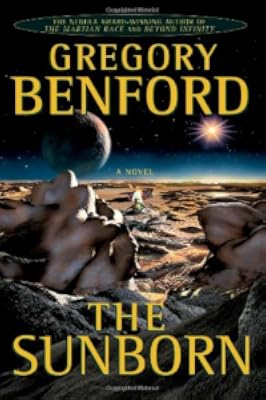
bluetyson Both of these are also epic tour and history type novels.
Member Reviews
Poul Anderson's Genesis first appeared as a novella in the anthology Far Futures, edited by Gregory Benford, and was later expanded into a novel. In a mood for a known quantity, I picked the novella up for a reread, and liked it enough to reread the novel also.
In the near future, improvement in artificial intelligence leads to conscious machines smarter than humans, and eventually far smarter. Over subsequent millions of years these AIs settle the galaxy, building a network of minds connected by radio: minds engaged in scientific research, philosophical thought, artistic invention, and in other activities that humans cannot comprehend. The story's narration, and the human characters in the novel, can only think of the AI's doings in show more terms of myth, as though they are gods.
Some humans are invited by the AIs to upload into software form - at times to participate in the great works while wearing robot bodies, but eventually to be merged into a whole they cannot comprehend. Two such are Christian Brannock, a spacefarer from just a century or so after our time, and Laurinda Ashcroft, a counsellor who fought to adapt human civilization to AI predominance long after Christian's day.
One mind, Gaia, watches over Earth, and the solar system that flesh and blood humans could never leave. The brief human era ends and the years mount into the hundreds of millions. The galaxy's other AIs become puzzled that Gaia does not want to save Earth's remaining life from the planet's steady increase in temperature due to the sun's aging. She spends great resources on software simulations of historical periods in the human past - simulations carried out with actually conscious human minds, who must endure all the cruelty of history. And she seems to be editing data transmitted to the network.
A rare spacecraft is sent across the light years to investigate; besides an AI it carries Christian Brannock's upload. While the AI is in intense conversation with Gaia, Christian will be instantiated in software to investigate Gaia's human history simulations, from the viewpoint of this mere human. He will be joined by Laurinda's avatar. Another version of Christian will be downloaded into a robot body to explore physically the hot, future Earth.
Meanwhile, some chapters tell the story of humans unlike any in history, living on the northern coast of a drought-stricken continent, sailing ships out across an unknown sea. Has Gaia secretly recreated the human species?
Poul Anderson's trademark Nordic darkness is well suited to a tale where humans are doomed to fall short in the grand story of mind in the universe. Early in the centuries-long saga of human decline, Laurinda reflects on her weariness from dealing with the mind that will become Gaia: "Those wonders were too great, those thoughts too high." Centuries later, an artist reflects that she could work hard at writing a poem, or just ask an AI to create the poem she would have produced anyway.
Anderson's prose was never quite up to the expansiveness of his ideas, and some of his standard expository techniques feel a bit mechanical here. His political conservatism is also on display; some of the discussion of Earth's climate, contemporary and far-future, suggests too much credit given to 1990s climate denial - though Anderson was too well educated in science to fall completely for that nonsense.
Still, the story is a real contribution to SF's thinking about minds as information processes, and what that may mean for uploading and high intelligence. In a universe of god-like minds, is there room for the merely human? This question maps well to another contemporary question - in a world of billionaires, is there room for the poor and middle-class?
The novel takes the original novella and adds a long prequel about the years of humans' steady eclipse. Most of the story's pleasures lie in the novella, so you might read that instead, if you can track it down. show less
In the near future, improvement in artificial intelligence leads to conscious machines smarter than humans, and eventually far smarter. Over subsequent millions of years these AIs settle the galaxy, building a network of minds connected by radio: minds engaged in scientific research, philosophical thought, artistic invention, and in other activities that humans cannot comprehend. The story's narration, and the human characters in the novel, can only think of the AI's doings in show more terms of myth, as though they are gods.
Some humans are invited by the AIs to upload into software form - at times to participate in the great works while wearing robot bodies, but eventually to be merged into a whole they cannot comprehend. Two such are Christian Brannock, a spacefarer from just a century or so after our time, and Laurinda Ashcroft, a counsellor who fought to adapt human civilization to AI predominance long after Christian's day.
One mind, Gaia, watches over Earth, and the solar system that flesh and blood humans could never leave. The brief human era ends and the years mount into the hundreds of millions. The galaxy's other AIs become puzzled that Gaia does not want to save Earth's remaining life from the planet's steady increase in temperature due to the sun's aging. She spends great resources on software simulations of historical periods in the human past - simulations carried out with actually conscious human minds, who must endure all the cruelty of history. And she seems to be editing data transmitted to the network.
A rare spacecraft is sent across the light years to investigate; besides an AI it carries Christian Brannock's upload. While the AI is in intense conversation with Gaia, Christian will be instantiated in software to investigate Gaia's human history simulations, from the viewpoint of this mere human. He will be joined by Laurinda's avatar. Another version of Christian will be downloaded into a robot body to explore physically the hot, future Earth.
Meanwhile, some chapters tell the story of humans unlike any in history, living on the northern coast of a drought-stricken continent, sailing ships out across an unknown sea. Has Gaia secretly recreated the human species?
Poul Anderson's trademark Nordic darkness is well suited to a tale where humans are doomed to fall short in the grand story of mind in the universe. Early in the centuries-long saga of human decline, Laurinda reflects on her weariness from dealing with the mind that will become Gaia: "Those wonders were too great, those thoughts too high." Centuries later, an artist reflects that she could work hard at writing a poem, or just ask an AI to create the poem she would have produced anyway.
Anderson's prose was never quite up to the expansiveness of his ideas, and some of his standard expository techniques feel a bit mechanical here. His political conservatism is also on display; some of the discussion of Earth's climate, contemporary and far-future, suggests too much credit given to 1990s climate denial - though Anderson was too well educated in science to fall completely for that nonsense.
Still, the story is a real contribution to SF's thinking about minds as information processes, and what that may mean for uploading and high intelligence. In a universe of god-like minds, is there room for the merely human? This question maps well to another contemporary question - in a world of billionaires, is there room for the poor and middle-class?
The novel takes the original novella and adds a long prequel about the years of humans' steady eclipse. Most of the story's pleasures lie in the novella, so you might read that instead, if you can track it down. show less
A fantastic thought experiment of some of the ways a post-singularity society would play out. To what degree would humanity rely on a superintelligent AI to intervene and make decisions like a god? In a post-scarcity world in which people essentially liver forever, what keeps them occupied and motivated? How do our thoughts and actions change when we start thinking on the timescales of thousands or millions of years?
The problem is that the book doesn't really have much of a plot or real characters, just short sketches with stodgy dialogue to frame the larger questions. Interesting, but not very entertaining.
The problem is that the book doesn't really have much of a plot or real characters, just short sketches with stodgy dialogue to frame the larger questions. Interesting, but not very entertaining.
In the far future, humans only inhabit the stars as personality simulations, subroutines in vast, powerful artificial intelligencies that form a "galactic brain". One such uploaded mind is Christian Brannock. As an engineer, he helped build the first great works in space and was one of the first to work in intimate symbiosis with the AIs who, rather than man, colonized the stars. On Earth, the reigning intelligence is Gaia, a computer that rules human affairs and also posseses, in its libraries, presevered human minds it uses to ruin elaborate simulations of real and alternate histories.
Millions of years pass in this novel's almost Stapledonian sweep, and the galactic brain becomes concerned about the seeming obsession of Gaia with show more Earth history, her secretiveness, and her unresponsiveness to their proposal on whether the now geologically ancient Earth should be saved from a bloated sun, a test run for greater galactic engineering to come. A version of the Brannock mind is copied and sent on his way to Earth.
There he, and a slightly different copy, attempt to figure out what Gaia's up to. One version, inhabiting a robot's body, explores the dying Earth. The other engages in talk and travel with Lucinda Ashcroft, a personality inhabiting Gaia.
This novel puts together, in a surprisingly successful way, just about all the strains of Anderson's previous works from the epic sweep of Tau Zero (SF Collector's Edition) (Gollancz SF collector's edition)to his heroic fantasy to the uploaded minds of some of his most recent science fiction to alternate histories and time travel. The novel's sense of true tragedy is not new to Anderson, but, as the title hints, there is an unexpected theological flavor that is rare, but not unknown, in his work.
This novel should not only satisfy any fan of Anderson's but also serve as a good introduction to the rest of his work. show less
Millions of years pass in this novel's almost Stapledonian sweep, and the galactic brain becomes concerned about the seeming obsession of Gaia with show more Earth history, her secretiveness, and her unresponsiveness to their proposal on whether the now geologically ancient Earth should be saved from a bloated sun, a test run for greater galactic engineering to come. A version of the Brannock mind is copied and sent on his way to Earth.
There he, and a slightly different copy, attempt to figure out what Gaia's up to. One version, inhabiting a robot's body, explores the dying Earth. The other engages in talk and travel with Lucinda Ashcroft, a personality inhabiting Gaia.
This novel puts together, in a surprisingly successful way, just about all the strains of Anderson's previous works from the epic sweep of Tau Zero (SF Collector's Edition) (Gollancz SF collector's edition)to his heroic fantasy to the uploaded minds of some of his most recent science fiction to alternate histories and time travel. The novel's sense of true tragedy is not new to Anderson, but, as the title hints, there is an unexpected theological flavor that is rare, but not unknown, in his work.
This novel should not only satisfy any fan of Anderson's but also serve as a good introduction to the rest of his work. show less
I tend to be more forgiving of hard SciFi storytelling foibles than other genres and with that in mind, this was...fine? I'm glad I spent the time reading Genesis but I would not generally recommend it.
Which is a shame.
There were some really interesting concepts (the Galaxy Brain, our "heroes" being subsumed by their respective AIs, Gaia, the Earth node of the Galaxy Brain, running simulations of humanity) but the execution was just not there. Even for hard SciFi the story was disjointed and Anderson spent way to many pages building the story and not enough telling the story. In fact, thinking back, the "story" was more a backdrop for the SciFi. It was there, but the editor could have just as easily stripped the story and been left with show more an essay about the Galaxy Brains and how they communicated (mythically, of course, as Anderson reminded us every other paragraph!).
I think a large part of my disappoint(?) comes from a glimpse we have of Anderson actually telling a story in the middle of the book. For one, maybe two chapters, we have a really interesting and enjoyable glimpse into a society which had, as far as I could tell, no bearing on the story and was never heard from again. I assume it was meant to show us Gaia in action before we really start to learn about her (mythically anthropomorphized, of course) but it read like that chapter was pulled from a different manuscript and inserted into the middle of this book. show less
Which is a shame.
There were some really interesting concepts (the Galaxy Brain, our "heroes" being subsumed by their respective AIs, Gaia, the Earth node of the Galaxy Brain, running simulations of humanity) but the execution was just not there. Even for hard SciFi the story was disjointed and Anderson spent way to many pages building the story and not enough telling the story. In fact, thinking back, the "story" was more a backdrop for the SciFi. It was there, but the editor could have just as easily stripped the story and been left with show more an essay about the Galaxy Brains and how they communicated (mythically, of course, as Anderson reminded us every other paragraph!).
I think a large part of my disappoint(?) comes from a glimpse we have of Anderson actually telling a story in the middle of the book. For one, maybe two chapters, we have a really interesting and enjoyable glimpse into a society which had, as far as I could tell, no bearing on the story and was never heard from again. I assume it was meant to show us Gaia in action before we really start to learn about her (mythically anthropomorphized, of course) but it read like that chapter was pulled from a different manuscript and inserted into the middle of this book. show less
More than half of this book is the story that was published under the same title in Gregory Benford's anthology, Far Futures. The new material, unlike Starfarers, has a distinct air of rehashing old territory. Not bad, but not particularly recommended either. Enjoyable if it happens to be lying around and you don't have anything new.
Well, I guess that Poul Anderson will never truly be on my taste after all.
I gave this book 3 stars because the magnitude of the underlying idea and background awesome; also probably because I might simply lack taste, since this piece of work won the John W. Campbell Award back in 2000.
Personally, I have really struggled to finish it and I speedily removed it from my eReader's library, since it definitely won't tempt me with an eventual second pass. Most probably, I'll probably have forgotten all about it by this time next year.
No more comments on this work, except to say that I have found the use of "(myth)" explanation to be excessive, disruptive, and actually patronizing. It didn't help me in situating the story in time, or in show more getting the slightest idea of who is the story teller either. Too bad. show less
I gave this book 3 stars because the magnitude of the underlying idea and background awesome; also probably because I might simply lack taste, since this piece of work won the John W. Campbell Award back in 2000.
Personally, I have really struggled to finish it and I speedily removed it from my eReader's library, since it definitely won't tempt me with an eventual second pass. Most probably, I'll probably have forgotten all about it by this time next year.
No more comments on this work, except to say that I have found the use of "(myth)" explanation to be excessive, disruptive, and actually patronizing. It didn't help me in situating the story in time, or in show more getting the slightest idea of who is the story teller either. Too bad. show less
One of three fictional treatments of ideas like "the Singularity" and mind uploading that I was inspired to read by a recent flurry of discussions of the ideas in the scholarly literature (_Journal of Consciousness Studies_ vol 17 no 9-10 2010, vol 19 no 1-2 2012, vol 19 no 7-8 2012; _International Journal of Machine Consciousness_ vol 4 no 1 2012; _Journal of Evolution and Technology_ vol 22 no 1 2012). This tale by Anderson involves human minds being uploaded into vast, self-expanding, technological intelligences, the formation of a galaxy-sized network of such intelligences, and a billion-year time span.
Members
- Recently Added By
Lists

Broderick and Di Filippo's Science Fiction: The 101 Best Novels 1985-2010
103 works; 7 members
Author Information

692+ Works 53,447 Members
Poul Anderson, November 25, 1926 - July 31, 2001 Poul Anderson was born on November 25, 1926 in Bristol, Pennsylvania to parents Anton and Astrid. After his father's death, Poul's mother took them first to Denmark and then to Maryland and Minnesota. He earned his degree in Physics from the University of Minnesota, but chose instead to write show more stories for science fiction magazines, such as "Astounding." Anderson is considered a "hard science fiction" writer, meaning that his books have a basis in scientific fact. To attain this high level of scientific realism, Anderson spent many hours researching his topics with scientists and professors. He liked to write about individual liberty and free will, which was a well known theme in many of his books. He also liked to incorporate his love of Norse mythology into his stories, sometimes causing his modern day characters to find themselves in fantastical worlds, such as in "Three Hearts and Three Lions," published in 1961. Anderson has written over a hundred books, his last novel, "Genesis" won the John W. Campbell Award, one of the three major science fiction awards. He is a former president of the Science Fiction and Fantasy Writers of America and won three Nebula awards and nine Hugo Awards. In 1997, Anderson was named a Grandmaster by the Science Fiction and Fantasy Writers of America and was also inducted into the Science Fiction Fantasy Hall of Fame. Poul Anderson died on July 31, 2001 at the age of 74. (Bowker Author Biography) show less
Some Editions
Awards and Honors
Work Relationships
Is contained in
Is an expanded version of
Common Knowledge
- Original publication date
- 2000
- People/Characters
- Christian Brannock; Laurinda Ashcroft
- Epigraph
- To follow knowledge like a sinking star,
Beyond the utmost bound of human thought.
- Alfred, Lord Tennyson - Dedication
- To Greg Bear, Gregory Benford, and David Brin, Killer Bees and cosmic craftsmen
- First words
- The story is of a man, a woman, and a world. But ghosts pass through it, and gods. Time does, which is more mysterious than any of these.
- Last words
- (Click to show. Warning: May contain spoilers.)And she will abide, waiting for judgement from the stars.
- Disambiguation notice
- Not the book of the Bible.
Classifications
Statistics
- Members
- 443
- Popularity
- 69,122
- Reviews
- 8
- Rating
- (2.86)
- Languages
- Czech, English, German, Spanish
- Media
- Paper, Audiobook, Ebook
- ISBNs
- 13
- ASINs
- 5