On This Page
Description
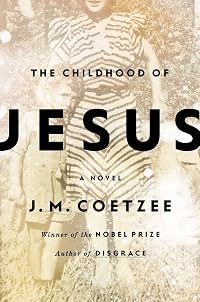
"A major new novel from the Nobel Prize-winning author of Waiting for the Barbarians, The Life & Times of Michael K and Disgrace Nobel laureate and two-time Booker Prize winner J. M. Coetzee returns with a haunting and surprising novel about childhood and destiny that is sure to rank with his classic novels. Separated from his mother as a passenger on a boat bound for a new land, David is a boy who is quite literally adrift. The piece of paper explaining his situation is lost, but a fellow show more passenger, Simón, vows to look after the boy. When the boat docks, David and Simón are issued new names, new birthdays, and virtually a whole new life. Strangers in a strange land, knowing nothing of their surroundings, nor the language or customs, they are determined to find David's mother. Though the boy has no memory of her, Simón is certain he will recognize her at first sight. "But after we find her," David asks, "what are we here for?" An eerie allegorical tale told largely through dialogue, The Childhood of Jesus is a literary feat-a novel of ideas that is also a tender, compelling narrative. Coetzee's many fans will celebrate his return while new readers will find The Childhood of Jesus an intriguing introduction to the work of a true master"-- show lessTags
Recommendations








Member Reviews
4 Stars
This is an uncorrected galley provided by Penguin
A man and a boy have traveled far across oceans to reach a new land. Once there they learn the native language, Spanish, and are given new names. Their ages are determined solely on physical appearance. Washed clean of their memories, like everyone who comes to new country, the man, Simon, sets out with the difficult task of finding David’s mother. On instinct alone he finds the woman he believes is the mother. The woman, who is successfully persuaded of the role, recognizes her son’s intelligent and unconventional wisdom as brilliance. The school and authorities see it negatively, however, and wishes to quell it by taking him away. Simon, who sees both points of view, must show more decide if he will help mother and son escape.
I will start off by saying that this is the first work of this author’s that I have read and I am thoroughly impressed. My only complaint is that it did take me awhile to get with the flow of the pacing. That might just be the fact that I am unfamiliar with the author. I cannot stress enough that I enjoy reading anything that makes my brain go into overdrive and that’s exactly what just happened. First of all there are the characters and their story line which in itself is intriguing. Then there is this underlying mystery of why can’t they remember anything and where did they come from? Possibilities galore were running through my head the whole time. This is one of those novels that make you evaluate life and possibly relate to on some level. I really enjoyed it and will gladly recommend it. show less
This is an uncorrected galley provided by Penguin
A man and a boy have traveled far across oceans to reach a new land. Once there they learn the native language, Spanish, and are given new names. Their ages are determined solely on physical appearance. Washed clean of their memories, like everyone who comes to new country, the man, Simon, sets out with the difficult task of finding David’s mother. On instinct alone he finds the woman he believes is the mother. The woman, who is successfully persuaded of the role, recognizes her son’s intelligent and unconventional wisdom as brilliance. The school and authorities see it negatively, however, and wishes to quell it by taking him away. Simon, who sees both points of view, must show more decide if he will help mother and son escape.
I will start off by saying that this is the first work of this author’s that I have read and I am thoroughly impressed. My only complaint is that it did take me awhile to get with the flow of the pacing. That might just be the fact that I am unfamiliar with the author. I cannot stress enough that I enjoy reading anything that makes my brain go into overdrive and that’s exactly what just happened. First of all there are the characters and their story line which in itself is intriguing. Then there is this underlying mystery of why can’t they remember anything and where did they come from? Possibilities galore were running through my head the whole time. This is one of those novels that make you evaluate life and possibly relate to on some level. I really enjoyed it and will gladly recommend it. show less
The Childhood of Jesus is not for readers who demand credible characters set in credible settings with credible dialogue. Vastly removed from the stark brutality of earlier works like Waiting for the Barbarians, the ethereal, delicately surreal world created by Coetzee in The Childhood of Jesus is a fusion of Kafka’s The Castle and Cervantes’ Don Quixote, permeated by the author’s rational philosophical interests undergirded with the mysticism of mathematics. The characters are “new arrivals” on page 1, and about to become fresh “new arrivals” on the final page of the novel (277).
The book is a journey with no return in a cyclical world where sex is discussed as a philosophical issue, not as a formidable, passionate reality show more at the core of human experience. Unlike the extreme impotence of some of the characters in Waiting for the Barbarians, Michael K, and Foe, in this novel Coetzee presents David’s guardian / father, Simon, as a stranger in this new world of memory loss and rootlessness, a stranger because he feels an instinct for sexual connection: “I am an ordinary man with ordinary needs. . . . [And] I am starved of beauty. . . . [f]eminine beauty” (138-39). There is no reciprocal passion in the book, not a single scene of shared sexual intimacy between any of the characters. Occasionally, Elena “allows [Simon] to make love to her. . . . [but she] has little sexual feeling for him, that is clear; but he likes to think of his lovemaking as a patient and prolonged act of resuscitation, of bringing back to life a female body that for all practical purposes has died” (61).
Also, the frequent set pieces where Coetzee stages surprise philosophical discussions are almost comical, the most extreme being the entirety of Chapter 16 where Simon is unplugging a toilet while discussing the dual nature of humans—a discourse on philosophical anthropology—with David, a five-year-old boy!
Equally interesting and occasionally comic is Coetzee’s ubiquitous use of biblical echoes. The reader can’t go more than six pages in any direction without a biblical resonance; whether it’s something like “Because by football alone you cannot live” (110) on the comic side, or, “You can’t expect me to commit myself, sight unseen” (254) on the more serious side, the novel creates a Kafkaesque / Quixotic world where the characters want “to start a new life” (276). The reader never senses that Coetzee is presenting a simplistic quest, however, because “They have no map. [They have] no idea what lies ahead on the road. In silence they drive on” (262). And yet, the book does imply the opposite of nihilism as “All great gifts come out of nowhere” (263). show less
The book is a journey with no return in a cyclical world where sex is discussed as a philosophical issue, not as a formidable, passionate reality show more at the core of human experience. Unlike the extreme impotence of some of the characters in Waiting for the Barbarians, Michael K, and Foe, in this novel Coetzee presents David’s guardian / father, Simon, as a stranger in this new world of memory loss and rootlessness, a stranger because he feels an instinct for sexual connection: “I am an ordinary man with ordinary needs. . . . [And] I am starved of beauty. . . . [f]eminine beauty” (138-39). There is no reciprocal passion in the book, not a single scene of shared sexual intimacy between any of the characters. Occasionally, Elena “allows [Simon] to make love to her. . . . [but she] has little sexual feeling for him, that is clear; but he likes to think of his lovemaking as a patient and prolonged act of resuscitation, of bringing back to life a female body that for all practical purposes has died” (61).
Also, the frequent set pieces where Coetzee stages surprise philosophical discussions are almost comical, the most extreme being the entirety of Chapter 16 where Simon is unplugging a toilet while discussing the dual nature of humans—a discourse on philosophical anthropology—with David, a five-year-old boy!
Equally interesting and occasionally comic is Coetzee’s ubiquitous use of biblical echoes. The reader can’t go more than six pages in any direction without a biblical resonance; whether it’s something like “Because by football alone you cannot live” (110) on the comic side, or, “You can’t expect me to commit myself, sight unseen” (254) on the more serious side, the novel creates a Kafkaesque / Quixotic world where the characters want “to start a new life” (276). The reader never senses that Coetzee is presenting a simplistic quest, however, because “They have no map. [They have] no idea what lies ahead on the road. In silence they drive on” (262). And yet, the book does imply the opposite of nihilism as “All great gifts come out of nowhere” (263). show less
A man and a young boy arrive in a new town, searching for both a place to stay and the boy’s mom. The man has no relation to the boy and simply met him on the boat. Most people in this new land are friendly and have muted most if not all of their desires. Food is basic and bland. Sex is either not wanted, or performed just to satisfy the man’s natural need. There are no desires to improve conditions or make manual labor more efficient.
It becomes apparent that in crossing the sea, the man and boy have washed the past completely away, and the novel is allegory. Putting the man and the boy in this strange place where they (and the reader) are a bit disoriented allows for Coetzee to delve into aspects of the human condition we don’t show more often think about, such as the relationship between beauty and desire (why does one lead to the other?), and the benefits to not pushing for technological advancement (just because it can be done, should it be?).
It is a book that requires thought despite its simple plot and restrained prose, and my review score bumped up a bit in writing this review. It’s clearly a reference to Christ not only from the title of the book, but also in flashes like the boy saying ‘I am the truth’ or possibly having ‘nowhere to lay his head’, though those are pretty rare. At first I was a little disappointed, thinking the allegory ‘weak’. Upon reflection, I think it’s a mistake to try to ‘map’ the characters directly to those in the Bible, or at least, to derive meaning in this way.
What is the main message in the novel? Suffer the little children. David, the boy, clearly needs to be suffered, as he is often not at all likeable. Embrace their imagination. Allow them to be non-conformists. Consider their fresh approach and other ways of thinking, even if dramatically different. They need guidance, but can also teach. And despite their immaturity today, they will blossom and do great things tomorrow. Even Christ was once a child.
Quotes:
On desire:
“From goodwill come friendship and happiness, come companionable picnics in the parklands or companionable afternoons strolling in the forest. Whereas from love, or at least from longing in its more urgent manifestations, come frustration and doubt and heartsore. It is as simple as that.”
And:
“You want to see this other woman because I do not provide what you feel you need, namely storms of passion. Friendship by itself is not good enough for you. Without the accompaniment of storms of passion it is somehow deficient.
To my ear that is an old way of thinking. In the old way of thinking, no matter how much you may have, there is always something missing. The name you choose to give this something-more that is missing is passion. Yet I am willing to bet that if tomorrow you were offered all the passion you wanted – passion by the bucketful – you would promptly find something new to miss, to lack. This endless dissatisfaction, this yearning for the something-more that is missing, is a way of thinking we are well rid of, in my opinion. Nothing is missing. The nothing that you think is missing is an illusion. You are living by an illusion.”
On faith:
“Faith? Faith has nothing to do with it. Faith means believing in what you do even when it does not bear visible fruit. The Centre is not like that. People arrive needing help, and we help them. We help them and their lives improve. None of that is invisible. None of it requires blind faith. We do our job, and everything turns out well. It is as simple as that.”
On intuition:
“’The moment I saw Ines, I knew. If we don’t trust the voice that speaks inside us, saying, This is the one! then there is nothing left to trust.’
‘Don’t make me laugh! Inner voices! People lose their savings at the horse races obeying inner voices. People plunge into calamitous love affairs obeying inner voices.’”
On seeing things in a different way; I thought over this one and decided to see it as a statement on ‘oneness’, things being part of a larger whole, that can’t be combined arbitrarily and then separated:
“While I was in hospital with nothing else to do, I tried, as a mental exercise, to see the world through David’s eyes. Put an apple before him and what does he see? An apple: not one apple, just an apple. Put two apples before him. What does he see? An apple and an apple: not two apples, not the same apple twice, just an apple and an apple. Now along comes senor Leon (senor Leon is his class teacher) and demands: How many apples, child? What is the answer? What are apples? What is the singular of which apples is the plural? Three men in a car heading for the East Block: who is the singular of which men is the plural – Eugenio or Simon or our friend the driver whose name I don’t know? Are we three, or are we one and one and one?
On parenting:
“How do you think a mother and a father come together in the first place – the mother and father of the future child? Because they owe each other a natural duty? Of course not. Their paths cross haphazardly, and they fall in love. What could be less natural, more arbitrary, than that? Out of their random conjectures a new being comes into the world, a new soul. Who, in this story, owes what to whom? I can’t say, and I’m sure you can’t either.”
On vanity:
“We like to believe we are special, my boy, each of us. But, strictly speaking, that cannot be so. If we were all special, there would be no specialness left. Yet we continue to believe in ourselves. We go down into the ship’s hold, into the heat and dust, we heave sacks onto our backs and lug them up into the light, we see our friends toiling just like us, doing exactly the same work, nothing special about it, and we feel proud of them and of ourselves, all comrades labouring together with a common goal; yet in a little corner of our hearts, which we keep hidden, we whisper to ourselves, Nevertheless, nevertheless, you are special, you will see!” show less
It becomes apparent that in crossing the sea, the man and boy have washed the past completely away, and the novel is allegory. Putting the man and the boy in this strange place where they (and the reader) are a bit disoriented allows for Coetzee to delve into aspects of the human condition we don’t show more often think about, such as the relationship between beauty and desire (why does one lead to the other?), and the benefits to not pushing for technological advancement (just because it can be done, should it be?).
It is a book that requires thought despite its simple plot and restrained prose, and my review score bumped up a bit in writing this review. It’s clearly a reference to Christ not only from the title of the book, but also in flashes like the boy saying ‘I am the truth’ or possibly having ‘nowhere to lay his head’, though those are pretty rare. At first I was a little disappointed, thinking the allegory ‘weak’. Upon reflection, I think it’s a mistake to try to ‘map’ the characters directly to those in the Bible, or at least, to derive meaning in this way.
What is the main message in the novel? Suffer the little children. David, the boy, clearly needs to be suffered, as he is often not at all likeable. Embrace their imagination. Allow them to be non-conformists. Consider their fresh approach and other ways of thinking, even if dramatically different. They need guidance, but can also teach. And despite their immaturity today, they will blossom and do great things tomorrow. Even Christ was once a child.
Quotes:
On desire:
“From goodwill come friendship and happiness, come companionable picnics in the parklands or companionable afternoons strolling in the forest. Whereas from love, or at least from longing in its more urgent manifestations, come frustration and doubt and heartsore. It is as simple as that.”
And:
“You want to see this other woman because I do not provide what you feel you need, namely storms of passion. Friendship by itself is not good enough for you. Without the accompaniment of storms of passion it is somehow deficient.
To my ear that is an old way of thinking. In the old way of thinking, no matter how much you may have, there is always something missing. The name you choose to give this something-more that is missing is passion. Yet I am willing to bet that if tomorrow you were offered all the passion you wanted – passion by the bucketful – you would promptly find something new to miss, to lack. This endless dissatisfaction, this yearning for the something-more that is missing, is a way of thinking we are well rid of, in my opinion. Nothing is missing. The nothing that you think is missing is an illusion. You are living by an illusion.”
On faith:
“Faith? Faith has nothing to do with it. Faith means believing in what you do even when it does not bear visible fruit. The Centre is not like that. People arrive needing help, and we help them. We help them and their lives improve. None of that is invisible. None of it requires blind faith. We do our job, and everything turns out well. It is as simple as that.”
On intuition:
“’The moment I saw Ines, I knew. If we don’t trust the voice that speaks inside us, saying, This is the one! then there is nothing left to trust.’
‘Don’t make me laugh! Inner voices! People lose their savings at the horse races obeying inner voices. People plunge into calamitous love affairs obeying inner voices.’”
On seeing things in a different way; I thought over this one and decided to see it as a statement on ‘oneness’, things being part of a larger whole, that can’t be combined arbitrarily and then separated:
“While I was in hospital with nothing else to do, I tried, as a mental exercise, to see the world through David’s eyes. Put an apple before him and what does he see? An apple: not one apple, just an apple. Put two apples before him. What does he see? An apple and an apple: not two apples, not the same apple twice, just an apple and an apple. Now along comes senor Leon (senor Leon is his class teacher) and demands: How many apples, child? What is the answer? What are apples? What is the singular of which apples is the plural? Three men in a car heading for the East Block: who is the singular of which men is the plural – Eugenio or Simon or our friend the driver whose name I don’t know? Are we three, or are we one and one and one?
On parenting:
“How do you think a mother and a father come together in the first place – the mother and father of the future child? Because they owe each other a natural duty? Of course not. Their paths cross haphazardly, and they fall in love. What could be less natural, more arbitrary, than that? Out of their random conjectures a new being comes into the world, a new soul. Who, in this story, owes what to whom? I can’t say, and I’m sure you can’t either.”
On vanity:
“We like to believe we are special, my boy, each of us. But, strictly speaking, that cannot be so. If we were all special, there would be no specialness left. Yet we continue to believe in ourselves. We go down into the ship’s hold, into the heat and dust, we heave sacks onto our backs and lug them up into the light, we see our friends toiling just like us, doing exactly the same work, nothing special about it, and we feel proud of them and of ourselves, all comrades labouring together with a common goal; yet in a little corner of our hearts, which we keep hidden, we whisper to ourselves, Nevertheless, nevertheless, you are special, you will see!” show less
This is a strange book, but fascinating. For me, it succeeded brilliantly, but it succeeded on its own terms, which are not those of a conventional novel. In some ways, it's almost anti-novelistic. Even its style is unusual: the narrative feels hamstrung and uncomfortable, consciously stiff, yet persistent.
In subject, it circles around a number of big issues, including power, politics, philosophy, faith and messianism.
The title is, like the book, both attractive and challenging, clever and a little unsettling. I can't help thinking that it would have made nearly as much sense had it been titled "The Childhood of Jim Jones" or even "The Childhood of Hitler."
This is not a book everyone will like, and I'm not sure I can even predict who show more will. The estimable Joyce Carol Oates says it is "clearly an allegory," but confesses she's not sure of what. I suspect that's what could make it frustrating for some, but satisfying for others. show less
In subject, it circles around a number of big issues, including power, politics, philosophy, faith and messianism.
The title is, like the book, both attractive and challenging, clever and a little unsettling. I can't help thinking that it would have made nearly as much sense had it been titled "The Childhood of Jim Jones" or even "The Childhood of Hitler."
This is not a book everyone will like, and I'm not sure I can even predict who show more will. The estimable Joyce Carol Oates says it is "clearly an allegory," but confesses she's not sure of what. I suspect that's what could make it frustrating for some, but satisfying for others. show less
When Simon is teaching 6-year old David, a refugee to Novilla along with Simon, to read Simon reproaches David that he must submit to what is on the page, not fill it in with his own fantasies. That he must not just look at the pictures and then guess at the story. David, ever petulant, ever adverse to any reasoning but his own, rebels against this method. What is Coetzee getting at here? If he is advising us as readers to submit to what is on his page, what part? The title? David shares affinities with Jesus, but are we to submit to David as a modern day Jesus; David a wilfull, whining, overly-cosseted, hard headed brat? That is not the picture of the Christ we are taught at Sunday School, but how must Jesus have appeared to his show more neighbors in the poor desert village of Nazareth. His reasoning made no more sense to the Pharisees than David's does to the local school. David's parentage is odd, chosen by an intuitive force. David is well beloved of his chosen parents and described by them in terms that echo the Gospels. David is tempted by Daga (dagger). While nearly always self-centered, David does show flashes of generosity and abhors suffering. One can go on and on with parallels. His best friend-Fidel, his dog-Bolivar, the name of the young man who joins them on their journey, Juan, his virgin mother, Ines (holy). Is it a stretch that the dissident little rebel is fed to the school teacher señor Leon? It is quite fun to find these possible parallels. The problem is that they don't add up. Nothing remains constant in its symbology. Why?
Novilla, the refugee city to which David and Simon have emigrated, is a hollow world. There is enough, but nothing more. There is goodwill but no passion. There is no irony. Simon remarks this several times. The good people of Novilla are flatly honest and good. Simon needs more. David simply doesn't fit at all in this world. What is it? The afterlife, an afterlife, the circle of hell that one ends up following the path paved with good intentions? A Utopia? An Untopia?
Simon keeps expecting irony, but finds none. He also looks for spices, and meat. In a world where the music is actually called Anodine. Simon is out of luck.
What am I going to submit to on this page. A world without irony, passion, spice, and meat isn't worth living in no matter how peaceful and well- intentioned the residents. When Simon tells a school official that there are things above the law, be responds, the law is "enough" for her. Sounds like a Pharisee to me. I'd hit the road too. show less
Novilla, the refugee city to which David and Simon have emigrated, is a hollow world. There is enough, but nothing more. There is goodwill but no passion. There is no irony. Simon remarks this several times. The good people of Novilla are flatly honest and good. Simon needs more. David simply doesn't fit at all in this world. What is it? The afterlife, an afterlife, the circle of hell that one ends up following the path paved with good intentions? A Utopia? An Untopia?
Simon keeps expecting irony, but finds none. He also looks for spices, and meat. In a world where the music is actually called Anodine. Simon is out of luck.
What am I going to submit to on this page. A world without irony, passion, spice, and meat isn't worth living in no matter how peaceful and well- intentioned the residents. When Simon tells a school official that there are things above the law, be responds, the law is "enough" for her. Sounds like a Pharisee to me. I'd hit the road too. show less
I've read a number of Coetzee's books, including "Foe", "Summertime", "Youth", "Disgrace", "Elizabeth Costello", "Diary of a Bad Year", and "Slow Man". Once again with this book, Coetzee's prose is spare, precise, and beautiful. However, unlike his other recent novels, this one is not playing with the line between Coetzee's life and the characters in his books (i.e., there is no character in this book whose name is "Coetzee"). That said, there are a number of sections that are heavy on philosophical musings about the nature of what is real, relationships, power, etc.
I enjoyed being carried along through the novel despite not really quite understanding what he was trying to get at, if anything. I got the feeling that all the characters, show more places, items, and scenes were all proxies for something, perhaps some reimagining of, as the title suggests, Jesus's childhood. But I'm sure it's not only that, if at all.
Interestingly, Don Quixote is weaved into the middle of the story in what seems to be an important way. Curiously, Simón only ever refers to its author as Benengali, not Cervantes, playing into David's habit of taking everything at a romantic face-value.
Overall, I'd say it's not his best work but perhaps that's because it was a little too oblique for me. But still, his writing is worth the price of admission alone. show less
I enjoyed being carried along through the novel despite not really quite understanding what he was trying to get at, if anything. I got the feeling that all the characters, show more places, items, and scenes were all proxies for something, perhaps some reimagining of, as the title suggests, Jesus's childhood. But I'm sure it's not only that, if at all.
Interestingly, Don Quixote is weaved into the middle of the story in what seems to be an important way. Curiously, Simón only ever refers to its author as Benengali, not Cervantes, playing into David's habit of taking everything at a romantic face-value.
Overall, I'd say it's not his best work but perhaps that's because it was a little too oblique for me. But still, his writing is worth the price of admission alone. show less
In this trilogy Coetzee reaches his former heights, returns to the territory where he moves with ease - the territory between the lines. The books leave the reader wondering, some messages certainly make it through, yet what if there is another meaning, hidden, felt but not trapped, not nailed to the page by a catchy precise phrase?
The books of the trilogy are influenced by Dostoyevsky's The Brothers Karamazov. The idea of Jesus coming at a different time and place is clearly borrowed from the main chapter of Dostoyevsky's sad masterpiece. If the analogy is not convincing enough for you, just look at the names of some key characters - obviously Alyosha and Dmitry are not mere coincidences.
Jesus as a child provides Coetzee with some show more interesting lines of conflict. Parents vs children, our social institutes vs parents and children, our education systems vs Don Quixote. The current set of values and requirements are no match for the gifted child. There is a price to pay as always there must be a price. Even if the memory of the entire land fails, what you don't remember does not allow you to ignore the bill. show less
The books of the trilogy are influenced by Dostoyevsky's The Brothers Karamazov. The idea of Jesus coming at a different time and place is clearly borrowed from the main chapter of Dostoyevsky's sad masterpiece. If the analogy is not convincing enough for you, just look at the names of some key characters - obviously Alyosha and Dmitry are not mere coincidences.
Jesus as a child provides Coetzee with some show more interesting lines of conflict. Parents vs children, our social institutes vs parents and children, our education systems vs Don Quixote. The current set of values and requirements are no match for the gifted child. There is a price to pay as always there must be a price. Even if the memory of the entire land fails, what you don't remember does not allow you to ignore the bill. show less
Members
- Recently Added By
Lists

Best 21st Century Books (So Far)
670 works; 86 members

Powell's Indiespensable
79 works; 6 members

Llibres que he llegit el 2014
23 works; 1 member

Powell's Indiespensable
15 works; 1 member
Author Information

112+ Works 42,239 Members
J.M. Coetzee's full name is John Michael Coetzee. Born in Cape Town, South Africa, in 1940, Coetzee is a writer and critic who uses the political situation in his homeland as a backdrop for many of his novels. Coetzee published his first work of fiction, Dusklands, in 1974. Another book, Boyhood, loosely chronicles an unhappy time in Coetzee's show more childhood when his family moved from Cape Town to the more remote and unenlightened city of Worcester. Other Coetzee novels are In the Heart of the Country and Waiting for the Barbarians. Coetzee's critical works include White Writing and Giving Offense: Essays on Censorship. Coetzee is a two-time recipient of the Booker Prize and in 2003, he won the Nobel Literature Award. (Bowker Author Biography) J. M. Coetzee's books include "Boyhood", "Dusklands", "In the Heart of the Country", "Waiting for the Barbarians", "Life & Times of Michael K", "Foe", & "The Master of Petersburg". A professor of general literature at the University of Cape Town, Coetzee has won many literary awards, including the CNA Prize (South Africa's premier literary award), the Booker Prize (twice), the Prix Etranger Femina, the Jerusalem Prize, the Lannan Literary Award, & The Irish Times International Fiction Prize. (Publisher Provided) show less
Some Editions
Awards and Honors
Awards
Distinctions
Notable Lists
Series

Belongs to Publisher Series
Otavan kirjasto (246)
Common Knowledge
- Canonical title*
- Die Kindheit Jesu
- Original title
- The childhood of Jesus
- Original publication date
- 2013
- Important places
- South Africa
- First words
- The man at the gate points them towards a low, sprawling building in the middle distance. "If you hurry," he says, "you can check in before they close their doors for the day."
- Original language
- English
*Some information comes from Common Knowledge in other languages. Click "Edit" for more information.
Classifications
Statistics
- Members
- 890
- Popularity
- 30,420
- Reviews
- 32
- Rating
- (3.51)
- Languages
- 16 — Catalan, Danish, Dutch, English, Finnish, French, German, Greek, Italian, Polish, Portuguese, Romanian, Slovenian, Spanish, Swedish, Turkish
- Media
- Paper, Audiobook, Ebook
- ISBNs
- 51
- ASINs
- 8