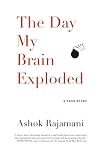
The Day My Brain Exploded: A True Story
by Ashok Rajamani
On This Page
Description
After a full-throttle brain bleed at the age of twenty-five, Ashok Rajamani, a first-generation Indian American, had to relearn everything: how to eat, how to walk and to speak, even things as basic as his sexual orientation. With humor and insight, he describes the events of that day (his brain exploded just before his brother's wedding!), as well as the long, difficult recovery period. In the process, he introduces readers to his family—his principal support group, as well as a constant show more source of frustration and amazement. Irreverent, coruscating, angry, at times shocking, but always revelatory, his memoir takes the reader into unfamiliar territory, much like the experience Alice had when she fell down the rabbit hole. That he lived to tell the story is miraculous; that he tells it with such aplomb is simply remarkable.More than a decade later he has finally reestablished a productive artistic life for himself, still dealing with the effects of his injury—life-long half-blindness and epilepsy— but forging ahead as a survivor dedicated to helping others who have suffered a similar catastrophe.
. show less
Tags
Recommendations

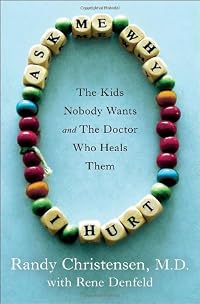

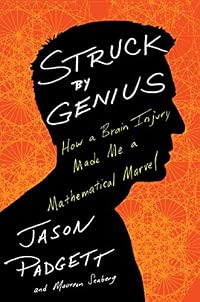
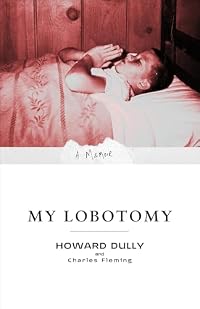
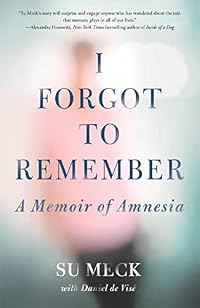








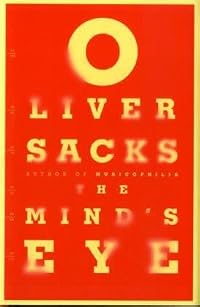
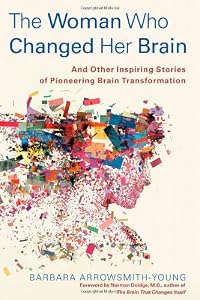
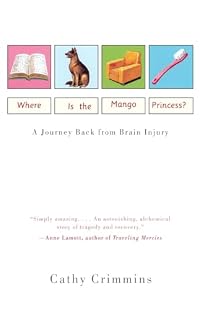

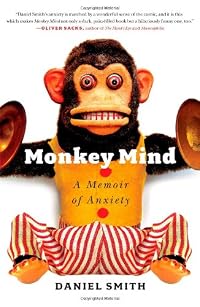
Member Recommendations
by meggyweg

Member Reviews
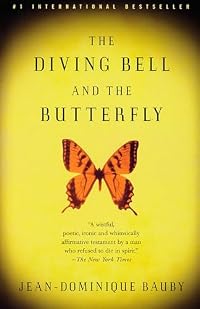
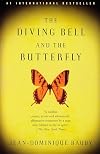
This true story of a medical emergency hitting the reset button on the author’s life was interesting but surprisingly crass. I liked hearing about his POV as the son of immigrants from India, but I could have skipped the constant references to sex and bad language. He did a great job conveying the helpless feeling of a patient confronted with a stream of contradicting diagnosis from doctors. I’d recommend The Diving Bell and The Butterfly instead.
After a ruptured AVM in 2000, Ashok Rajamani had to learn how to function again. I was hooked on this book from the beginning. His account of the embarrassing situation he found himself in when his AVM ruptured was tragic yet awkwardly funny. The complications and subsequent recovery were told in a brutal and honest way. While the book jumps back and forth in time, I felt that lent to the chaotic feeling of the book's subject. Rajamani is a gifted writer and a fighting survivor.
 This review was written for LibraryThing Early Reviewers.
This memoir is heart wrenching with raw emotion and honesty. After suffering an aneurysm, Ashok Rajamani begins the recovery process with pain, anger, wonder, and discovery. Ashok portrays his experience and rehabilitation with clarity and honesty, which most of us will never endure. I highly recommend this book, especially if you know of someone who has suffered a head injury or want to begin to understand the complexity of the human body.
This review was written for LibraryThing Early Reviewers.Ashok Rajamani suffers a brain aneurysm on the day of his brother's wedding. The aneurysm was the result of a congenital defect called an AVM, or arteriovenous malformation. Ashok survives the ordeal, including open-brain surgery and meningitis, only to have to begin his life again, relearning everything.
Told with great humor and in a non-linear fashion, we go back and forth between life before the aneurysm to life after. Ashok and his brother grow up in a suburb of Chicago with very few other children of color or children of non-Christian families. He talks of clashes with his Christian schoolmates and loneliness. He dreams of going to New York, and moves there for college. After a family trip, he returns to New York after 9-11 to show more find he is less welcome there because of his skin color.
Much of the story is about his relationship with his father, mother and brother. Although they all stand by Ashok during the initial hospitalization and afterward, they do so in ways that he doesn't understand at first. Their relationships change as Ashok struggles with all aspect of his life.
He shares many anecdotes of living with partial blindness and his other health issues, and the most touching are the stories of his participation in a support group for people with brain injuries. The medical professionals he has consulted are a cast of characters both heart warming and frightening. It seems that many of the health problems he has are not fully understood, and he spends a lot of time shopping for doctors that will help him and explain what is going on, instead of doctors who continue to say that to solve his problems they'll need to open up his skull again.
I read parts of the book to He-who-caters-to-my-every-whim in the car while he was driving, an indication of the books readability and humor. Two nights ago I decided that "Exploded" was worth being tired the next day and stayed up to finish it, sacrificing good sleep hygiene to see where the story went. Another recommendation for the book. This book will go on the shelf for reading again in the future. show less
Told with great humor and in a non-linear fashion, we go back and forth between life before the aneurysm to life after. Ashok and his brother grow up in a suburb of Chicago with very few other children of color or children of non-Christian families. He talks of clashes with his Christian schoolmates and loneliness. He dreams of going to New York, and moves there for college. After a family trip, he returns to New York after 9-11 to show more find he is less welcome there because of his skin color.
Much of the story is about his relationship with his father, mother and brother. Although they all stand by Ashok during the initial hospitalization and afterward, they do so in ways that he doesn't understand at first. Their relationships change as Ashok struggles with all aspect of his life.
He shares many anecdotes of living with partial blindness and his other health issues, and the most touching are the stories of his participation in a support group for people with brain injuries. The medical professionals he has consulted are a cast of characters both heart warming and frightening. It seems that many of the health problems he has are not fully understood, and he spends a lot of time shopping for doctors that will help him and explain what is going on, instead of doctors who continue to say that to solve his problems they'll need to open up his skull again.
I read parts of the book to He-who-caters-to-my-every-whim in the car while he was driving, an indication of the books readability and humor. Two nights ago I decided that "Exploded" was worth being tired the next day and stayed up to finish it, sacrificing good sleep hygiene to see where the story went. Another recommendation for the book. This book will go on the shelf for reading again in the future. show less
This review was written for LibraryThing Early Reviewers.I've read a few other memoirs by people who dealt with medical crises and this seems to be fairly typical of them. Ashok Rajamani writes with a disarming frankness -- his brain bleed, he confesses happened while he was jerking off just a few hours before his brother's wedding -- and without self-pity.
I only wish he'd gone into more detail about his recovery. I gather it must have been remarkable; at the support group he went to, the others refused to believe it had only been five years since his brain bleed. I think this book would do well for a general audience as well as for people with a particular interest in the topic. Don't expect to find a lot of interesting medical tidbits in here though.
(I got this book for free from show more LibraryThing Early Reviewers.) show less
I only wish he'd gone into more detail about his recovery. I gather it must have been remarkable; at the support group he went to, the others refused to believe it had only been five years since his brain bleed. I think this book would do well for a general audience as well as for people with a particular interest in the topic. Don't expect to find a lot of interesting medical tidbits in here though.
(I got this book for free from show more LibraryThing Early Reviewers.) show less
This review was written for LibraryThing Early Reviewers.The book opens with an embarrassing scene-which leads to a horrible one. Suffering from a very serious, almost fatal brain explosion, Ashok Rajamani experiences a rare brain disorder. I imagine that one of the reasons the book seems to jump around a lot is due to writing a book when you do indeed, have a brain injury. The writer has a decent sense of humor, and shares some insight into being an Indian in American culture (especialy after 9/11) and tells some coming-of-age stories that are funny- one where he refers to he and his brother as 'young, brown hicks' at the county fair. Interestingly, he really loved meeting other Indian people, went to Indian festivals and India itself- and the thought crossed my mind that sometimes maybe it show more isn't prejudice so much, but that we all sometimes like to be with people that are like ourselves. High school is such a hotbed of misery- if they don't call you 'Sand-Nigger'-(which is unexcusably horrible)- they call you 'Fat' or 'Ugly' or 'Slut' or 'Nerd'- in other words- we were all sneered in High School- no one goes unscathed. It's like teens (and adults!) have to find something to hold you down, and small minds can only focus on what's obvious-usually based on physical appearance
But the physical tribulations the writer had to go through were many, and they were sad and scary- and yes- it made me appreciate the simple gift of good health. This is a good-natured read. At times it's immature, and disjointed, and certain subjects were dodged (sexuality- I'm still confused) and his father seems maddeningly callous and put out by having a son who's ill, (hello? Not his fault!) but overall it was a decent read. show less
But the physical tribulations the writer had to go through were many, and they were sad and scary- and yes- it made me appreciate the simple gift of good health. This is a good-natured read. At times it's immature, and disjointed, and certain subjects were dodged (sexuality- I'm still confused) and his father seems maddeningly callous and put out by having a son who's ill, (hello? Not his fault!) but overall it was a decent read. show less
This review was written for LibraryThing Early Reviewers.“The Day My Brain Exploded” was a compelling, emotional novel about a life changing experience. A one in a million event life ending/new life beginning moment in the life of one young man. Ashok Rajamani, thanks to an AVM buried inside his head, experiences death and rebirth – and here he shared those experiences with the reader.
One the day of his brother’s wedding, he has an aneurysm, and his life changes forever.
“I had lost track of time while my entire world lay in my skull. The NCCU staff would continuously ask what day and hour it was. Sometimes I knew, sometimes I didn’t. It was often impossible to figure it out. Even surrounded by people, mine was a world of maddening solitude and darkness.”
He also describes, as show more best he can, the experiences of his family. As I have spent a lot of time in the hospital, first as a patient and then as a mother caring for her child, this particularly resonated with me.
“…the healing hands of a mother is the only way to bring a child back to life, and that this moment shall pass and that my child will be okay. Healing words and two mothers in pain sharing a moment. For just that moment there was a calm, as loneliness and solitude go hand in hand in the waiting rooms of all hospitals.”
And after months of being strapped into a hospital bed, when he finally takes his first journey back into the outside world, “I felt air – genuine, outside air – flowing into my body. I felt the clouds and blue sky hug me. I saw the sun and felt its heat. I had just been released from the black sphere within my head into the world, a world of brightness, a world of freedom, and a world of light. The sun symbolized everything that was active and breathing. And I was finally aglow with it. I had truly re-entered the land of the living.”
Some parts of this story would have been nearly unbelievable, had Rajamani not laid the details out so clearly. This memoir, woven into the experiences of his past and his hopes for the future is one that impacts the reader in a way that will linger. show less
One the day of his brother’s wedding, he has an aneurysm, and his life changes forever.
“I had lost track of time while my entire world lay in my skull. The NCCU staff would continuously ask what day and hour it was. Sometimes I knew, sometimes I didn’t. It was often impossible to figure it out. Even surrounded by people, mine was a world of maddening solitude and darkness.”
He also describes, as show more best he can, the experiences of his family. As I have spent a lot of time in the hospital, first as a patient and then as a mother caring for her child, this particularly resonated with me.
“…the healing hands of a mother is the only way to bring a child back to life, and that this moment shall pass and that my child will be okay. Healing words and two mothers in pain sharing a moment. For just that moment there was a calm, as loneliness and solitude go hand in hand in the waiting rooms of all hospitals.”
And after months of being strapped into a hospital bed, when he finally takes his first journey back into the outside world, “I felt air – genuine, outside air – flowing into my body. I felt the clouds and blue sky hug me. I saw the sun and felt its heat. I had just been released from the black sphere within my head into the world, a world of brightness, a world of freedom, and a world of light. The sun symbolized everything that was active and breathing. And I was finally aglow with it. I had truly re-entered the land of the living.”
Some parts of this story would have been nearly unbelievable, had Rajamani not laid the details out so clearly. This memoir, woven into the experiences of his past and his hopes for the future is one that impacts the reader in a way that will linger. show less
This review was written for LibraryThing Early Reviewers.Members
- Recently Added By
Lists

Top Five Books of 2013
1,564 works; 715 members
Author Information
2 Works 80 Members
Classifications
- Genres
- Nonfiction, Biography & Memoir, General Nonfiction
- DDC/MDS
- 617.4810440092 — Technology Medicine & health Surgery, regional medicine, dentistry, ophthalmology, otology, audiology Surgery by systems
- LCC
- RC394 .H37 .R37 — Medicine Internal medicine Internal medicine Neurosciences. Biological psychiatry. Neuropsychiatry Neurology. Diseases of the nervous system
- BISAC
Statistics
- Members
- 79
- Popularity
- 395,182
- Reviews
- 13
- Rating
- (3.66)
- Languages
- English
- Media
- Paper, Audiobook, Ebook
- ISBNs
- 7
- ASINs
- 1