
On This Page
Description
A new, beautifully illustrated edition of David Attenborough's groundbreaking Life on Earth. David Attenborough's unforgettable meeting with gorillas became an iconic moment for millions of television viewers. Life on Earth, the series and accompanying book, fundamentally changed the way we view and interact with the natural world setting a new benchmark of quality, influencing a generation of nature lovers. Told through an examination of animal and plant life, this is an astonishing show more celebration of the evolution of life on earth, with a cast of characters drawn from the whole range of organisms that have ever lived on this planet. Attenborough's perceptive, dynamic approach to the evolution of millions of species of living organisms takes the reader on an unforgettable journey of discovery from the very first spark of life to the blue and green wonder we know today. Now, to celebrate the 40th anniversary of the book's first publication, David Attenborough has revisited Life on Earth, completely updating and adding to the original text, taking account of modern scientific discoveries from around the globe. He has chosen beautiful, completely new photography, helping to illustrate the book in a much greater way than was possible forty years ago. This special anniversary edition provides a fitting tribute to an enduring wildlife classic, destined to enthral the generation who saw it when first published and bring it alive for a whole new generation. show lessTags
Recommendations





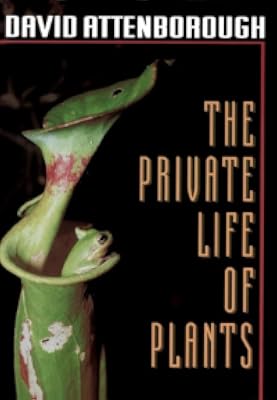
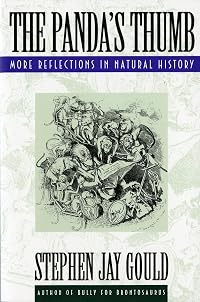


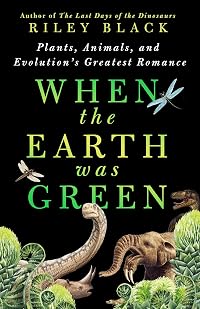
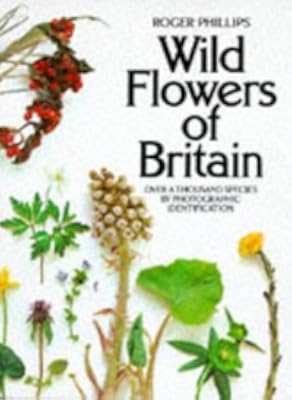








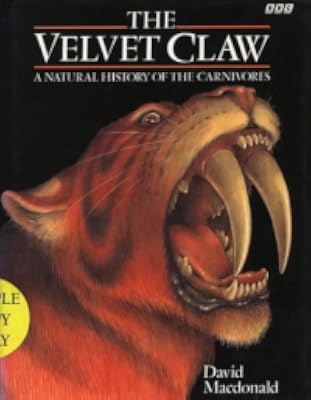
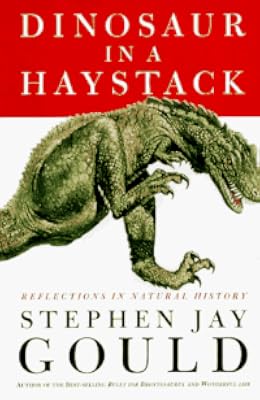

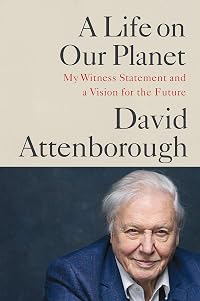
Member Recommendations

Sylak Two of the 20th century's Greats of natural history.
Member Reviews
LIFE ON EARTH by David Attenborough (and read by him as well) was a good pick to listen to during finals week - not so engaging that I keep listening to find out what happens next at the expense of getting my grading done, but engaging enough to take my mind off my grading and other responsibilities when I needed a break, or was cooking, etc. I will say that I found it more relaxing to listen to in the chapters when he's describing things that I'm somewhat familiar with, but don't know well (i.e. the chapters on plants and invertebrates.) The chapters on vertebrates, however, were somewhat less relaxing to listen to, as I spent the whole time listening very carefully for any mistakes.
One thing Attenborough does very well in this book is show more connect the evolution of traits together, helping explain why certain traits evolved when they did. For example, as vascular plants evolved, there was a selective advantage for getting taller in order to better compete for light. But then, once plants started getting taller, there was a selective advantage to herbivores that could reach the tasty parts of the plants, which led to the evolution of flying insects, which in turn contributed to the evolution of the flowering plants to use those insects as targeted pollinators vs. relying on wind pollination. Some of it is almost certainly adaptationism / just-so-story-ism, but he does an excellent job of connecting various pieces together into a coherent whole.
He does get some stuff wrong -- some factual details that may have just gotten missed in the 40th anniversary update of the text, but also other places where the way he frames evolutionary history is... antiquated at best. The most egregious (in my opinion) is that he repeatedly refers to various living organisms as "primitive", and refers to non-mammalian synapsids (everything that is more closely related to mammals than any other living organism, but is not technically a true mammal -- includes things like Dimetrodon, the sail-back "dinosaur") as "reptiles". Which: No. Absolutely not. Synapsids split from the branch that would become reptiles over 200 million years ago. (He also calls early tetrapods like Tiktaalik "amphibians", which: they were almost certainly amphibious, but they were absolutely not the same as modern amphibians.)
But overall: Enjoyable to listen to Attenborough's narration even without the amazing visuals of a nature documentary. show less
One thing Attenborough does very well in this book is show more connect the evolution of traits together, helping explain why certain traits evolved when they did. For example, as vascular plants evolved, there was a selective advantage for getting taller in order to better compete for light. But then, once plants started getting taller, there was a selective advantage to herbivores that could reach the tasty parts of the plants, which led to the evolution of flying insects, which in turn contributed to the evolution of the flowering plants to use those insects as targeted pollinators vs. relying on wind pollination. Some of it is almost certainly adaptationism / just-so-story-ism, but he does an excellent job of connecting various pieces together into a coherent whole.
He does get some stuff wrong -- some factual details that may have just gotten missed in the 40th anniversary update of the text, but also other places where the way he frames evolutionary history is... antiquated at best. The most egregious (in my opinion) is that he repeatedly refers to various living organisms as "primitive", and refers to non-mammalian synapsids (everything that is more closely related to mammals than any other living organism, but is not technically a true mammal -- includes things like Dimetrodon, the sail-back "dinosaur") as "reptiles". Which: No. Absolutely not. Synapsids split from the branch that would become reptiles over 200 million years ago. (He also calls early tetrapods like Tiktaalik "amphibians", which: they were almost certainly amphibious, but they were absolutely not the same as modern amphibians.)
But overall: Enjoyable to listen to Attenborough's narration even without the amazing visuals of a nature documentary. show less
In this unique book, David Attenborough has undertaken nothing less than a history of nature, from the emergence of tiny one-celled organisms in the primeval slime more than 3,000 million years ago to apelike but upright man, equally well adapted to life in the rain forest of New Guinea and the glass canyons of a modern metropolis. Told through an examination of animal and plant life today - with occasional juxtapositions of extinct fossil forms to reveal the origin of living creatures - "Life on Earth" is an astonishing pageant of life, with a cast of characters drawn from the whole range of living animals the world over. Attenborough's perceptive, dynamic approach to the evolution of some four million species of living organisms that show more populate the planet is to trace the most significant thread in the history of each major group. He then proceeds to explain from the evidence of living representatives and fossil remains why certain animals adapted and survived, evolved to more complex and "higher" forms of life, while others, by some inherent limitation imposed by their physiology or structure, failed and became extinct. "Life on Earth" is a book of wonders. A model of clarity and ease as a guide, Attenborough takes the reader around the world with him into jungles where orchids have petals that "impersonate" wasps to attract pollinating insects; to Australia, where honeypot ants force feed nectar to workers of a special caste, then hang them up by their forelegs like living storage jars; to remote mountains in Japan where little monkeys called macaques have learned to combat the winter snows by bathing in hot volcanic springs. show less
As always, David Attenborough, knocks it out of the park! He’s calming and informative voice coupled with a fascinating subject matter make this a brilliant topic for an audiobook. This was a highly enjoyable look through life from the pre-Cambrian age through to today. There are chapters on climate change, environmentalism, and other, topical treatments for today but don’t be forced, this isn’t a crusade but mainly the start of a man’s life‘s love with the natural world.
Attenborough writes really well as he discusses evolution. Truly, a classic.
Brilliant! Some lovely photographs too.
Beautiful pictures!
full of great photographs
Members
- Recently Added By
Lists

Recommended Nature Writing
346 works; 180 members

al.vick-parents books
301 works; 1 member

Books Read in 2019
4,052 works; 110 members

Books Read in 2020
4,379 works; 124 members

Books Read in 2021
5,361 works; 114 members
Author Information

Some Editions
Awards and Honors
Distinctions
The Guardian Book of the Day (2018-10-12)
Notable Lists
Series

Work Relationships
Is an adaptation of
Is expanded in
Common Knowledge
- Canonical title
- Life on Earth: A Natural History
- Original title
- Life on Earth: A Natural History
- Alternate titles
- Life on Earth
- Original publication date
- 1979
- Important places
- Earth
- Important events
- Cambrian Explosion
- Related movies
- Life on Earth (1979 | IMDb)
- Epigraph
- [None]
- Dedication
- [None]
- First words
- Twenty-five years ago, I went to the tropics for the first time.
Introduction.
It is not difficult to discover an unknown animal.
One. The infinite variety. - Last words
- (Click to show. Warning: May contain spoilers.)In our hands now lies not only our own future, but that of all other living creatures with whom we shhare the earth.
- Blurbers
- Lorenz, Konrad; Morris, Desmond; Tinbergen, Niko; Ashby, Eric
- Original language
- English
- Disambiguation notice
- "Discovering life on earth" by David Attenborough is a shorter, juvenile version. "Life on Earth: Augmented and Enlarged Edition" should also not be combined with "Life on earth".
Classifications
Statistics
- Members
- 1,771
- Popularity
- 12,382
- Reviews
- 13
- Rating
- (4.22)
- Languages
- 11 — Danish, Dutch, English, Finnish, French, German, Hungarian, Italian, Portuguese, Spanish, Swedish
- Media
- Paper, Audiobook, Ebook
- ISBNs
- 44
- UPCs
- 1
- ASINs
- 18