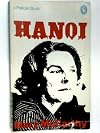
Hanoi
by Mary McCarthy
On This Page
Description
This book is Mary McCarthy's account of the American and Vietnamese forces in North Vietnam during the Vietnam War.Tags
Recommendations





















Member Reviews
This book had a purpose in 1968; to call upon President Johnson and the American public to end the Vietnam War. McCarthy had visited South Vietnam in 1967. Next year, firmly against the continuation of the war, she arrived in Hanoi to report from the other side. Unlike Jane Fonda's visit in 1972, McCarthy seemed to largely escape public execration at home. She notes the care she took to avoid becoming a mouthpiece for Northern propaganda, and in most respects (bar one) she seems to have succeeded. She writes about how her understanding of the North was limited both by the circumstances of her visit and by her own western liberal sensibilities. But her story in the end is measured, and interesting. It is a series of portraits of people show more and places, of ordered calm compared to the chaos in the South. For the South, as McCarthy observes, was where the war was. McCarthy arrived at the tail end of the Rolling Thunder bombing campaign against the North. She observes that despite this life in the North was continuing - if not normally then at least effectively - a view shared by US analysts looking back on that campaign.
Then something interesting happens in this book. She averred that she had no intention of analyzing the policies or intentions of the North, but to simply report what she saw. Nevertheless, there seems to have been a process whereby she begins to 'get inside the head' of her subject. She begins to map the 'uncomfortable' questions, and bring her own views on the relation of Government and people into the discussion. She approves of the distribution of decision making and control; understanding that it was a by-product of the dispersal of the population and industry triggered by the US bombing. She notes the dim view the North Vietnamese leadership take towards this. She suggests that they do not trust the people not to adopt a free market economy the moment the war is concluded, given that making money and 'getting ahead' is strongly built into the Vietnamese character. A prescient observation indeed.
McCarthy's most telling failure of analysis, like the rest of her views, is put forward in this book without any attempt at dissimulation. She interviewed two POW's, airmen who had been shot down during the bombing campaign. She seems to have approached this with some fore-thought and wariness regarding her own prejudices. She had already been shown many bombed out sites, including a hospital. Regardless of whether she saw real or crafted sites, it is accepted by the US that the bombing caused approximately 70,000 civilian casualties. In the end her observation was only that the men she interviewed seemed to be a little uncouth, perhaps even dull, and she blames this as much on her own insular background as them – so it all seems fairly harmless and inconsequential. What she missed, and one of the POW's (James Risner) put it in a matter of fact sort of way when he was released, was his attempt to show her marks of torture on his body. If he and his colleague seemed dull and unresponsive to McCarthy; it makes sense now that their agenda was not to try and have a relaxed and interesting conversation, but to get across what they knew their guards would prefer remain hidden. In fact, having been kept in isolation and tortured, they were not likely capable of carrying on any sort of conversation. It's not clear whether McCarthy ever 'got this', she defended her opinion of the POW's several years later. Her failure at this juncture was grievious. It can only be said in her defence that her liberal background in a pre-9/11 world did not prepare her to come face to face with a torture victim and recognize what was going on. But the reader should be aware of this, in fairness to the airmen.
This book has wider significance, then, than simply as a message to President Johnson. It is an illuminating portrait of North Vietnam in 1968, and a lesson as to the risks of reporting behind 'enemy' lines during a conflict. Best read alongside Harrison Salisbury's 'Behind the Lines – Hanoi', an account of his 1966 visit to North Vietnam. show less
Then something interesting happens in this book. She averred that she had no intention of analyzing the policies or intentions of the North, but to simply report what she saw. Nevertheless, there seems to have been a process whereby she begins to 'get inside the head' of her subject. She begins to map the 'uncomfortable' questions, and bring her own views on the relation of Government and people into the discussion. She approves of the distribution of decision making and control; understanding that it was a by-product of the dispersal of the population and industry triggered by the US bombing. She notes the dim view the North Vietnamese leadership take towards this. She suggests that they do not trust the people not to adopt a free market economy the moment the war is concluded, given that making money and 'getting ahead' is strongly built into the Vietnamese character. A prescient observation indeed.
McCarthy's most telling failure of analysis, like the rest of her views, is put forward in this book without any attempt at dissimulation. She interviewed two POW's, airmen who had been shot down during the bombing campaign. She seems to have approached this with some fore-thought and wariness regarding her own prejudices. She had already been shown many bombed out sites, including a hospital. Regardless of whether she saw real or crafted sites, it is accepted by the US that the bombing caused approximately 70,000 civilian casualties. In the end her observation was only that the men she interviewed seemed to be a little uncouth, perhaps even dull, and she blames this as much on her own insular background as them – so it all seems fairly harmless and inconsequential. What she missed, and one of the POW's (James Risner) put it in a matter of fact sort of way when he was released, was his attempt to show her marks of torture on his body. If he and his colleague seemed dull and unresponsive to McCarthy; it makes sense now that their agenda was not to try and have a relaxed and interesting conversation, but to get across what they knew their guards would prefer remain hidden. In fact, having been kept in isolation and tortured, they were not likely capable of carrying on any sort of conversation. It's not clear whether McCarthy ever 'got this', she defended her opinion of the POW's several years later. Her failure at this juncture was grievious. It can only be said in her defence that her liberal background in a pre-9/11 world did not prepare her to come face to face with a torture victim and recognize what was going on. But the reader should be aware of this, in fairness to the airmen.
This book has wider significance, then, than simply as a message to President Johnson. It is an illuminating portrait of North Vietnam in 1968, and a lesson as to the risks of reporting behind 'enemy' lines during a conflict. Best read alongside Harrison Salisbury's 'Behind the Lines – Hanoi', an account of his 1966 visit to North Vietnam. show less
Members
- Recently Added By
Author Information

45+ Works 7,706 Members
Classifications
- Genres
- Nonfiction, Travel, History, General Nonfiction, Biography & Memoir
- DDC/MDS
- 915.97 — History & geography Geography & travel Geography of and travel in Asia Southeast Asia; Indochina; Mekong River Vietnam
- LCC
- DS557 .A72 .M29 — History of Europe, Asia, Africa and Oceania Asia History of Asia Southeast Asia French Indochina Vietnam. Annam Vietnamese Conflict
Statistics
- Members
- 30
- Popularity
- 929,561
- Reviews
- 1
- Rating
- (3.50)
- Languages
- English
- Media
- Paper
- ISBNs
- 3
- ASINs
- 1