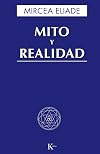
Myth and Reality
by Mircéa Eliade
On This Page
Description
This classic study deals primarily with societies around the world in which myth supplies models for human behavior, & by that very fact, gives meaning & value to life.Tags
Recommendations














Member Reviews
While Eliade has some interesting insights at times - relating creation myths to creativity, for instance - his work suffers from a lack of independent research and a clear bias towards monotheistic, masculine deities. I was prepared to enjoy this book, knowing that Eliade has influenced some interesting thinkers, but had a hard time getting past undocumented assertions about "primitive" cultures and sprinklings of fallacious thought throughout, especially when the fallacies all, inevitably, supported monotheistic views.
Eliade emphasizes the notion of sacred time where myths are imagined in the past (cosmology) and eschatological myths are imagined in an apocalyptic future. I do not think modern man has changed all that much though and any division he tries to make between "primitive" cultures and so-called secular moderns is superficial. Being published during the cold war Eliade shows how myth still exists in "secular" narratives like Marx' "Just Man" (the same archetype in the Robin Hood theme), his comments on end-of-the-world flood myths in Chapter IV are very applicable to modern environmental flood/climate prophecies that are thought of as Truth by the eco-prophets too. This book should be read along side his "Sacred and Profane" and Eliade is a show more nice compliment to Campbell and von Franz as well. Don't think this is merely a book discussing archaic minds and fanciful stories, myth is alive and well today. show less
Not what I was expecting. Very scholarly type writing but doesn't really break down the myths and compare them. Doesn't even look at major modern religious myths. Only wants to look at myths in tribes that until very recently have not been influenced by outside cultures. I can see where it is coming from as a study but it would be far more interesting if the author wasn't treating myths as something only the "natives" recite, believe and act on.
Në veprën "Miti dhe realiteti", Eliade merr në studim ato shoqëri në të cilat miti luan ende rolin kryesor në formimin e tipareve kulturore themelore të shoqërisë: marrëdhënien e mitit me botëkuptimin, me konceptimin e historisë, kohës, me përvojën njerëzore në përgjithësi.
ASPECTOS DEL MITO
Los mitos relatan historias sacras, acontecimientos que
tuvieron lugar en un tiempo primordial, el tiempo fabuloso de los
«orígenes», Por eso la función del mito es dar un significado al
mundo y a la existencia humana. Gracias al mito, el mundo se
convierte en algo abarcable, en un cosmos perfectamente
inteligible.
En el presente libro, y a partir de estas premisas,
Mircea Eliade aborda con elegancia y precisión los grandes
mitos de la historia, desde los pueblos primitivos hasta la
época moderna, sin olvidar las grandes civilizaciones del pasado,
trátese de India o de Grecia. Y la obra resultante acaba
constituyendo a la vez una fascinante narración histórica y una
apasionante síntesis filosófica, todo ello show more encarnado en multitud
de casos y ejemplos que convierten la lectura del volumen en
una experiencia tan placentera como enriquecedora.
Mircea Eliade (1907-1986) fue profesor de la Universidad de
Bucarest, de la École des Hautes Études de París, de la
Universidad de la Sorbona y de la Universidad de Chicago,
entre otras instituciones. También es autor de obras como
Patánjali y el yoga, Metodología de la historia de las religiones,
Diccionario de las religiones (con I. P. Couliano), Alquimia
asiática, Cosmología y alquimia babilónicas, Ocultismo, brujeria
y modas culturales, Lo sagrado y lo profano o Historia de
las creencias y las ideas religiosas (en tres volúmenes), todas
ellas igualmente editadas por Paidós. show less
Los mitos relatan historias sacras, acontecimientos que
tuvieron lugar en un tiempo primordial, el tiempo fabuloso de los
«orígenes», Por eso la función del mito es dar un significado al
mundo y a la existencia humana. Gracias al mito, el mundo se
convierte en algo abarcable, en un cosmos perfectamente
inteligible.
En el presente libro, y a partir de estas premisas,
Mircea Eliade aborda con elegancia y precisión los grandes
mitos de la historia, desde los pueblos primitivos hasta la
época moderna, sin olvidar las grandes civilizaciones del pasado,
trátese de India o de Grecia. Y la obra resultante acaba
constituyendo a la vez una fascinante narración histórica y una
apasionante síntesis filosófica, todo ello show more encarnado en multitud
de casos y ejemplos que convierten la lectura del volumen en
una experiencia tan placentera como enriquecedora.
Mircea Eliade (1907-1986) fue profesor de la Universidad de
Bucarest, de la École des Hautes Études de París, de la
Universidad de la Sorbona y de la Universidad de Chicago,
entre otras instituciones. También es autor de obras como
Patánjali y el yoga, Metodología de la historia de las religiones,
Diccionario de las religiones (con I. P. Couliano), Alquimia
asiática, Cosmología y alquimia babilónicas, Ocultismo, brujeria
y modas culturales, Lo sagrado y lo profano o Historia de
las creencias y las ideas religiosas (en tres volúmenes), todas
ellas igualmente editadas por Paidós. show less
Jan 8, 2018 (Edited)Spanish
Analyse riche et rigoureuse des mythes par un érudit.
Jun 6, 2018French
MITO Y REALIDAD
CAPITULO I
LA ESTRUCTURA DE LOS MITOS
LA IMPORTANCIA DEL "MITO VIVO"
Desde hace más de medio siglo, los estudiosos occidentales han situado el estudio del mito en una perspectiva que contrastaba sensiblemente con la de, pongamos por caso, el siglo xIx. En vez de tratar, como sus predecesores, el mito en la acepción usual del término, es decir, en cuanto «fábula», «invención», «ficción», le han aceptado tal como le comprendían las sociedades arcaicas, en las que el mito designa, por el contrario, una «historia verdadera», y lo que es más, una historia de inapreciable valor, porque es sagrada, ejemplar y significativa. Pero este nuevo valor semántico acordado al vocablo «mito» hace su empleo en el lenguaje show more corriente harto equívoco. En efecto, esta palabra se utiliza hoy tanto en el sentido de 《ficción» o de «ilusión» como en el sentido, familiar especialmente a los etnólogos, a los sociólogos y a los historiadores de las religiones, de «tradición sagrada, revelación primordial, modelo ejemplar».
Se insistirá más adelante sobre la historia de las diferentes significaciones que el término «mito» ha adoptado en el mundo antiguo y cristiano (cf. capítulos VIII-IX). Es de todos conocido que a partir de Jenofanes (hacia 565-470)--que fue el primero en------- show less
CAPITULO I
LA ESTRUCTURA DE LOS MITOS
LA IMPORTANCIA DEL "MITO VIVO"
Desde hace más de medio siglo, los estudiosos occidentales han situado el estudio del mito en una perspectiva que contrastaba sensiblemente con la de, pongamos por caso, el siglo xIx. En vez de tratar, como sus predecesores, el mito en la acepción usual del término, es decir, en cuanto «fábula», «invención», «ficción», le han aceptado tal como le comprendían las sociedades arcaicas, en las que el mito designa, por el contrario, una «historia verdadera», y lo que es más, una historia de inapreciable valor, porque es sagrada, ejemplar y significativa. Pero este nuevo valor semántico acordado al vocablo «mito» hace su empleo en el lenguaje show more corriente harto equívoco. En efecto, esta palabra se utiliza hoy tanto en el sentido de 《ficción» o de «ilusión» como en el sentido, familiar especialmente a los etnólogos, a los sociólogos y a los historiadores de las religiones, de «tradición sagrada, revelación primordial, modelo ejemplar».
Se insistirá más adelante sobre la historia de las diferentes significaciones que el término «mito» ha adoptado en el mundo antiguo y cristiano (cf. capítulos VIII-IX). Es de todos conocido que a partir de Jenofanes (hacia 565-470)--que fue el primero en------- show less
Feb 3, 2018 (Edited)Spanish
Members
- Recently Added By
Lists

Jordan B. Peterson's Recommended Books
104 works; 5 members
Author Information

389+ Works 17,091 Members
Born in Bucharest, Rumania, Mircea Eliade studied at the University of Bucharest and, from 1928 to 1932, at the University of Calcutta with Surendranath Dasgupta. After taking his doctorate in 1933 with a dissertation on yoga, he taught at the University of Bucharest and, after the war, at the Sorbonne in Paris. From 1957, Eliade was a professor show more of the history of religions at the University of Chicago. He was at the same time a writer of fiction, known and appreciated especially in Western Europe, where several of his novels and volumes of short stories appeared in French, German, Spanish, and Portuguese. Two Tales of the Occult "to relate some yogic techniques, and particularly yogic folklore, to a series of events narrated in the genre of a mystery story." Both Nights of Serampore and The Secret of Dr. Honigberger evoke the mythical geography and time of India. Mythology, fantasy, and autobiography are skillfully combined in Eliade's tales. (Bowker Author Biography) show less
Some Editions
Series
Belongs to Publisher Series
World Perspectives (31)
Common Knowledge
- Canonical title
- Myth and Reality
- Original title
- Aspects du mythe
- Alternate titles
- Myth & Reality
- Original publication date
- 1963
- Original language
- French
Classifications
- Genres
- Nonfiction, Anthropology, Religion & Spirituality, Philosophy, General Nonfiction, History
- DDC/MDS
- 291.13 — Religion Other religions [Formerly: General Religious Topics] [formerly: Religious mythology, general classes of religion, interreligious relations and attitudes, social theology. Relocated to 201] Archetypal Mythology
- LCC
- BL304 .E413 — Philosophy, Psychology and Religion Religions. Mythology. Rationalism Religions. Mythology. Rationalism The myth. Comparative mythology
- BISAC
Statistics
- Members
- 778
- Popularity
- 35,888
- Reviews
- 10
- Rating
- (3.89)
- Languages
- 9 — Czech, English, French, Italian, Latvian, Polish, Portuguese, Spanish, Turkish
- Media
- Paper, Ebook
- ISBNs
- 22
- ASINs
- 12