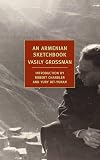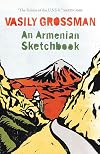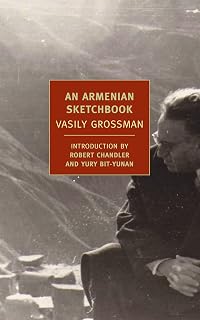
An Armenian Sketchbook
by Vasily Grossman
On This Page
Description
An NYRB Classics Original Few writers had to confront as many of the last century's mass tragedies as Vasily Grossman, who wrote with terrifying clarity about the Shoah, the Battle of Stalingrad, and the Terror Famine in the Ukraine. An Armenian Sketchbook, however, shows us a very different Grossman, notable for his tenderness, warmth, and sense of fun. After the Soviet government confiscated--or, as Grossman always put it, "arrested"--Life and Fate, he took on the task of show more revising a literal Russian translation of a long Armenian novel. The novel was of little interest to him, but he needed money and was evidently glad of an excuse to travel to Armenia. An Armenian Sketchbook is his account of the two months he spent there. This is by far the most personal and intimate of Grossman's works, endowed with an air of absolute spontaneity, as though he is simply chatting to the reader about his impressions of Armenia--its mountains, its ancient churches, its people--while also examining his own thoughts and moods. A wonderfully human account of travel to a faraway place, An Armenian Sketchbook also has the vivid appeal of a self-portrait. show lessTags
Recommendations























Member Reviews
There is so much humanity in this simple little book. Maybe it comes from Grossman having seen and been one of the first write about the concentration camps, or his frustrations with Soviet censors, who had just taken away his draft of ‘Life and Fate’, which he thought was lost forever. With great suffering often comes great compassion, and wisdom. Maybe it comes from Grossman sensing his own mortality, as he would die from stomach cancer just a couple of years after his visit to Armenia. Maybe it comes from the kindred spirits he saw in the Armenians (and they in him) as a Jew – Armenia, a country that saw countless invaders over the centuries and a genocide at the hands of the Ottomans as recently as 1915, and yet retaining show more their cultural identity.
It seems Grossman travelled down there, frustrated by the lack of freedom in the Soviet Union, the censorship of course, and on top of that, the work he was doing with a translator to get a mediocre Armenian writer’s book translated into Russian. As he reflected on (dare I say it) life and fate, he was touched by the simple people he saw, and those who lived the Christian Credo and the golden rule. He didn’t idealize them – he saw plenty of less than perfect behavior and honestly commented on it – but he accepted it all as part of being human, and extended these sketches of Armenians and his travel within Armenia to something more global, and universal – and therein lies his greatness.
Chapter 4 is brilliant – a masterpiece which starts off by pointing out the wrongness of typical Russian’s views of Armenians, as they were the butt of many jokes, but then quickly expands to discuss the need for freedom, because allowing Russians to expose themselves to diversity would lead to the understanding that “all men are brothers”. Grossman’s words against nationalism and against reactionaries are so vibrant today as America and the world turns towards conservative, xenophobic populists. But despite this and his thoughts on many other subjects, such as religion, God, art, suicide, and the cosmos, this is not a heavy book in the slightest – as he celebrates Armenia and humanity, so (for example) he also includes his own very human (and hilarious) troubles when he desperately needs to find a toilet.
My only quibble with this learned edition, which includes helpful notes and some photographs of Grossman in Armenia, is the translation of the title to ‘An Armenian Sketchbook’. While that title is apt, it wasn’t Grossman’s, and it goes against my grain to see the original meaning changed in translation. Moreover, while these are indeed sketches and snippets of Armenian life, Grossman’s original title ‘Dobro vam’, itself a literal translation of the Armenian ‘Barev dzez’, carries with it so much more of the warmth and goodwill towards men that is his central theme.
And as he ends his book “Barev dzez – All good to you, Armenians and non-Armenians!”, I say barev dzez to you as well, Vasily Grossman, barev dzez, wherever you are.
Quotes:
On freedom, and diversity:
“When people are free, communication between different nations is fruitful and beneficial. … And the beggarliness, blindness, and inhumanity of narrow nationalism and hostility between states would be clearly demonstrated.
It is time we recognized that all men are brothers.
Reactionaries seek to excise and destroy the deepest and most essentially human aspects of a nation’s character; they promulgate its most inhuman and superficial aspects.”
And this one, please read this Donald Trump:
“Any struggle for national dignity and national freedom is first of all a struggle for human dignity and human freedom. Those who fight for true national freedom are fighting against mandatory typecasting, against a blind obsession with national character – whether characterized as positive or negative. The true champion of a nation’s freedom are those who reject the limitation of stereotypes and affirm the rich diversity of human nature to be found within this nation.”
And lastly…so powerful…
“What matters is the need to move from the rigidity of national stereotypes towards something more truly human; what matters is to discover the riches of human hearts and souls; what matters is the human content of poetry and science, the universal charm and beauty of architecture; what matters is human courage and nobility; what matters is the magnanimity of a nation’s leaders and historical figures. Only by exalting what is truly human, only by fusing the national with what is universally human, can true dignity – and true freedom – be achieved.”
On brotherhood, and the bond between writers and readers:
“True brotherhood and true lasting ties between people and nations are born not in offices, not in governors’ palaces, but in peasant huts, during journeys into exile, in camps and soldiers’ barracks. These are the links that last. It is the words written beneath dim oil lamps, the words read by people lying on bed boards in prison cells or sitting in peasant huts and smoky little rooms, that create the binding ties of unity, love, and mutual national respect.”
On suicide:
“Sometimes suicide is the logical act of someone with a great mind. While the stupid and the shortsighted crawl about in the mire and hope of optimism, he or she can see that in front of them is only a bog, a wall, or a precipice.
Sometimes suicide is a manifestation of blindness, of psychological limitation: all that can be seen is a wall. Someone falls into despair and is too shortsighted to see that there is a path, and a door, right beside them.”
On inner turmoil:
“The young Lermontov was mistaken when he wrote: ‘Then the anguish of my soul is stilled…’ The anguish of the human soul is terrible and unquenchable. It is impossible to calm it or escape from it. Quiet country sunsets, the lapping of the eternal sea, and the sweet town of Dilijian are all equally powerless before it. As for Lermontov, he was unable to still the anguish of his soul even at the foot of Mount Mashuk. No outward tranquility can save you from grinding anguish; no mountain air can cool you when flaming pitch burns your insides; not bloody and gaping wound can be healed by life in the wonderful town of Dilijian.”
On the feeling of dying; I loved the imagery:
“So I lay in a sweat, a passenger caught without a ticket, thrown out from a moving train with all my heavy suitcases. So I lay, watching as tens of thousands of suddenly useless, stupid thoughts, feelings, and memories slipped out from my tightly packed cases and baskets and flew off into the eternal darkness of winter.”
On writing:
“He asked me about my own impressions of Armenia. I said something about the beauty of the country’s ancient churches. I said I wanted books to be like these churches, simply made yet expressive, and that I would like God to be living in each book, as in a church.” show less
It seems Grossman travelled down there, frustrated by the lack of freedom in the Soviet Union, the censorship of course, and on top of that, the work he was doing with a translator to get a mediocre Armenian writer’s book translated into Russian. As he reflected on (dare I say it) life and fate, he was touched by the simple people he saw, and those who lived the Christian Credo and the golden rule. He didn’t idealize them – he saw plenty of less than perfect behavior and honestly commented on it – but he accepted it all as part of being human, and extended these sketches of Armenians and his travel within Armenia to something more global, and universal – and therein lies his greatness.
Chapter 4 is brilliant – a masterpiece which starts off by pointing out the wrongness of typical Russian’s views of Armenians, as they were the butt of many jokes, but then quickly expands to discuss the need for freedom, because allowing Russians to expose themselves to diversity would lead to the understanding that “all men are brothers”. Grossman’s words against nationalism and against reactionaries are so vibrant today as America and the world turns towards conservative, xenophobic populists. But despite this and his thoughts on many other subjects, such as religion, God, art, suicide, and the cosmos, this is not a heavy book in the slightest – as he celebrates Armenia and humanity, so (for example) he also includes his own very human (and hilarious) troubles when he desperately needs to find a toilet.
My only quibble with this learned edition, which includes helpful notes and some photographs of Grossman in Armenia, is the translation of the title to ‘An Armenian Sketchbook’. While that title is apt, it wasn’t Grossman’s, and it goes against my grain to see the original meaning changed in translation. Moreover, while these are indeed sketches and snippets of Armenian life, Grossman’s original title ‘Dobro vam’, itself a literal translation of the Armenian ‘Barev dzez’, carries with it so much more of the warmth and goodwill towards men that is his central theme.
And as he ends his book “Barev dzez – All good to you, Armenians and non-Armenians!”, I say barev dzez to you as well, Vasily Grossman, barev dzez, wherever you are.
Quotes:
On freedom, and diversity:
“When people are free, communication between different nations is fruitful and beneficial. … And the beggarliness, blindness, and inhumanity of narrow nationalism and hostility between states would be clearly demonstrated.
It is time we recognized that all men are brothers.
Reactionaries seek to excise and destroy the deepest and most essentially human aspects of a nation’s character; they promulgate its most inhuman and superficial aspects.”
And this one, please read this Donald Trump:
“Any struggle for national dignity and national freedom is first of all a struggle for human dignity and human freedom. Those who fight for true national freedom are fighting against mandatory typecasting, against a blind obsession with national character – whether characterized as positive or negative. The true champion of a nation’s freedom are those who reject the limitation of stereotypes and affirm the rich diversity of human nature to be found within this nation.”
And lastly…so powerful…
“What matters is the need to move from the rigidity of national stereotypes towards something more truly human; what matters is to discover the riches of human hearts and souls; what matters is the human content of poetry and science, the universal charm and beauty of architecture; what matters is human courage and nobility; what matters is the magnanimity of a nation’s leaders and historical figures. Only by exalting what is truly human, only by fusing the national with what is universally human, can true dignity – and true freedom – be achieved.”
On brotherhood, and the bond between writers and readers:
“True brotherhood and true lasting ties between people and nations are born not in offices, not in governors’ palaces, but in peasant huts, during journeys into exile, in camps and soldiers’ barracks. These are the links that last. It is the words written beneath dim oil lamps, the words read by people lying on bed boards in prison cells or sitting in peasant huts and smoky little rooms, that create the binding ties of unity, love, and mutual national respect.”
On suicide:
“Sometimes suicide is the logical act of someone with a great mind. While the stupid and the shortsighted crawl about in the mire and hope of optimism, he or she can see that in front of them is only a bog, a wall, or a precipice.
Sometimes suicide is a manifestation of blindness, of psychological limitation: all that can be seen is a wall. Someone falls into despair and is too shortsighted to see that there is a path, and a door, right beside them.”
On inner turmoil:
“The young Lermontov was mistaken when he wrote: ‘Then the anguish of my soul is stilled…’ The anguish of the human soul is terrible and unquenchable. It is impossible to calm it or escape from it. Quiet country sunsets, the lapping of the eternal sea, and the sweet town of Dilijian are all equally powerless before it. As for Lermontov, he was unable to still the anguish of his soul even at the foot of Mount Mashuk. No outward tranquility can save you from grinding anguish; no mountain air can cool you when flaming pitch burns your insides; not bloody and gaping wound can be healed by life in the wonderful town of Dilijian.”
On the feeling of dying; I loved the imagery:
“So I lay in a sweat, a passenger caught without a ticket, thrown out from a moving train with all my heavy suitcases. So I lay, watching as tens of thousands of suddenly useless, stupid thoughts, feelings, and memories slipped out from my tightly packed cases and baskets and flew off into the eternal darkness of winter.”
On writing:
“He asked me about my own impressions of Armenia. I said something about the beauty of the country’s ancient churches. I said I wanted books to be like these churches, simply made yet expressive, and that I would like God to be living in each book, as in a church.” show less
Martin Amis calls Vasily Grossman the "Tolstoy of the USSR," but I don't recall Tolstoy writing about what it feels like to piss when you've held it in for hours.
An Armenian Sketchbook is the first of Grossman's non-fiction I've read, and it's certainly the most personal of any of his published writings. A travelogue is a perfect opportunity for Grossman to play to his strengths. The format lends itself to both digression and self-reflection, and there wasn't a better time in Grossman's life for him to do both. His masterpiece, Life and Fate, had just been confiscated by Soviet authorities, and he traveled to Armenia believing that it wouldn't be published until centuries after his death. If you've read it, you know how good it is and show more how much work was put into it, so the despair he must have felt as he sat on the train to Yerevan must have been overwhelming.
And yet, as he always does, Grossman manages to take solace in the human kindness for which he has such a keen eye. I mentioned that quote earlier about him being like Tolstoy. Check this out.
A feature of Grossman's writing that I've always loved is his ability to make scenery relevant. I'm very quick to glaze over passages in both fiction and non-fiction where the author writes about big trees and flowers and bushes and grass and whatever else the subject of the book might be looking at. Grossman, though, writes about much more than what he sees.
There are several characters from the Grossman novels I've read that have stuck with me over the past few years (in particular Anna Sergeyevna and Vasily Timofeyevich from Everything Flows), but Grossman himself in An Armenian Sketchbook might be my favorite character of them all. He's very honest about his own shortcomings, and his reoccurring hope that the Armenians he meets might have read his previous works is particularly endearing knowing how resigned he was to never being published again. It's not the literary highlight of the book, but my favorite moment in all of Grossman's books comes at the end of this one, where an old man speaks to him at an Armenian wedding about how moved he was by Grossman's coverage of World War II and his generous depiction of Armenian peasantry. As such a huge fan of Grossman, it was gratifying to encounter at least one happy moment in the life of a man denied so much of the acclaim he deserved.
"To the end of my life I will remember the speeches I heard in this village club," he said. That end came far too quickly, just two years after his visit to Yerevan.
I've been fighting the urge to write this for the entire review, but I might as well admit it to myself. Vasily Grossman is my favorite author. He manages to tackle the darkest events in world history with brutal honesty while at the same time giving the reader something to hope for and believe in without ever being corny or falling into cliches. His characters live, die, love, suffer, and have inopportune bowel movements. He never wastes a word, whether he's writing 100 pages or 900. He combines the voices of so many of the Russian greats seamlessly. Gogol, Chekhov, and Tolstoy are here in abundance. At the same time, his work doesn't feel distinctly Russian. As much as I love Russian literature, its profundity comes with a heaviness (in writing style, not just in the number of pages) that isn't present with Grossman. He doesn't dumb anything down, but his deepest moments are simple, accessible, and refreshing, regardless of the subject matter. It's an incredible feat that he makes look so easy, and I can't get enough of it.
I'm not sure if An Armenian Sketchbook is the perfect place to start with Grossman (I'm not good at figuring out that sort of thing), but it doesn't matter that much. Read as much of this man as you can whenever possible. show less
An Armenian Sketchbook is the first of Grossman's non-fiction I've read, and it's certainly the most personal of any of his published writings. A travelogue is a perfect opportunity for Grossman to play to his strengths. The format lends itself to both digression and self-reflection, and there wasn't a better time in Grossman's life for him to do both. His masterpiece, Life and Fate, had just been confiscated by Soviet authorities, and he traveled to Armenia believing that it wouldn't be published until centuries after his death. If you've read it, you know how good it is and show more how much work was put into it, so the despair he must have felt as he sat on the train to Yerevan must have been overwhelming.
And yet, as he always does, Grossman manages to take solace in the human kindness for which he has such a keen eye. I mentioned that quote earlier about him being like Tolstoy. Check this out.
The gift possessed by a great poet or scientist is not the highest of gifts. Among even the most brilliant virtuosos of the mathematical formula, of the musical phrase and poetic line, of the paintbrush and chisel are all too many people who are weak, petty-minded, greedy, servile, venal, and envious - people like slugs or mollusks, moral nobodies in whom, thanks to the irritating pangs of conscience, a pearl is sometimes born. But the supreme human gift is beauty of soul; it is in nobility, magnanimity, and personal courage in the name of what is good. It is a gift possessed by certain shy, anonymous warriors, by certain soldiers but for whose exploits we would cease to be human.How Tolstoy is that?
A feature of Grossman's writing that I've always loved is his ability to make scenery relevant. I'm very quick to glaze over passages in both fiction and non-fiction where the author writes about big trees and flowers and bushes and grass and whatever else the subject of the book might be looking at. Grossman, though, writes about much more than what he sees.
But when you look at these black and green stones, you realize at once who cut them. The stonecutter is time. This stone is ancient; it has turned black and green from age. What shattered the mighty body of the basalt were the blows struck by long millennia. The mountains disintegrated; time turned out to be stronger than basalt massifs. And now all this no longer seems to be a vast quarry; it is the site of a battle fought between a great stone mountain and the vastness of time. Two monsters clashed on these fields; time was the victor. The mountains are dead, fallen in battle.He looked at a bunch of rocks and came up with THAT. Incredible.
There are several characters from the Grossman novels I've read that have stuck with me over the past few years (in particular Anna Sergeyevna and Vasily Timofeyevich from Everything Flows), but Grossman himself in An Armenian Sketchbook might be my favorite character of them all. He's very honest about his own shortcomings, and his reoccurring hope that the Armenians he meets might have read his previous works is particularly endearing knowing how resigned he was to never being published again. It's not the literary highlight of the book, but my favorite moment in all of Grossman's books comes at the end of this one, where an old man speaks to him at an Armenian wedding about how moved he was by Grossman's coverage of World War II and his generous depiction of Armenian peasantry. As such a huge fan of Grossman, it was gratifying to encounter at least one happy moment in the life of a man denied so much of the acclaim he deserved.
"To the end of my life I will remember the speeches I heard in this village club," he said. That end came far too quickly, just two years after his visit to Yerevan.
I've been fighting the urge to write this for the entire review, but I might as well admit it to myself. Vasily Grossman is my favorite author. He manages to tackle the darkest events in world history with brutal honesty while at the same time giving the reader something to hope for and believe in without ever being corny or falling into cliches. His characters live, die, love, suffer, and have inopportune bowel movements. He never wastes a word, whether he's writing 100 pages or 900. He combines the voices of so many of the Russian greats seamlessly. Gogol, Chekhov, and Tolstoy are here in abundance. At the same time, his work doesn't feel distinctly Russian. As much as I love Russian literature, its profundity comes with a heaviness (in writing style, not just in the number of pages) that isn't present with Grossman. He doesn't dumb anything down, but his deepest moments are simple, accessible, and refreshing, regardless of the subject matter. It's an incredible feat that he makes look so easy, and I can't get enough of it.
I'm not sure if An Armenian Sketchbook is the perfect place to start with Grossman (I'm not good at figuring out that sort of thing), but it doesn't matter that much. Read as much of this man as you can whenever possible. show less
Here is further evidence that non-fiction soothes the soul. Vasily Grossman is known for his stunning writing on monumental tragedies of the 20th century: the holocaust, the Eastern Front, Stalinism. ‘An Armenian Sketchbook’ appears to be a simple travelogue, written after Grossman spent some time there translating an Armenian epic. Although it contains some witty pen portraits and lyrical descriptions of vistas, it is really a book of profound reflections on life by a man who has seen the absolute worst of humanity yet has not lost hope for our species. The introduction and appendices note that during his time in Armenia Grossman was ill, his marriage was breaking down, and his masterpiece [b:Life and Fate|88432|Life and show more Fate|Vasily Grossman|https://images.gr-assets.com/books/1320447178s/88432.jpg|2435598] (one of my favourite novels of all time) had been ‘arrested’. I hadn’t previously come across the detail that post-confiscation Grossman had to sign a document stating that he had no further copies of it. Thus, if it had ended up published outside the USSR, Grossman and his family would have been at serious risk. During the Armenian trip, Grossman was presumably reconciling himself to the fact that his best work would never be published or appreciated. It is a minor tragedy in comparison with the subject matter of [b:Life and Fate|88432|Life and Fate|Vasily Grossman|https://images.gr-assets.com/books/1320447178s/88432.jpg|2435598] that Grossman did not live to see its brilliance praised, but a tragedy nonetheless. Still, ‘An Armenian Sketchbook’ makes clear that his more Soviet-friendly work, including his journalism, was admired and remembered even in obscure mountain villages.
Needless to say, the writing throughout the sketchbook is wonderful. Whether he is describing the beauty of a mountain, the fear of death, or the search for a toilet, Grossman has an exquisite way with words. (My compliments also to the translators, Robert and Elizabeth Chandler.) He returns several times to the importance of the worlds we each create for ourselves through our unique perceptions and creativities, clearly mourning his seemingly lost novel:
Reading anything by Vasily Grossman is a salutary reminder that, terrible as the 21st century might seem at this moment, by this point in the 20th the world was in the midst of a war thought to end all wars and Russia was convulsed by revolution. There is still time to learn from the last century’s mistakes. Grossman witnessed some of the worst crimes perpetrated by humans against other humans, yet he still thought that people were capable of goodness, even greatness, and that there was beauty in the world. And he had a gift for placing that beauty in its context:
Descriptions like these actually remind me of Mervyn Peake, who also witnessed the concentration camps in his capacity as an official war artist. Stones battling time take me straight back to [b:Gormenghast|258392|Gormenghast|Mervyn Peake|https://images.gr-assets.com/books/1480786154s/258392.jpg|3599885], another all time favourite book.
The most powerful moment in ‘An Armenian Sketchbook’ is an anecdote in which Grossman seems to be having a panic attack and imagines himself to be dying. He concludes his account with this:
That’s why I read this book; indeed that’s why I read at all. show less
Needless to say, the writing throughout the sketchbook is wonderful. Whether he is describing the beauty of a mountain, the fear of death, or the search for a toilet, Grossman has an exquisite way with words. (My compliments also to the translators, Robert and Elizabeth Chandler.) He returns several times to the importance of the worlds we each create for ourselves through our unique perceptions and creativities, clearly mourning his seemingly lost novel:
Perfect worlds do not exist. There are only the funny, strange, weeping, singing, truncated, and imperfect universes created by the gods of paintbrush and musical instruments, the gods who infuse their creations with their own blood, their own soul. When he looks at these worlds, the true Lord of Hosts, the creator of the universe, probably cannot help but smile mockingly.
[...]
We have the right to ask the divine mocker this question: in whose image and likeness was humanity created? In whose image were Hitler and Himmler created? It was not men and women who gave Eichmann his soul; men and women merely made an Obersturmbannfuhrer’s uniform for him. And there were many other of God’s creations who covered their nakedness with the uniforms of generals and police chiefs, or with the silk shirts of executioners.
We should call on the Creator to show more modesty. He created the world in a frenzy of excitement. Instead of revising his rough drafts, he had his work printed straightaway. What a lot of contradictions there are in it. What a lot of typing errors, inconsistencies in the plot, passages that are too long and wordy, characters that are entirely superfluous. But it is painful to cut and trim the living cloth of a book written and published in too much of a hurry.
And so we leave the village.
Reading anything by Vasily Grossman is a salutary reminder that, terrible as the 21st century might seem at this moment, by this point in the 20th the world was in the midst of a war thought to end all wars and Russia was convulsed by revolution. There is still time to learn from the last century’s mistakes. Grossman witnessed some of the worst crimes perpetrated by humans against other humans, yet he still thought that people were capable of goodness, even greatness, and that there was beauty in the world. And he had a gift for placing that beauty in its context:
But when you look at these black and green stones, you realise at once who cut them. The stonecutter was time. This stone is ancient; it has turned black and green from age. What shattered the mighty body of the basalt were the blows struck by long millennia. The mountains disintegrated; time turned out to be stronger than the basalt massifs. And now all this no longer seems like a vast quarry; it is the site of a battle fought between a great stone mountain and the vastness of time. Two monsters clashed on these fields; time was the victor. The mountains are dead, fallen in battle. They have been felled by time just as mosquitoes, moths, people, dandelions, oak and birch are felled by time. Defeated by time, the dead mountains have been turned to dust. Their black and green bones lie scattered on the field of battle. Time has triumphed; time is invincible.
Descriptions like these actually remind me of Mervyn Peake, who also witnessed the concentration camps in his capacity as an official war artist. Stones battling time take me straight back to [b:Gormenghast|258392|Gormenghast|Mervyn Peake|https://images.gr-assets.com/books/1480786154s/258392.jpg|3599885], another all time favourite book.
The most powerful moment in ‘An Armenian Sketchbook’ is an anecdote in which Grossman seems to be having a panic attack and imagines himself to be dying. He concludes his account with this:
All this leads me to think that this world of contradictions, of typing errors, of passages that are too long and wordy, of arid deserts, of fools, of camp commandants, of mountain peaks coloured by the evening sun is a beautiful world. If the world were not so beautiful, the anguish of a dying man would not be so terrible, so incomparably more terrible than any other experience. This is why I feel such emotion, why I weep or feel overjoyed when I read or look at the works of other people who have brought together through love the truth of the eternal world and the truth of their mortal “I”.
That’s why I read this book; indeed that’s why I read at all. show less
A rather charming oddity, much lighter in tone and substance than anything else Grossman wrote - so although it is an easy read anyone starting with this one will see nothing of the power and humanity of his great novels (Life and Fate, Everything Flows and Stalingrad).
This is a travelogue of a journey Grossman took as part of a project to "translate" an epic modern Armenian novel (from a rougher word for word translation in Russian - Grossman knew almost no Armenian).
Grossman was already suffering, both from the "arrest" of the Life and Fate manuscript and from the illness that killed him a couple of years later.
Grossman is not above self parody, and there is an element of picaresque at play, along with the history and landscape show more writing common to most travel books. show less
This is a travelogue of a journey Grossman took as part of a project to "translate" an epic modern Armenian novel (from a rougher word for word translation in Russian - Grossman knew almost no Armenian).
Grossman was already suffering, both from the "arrest" of the Life and Fate manuscript and from the illness that killed him a couple of years later.
Grossman is not above self parody, and there is an element of picaresque at play, along with the history and landscape show more writing common to most travel books. show less
a strange, slightly absurd, but also beautiful account of the writer's stint in the country as a translator tasked with interviewing another writer, the "father of Armenian literature" and translating his work. It's a little absurd because Grossman doesn't speak Armenian, and suspects he has been sent there because he was about to fall afoul with the current regime. Stalin's legacy is being torn down more quickly than even his statues are being knocked over in the public squares, and everything is in upheaval. But Grossman's description of the country and the people are beautiful. I conceived of a great desire to see Lake Sevan, and basically badgered my mom into reading the book.
Dipped into this one after seeing it recommended as a good book about the Caucasus region, an area of the world I find fascinating for its long history and position as a crossroads of far-flung cultures. I under that Grossman is much better known for his hefty novels about WWII. What we have here, however, is a slight book, written only a few years before the author’s death in the early sixties.
There is a lot of good writing here, of the type a good writer might fill a notebook with in between bigger projects. It’s wide ranging, associative, rambly from time to time, and it’s clear that Grossman wrote it as it came without feeling pressure to make it more than it was. There is no implication that this book is meant to give any show more image of Armenia other than the impressions of an aging man who doesn’t understand the language and is a stranger to the culture - Grossman says as much a bunch of times throughout the book.
I use the word “aging” to describe the author because I can’t remember the last time I read a book that so felt like the work of an old man. Grossman was only in his late fifties at the time, but late fifties in 1962 Soviet Union is obviously a lot different than it is today. Throughout the book, you feel like Grossman is struggling to figure out his place in the world, the scale of his fame, and what legacy he would leave behind. These are perhaps natural reactions for a famous writer travelling to a place where he is nearly anonymous, a feeling of obsolescence and almost spectral irreality that can strike you when traveling in a distant, foreign land. We are treated to lengthy descriptions of various maladies that are bothering him, including: one, a long, highly relatable description of waking up in the middle of the night with the sudden realization that you and everyone you know will die; and two, two very dramatic descriptions of the author frantically trying to find a place to take a shit.
All of this is very understandable and Grossman deserves commendation for depicting with honesty the pitfalls of travelling to foreign lands in later life. But there is a difficult to define feeling of “I’m kind of a big deal back home” that imbues the whole book, a feeling of overbearing “me-ness”. This isn’t always bad and wouldn’t be a problem at all if I’d come to this book looking to learn more about Grossman. I didn’t though; I came to this book to learn more about Armenia. We do get some interesting observations of the Armenian landscape and Armenian people, but then find that they are repeated in all but the same words later in the book. show less
There is a lot of good writing here, of the type a good writer might fill a notebook with in between bigger projects. It’s wide ranging, associative, rambly from time to time, and it’s clear that Grossman wrote it as it came without feeling pressure to make it more than it was. There is no implication that this book is meant to give any show more image of Armenia other than the impressions of an aging man who doesn’t understand the language and is a stranger to the culture - Grossman says as much a bunch of times throughout the book.
I use the word “aging” to describe the author because I can’t remember the last time I read a book that so felt like the work of an old man. Grossman was only in his late fifties at the time, but late fifties in 1962 Soviet Union is obviously a lot different than it is today. Throughout the book, you feel like Grossman is struggling to figure out his place in the world, the scale of his fame, and what legacy he would leave behind. These are perhaps natural reactions for a famous writer travelling to a place where he is nearly anonymous, a feeling of obsolescence and almost spectral irreality that can strike you when traveling in a distant, foreign land. We are treated to lengthy descriptions of various maladies that are bothering him, including: one, a long, highly relatable description of waking up in the middle of the night with the sudden realization that you and everyone you know will die; and two, two very dramatic descriptions of the author frantically trying to find a place to take a shit.
All of this is very understandable and Grossman deserves commendation for depicting with honesty the pitfalls of travelling to foreign lands in later life. But there is a difficult to define feeling of “I’m kind of a big deal back home” that imbues the whole book, a feeling of overbearing “me-ness”. This isn’t always bad and wouldn’t be a problem at all if I’d come to this book looking to learn more about Grossman. I didn’t though; I came to this book to learn more about Armenia. We do get some interesting observations of the Armenian landscape and Armenian people, but then find that they are repeated in all but the same words later in the book. show less
I became an admirer of Vasily Grossman when I read his magnificent and tragic Life and Fate, and continued on with his other works of fiction and reportage, all in NYRB editions. (I also have, but have not yet read, his A Writer at War.) Grossman not only lived through some of the worst horrors of the 20th century, but also, as a reporter attached to the Red Army, saw many of them first-hand, including being one of the first to enter Trebiinka. His writing shines with diamond-sharp clarity, and with a pervasive humanity.
Thus I was happy to read this much more personal account of two months Grossman spent, at the beginning of the 1960s and towards the end of his life, in Armenia. Although Stalin had died, the KGB had recently confiscated show more his manuscript of Life and Fate and, perhaps as something of a consolation prize, he was given the task of editing a literal translation of an Armenian book. So he went to Armenia, and in this brief volume he tells some of his impressions of Armenia and some of what he did there, and meditates on the meaning of nations, villages, Russian stoves,and -- above all -- what is good. The original title of this book was a Russian translation of an Armenian greeting: Barev dzez, or "Good to you."
I found much of this book very moving. Grossman is not afraid to share his personal thoughts and feelings, while the journalist in him observes the rocky environment of Armenia, the haunted look of the sheep (who become, in a way, stand-ins for the millions killed by Stalin and Hitler), differences in how people express their religious feelings, a wedding in a remote mountain village, and much more. Through what is at first glance a travelogue, Grossman comments on some of the foremost questions of the 20th century and indeed of all time, including the impact of history, the continuity of humanity, and how we treat our fellow human beings. I feel the best way I can illustrate his approach is by quoting several of the many many many passages I marked in this book.
"One thing astonishes me. An old man or woman has only to raise their hand and a bus driver will stop for them; people here are kind an compassionate. Pretty young women walk along the pavement, clicking their thin high heels; dandies in hats lead sheep they have bought for the impending holiday; the sheep click their little hooves on the pavement, and the young women click their fashionable little heels; amid the fine buildings and the neon lights, the sheep smell their death" p. 24
"All of this leads me to think that this world of contradictions, of typing errors, of passages that are too long and wordy, of arid deserts, of fools, of camp commandants, of mountain peaks colored by the evening sun is a beautiful world. If the world were not so beautiful, the anguish of a dying man would not be so terrible, so incomparably more terrible than any other experience. That is why I feel such emotion, why I weep or feel overjoyed when I read or look at the works of other people who have brought together through love the truth of the eternal world and the truth of their mortal "I." " p. 80
"Nowhere else in Armenia, perhaps, have I seen such a stony desolation, impossible to escape from, as in the high valleys of Mount Aragats. I have no idea how to convey this improbable feeling. In three dimensions -- height, width, and depth -- stone, nothing but stone. No, there were more than three dimensions of stone; there was also an expression of the world's fourth coordinate -- time. The migrations of peoples, paganism, the ideas of Marx and Lenin, the wrath of the Soviet state had all found expression in this stone, in the basalt walls of churches, in gravestones, in elegantly built new clubs, in schools and palaces of culture, in quarries and mines, in the stone walls of labor camps. p. 99 show less
Thus I was happy to read this much more personal account of two months Grossman spent, at the beginning of the 1960s and towards the end of his life, in Armenia. Although Stalin had died, the KGB had recently confiscated show more his manuscript of Life and Fate and, perhaps as something of a consolation prize, he was given the task of editing a literal translation of an Armenian book. So he went to Armenia, and in this brief volume he tells some of his impressions of Armenia and some of what he did there, and meditates on the meaning of nations, villages, Russian stoves,and -- above all -- what is good. The original title of this book was a Russian translation of an Armenian greeting: Barev dzez, or "Good to you."
I found much of this book very moving. Grossman is not afraid to share his personal thoughts and feelings, while the journalist in him observes the rocky environment of Armenia, the haunted look of the sheep (who become, in a way, stand-ins for the millions killed by Stalin and Hitler), differences in how people express their religious feelings, a wedding in a remote mountain village, and much more. Through what is at first glance a travelogue, Grossman comments on some of the foremost questions of the 20th century and indeed of all time, including the impact of history, the continuity of humanity, and how we treat our fellow human beings. I feel the best way I can illustrate his approach is by quoting several of the many many many passages I marked in this book.
"One thing astonishes me. An old man or woman has only to raise their hand and a bus driver will stop for them; people here are kind an compassionate. Pretty young women walk along the pavement, clicking their thin high heels; dandies in hats lead sheep they have bought for the impending holiday; the sheep click their little hooves on the pavement, and the young women click their fashionable little heels; amid the fine buildings and the neon lights, the sheep smell their death" p. 24
"All of this leads me to think that this world of contradictions, of typing errors, of passages that are too long and wordy, of arid deserts, of fools, of camp commandants, of mountain peaks colored by the evening sun is a beautiful world. If the world were not so beautiful, the anguish of a dying man would not be so terrible, so incomparably more terrible than any other experience. That is why I feel such emotion, why I weep or feel overjoyed when I read or look at the works of other people who have brought together through love the truth of the eternal world and the truth of their mortal "I." " p. 80
"Nowhere else in Armenia, perhaps, have I seen such a stony desolation, impossible to escape from, as in the high valleys of Mount Aragats. I have no idea how to convey this improbable feeling. In three dimensions -- height, width, and depth -- stone, nothing but stone. No, there were more than three dimensions of stone; there was also an expression of the world's fourth coordinate -- time. The migrations of peoples, paganism, the ideas of Marx and Lenin, the wrath of the Soviet state had all found expression in this stone, in the basalt walls of churches, in gravestones, in elegantly built new clubs, in schools and palaces of culture, in quarries and mines, in the stone walls of labor camps. p. 99 show less
Members
- Recently Added By
Published Reviews
High quality global journalism requires investment. Please share this article with others using the link below, do not cut & paste the article. See our Ts&Cs and Copyright Policy for more detail. Email ftsales.support@ft.com to buy additional rights. http://www.ft.com/cms/s/2/03fa2b0e-e3...
I had gone to Armenia because I was translating An Armenian Sketchbook, a memoir by Vasily Grossman about show more the two months he spent there in late 1961. He too had been impressed by the medieval churches. And like me, he had gone to Armenia to work on a translation; he had been commissioned to edit a clumsy literal version of The Children of the Large House, a long novel about the second world war by an established Armenian writer, Hrachya Kochar. That, at least, was the official reason; the real reasons were more complex. show less
I had gone to Armenia because I was translating An Armenian Sketchbook, a memoir by Vasily Grossman about show more the two months he spent there in late 1961. He too had been impressed by the medieval churches. And like me, he had gone to Armenia to work on a translation; he had been commissioned to edit a clumsy literal version of The Children of the Large House, a long novel about the second world war by an established Armenian writer, Hrachya Kochar. That, at least, was the official reason; the real reasons were more complex. show less
added by Mr.Durick
Lists

Russian Literature
184 works; 35 members

Books about Russia and the former USSR
67 works; 11 members

Caucasus
122 works; 2 members

Books Read in 2020
4,379 works; 123 members
Author Information

73+ Works 8,741 Members
Grossman, a graduate in physics and mathematics from Moscow University, worked first as a chemical engineer and became a published writer during the mid-1930s. His early stories and novel deal with such politically orthodox themes as the struggle against the tsarist regime, the civil war, and the building of the new society. Grossman served as a show more war correspondent during World War II, publishing a series of sketches and stories about his experiences. Along with Ehrenburg, he edited the suppressed documentary volume on the fate of Soviet Jews, The Black Book. In 1952 the first part of his new novel, For the Good of the Cause, appeared and was sharply criticized for its depiction of the war. The censor rejected another novel, Forever Flowing (1955), which was circulated in samizdat and published in the West. The secret police confiscated a sequel to For the Good of the Cause, the novel Life and Fate, in 1961, but a copy was smuggled abroad and published in 1970. Grossman's books were issued in the Soviet Union in the late 1980s and have met with both admiration and, on part of the nationalist right wing, considerable hostility. (Bowker Author Biography) show less
Some Editions
Awards and Honors
Awards
Series
Belongs to Publisher Series
Common Knowledge
- Canonical title
- An Armenian Sketchbook
- Original title
- Dobro vam
- Original publication date
- 1998 (Russian) (Russian); 2013 (English translation) (English translation)
- People/Characters
- Vasily Grossman
- Important places
- Armenia
- First words
- I first glimpsed Armenia from the train, early in the morning: greenish-gray rock— not mountains or crags but scree, flat deposits of stone, fields of stone.
- Last words
- (Click to show. Warning: May contain spoilers.)Barev dzez—All good to you, Armenians and non-Armenians!
- Blurbers
- Amis, Martin
Classifications
- Genres
- Travel, Biography & Memoir
- DDC/MDS
- 891.73 — Literature & rhetoric Literatures of other languages East Indo-European and Celtic literatures Russian and East Slavic languages Russian fiction
- LCC
- PG3476 .G7 .D613 — Language and Literature Slavic languages and literatures. Baltic languages. Albanian language Slavic. Baltic. Albanian Russian literature Individual authors and works 1917-1960
- BISAC
Statistics
- Members
- 299
- Popularity
- 107,581
- Reviews
- 8
- Rating
- (3.98)
- Languages
- 5 — Dutch, English, French, German, Italian
- Media
- Paper, Ebook
- ISBNs
- 12
- ASINs
- 3