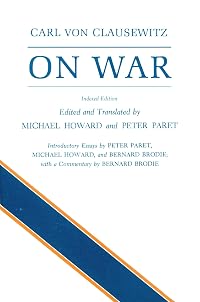
On War
by Carl von Clausewitz
On This Page
Description
On War is the most significant attempt in Western history to understand war, both in its internal dynamics and as an instrument of policy. Since the work's first appearance in 1832, it has been read throughout the world, and has stimulated generations of soldiers, statesmen, and intellectuals.Tags
Recommendations


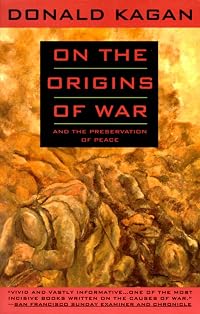
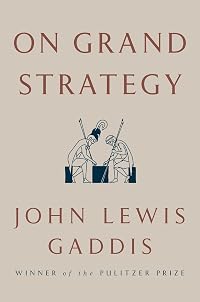
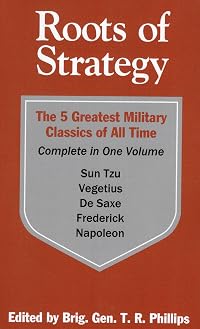
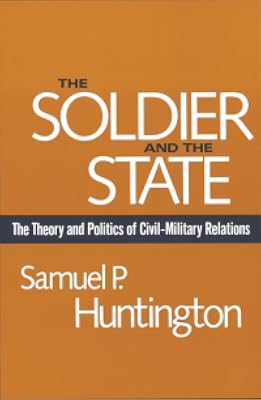
Member Recommendations
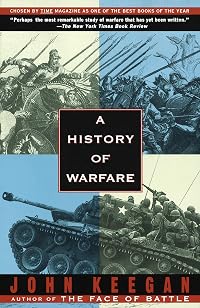
Cecrow Keegan engages with Clausewitz and challenges him on a number of points.
Member Reviews
If this classic, foundational text of modern Western military theory has anything to teach us, it’s that we all live in Napoleon’s world. Before the rise of the Corsican corporal, war between Europe’s monarchies was more often than not a wrestling match between dynasties over chunks of territory that were just as likely to be traded back during peace negotiations as retained for exploitation until the next war.
The levée en masse of the French Revolution gave Napoleon the human means to wage a total war of extinction on Europe’s dynastic houses. By the time the monarchs finally brought him down, the lessons he had taught the kings had been well learned. Clausewitz represents the most significant attempt to digest those lessons show more into a manual of strategic generalship that still finds a place in modern studies of war.
Perhaps the most important of Clausewitz’s ideas is the need to wage war in subordination to clearly defined ends. War is not a pastime of princes but the overflow of state policy. The strategic general shapes the battlefield to achieve that policy, and will resist the push or pull of frictions that might lure him toward any aim but the destruction of the enemy’s forces, in order to bring about the desired policy in the peace. This sort of goal-oriented thinking is crucial in war, but it strikes me that you could do worse than adapt this insight to your approach to your own life. show less
The levée en masse of the French Revolution gave Napoleon the human means to wage a total war of extinction on Europe’s dynastic houses. By the time the monarchs finally brought him down, the lessons he had taught the kings had been well learned. Clausewitz represents the most significant attempt to digest those lessons show more into a manual of strategic generalship that still finds a place in modern studies of war.
Perhaps the most important of Clausewitz’s ideas is the need to wage war in subordination to clearly defined ends. War is not a pastime of princes but the overflow of state policy. The strategic general shapes the battlefield to achieve that policy, and will resist the push or pull of frictions that might lure him toward any aim but the destruction of the enemy’s forces, in order to bring about the desired policy in the peace. This sort of goal-oriented thinking is crucial in war, but it strikes me that you could do worse than adapt this insight to your approach to your own life. show less
"War is simply the continuation of politics by other means."
Far too many people quote Clausewitz without reading him, but after reading this edition of On War, there is no excuse not to read Clausewitz, and perhaps understand him.
I will speak first to the translation: This is how it should be done. Howard, Paret, and Brodie produce an accurate and highly readable text, with invaluable supplementary essays on the historical impact of Clausewitz and his key points. Accept no other translations.
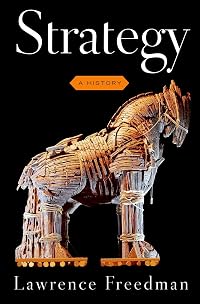
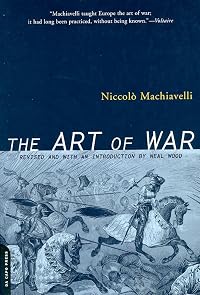
Second, the text itself. I'm a war nerd, and this is one of the best books on strategy that I've read. Compared to The Art of War or Liddell Hart's Strategy, Clausewitz is clear and direct. War is violence used to disarm and enemy and compel him to show more your will. The best way to achieve this end is to concentrate your forces and destroy the enemy in a decisive battle. But this reading is also simplistic and unfair. Clausewitz has the utmost respect for friction, uncertainty and confusion in war, and the impact of psychological and political factors. He does not advocate for war, merely for clarity in the process of conducting a war. If there is one aphorism that is not in the text but should be, it is "The object of war is to secure a better peace." If more political leaders had a conception of the better peace they aimed at, and the cost and limitations of military means in securing that end, we would have a safer and more secure world.
The philosophy is timeless, but much of the specific detail is tied up in the tactics of Napoleonic arms and armies, and may be of limited interest to anyone aside from the most dedicated history buffs. After reading this book, I just wish that we had a thinker of similar ability and breadth today to clarify the use of modern combined arms, the problems of counter-insurgency warfare, and the features of Cold War style economic, political, and cultural competition. Clausewitz has moved to the top of my post-Singularity Resurrection list. show less
Far too many people quote Clausewitz without reading him, but after reading this edition of On War, there is no excuse not to read Clausewitz, and perhaps understand him.
I will speak first to the translation: This is how it should be done. Howard, Paret, and Brodie produce an accurate and highly readable text, with invaluable supplementary essays on the historical impact of Clausewitz and his key points. Accept no other translations.
Second, the text itself. I'm a war nerd, and this is one of the best books on strategy that I've read. Compared to The Art of War or Liddell Hart's Strategy, Clausewitz is clear and direct. War is violence used to disarm and enemy and compel him to show more your will. The best way to achieve this end is to concentrate your forces and destroy the enemy in a decisive battle. But this reading is also simplistic and unfair. Clausewitz has the utmost respect for friction, uncertainty and confusion in war, and the impact of psychological and political factors. He does not advocate for war, merely for clarity in the process of conducting a war. If there is one aphorism that is not in the text but should be, it is "The object of war is to secure a better peace." If more political leaders had a conception of the better peace they aimed at, and the cost and limitations of military means in securing that end, we would have a safer and more secure world.
The philosophy is timeless, but much of the specific detail is tied up in the tactics of Napoleonic arms and armies, and may be of limited interest to anyone aside from the most dedicated history buffs. After reading this book, I just wish that we had a thinker of similar ability and breadth today to clarify the use of modern combined arms, the problems of counter-insurgency warfare, and the features of Cold War style economic, political, and cultural competition. Clausewitz has moved to the top of my post-Singularity Resurrection list. show less
It is the most influential yet incomplete and unrevised book of military history and political theory as its readers developed the opening strategies that would lead to stalemate in 1914. On War by Carl von Clausewitz distilled his experiences in the Revolutionary and Napoleonic Wars as well as his career long study of military history into book of on the nature and meaning of war in all it’s aspects.
Since his widow published his uncompleted work, in which only the first chapter of Book One was revised to his satisfaction, Clausewitz’s features discussions on strategic and tactical doctrines, engagements, a military force, and the basics of defense and attack. While many other 19th century military writers covered the same things, show more Clausewitz however took note of the differences of absolute and limited war, the violence of war, and most importantly that war is “just the continuation of politics by different means”. Clausewitz style is markedly different between the first chapter of Book One and almost the rest of the volume, except Book Eight, due to the unrevised nature of the text that doesn’t reflect the dual focus Clausewitz introduced at the beginning of the book. While numerous chapters deal with what lay readers would take to be military minutia, for those in the military who realize Clausewitz’s overall objective they understand why. Potentially for those like me who are civilians and want to read this book, it’s because of Clausewitz’s tying military theory with political theory with an eye to understanding how it influenced the Western way of war since its publication. Yet this aspect which was covered in essays and commentary by Michael Howard, Peter Paret, and Bernard Brodie informs the reader that the Imperial German generals and their French counterparts in the lead up to the First World War misinterpreted Clausewitz and emphasized the offensive and not the defensive as the author intended nor did they understand the author’s typing in of the political aspect of war. While reading the book with this knowledge it was a great help in understanding what Clausewitz was talking back.
On War is one of the most influential books of the 20th Century due to its use by those in the military who misinterpreted the intentions of author Carl von Clausewitz, even though the book is incomplete and not revised to the author’s satisfaction. The Everyman edition with essays and commentary really helps laymen like me understand what the Prussian intended to leave to future military professionals. show less
Since his widow published his uncompleted work, in which only the first chapter of Book One was revised to his satisfaction, Clausewitz’s features discussions on strategic and tactical doctrines, engagements, a military force, and the basics of defense and attack. While many other 19th century military writers covered the same things, show more Clausewitz however took note of the differences of absolute and limited war, the violence of war, and most importantly that war is “just the continuation of politics by different means”. Clausewitz style is markedly different between the first chapter of Book One and almost the rest of the volume, except Book Eight, due to the unrevised nature of the text that doesn’t reflect the dual focus Clausewitz introduced at the beginning of the book. While numerous chapters deal with what lay readers would take to be military minutia, for those in the military who realize Clausewitz’s overall objective they understand why. Potentially for those like me who are civilians and want to read this book, it’s because of Clausewitz’s tying military theory with political theory with an eye to understanding how it influenced the Western way of war since its publication. Yet this aspect which was covered in essays and commentary by Michael Howard, Peter Paret, and Bernard Brodie informs the reader that the Imperial German generals and their French counterparts in the lead up to the First World War misinterpreted Clausewitz and emphasized the offensive and not the defensive as the author intended nor did they understand the author’s typing in of the political aspect of war. While reading the book with this knowledge it was a great help in understanding what Clausewitz was talking back.
On War is one of the most influential books of the 20th Century due to its use by those in the military who misinterpreted the intentions of author Carl von Clausewitz, even though the book is incomplete and not revised to the author’s satisfaction. The Everyman edition with essays and commentary really helps laymen like me understand what the Prussian intended to leave to future military professionals. show less
My first full reading of Clausewitz (accepting that the Penguin volume does not include several books on early nineteenth-century military operations) impressed upon me the essence of philosophy and theory as it applies to the social sciences. This Penguin volume is interesting in that it includes an introduction from the editor of the 1908 version used by the US military (Colonel F.N. Maude) and a later introduction from the time of the Cold War (1966 and the early stages of the Vietnam War) by Professor Anatol Rapoport. I have long viewed On War much the same as one might Adam Smith’s Wealth of Nations: the quote “war is the continuation of policy by other means” proving to be as similarly unhelpful “as if by an invisible show more hand” in comprehending the extent of the philosophical grounding in store for the avid reader of classic literature. Reading Clausewitz is like reading John Stuart Mill: almost every lesson is so ingrained in the education of political scientists (or in this case, from my training as an army officer) that it seems like nothing new. From morale being one third of combat power (p. 424) to the implied role of the infantry (which I memorised years ago and can still recite), to the essence of war and the changes heralded by the Napoleonic period to the future of absolute or total war that would arrive in 1914, these things I mostly knew. But the references to philosophy (the Stoic’s negative visualisation gets a run), to how to develop a theory, to the social scientific view of the world that is largely inductive (and unfalsifiable if one is a fan of Karl Popper) astounded me. That I could learn so much unexpectedly was a blessing. Some ideas are worth noting. First, in the introduction, Rapoport writes of Clausewitz (p. 72):
Those without specialized mathematical knowledge (e.g. political scientists, administrators, military men) tend to conceive of their expertise as that of the artist rather than of a scientist.Rapoport explains (p. 431):
In the exact sciences, theory is used precisely in the sense rejected by Clausewitz, namely, in the sense of a collection of theorems deduced rigorously from postulates formulated in ‘if so… then so” terms, i.e. as formulas. Clausewitz here uses ‘theory’ in the sense often used in the social sciences, namely, as a synthesis of concepts which illuminate the subject matter without necessarily enabling us to make specific predictions or to control specific situations.This was illuminating, given that only today I was rummaging through the inductive nature of my own theories developed from research and then reading of Popper’s critique of historicism (another discussion that is new to me). An interesting reference from the notes is one of what was probably the most outdated books of the twentieth century even before it was published: Cavalry in Future Wars written in 1908. Rapoport argues that by then, cavalry in its traditional form had no future (Henry Chauvel aside). Finally, Clausewitz subordinates the military to the political without diminishing what he considered to be its noble qualities:
In one word, the Art of War in its highest point of view is policy, but, no doubt, a policy which fights battles instead of writing notes.Clausewitz frequently argues that the Art of War can only be learnt through practice. While policy-makers might best be suited to determining the aim of war (as policy) from book-learning, military commanders could never attain the artistic qualities necessary for successful military campaigning without direct experience of the fog of war. As I have recently moved into research that involves practitioners, Clausewitz gives me some hope for my theoretical aspirations and the use of induction in my work. This was a wonderful surprise, a circumstance that often repeats itself when I embark on a cover to cover reading of books that I thought I knew. I must admit that this is the second volume of this work I have purchased. When the first arrived and I discovered it was an abridged version, I donated it to my local library. When this book arrived (Penguin classics are ‘unabridged’ – this version is unabridged from the 1908 abridged version), I was disappointed but pushed on out of frustration. I must say it was worth it and I will be recommending this as a reading project for others in my field who, like me, might also think they know Clausewitz. show less
On War is stereotyped as being a static military manual lost in archaic post-medieval European Battle strategy with nothing new to offer in a world defined by modern and maverick military combat. This, though, is an erroneous misassumption which detracts from Clausewitz's true emphasis on how to win wars.
A witness to the bloodiest wars of his times, Clausewitz developed a theory of war orbiting the soldier-statesman model which proposes that battle is the cumulative result of two opposing forces colliding to adjudge each other's mettle and possibly render one of their number weakened. The true triumph is delivered through non-violent engagements (diplomacies, treaties etc) though the overawing stick of undefeated battlefield prowess show more works exceptional wonders here as well.
Otherwise Clausewitz proposes the entire gamut of deception and tactical military works necessary to win war. A fascinating read though some of it comes across as being underdeveloped given Clausewitz's propensity to go off tangent. show less
A witness to the bloodiest wars of his times, Clausewitz developed a theory of war orbiting the soldier-statesman model which proposes that battle is the cumulative result of two opposing forces colliding to adjudge each other's mettle and possibly render one of their number weakened. The true triumph is delivered through non-violent engagements (diplomacies, treaties etc) though the overawing stick of undefeated battlefield prowess show more works exceptional wonders here as well.
Otherwise Clausewitz proposes the entire gamut of deception and tactical military works necessary to win war. A fascinating read though some of it comes across as being underdeveloped given Clausewitz's propensity to go off tangent. show less
Overall, it was really great, but I'm uncomfortable with the way he slights logistics, and I think his ideas could have been communicated a lot more concisely (although that's probably a fault due to the work being an unfinished draft, he never had the chance to go over it and pare out the redundancies).
I read it without any preparation and feel like I didn't miss too much. Historical references are used mostly in the form of, after discussing a point thoroughly, being dropped to say "and here are examples of what I was talking about". So you don't need to be able to parse them to follow the theory. You would need a pretty detailed grounding in the Silesian and Napoleonic wars to follow them if you wanted to, though, since for show more Clausewitz these campaigns were very recent history so he assumes any student of military theory would be so familiar with them that a mere place name ("Borodino") would be sufficient to conjure to mind the context, details, aftermath and implications of a battle. show less
I read it without any preparation and feel like I didn't miss too much. Historical references are used mostly in the form of, after discussing a point thoroughly, being dropped to say "and here are examples of what I was talking about". So you don't need to be able to parse them to follow the theory. You would need a pretty detailed grounding in the Silesian and Napoleonic wars to follow them if you wanted to, though, since for show more Clausewitz these campaigns were very recent history so he assumes any student of military theory would be so familiar with them that a mere place name ("Borodino") would be sufficient to conjure to mind the context, details, aftermath and implications of a battle. show less
This is not an easy book to read nor understand. It takes several readings. A large investment in time will allow the reader to understand Clausewitz's system and the remarkable way that it stills aides in understanding the phenomenon of war. The text is adorned with many historical examples. Continuously emphasizing that war is 'a continuity of policy by other means. He has defined perfectly the theory of war, its tactical and strategic purposes. A must for an military or political leader.
Members
- Recently Added By
Lists

The Telegraph's 110 Best Books: The Perfect Library
101 works; 18 members

Política - Clásicos
164 works; 2 members

How to Read a Book's Recommended Reading List
309 works; 10 members

Ryan Holiday's Books To Base Your Life On
97 works; 2 members

Foundational Books in International Relations
13 works; 1 member

100
15 works; 1 member

In Our Time books
4,934 works; 2 members

Books in the Bibliography of The Cold War by John Lewis Gaddis
192 works; 1 member

Books Read in 2026
2,083 works; 69 members
Author Information

97+ Works 5,973 Members
General Carl Von Clausewitz (1780-1831) was born in Burg, Prussia, and entered the Prussian army at the age of twelve. He first experienced combat at age thirteen and was admitted to the War Academy of Berlin in 1801. When Prussia agreed to provide military assistance to Napoleon in 1812, Clausewitz joined the Russian army and was involved in the show more campaign of Moscow. He rejoined the Prussian army in 1814 and took part in the Waterloo campaign in 1815. He later became director of the War Academy in Berlin. show less
Some Editions
Awards and Honors
Notable Lists
Series
Belongs to Publisher Series
Work Relationships
Is contained in
Is abridged in
Common Knowledge
- Canonical title
- On War
- Original title
- Vom Kriege
- Original publication date
- 1832
- People/Characters
- Leopold Joseph Daun; Frederick the Great, King of Prussia; Napoleon Bonaparte
- First words
- We propose to consider first the single elements of our subject, then each branch or part, and, last of all, the whole, in all its relations—therefore to advance from the simple to the complex. But it is necessary for us to... (show all) commence with a glance at the nature of the whole, because it is particularly necessary that in the consideration of any of the parts their relation to the whole should be kept constantly in view.
- Quotations
- It is even better to act quickly and err than to hesitate until the time of action is past.
- Last words
- (Click to show. Warning: May contain spoilers.)As for the rest, most night combats are so conducted as to end with daylight, so that only the approach and the first attack are made under cover of darkness, because the assailant in that manner can better profit by the consequences of the state of confusion into which he throws his adversary; and combats of this description which do not commence until daybreak, in which the night therefore is only made use of to approach, are not to be counted as night combats.
- Original language
- German
- Disambiguation notice
- Abridged editions such as the Penguin, Oxford, Einaudi, Voltaire, Dodo, Wordsworth, and others should not be combined with the unabridged editions.
Classifications
Statistics
- Members
- 3,403
- Popularity
- 4,956
- Reviews
- 27
- Rating
- (3.92)
- Languages
- 19 — Chinese, Danish, Dutch, English, Estonian, Finnish, French, German, Greek, Hungarian, Italian, Japanese, Norwegian (Bokmål), Polish, Portuguese, Russian, Spanish, Swedish, Turkish
- Media
- Paper, Audiobook, Ebook
- ISBNs
- 185
- ASINs
- 81