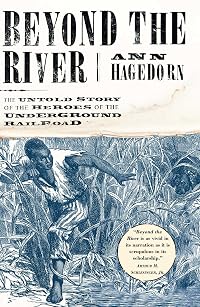
Beyond the River: The Untold Story of the Heroes of the Underground Railroad
by Ann Hagedorn
On This Page
Description
"The decades preceding the Civil War were rife with fierce sectarian violence along the borders between slave and free states. The Ohio River was one such border. Here in the river towns of Ohio and Kentucky, abolitionists and slave chasers confronted each other during the "war before the war." Slave masters and bounty hunters chased runaway slaves from Kentucky into Ohio, hoping to catch their quarry before the slaves disappeared on the underground path to freedom. In the river town of show more Ripley, the slave hunters inevitably confronted John Rankin and his determined, courageous colleagues. One of the early abolitionist leaders, Rankin began his career when he wrote a series of letters denouncing his brother's recent purchase of a slave in Virginia. The letters were collected and published as Letters on American Slavery and influenced William Lloyd Garrison, among others. Rankin, a Presbyterian minister and a farmer, bought property on a high hilltop overlooking Ripley and the Ohio River. His house was visible for miles into Kentucky, and he hung a lantern at night to help guide runaways. He and his fellow abolitionists, both black and white, formed the front line of freedom, and some of them paid a high price for it. In 1838, abolitionist John B. Mahan, a colleague of Rankin's, was lured into a trap and transported to Kentucky for one of the most celebrated trials of the era. Charged with breaking Kentucky laws, even though he had not been in the state for nearly twenty years, he was imprisoned in a windowless cell for three months, shackled at his wrists and ankles. At his trial, slaveholders tried in vain to identify and break the Ripley line "conductors." Another celebrated conductor on the Ripley line, John Parker, a former slave himself, was regarded as the most daring of the Ohio abolitionists. He made dozens of trips across the river into Kentucky to bring out slaves trying to escape, risking his life and his own freedom every time."--Jacket. show lessTags
Recommendations





Member Reviews
Summary: A history of the Underground Railroad line passing through Ripley, Ohio, featuring the Rankin family and other townspeople.
One of the aspects of Ohio history of which I am most proud is our efforts to end slavery. From the advocacy of countless individuals to Uncle Tom’s Cabin and the numerous lines of the Underground Railroad, moving slaves to freedom in Canada, Ohio was on the forefront of opposing this form of human bondage. We are the home of the National Underground Freedom Center in Cincinnati. When I was a campus minister at Ohio State, I learned that one of those lines ran through the land that would become Ohio State, with a stop where the main library would later be located. The newest iteration of the student union show more features a three-story octagonal structure at the south end, an architectural representation of a lantern, a symbol for a stop on the underground railroad. Incidentally, The Lantern is also the name of the student newspaper.
Enough for giving kudos to my home state. Or not quite, because this review features a small Ohio town on the Ohio River that played a major role in underground railroad history. Ripley, Ohio is about as far south as you can get and still be in Ohio. Early settlers to the town included a number from the South who abhorred slavery. The town sat just across from Kentucky, a slave state on the north edge of the South. In between sat the river, which would sometimes freeze over in the city or run shallow in the summer.
Ann Hagedorn writes a vivid account of the townspeople who rescued and sheltered slaves, setting them on their way to Canada through a network of stops spanning the state. In order to write this history, Hagedorn moved to Ripley. Thus, she interviewed descendants, mined local archives, and saw the lay of the land, largely unchanged.
A figure who looms large in the account is Rev. John Rankin. He was among those moving from the South, not only because he opposed slavery, but had the temerity to do so in his preaching. The call to Ripley brought him to a small church more amenable to his views. The church not only served as a platform for his views but also a springboard to abolitionist advocacy and organizing throughout the state and nationally. Hagedorn chronicles how he “walked the talk” in helping fugitive slaves on their way north. He moved out of town to build a house atop the hill with a lantern that could be seen from across the river. Slaves knew to make for the lantern. Rankin’s whole family was involved and Hagedorn chronicles how mother and sons, toting guns repelled slave hunters seeking fugitives.
With the passage of the Fugitive Slave Act, aiding fugitives was illegal. Hagedorn describes the ways “stationmasters” avoided detection. For example, they usually knew only the next stop so that they limited exposure of the line. Fugitives were moved quickly. Often, townspeople did not know who else was involved.
But some paid heavily. John Mahan was one. Hagedorn describes how slave hunters from Kentucky trapped him. Subsequently, officials extradited him to Kentucky. After months in jail, the jury acquitted him of criminal charge, allowing him to return home. However, legal costs, and a subsequent civil trial for damages from the slave owner led to bankruptcy.
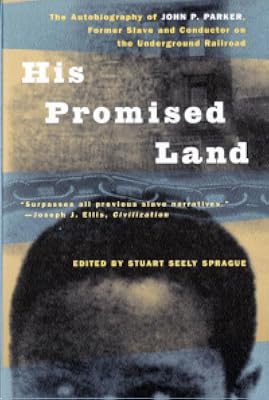
Ripley had its own Harriet Tubman. John Parker was a former slave, who made frequent forays into Kentucky to bring slaves across the Ohio. All this was at great risk, especially when he saw wanted posters with his picture. But he never got caught.
Hagedorn shows the connections those in Ripley had to a wider network, particularly abolitionists in Cincinnati. One winter, the rescue, over melting ice of a slaved named Eliza and her children, contributed to one of the most memorable narratives in Uncle Tom’s Cabin.
The narrative also traces the intensification of the hostility as more slaves crossed the river that mirrored the rising hostility between north and south. This included increasing incidents of violent attacks on Ripley residents.
Hagedorn combines scrupulous scholarship with vivid storytelling. She introduces us to “everyday heroes” as well as dominant figures like John Rankin. Also, behind this story is the question of when moral conviction and the laws of the land conflict. Hagedorn draws out the “higher law” that drove people like Rankin to courageously subvert the legal structures supporting slavery. Again, the local situation illustrates how untenable it is to sustain such a conflict. Something to think about. show less
One of the aspects of Ohio history of which I am most proud is our efforts to end slavery. From the advocacy of countless individuals to Uncle Tom’s Cabin and the numerous lines of the Underground Railroad, moving slaves to freedom in Canada, Ohio was on the forefront of opposing this form of human bondage. We are the home of the National Underground Freedom Center in Cincinnati. When I was a campus minister at Ohio State, I learned that one of those lines ran through the land that would become Ohio State, with a stop where the main library would later be located. The newest iteration of the student union show more features a three-story octagonal structure at the south end, an architectural representation of a lantern, a symbol for a stop on the underground railroad. Incidentally, The Lantern is also the name of the student newspaper.
Enough for giving kudos to my home state. Or not quite, because this review features a small Ohio town on the Ohio River that played a major role in underground railroad history. Ripley, Ohio is about as far south as you can get and still be in Ohio. Early settlers to the town included a number from the South who abhorred slavery. The town sat just across from Kentucky, a slave state on the north edge of the South. In between sat the river, which would sometimes freeze over in the city or run shallow in the summer.
Ann Hagedorn writes a vivid account of the townspeople who rescued and sheltered slaves, setting them on their way to Canada through a network of stops spanning the state. In order to write this history, Hagedorn moved to Ripley. Thus, she interviewed descendants, mined local archives, and saw the lay of the land, largely unchanged.
A figure who looms large in the account is Rev. John Rankin. He was among those moving from the South, not only because he opposed slavery, but had the temerity to do so in his preaching. The call to Ripley brought him to a small church more amenable to his views. The church not only served as a platform for his views but also a springboard to abolitionist advocacy and organizing throughout the state and nationally. Hagedorn chronicles how he “walked the talk” in helping fugitive slaves on their way north. He moved out of town to build a house atop the hill with a lantern that could be seen from across the river. Slaves knew to make for the lantern. Rankin’s whole family was involved and Hagedorn chronicles how mother and sons, toting guns repelled slave hunters seeking fugitives.
With the passage of the Fugitive Slave Act, aiding fugitives was illegal. Hagedorn describes the ways “stationmasters” avoided detection. For example, they usually knew only the next stop so that they limited exposure of the line. Fugitives were moved quickly. Often, townspeople did not know who else was involved.
But some paid heavily. John Mahan was one. Hagedorn describes how slave hunters from Kentucky trapped him. Subsequently, officials extradited him to Kentucky. After months in jail, the jury acquitted him of criminal charge, allowing him to return home. However, legal costs, and a subsequent civil trial for damages from the slave owner led to bankruptcy.
Ripley had its own Harriet Tubman. John Parker was a former slave, who made frequent forays into Kentucky to bring slaves across the Ohio. All this was at great risk, especially when he saw wanted posters with his picture. But he never got caught.
Hagedorn shows the connections those in Ripley had to a wider network, particularly abolitionists in Cincinnati. One winter, the rescue, over melting ice of a slaved named Eliza and her children, contributed to one of the most memorable narratives in Uncle Tom’s Cabin.
The narrative also traces the intensification of the hostility as more slaves crossed the river that mirrored the rising hostility between north and south. This included increasing incidents of violent attacks on Ripley residents.
Hagedorn combines scrupulous scholarship with vivid storytelling. She introduces us to “everyday heroes” as well as dominant figures like John Rankin. Also, behind this story is the question of when moral conviction and the laws of the land conflict. Hagedorn draws out the “higher law” that drove people like Rankin to courageously subvert the legal structures supporting slavery. Again, the local situation illustrates how untenable it is to sustain such a conflict. Something to think about. show less
Beyond the River: The Untold Story of the Heroes of the Underground Railroad by Ann Hagedorn explores the role of the people of Ripley, Ohio in the Underground Railroad. Hagedorn brings the Ohio River, Ripley and the surrounding area, the people on both sides of the river, and the war between abolitionists and slave owners/slave catchers to life in a way that immersed me in an area I thought I knew well. I grew up on the Kentucky side of the Ohio River but close enough to Ripley to have heard stories growing up that always intrigued me but seemed slightly surreal. Hagedorn's well researched book transported me right back to the 1800s and the people fighting slavery. I kept thinking about how humans always want to romanticize their show more cruelty, but Beyond the River cuts through the efforts to romanticize history straight to the dirty truth. Hagedorn doesn't try to make the struggle look admirable. She doesn't even paint the heroes as infallible as so often happens in the telling of history. Beyond the River tells the struggle not only between slave owners/slave catchers and the abolitionists/runaways but between the states themselves. Beyond the River is a well researched, well written story that has the power to provoke thought that could potentially lead to a better understanding of the history of the United States and how that history still affects us today. show less
In Beyond the River, Ann Hagedorn tells the remarkable story of the participants in the Ripley line of the Underground Railroad, bringing to life the struggles of the men and women, black and white, who fought “the war before the war” along the Ohio River. Determined in their cause, Rankin, his family, and his fellow abolitionists—some of them former slaves themselves—risked their lives to guide thousands of runaways safely across the river into the free state of Ohio, even when a sensational trial in Kentucky threatened to expose the Ripley “conductors.” Rankin, the leader of the Ripley line and one of the early leaders of the antislavery movement, became nationally renowned after the publication of his Letters on American show more Slavery, a collection of letters he wrote to persuade his brother in Virginia to renounce slavery. show less
Compellingly told and interesting to the end. It describes life in Ripley, Ohio in the early nineteenth century as the Rankin family works to transform much of the town into a major hub on the underground railroad. The story offers both insight into how the underground railroad worked and archives an important aspect of U.S. history that lacks a strong written record.
Ratings
Members
- Recently Added By
Author Information

9 Works 701 Members
Ann Hagedorn has been a writer for The Wall Street Journal and special projects editor for the New York Daily News and has taught narrative writing at Columbia's Graduate School of Journalism. She currently lives in Ripley, Ohio.
Awards and Honors
Awards
Distinctions
Common Knowledge
- Important places
- Ohio, USA
- Important events
- Underground Railroad
Classifications
- Genres
- Nonfiction, History, General Nonfiction, Biography & Memoir
- DDC/MDS
- 973.7 — History & geography History of North America United States Civil War Era (1857-1865)
- LCC
- E450 .H165 — History of the United States United States Revolution to the Civil War, 1775/1783-1861 Slavery in the United States. Antislavery
- BISAC
Statistics
- Members
- 195
- Popularity
- 168,852
- Reviews
- 4
- Rating
- (3.77)
- Languages
- English
- Media
- Paper, Ebook
- ISBNs
- 3
- ASINs
- 1