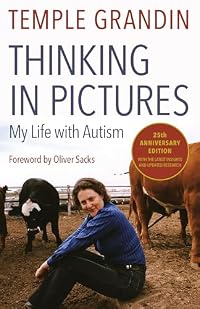
Thinking in Pictures, Expanded Edition: My Life with Autism
by Temple Grandin
On This Page
Description
The author describes her life with autism and how she has used her strong visual sensibility to cope with it.Tags
Recommendations
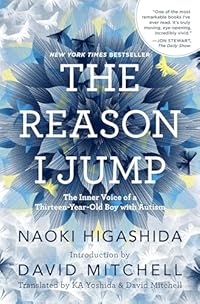
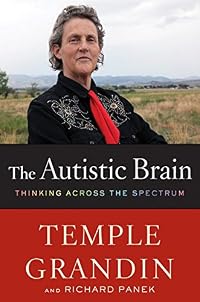
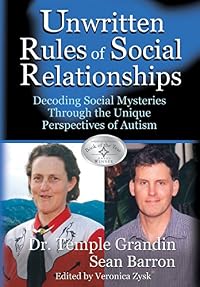
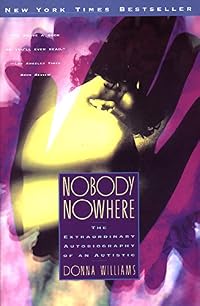











Member Reviews
I read Animals in Translation by Temple Grandin last year and loved it. I found her insights and speculations about the thought processes of animals (and people) truly intriguing. Reading the book felt like taking a privileged journey into a world so different from my own that nevertheless exists side by side with my own. In the case of my dog, that magical world lived entirely intertwined with my own, and I remember the absolute delight I felt when the author suggested that people and dogs might have co-evolved to distribute character traits.
Thinking in Pictures was, of course, first published a long time ago, and my only knowledge of it was references in Animals… and in one of Oliver Sachs’ books. But it’s been reissued recently show more to coincide with the HBO film, and each chapter includes updates that I suspect would make it a fascinating read even for someone who’d read the original.
For me, the book gave delightful insights into Temple Grandin’s different way of thinking, nicely narrated in a written voice that sounded in my head like that of a dear friend with Asperger’s Syndrome. Before reading, I hadn’t really understood how one might “think in pictures,” but the author explains it so clearly I found myself realizing that sometimes, like when we play memory games, I think in pictures too.
The author makes a point of showing how important her “difference” is to the job she does, and likewise how important it has been for many famous people. A small amount of Asperger’s might be a wonderful thing, might even be genius, but too much can mean disaster. Similarly depression and creativity often go hand in hand, and a world where all of us are “normal” would be sadly boring. Her comments about genius students with Asperger’s left behind in special ed classes were particularly disturbing, and went hand in hand with her many comments about each individual being different. I found myself wondering to what extent we’ve “normalized” our education system to a level where everyone’s expected to be the same, rather than where everyone can be treated as uniquely as they deserve.
I enjoyed the book and the many ideas, yes and word-pictures, it presents, and I’m very glad to have found it reissued and ready for new readers like me. show less
Thinking in Pictures was, of course, first published a long time ago, and my only knowledge of it was references in Animals… and in one of Oliver Sachs’ books. But it’s been reissued recently show more to coincide with the HBO film, and each chapter includes updates that I suspect would make it a fascinating read even for someone who’d read the original.
For me, the book gave delightful insights into Temple Grandin’s different way of thinking, nicely narrated in a written voice that sounded in my head like that of a dear friend with Asperger’s Syndrome. Before reading, I hadn’t really understood how one might “think in pictures,” but the author explains it so clearly I found myself realizing that sometimes, like when we play memory games, I think in pictures too.
The author makes a point of showing how important her “difference” is to the job she does, and likewise how important it has been for many famous people. A small amount of Asperger’s might be a wonderful thing, might even be genius, but too much can mean disaster. Similarly depression and creativity often go hand in hand, and a world where all of us are “normal” would be sadly boring. Her comments about genius students with Asperger’s left behind in special ed classes were particularly disturbing, and went hand in hand with her many comments about each individual being different. I found myself wondering to what extent we’ve “normalized” our education system to a level where everyone’s expected to be the same, rather than where everyone can be treated as uniquely as they deserve.
I enjoyed the book and the many ideas, yes and word-pictures, it presents, and I’m very glad to have found it reissued and ready for new readers like me. show less
3.5 stars
Temple Grandin is autistic, and grew up to earn a PhD in animal science. This book is an autobiography combined with information on autism, with plenty of animal anecdotes thrown in, as well.
This was good. No question my interests are more in line with the animal portions of the book, but the autistic information was interesting, as well. I was particularly interested in Temple's own childhood and how she thinks in pictures (hence the title) – some autistics do that, but not all. She included plenty of psychological and scientific information on autism, in addition to the anecdotes from her own life (and the lives of other autistics she knows or has heard from), as well as advice for parents of children with autism.
Temple Grandin is autistic, and grew up to earn a PhD in animal science. This book is an autobiography combined with information on autism, with plenty of animal anecdotes thrown in, as well.
This was good. No question my interests are more in line with the animal portions of the book, but the autistic information was interesting, as well. I was particularly interested in Temple's own childhood and how she thinks in pictures (hence the title) – some autistics do that, but not all. She included plenty of psychological and scientific information on autism, in addition to the anecdotes from her own life (and the lives of other autistics she knows or has heard from), as well as advice for parents of children with autism.
I liked this book more than I did Grandin's Animals in Translation. This is a book crammed full of information - scientific, personal and medical - about living with autism. I would have liked more of the personal side, but I think Grandin is so focused on the problems and remedies that she doesn't think details of her own life are really all that interesting or pertinent. Her explanations of how autistic people can never really fully understand the nuances of human relationships are both enlightening and sad in equal measure. Her thoughts on religion and an afterlife are also extremely interesting. She sees no differences between the various religions of the world, and doesn't feel there is - or should be - any "true religion," a show more sentiment I completely agree with.
While Grandin's writing style can be rather flat and unengaging - a symptom of her autism - I would not hesitate to recommend this book to anyone seeking more information about autism, and what it's like to live with this much misunderstood condition. I have nothing but admiration and respect for Temple Grandin and the way she has lived her life. show less
While Grandin's writing style can be rather flat and unengaging - a symptom of her autism - I would not hesitate to recommend this book to anyone seeking more information about autism, and what it's like to live with this much misunderstood condition. I have nothing but admiration and respect for Temple Grandin and the way she has lived her life. show less
Autistic livestock expert and stockyard designer Temple Grandin talks about what thinking and feeling are like for her and for many other autistic people, including both the difficulties the condition causes and the advantages that her extremely vivid and concrete visual memory have provided in her professional life. She also gives an overview of the current (as of 2005, in this updated edition) medical and scientific understanding of autism, incomplete as it is, and offers a considerable amount of advice on autism treatments and the education of autistic children. I think this is likely to be an extremely worthwhile book for those with autistic people in their lives, especially parents, but it's also an enlightening read for those of show more us who are simply interested in how human minds, both "normal" and otherwise, work. show less
Grandin tries to cover a lot of ground:
1. depict life as lived by an autistic person;
2. survey and comment on treatments for autism;
3. describe ethical practices in livestock handling
4. reveal her own spiritual life through personal testimony.
#1 brought me to the book and that part was brave, revealing, and well-written, though sometimes redundant -- worth reading, anyway. #2 was probably the best part of the book but not up my alley, #3 was surprisingly interesting when related to her description of her thought processes: "The one common denominator of all autistic and Asperger thinking is that details are associated into categories to form a concept."
She describes her thought processes, and those of autistic people in general, as show more "associational" rather than "logical", and the organization of the book perhaps reveals that, as the narrative takes up topics, drops them for others, then takes them up again later, instead of arranging chapters conceptually -- something that may explain the redundancy. It could also just be poor editing. show less
1. depict life as lived by an autistic person;
2. survey and comment on treatments for autism;
3. describe ethical practices in livestock handling
4. reveal her own spiritual life through personal testimony.
#1 brought me to the book and that part was brave, revealing, and well-written, though sometimes redundant -- worth reading, anyway. #2 was probably the best part of the book but not up my alley, #3 was surprisingly interesting when related to her description of her thought processes: "The one common denominator of all autistic and Asperger thinking is that details are associated into categories to form a concept."
She describes her thought processes, and those of autistic people in general, as show more "associational" rather than "logical", and the organization of the book perhaps reveals that, as the narrative takes up topics, drops them for others, then takes them up again later, instead of arranging chapters conceptually -- something that may explain the redundancy. It could also just be poor editing. show less
Despite the fact that I probably relate more to this style of thinking than I did to the other memoir on autism that I read recently, I found it harder to be engaged with this book. There seemed to be much more talk of the research that's being done on visual memory and less about the experiences of the author.
After reading this book, I not only have a better understanding of how the autistic brain works but also how my own normal(?) brain works. It was very clearly written and even though it was repetitious at times, I found it hard to put down. I was especially fascinated with her insights on animal behavior and how animals think.
Members
- Recently Added By
Author Information

46+ Works 9,530 Members
Temple Grandin was born August 29, 1947 in Boston, Massachusetts. She is a bestselling author, doctor and professor of Animal Science at Colorado State University, and leader of both the animal welfare and autism advocacy movements. Grandin was diagnosed with autism in 1950. She was immediately placed in a structured nursery, had speech therapy, show more and had a nanny spend hours playing turn-based games with her. At the age of four, she began talking and her progress continued. In 1970, Grandin received her bachelor's degree in psychology from Franklin Pierce College in Rindge, New Hampshire. She received her master's degree in animal science from Arizona State University in 1975, and in 1989, she received a Ph.D. in animal science from the University of Illinois at Urbana-Champaign. Grandin, being a high-functioning autistic, is widely-known for her work in autism advocacy. She has been featured on major televisions programs such as the Today Show and ABC's Primetime Live. She has also been featured in Time magazine, People magazine, Forbes, and the New York Times. Grandin was the subject of the Horizon documentary "The Woman Who Thinks Like a Cow" and was described by Oliver Sacks in the title of his narrative book: An Anthropologist on Mars. Grandin's bestselling book: Thinking in Pictures is scheduled to be released as an HBO film in 2009. Grandin's Animals in Translation and Animals Make Us Human have also been bestsellers. Grandin lives in Colorado, but has speaking engagements on autism and cattle handling around the world. show less
Work Relationships
Is an expanded version of
Common Knowledge
- Original publication date
- 1996
- Disambiguation notice
- Expanded Edition
Classifications
- Genres
- Biography & Memoir, Nonfiction, General Nonfiction, Science & Nature
- DDC/MDS
- 616.858820092 — Applied Science & Technology Medicine & health Diseases, Allergies, Skin Conditions Nervous Disorders: Autism, Anorexia, OCD Miscellaneous Personality, sexual, gender-identity, impulse-control, factitious, developmental, learning disorders; violent behavior; mental retardation Mental retardation; developmental and learning disorders Autism
- LCC
- RC553 .A88 .G74 — Medicine Internal medicine Internal medicine Neurosciences. Biological psychiatry. Neuropsychiatry Psychiatry Psychopathology
- BISAC
Statistics
- Members
- 1,048
- Popularity
- 24,476
- Reviews
- 23
- Rating
- (3.86)
- Languages
- English
- Media
- Paper, Ebook
- ISBNs
- 4
- ASINs
- 8