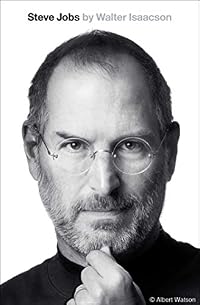
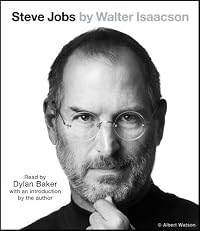
Steve Jobs
by Walter Isaacson, Уолтер Айзексон
On This Page
Description
Based on more than forty interviews with Jobs conducted over two years, as well as interviews with more than a hundred family members, friends, adversaries, competitors, and colleagues, the author has written a riveting story of the roller-coaster life and searingly intense personality of a creative entrepreneur whose passion for perfection and ferocious drive revolutionized six industries: personal computers, animated movies, music, phones, tablet computing, and digital publishing. At a show more time when America is seeking ways to sustain its innovative edge, and when societies around the world are trying to build digital-age economies, Jobs stands as the ultimate icon of inventiveness and applied imagination. He knew that the best way to create value in the twenty-first century was to connect creativity with technology. He built a company where leaps of the imagination were combined with remarkable feats of engineering. Although Jobs cooperated with this book, he asked for no control over what was written nor even the right to read it before it was published. He put nothing off-limits. He encouraged the people he knew to speak honestly. And Jobs speaks candidly, sometimes brutally so, about the people he worked with and competed against. His friends, foes, and colleagues provide an unvarnished view of the passions, perfectionism, obsessions, artistry, devilry, and compulsion for control that shaped his approach to business and the innovative products that resulted. Driven by demons, Jobs could drive those around him to fury and despair. But his personality and products were interrelated, just as Apple's hardware and software tended to be, as if part of an integrated system. His tale is instructive and cautionary, filled with lessons about innovation, character, leadership, and values. -- From publisher. show lessTags
Recommendations



Member Recommendations
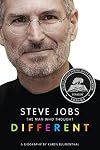
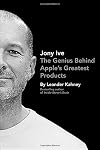
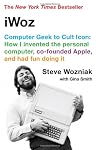
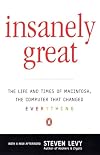
by anonymous user
Member Reviews
I have to hand it to Walter Isaacson. He was commissioned by Jobs to write a warts-and-all biography, and he absolutely followed through. The portrait of Jobs he paints here is that of a man who somehow managed to combine some of the worst traits of capitalist and hippie, a man who was, frankly, a colossal ass. Although, admittedly, a colossal ass with with a real eye for design and a certain amount of vision. (And I can't deny it, I do love my iPod.)
As I was reading this, especially the earlier chapters, in which the focus was more on Jobs's personality than his not-yet-fully-realized technology empire, I kept thinking that I was going to end up rating this book lower than I actually have, just because I found spending time with its show more subject, however vicariously, to be simply too unpleasant. But in the end, I couldn't do it. Isaacson's skills as a biographer are so good, and the details of Jobs's career are so interesting, that it turned out to be an entirely worthwhile read, after all. show less
As I was reading this, especially the earlier chapters, in which the focus was more on Jobs's personality than his not-yet-fully-realized technology empire, I kept thinking that I was going to end up rating this book lower than I actually have, just because I found spending time with its show more subject, however vicariously, to be simply too unpleasant. But in the end, I couldn't do it. Isaacson's skills as a biographer are so good, and the details of Jobs's career are so interesting, that it turned out to be an entirely worthwhile read, after all. show less
This was an exhausting read and I didn't even read it, I listened to it on audiobook. The book was very well written and seemed to be very well researched. I loved Walter's way of writing about Jobs.
Jobs on the other hand had no redeeming qualities in my book. The people he lead do make nice products but there is no need to pummel people all the way to get that.
Jobs on the other hand had no redeeming qualities in my book. The people he lead do make nice products but there is no need to pummel people all the way to get that.
This truly impressive biography was unputdownable. I was fascinated reading how Steve Jobs' disagreeable, "asshole" personality and intuitive genius were so important to the start-up and ultimate success of Apple. Walter Isaacson did an amazing job in bringing this story to life.
I loved reading about all of the individuals, both Jobs' friends and foes, who were so important in bringing the computer age to life. I liked the way Isaacson delved into Jobs' personality in order to seek psychological insight into the man himself and how Jobs flattered, cajoled, charmed, screamed, chastised, and forced his way into control of all aspects of his life...even trying to maneuver out of his ultimate demise. I was throughly saddened when I finally show more read about his death.
For me, this book was quite the page-turner. The subchapters were short enough to allow me to stop and start reading at pretty much any point. This was important since the entire volume, consisting of over 600 pages, is not the type of book I usually pick up for a "fun read". I got hooked, however, after I started listening to this biography on CD and becoming thoroughly absorbed in it. It's probably one of the best biographies I've ever read. It makes me want to read Isaacson's other works simply for the engaging way he wrote this book. It also makes me sad that I never before bought any stock in Apple! :) show less
I loved reading about all of the individuals, both Jobs' friends and foes, who were so important in bringing the computer age to life. I liked the way Isaacson delved into Jobs' personality in order to seek psychological insight into the man himself and how Jobs flattered, cajoled, charmed, screamed, chastised, and forced his way into control of all aspects of his life...even trying to maneuver out of his ultimate demise. I was throughly saddened when I finally show more read about his death.
For me, this book was quite the page-turner. The subchapters were short enough to allow me to stop and start reading at pretty much any point. This was important since the entire volume, consisting of over 600 pages, is not the type of book I usually pick up for a "fun read". I got hooked, however, after I started listening to this biography on CD and becoming thoroughly absorbed in it. It's probably one of the best biographies I've ever read. It makes me want to read Isaacson's other works simply for the engaging way he wrote this book. It also makes me sad that I never before bought any stock in Apple! :) show less
There was a lot to Steve Jobs, despite his penchant for minimalism. But what stands out the most to me from Isaacon's biography is Jobs' passion for making great products -- his uncompromising obsession with making everything that he touched as perfect as it could be. That's what Jobs' legacy is for the great majority of us who didn't work with or live close to him -- he not only gave us incredible, ground-breaking products, but a model of personal passion to produce the thing that is perfect.
Isaacson presents more than that one side of Jobs. There is also Jobs the interpersonal disaster, the narcissist seemingly utterly lacking the capacity for empathy. As Isaacson says and cites others saying, Jobs seems to actually need to tear down show more other people now and then, and shows little regret afterwards. This often-public destruction of another human being can be rationalized as the need to push people to extreme accomplishments, or to separate "B players" from "A players", but it is all too-often abused as an excuse for simply being a jerk.
Another side that Isaacson reveals is Jobs as complex husband and father. Given how difficult his relationships with people in general were, it's not hard to imagine that his romantic relationships were difficult as well, or that he struggled as a parent, particularly with his daughters. His initial denial of his first child, by his girlfriend at the time, is appalling but really not so surprising, given all that we learn about his apparent drive to unfettered self-indulgence.
But all of that, as reprehensible as it is, pales in comparison to what I took away from Isaacson's book about Jobs the designer.
The "product" is more than the thing, for Jobs. It begins with the advertising, the shopping experience at the Apple store, the paying experience, the packaging, then the thing itself, how you use it, how you use it with other products, the support experience, even how you eventually replace the product with something new -- Jobs wanted every bit of it to be perfect. Hence the closed system that Apple both suffers and thrives from. In an almost measured, wise moment, Jobs grants to Bill Gates that each pursued a profitable course, one controlling the product and the other freely licensing it for wide adoption and multiple sources of innovation. Of course, when he comes back to himself, Jobs believes and says that what Microsoft produced, by allowing any and all to play in an uncoordinated manner, was "crap." Openness sounds good and plays well in the technology culture, but Jobs' particular path to perfection demanded and thrived on control.
What's odd is that, as a person of so little empathy, Jobs could be such a great, almost unerring, judge of what people would love in a product. After all, "perfection" here is hardly an objective standard -- it's Jobs' own judgment. He was wrong now and then -- the G4 Cube or that hockey puck mouse that came with the original iMac -- but his batting average was awfully good. Isaacson provides a jaw-dropping list, from the Apple II and the Mac, through Toy Story, iTunes, the iPhone and iPod, the iPad, the Apple retail stores, and right up to iCloud. And he did it all while disdaining customer focus groups or even customer testing. "Our job," he said, "is to figure out what they're going to want before they do."
Jobs' passion went beyond the product, too, to the company itself. It's clear, especially later in his life, that Apple was not just a vehicle for him, that he wanted to create a great company that would continue well beyond his leadership, to go on to create great, innovative products, with that same no-compromise approach. He may not have been a great teacher or mentor, and we'll see how that part of his legacy turns out, but the intention to create a great company that outlived him was certainly there.
Jobs has sometimes been derided as simply a skilled marketer (by distinction from Steve Wozniak's technical brilliance), even as a con man, manipulating whole crowds by creating "reality distortion fields" around him. But I think Jobs was sincere. Even when he shilled his products, proclaiming them "the greatest thing we've done", he meant it. Why not? He had made sure it was great, he wouldn't stop until it was. When he told the Cupertino City Council, while showing the drawings for Apple's proposed new headquarters, "It's like a spaceship has landed," he wasn't so much hyping as he was showing his own genuine delight with what he and his architects were creating. That delight was the payoff for his perfectionism.
Isaacson's book won't be the only biography of Jobs. I'd be interested to read, for example, a study of Jobs as designer (or of Apple's design history under his leadership, finally giving due respect to the contributions of not only Jony Ive but the many others who contributed). But Isaacson's is certainly a good starting point, a kind of opening to the conversation that others can now take up and hopefully will. show less
Isaacson presents more than that one side of Jobs. There is also Jobs the interpersonal disaster, the narcissist seemingly utterly lacking the capacity for empathy. As Isaacson says and cites others saying, Jobs seems to actually need to tear down show more other people now and then, and shows little regret afterwards. This often-public destruction of another human being can be rationalized as the need to push people to extreme accomplishments, or to separate "B players" from "A players", but it is all too-often abused as an excuse for simply being a jerk.
Another side that Isaacson reveals is Jobs as complex husband and father. Given how difficult his relationships with people in general were, it's not hard to imagine that his romantic relationships were difficult as well, or that he struggled as a parent, particularly with his daughters. His initial denial of his first child, by his girlfriend at the time, is appalling but really not so surprising, given all that we learn about his apparent drive to unfettered self-indulgence.
But all of that, as reprehensible as it is, pales in comparison to what I took away from Isaacson's book about Jobs the designer.
The "product" is more than the thing, for Jobs. It begins with the advertising, the shopping experience at the Apple store, the paying experience, the packaging, then the thing itself, how you use it, how you use it with other products, the support experience, even how you eventually replace the product with something new -- Jobs wanted every bit of it to be perfect. Hence the closed system that Apple both suffers and thrives from. In an almost measured, wise moment, Jobs grants to Bill Gates that each pursued a profitable course, one controlling the product and the other freely licensing it for wide adoption and multiple sources of innovation. Of course, when he comes back to himself, Jobs believes and says that what Microsoft produced, by allowing any and all to play in an uncoordinated manner, was "crap." Openness sounds good and plays well in the technology culture, but Jobs' particular path to perfection demanded and thrived on control.
What's odd is that, as a person of so little empathy, Jobs could be such a great, almost unerring, judge of what people would love in a product. After all, "perfection" here is hardly an objective standard -- it's Jobs' own judgment. He was wrong now and then -- the G4 Cube or that hockey puck mouse that came with the original iMac -- but his batting average was awfully good. Isaacson provides a jaw-dropping list, from the Apple II and the Mac, through Toy Story, iTunes, the iPhone and iPod, the iPad, the Apple retail stores, and right up to iCloud. And he did it all while disdaining customer focus groups or even customer testing. "Our job," he said, "is to figure out what they're going to want before they do."
Jobs' passion went beyond the product, too, to the company itself. It's clear, especially later in his life, that Apple was not just a vehicle for him, that he wanted to create a great company that would continue well beyond his leadership, to go on to create great, innovative products, with that same no-compromise approach. He may not have been a great teacher or mentor, and we'll see how that part of his legacy turns out, but the intention to create a great company that outlived him was certainly there.
Jobs has sometimes been derided as simply a skilled marketer (by distinction from Steve Wozniak's technical brilliance), even as a con man, manipulating whole crowds by creating "reality distortion fields" around him. But I think Jobs was sincere. Even when he shilled his products, proclaiming them "the greatest thing we've done", he meant it. Why not? He had made sure it was great, he wouldn't stop until it was. When he told the Cupertino City Council, while showing the drawings for Apple's proposed new headquarters, "It's like a spaceship has landed," he wasn't so much hyping as he was showing his own genuine delight with what he and his architects were creating. That delight was the payoff for his perfectionism.
Isaacson's book won't be the only biography of Jobs. I'd be interested to read, for example, a study of Jobs as designer (or of Apple's design history under his leadership, finally giving due respect to the contributions of not only Jony Ive but the many others who contributed). But Isaacson's is certainly a good starting point, a kind of opening to the conversation that others can now take up and hopefully will. show less
Before I'd started Isaacson's Steve Jobs, I'd never really known what Steve Jobs' capacity at Apple was. I actually still don't really know. Was the only thing he did as CEO screaming at his employees that their work was "shit"? Shit, shit, shit? I don't think they were shit. SJ’s perfectionism was downright arbitrary at times, and perhaps that’s why he succeeded so well. His dictatorship, ruled out of a pair of guerilla-glued-on reality distortion goggles, took its inspiration from Stalinist Russia’s governance structures of Five-Year Plans and forced industrialization. The kind of efficiency he mined out of his workers reminds me eerily of an anecdote my Current Global Macroeconomic Challenges professor David Wyss kept resorting show more to when discussing China’s growth: One day a government official tells a neighborhood block to find a new home, and the next day there’s a highway in its place. Apple didn’t get things done because of an inherently efficient structure of talent; it got things done because Steve Jobs’ taste buds ruled over Apple like Vladimir over Russia.
Commendable taste buds they were. His web of philosophies, all poking out of a center of zennish Simplicity, guided his every move – though, in the end, it was his gut feeling that really seemed to intuit whether he liked a product or not. Well, duh. CEOs should have gut feelings about things and should usually let their gut feelings dictate those things. Or the gut should, at least, act in an editorial capacity. And I think most of Steve Jobs’ role as Apple CEO could be translated into EAL: editor-at-large – he’d pour over a product, examine it, let his gut grunt its yeas or nays, and either scream his fucking head off or take credit for the idea’s beautiful success.
More than the fact that SJ was a complete asshole, I learned a few things. I learned that life philosophy can drive people in their quests for better products. I learned that customers don't know what they want. Like, graphical user interfaces on computers? Those were not a thing -- not even an intuitive thought, until someone (I forget who) came up with it three decades ago. I learned that CEOs and company executives and engineers and designers bicker. A lot. They bicker about the price of the product, the materials of the product, the way the products looks, feels, the way it's marketed and advertised, the way it's packaged and sold even.
Overall, this book was pretty illuminating in the way it delved into all of Apple's personalities and products and organizational structures. It was a fast, simple, if not as completely elegant as one of Steve's products. show less
Commendable taste buds they were. His web of philosophies, all poking out of a center of zennish Simplicity, guided his every move – though, in the end, it was his gut feeling that really seemed to intuit whether he liked a product or not. Well, duh. CEOs should have gut feelings about things and should usually let their gut feelings dictate those things. Or the gut should, at least, act in an editorial capacity. And I think most of Steve Jobs’ role as Apple CEO could be translated into EAL: editor-at-large – he’d pour over a product, examine it, let his gut grunt its yeas or nays, and either scream his fucking head off or take credit for the idea’s beautiful success.
More than the fact that SJ was a complete asshole, I learned a few things. I learned that life philosophy can drive people in their quests for better products. I learned that customers don't know what they want. Like, graphical user interfaces on computers? Those were not a thing -- not even an intuitive thought, until someone (I forget who) came up with it three decades ago. I learned that CEOs and company executives and engineers and designers bicker. A lot. They bicker about the price of the product, the materials of the product, the way the products looks, feels, the way it's marketed and advertised, the way it's packaged and sold even.
Overall, this book was pretty illuminating in the way it delved into all of Apple's personalities and products and organizational structures. It was a fast, simple, if not as completely elegant as one of Steve's products. show less
How does one review a book--the biography Steve Jobs by Walter Isaacson--when the book itself is more or less a review of Steve Jobs' life?
Anybody who reads seems to be reading, or have read, Steve Jobs. Consequently there have already been numerous quotes, reviews, and discussions both about the book, and about Steve Jobs in general. It's difficult not to tread too much on what's already been said, and impart a unique position, but alas, it's worth a shot.
Steve Jobs is a marvelously engrossing book, about one of the world's greatest technology visionaries. It details nearly his entire life, including where he came from--both his genetic parents, and his adopted parents. From the very beginning, it's clear that Jobs must have been show more insufferable to live with growing up, and even more insufferable as an adult.
What makes Steve Jobs so intriguing are all the behind-the-scenes moments that intersperse the book. Even to those who are familiar with Steve Jobs' life and career, there was a lot of new information presented in this book--both good and bad. In the end, it's clear that though Steve Jobs built a remarkable company, he did so by being shrewd, manipulative, uncompromising, and most of all: unapologetic. His vision of the way people should use technology was unwavering, much to the chagrin of many in the media, and the outside world itself.
It's clear in this book that Steve Jobs was a very difficult person to work for and with, live with, or even to be around in any way. He could be extraordinarily demeaning to people at one moment, and treat them as if they were the greatest person alive the next.
What makes this biography so interesting is the way Isaacson details both the good and bad sides of Steve Jobs. He criticizes Jobs' faults, and praises his strengths--sometimes simultaneously. But it's clear that this biography was designed to portray Steve Jobs, and not some mythical figure who could do no wrong. For those who weren't aware of the way Jobs handled his day-to-day duties, and the way he interacted with those around him, the book may come as a shocking blow; Steve Jobs was not a great guy. Instead, he focused his efforts and his energy on making great products that he believed in.
At times surprisingly callous, and at other times genuinely amiable, Steve Jobs was a man who--perhaps by luck--changed the world. He made no apology for being the way he was; that was simply Steve Jobs.
Steve Jobs is a fascinating read, and--though lengthy--is a page-turner. Though completed before Steve Jobs' death on October 5th, 2011, it's clear that the author knew it was likely to be published after Jobs succumbed to his cancer. In many ways, it's a fitting epigraph to a life that was filled with contentious and arduous bouts with corporate executives, celebrities, and even his closest friends and family. Most of the book is spent describing how Jobs became to be the man he was, and also about his ideas and opinions that led to revolutions in so many different industries. It's clear that without Steve Jobs, the world would likely be a very different place.
At the same time, it's also clear that Steve Jobs really was the main force driving Apple's innovation. Though Apple has been built to inherit Jobs' design aesthetics, and culture, one has to wonder how long his influence will continue beyond his death. Is there anyone who will take up the mantle of perfection that Jobs insisted upon? Time will tell, of course.
Steve Jobs is also a wonderful book in that it isn't overtly technical in nature. Someone who's not necessarily into the tech scene, or computers can still pick up and read the book without difficulty. Though there are certainly sections that will enthuse tech people, it doesn't get too complicated for the average reader. It really is a wonderfully intriguing, and well-written biography. show less
Anybody who reads seems to be reading, or have read, Steve Jobs. Consequently there have already been numerous quotes, reviews, and discussions both about the book, and about Steve Jobs in general. It's difficult not to tread too much on what's already been said, and impart a unique position, but alas, it's worth a shot.
Steve Jobs is a marvelously engrossing book, about one of the world's greatest technology visionaries. It details nearly his entire life, including where he came from--both his genetic parents, and his adopted parents. From the very beginning, it's clear that Jobs must have been show more insufferable to live with growing up, and even more insufferable as an adult.
What makes Steve Jobs so intriguing are all the behind-the-scenes moments that intersperse the book. Even to those who are familiar with Steve Jobs' life and career, there was a lot of new information presented in this book--both good and bad. In the end, it's clear that though Steve Jobs built a remarkable company, he did so by being shrewd, manipulative, uncompromising, and most of all: unapologetic. His vision of the way people should use technology was unwavering, much to the chagrin of many in the media, and the outside world itself.
It's clear in this book that Steve Jobs was a very difficult person to work for and with, live with, or even to be around in any way. He could be extraordinarily demeaning to people at one moment, and treat them as if they were the greatest person alive the next.
What makes this biography so interesting is the way Isaacson details both the good and bad sides of Steve Jobs. He criticizes Jobs' faults, and praises his strengths--sometimes simultaneously. But it's clear that this biography was designed to portray Steve Jobs, and not some mythical figure who could do no wrong. For those who weren't aware of the way Jobs handled his day-to-day duties, and the way he interacted with those around him, the book may come as a shocking blow; Steve Jobs was not a great guy. Instead, he focused his efforts and his energy on making great products that he believed in.
At times surprisingly callous, and at other times genuinely amiable, Steve Jobs was a man who--perhaps by luck--changed the world. He made no apology for being the way he was; that was simply Steve Jobs.
Steve Jobs is a fascinating read, and--though lengthy--is a page-turner. Though completed before Steve Jobs' death on October 5th, 2011, it's clear that the author knew it was likely to be published after Jobs succumbed to his cancer. In many ways, it's a fitting epigraph to a life that was filled with contentious and arduous bouts with corporate executives, celebrities, and even his closest friends and family. Most of the book is spent describing how Jobs became to be the man he was, and also about his ideas and opinions that led to revolutions in so many different industries. It's clear that without Steve Jobs, the world would likely be a very different place.
At the same time, it's also clear that Steve Jobs really was the main force driving Apple's innovation. Though Apple has been built to inherit Jobs' design aesthetics, and culture, one has to wonder how long his influence will continue beyond his death. Is there anyone who will take up the mantle of perfection that Jobs insisted upon? Time will tell, of course.
Steve Jobs is also a wonderful book in that it isn't overtly technical in nature. Someone who's not necessarily into the tech scene, or computers can still pick up and read the book without difficulty. Though there are certainly sections that will enthuse tech people, it doesn't get too complicated for the average reader. It really is a wonderfully intriguing, and well-written biography. show less
Walter Isaacson has written a perfectly timed, highly readable but incurious Maureen Dowdesque biography of Steve Jobs. To understand Isaacson's approach to biography and journalism, it is helpful to note that Isaacson's leadership drove not one but two venerable US media properties into the ground (TIME magazine and CNN). He now directs the Aspen Institute, the Davos for non-thinkers. His approach is characterized by a relentless quest for the shallow, a perpetual "we'll have to leave it there" when faced with real questions, and an inveterate urge to brown-nose the rich and powerful. He can be quite critical about out-of-power and dead persons (Jobs is the chief victim of that), but acting CEOs and celebrities are treated like show more demigods.
Often mentioned in reviews, Isaacson hones in - in pure Maureen Dowd mode - multiple times on the younger Steve Jobs' crazy theory that his vegetarianism made showering unnecessary, a theory quickly disproved by reality and its unpleasantness heavily signaled to Jobs by his environment. Isaacson never confronted Jobs about the issue to discuss and reveal why Jobs persisted in a behavior obviously olfactory hurtful to the people exposed to him. At the core, Jobs remained a petulant, egoistic and often cruel child that never grew up, Peter Pan's evil stepbrother.
Another non- to half-discussed issue is Jobs' Indian influence. How can one square the idea of karma with Jobs' relentless bullying and being a jerk? He notoriously parked on handicapped parking spaces and refused to equip his cars with number plates. Such antisocial behavior is only possible in the Unequal States of America. In a nation of laws, he would have been required to personally demonstrate the application of his plates on his car to the authorities. If he continued driving without plates, he would have been stripped off his driving license. If he then continued driving, he would have been met with the escalating full strength of the government.
Isaacson also excuses Jobs' bullying of countless waiters and receptionists who had to endure Jobs' princess-and-the-pea behavior, sending back products time and again. Jobs' cruelty extended to his own employees whom he cheated out of options and which he tried to deprive of fourteen days severance pay. Social Darwinism not an Indian social contract guided Jobs' philosophy.
Jobs' childlike being was also his source of his strength: Like any child, he was unwilling to accept a no, asking again and again for favors, crying, whining, but especially schmoozing with unblinking eyes and using a child's gift of offering another person its concentrated, full attention. In these moments, Jobs seemed to live with, through and for the other person who became intoxicated with Jobs' flattering them. Jobs trained and perfected his gift for cajoling and flattering audiences first on socially awkward nerds who, in exchange for Jobs' attention, handed him control of their inventions.
Jobs was not an inventor or innovator, he was a prosumer. He was his own client number one. He tested and adapted other people's ideas and products to his own personal needs as a finicky customer. Jobs' products won when the technology leaders failed to do their job. IBM or Xerox should have built the Apple II/Mac, Disney Pixar, Sony the iPod, the telecoms the iPhone and media companies the iPad. When an industry is roused out of its complacency, Apple is typically squeezed out of the market. Jobs' strength was to entice and bully the dinosaurs' ignorant CEOs. Isaacson again fails to deliver the juicy details about these negotiations.
While Apple's genial marketing positioned it as a rebel, about being different, it and Jobs were conservative even reactionary in its views. His love for Big Brother can be best seen in his vision for the new Apple HQ which is in the form of a transparent circle. In architecture, the circle is used for defense and for prisons. The circle offers cheap total surveillance from the center, especially given Jobs' penchant for glass which obliterates personal defensive space. The contrast between the humane Pixar HQ which benefited from other people's ideas and Apple HQ couldn't be starker. The removal of the Mac arrow keys, the inability to exchange iPod or iPhone batteries and the draconic restrictions of the Apple software store are examples of Jobs' predilection for taking away customer control. The masses must be provided with locked-in and closed-off products. In the end, Winston Smith learned not to think different and he loved it.
The products from Cupertino changed how humans interact with technology. Given that Jobs' profited from other people's inventions and ideas, it is highly likely that they would have seen the light of day at some other company under a less controlling CEO sooner or later. Ultimately, the worship and deference shown to Jobs is only partially merited. This biography does not offer a full assessment of Steve Jobs. His standard biography has yet to be written. show less
Often mentioned in reviews, Isaacson hones in - in pure Maureen Dowd mode - multiple times on the younger Steve Jobs' crazy theory that his vegetarianism made showering unnecessary, a theory quickly disproved by reality and its unpleasantness heavily signaled to Jobs by his environment. Isaacson never confronted Jobs about the issue to discuss and reveal why Jobs persisted in a behavior obviously olfactory hurtful to the people exposed to him. At the core, Jobs remained a petulant, egoistic and often cruel child that never grew up, Peter Pan's evil stepbrother.
Another non- to half-discussed issue is Jobs' Indian influence. How can one square the idea of karma with Jobs' relentless bullying and being a jerk? He notoriously parked on handicapped parking spaces and refused to equip his cars with number plates. Such antisocial behavior is only possible in the Unequal States of America. In a nation of laws, he would have been required to personally demonstrate the application of his plates on his car to the authorities. If he continued driving without plates, he would have been stripped off his driving license. If he then continued driving, he would have been met with the escalating full strength of the government.
Isaacson also excuses Jobs' bullying of countless waiters and receptionists who had to endure Jobs' princess-and-the-pea behavior, sending back products time and again. Jobs' cruelty extended to his own employees whom he cheated out of options and which he tried to deprive of fourteen days severance pay. Social Darwinism not an Indian social contract guided Jobs' philosophy.
Jobs' childlike being was also his source of his strength: Like any child, he was unwilling to accept a no, asking again and again for favors, crying, whining, but especially schmoozing with unblinking eyes and using a child's gift of offering another person its concentrated, full attention. In these moments, Jobs seemed to live with, through and for the other person who became intoxicated with Jobs' flattering them. Jobs trained and perfected his gift for cajoling and flattering audiences first on socially awkward nerds who, in exchange for Jobs' attention, handed him control of their inventions.
Jobs was not an inventor or innovator, he was a prosumer. He was his own client number one. He tested and adapted other people's ideas and products to his own personal needs as a finicky customer. Jobs' products won when the technology leaders failed to do their job. IBM or Xerox should have built the Apple II/Mac, Disney Pixar, Sony the iPod, the telecoms the iPhone and media companies the iPad. When an industry is roused out of its complacency, Apple is typically squeezed out of the market. Jobs' strength was to entice and bully the dinosaurs' ignorant CEOs. Isaacson again fails to deliver the juicy details about these negotiations.
While Apple's genial marketing positioned it as a rebel, about being different, it and Jobs were conservative even reactionary in its views. His love for Big Brother can be best seen in his vision for the new Apple HQ which is in the form of a transparent circle. In architecture, the circle is used for defense and for prisons. The circle offers cheap total surveillance from the center, especially given Jobs' penchant for glass which obliterates personal defensive space. The contrast between the humane Pixar HQ which benefited from other people's ideas and Apple HQ couldn't be starker. The removal of the Mac arrow keys, the inability to exchange iPod or iPhone batteries and the draconic restrictions of the Apple software store are examples of Jobs' predilection for taking away customer control. The masses must be provided with locked-in and closed-off products. In the end, Winston Smith learned not to think different and he loved it.
The products from Cupertino changed how humans interact with technology. Given that Jobs' profited from other people's inventions and ideas, it is highly likely that they would have seen the light of day at some other company under a less controlling CEO sooner or later. Ultimately, the worship and deference shown to Jobs is only partially merited. This biography does not offer a full assessment of Steve Jobs. His standard biography has yet to be written. show less
Members
- Recently Added By
Published Reviews
ThingScore 55
Steve Jobs dreamed of a legacy that awed people. He wanted to be in the pantheon of great product innovators, indeed surpassing Edwin Land and even his early icons William Hewitt and David Packard. But, Jobs created more than great products. Just as significant was his ability to create great companies with valuable brands. And, he created two of the best of his era: Apple and Pixar.
added by SqueakyChu
Isaacson’s book is long, dull, often flat-footed, and humorless. It hammers on one nail, incessantly: that Steve Jobs was an awful man, but awful in the service of products people really liked (and eventually bought lots of) and so in the end his awfulness was probably OK. It is not Isaacson’s fault that Jobs from early on had a “admixture of sensitivity and insensitivity, bristliness show more and detachment,” as Isaacson describes it, or that Jobs abandoned friends, thought almost everyone else was a shithead, showed little interest in his daughters, and made life generally miserable for anyone who had to provide a good or service to him. But it is Isaacson’s fault that the biography is so narrowly focused on one moral theme. The reader is left to judge, with plenty of evidence both ways—and a clear idea of where Isaacson’s sympathies lie—whether Jobs deserves the Artist’s Exemption. show less
added by Shortride
As Walter Isaacson says in this incisive biography, Jobs behaved like a Nietzschean superman, using his will – transmitted through an unblinking stare – as a remote-control device that compelled others to do his bidding.
added by SqueakyChu
Lists

Top Five Books of 2013
1,562 works; 721 members

Best Biographies, Autobiographies and Memoirs
464 works; 156 members

Best Biographies
216 works; 26 members

100 Biographies and Memoirs to Read in a (Single) Lifetime
98 works; 12 members

Top Five Books of 2013
5 works; 1 member

Recommend the 20 best books you've read in the last five years
2,168 works; 601 members

Mind Expanding Books by hackerkid
581 works; 8 members

Shaykh Hamza's Book Recommendations
439 works; 3 members
Author Information

39+ Works 35,660 Members
Walter Isaacson was born on May 20, 1952 in New Orleans, Louisiana. He received a B. A. in history and literature from Harvard College. He then attended the University of Oxford, where he was a Rhodes Scholar at Pembroke College and read philosophy, politics, and economics. He began his career in journalism at The Sunday Times of London and then show more the New Orleans Times-Picayune/States-Item. He joined TIME in 1978 and served as a political correspondent, national editor and editor of new media before becoming the magazine's editor in 1996. He became Chairman and CEO of CNN in 2001, and then president and CEO of the Aspen Institute in 2003. He has written numerous books including American Sketches, Einstein: His Life and Universe, Benjamin Franklin: An American Life, Kissinger: A Biography, Steve Jobs, and The Innovators: How a Group of Hackers, Geniuses, and Geeks Created the Digital Revolution. He is the co-author, with Evan Thomas, of The Wise Men: Six Friends and the World They Made. (Bowker Author Biography) show less
1 Work 10,711 Members
Some Editions
Awards and Honors
Awards
Distinctions
Notable Lists
Work Relationships
Is contained in
Is abridged in
Has as a reference guide/companion
Common Knowledge
- Canonical title*
- Steve Jobs
- Original title
- Steve Jobs: A biography
- Original publication date
- 2011
- People/Characters
- Steve Jobs; Steve Wozniak; Tim Cook; Jony Ive; Steve Ballmer; Paul Jobs (show all 13); Clara Jobs; Jef Reskin; Ronald Wayne; Mona Simpson; Chris Ann Brennan; Lisa Brennan-Jobs; Laurene Powell
- Important places
- Cupertino, California, USA; Haridwar, India; Los Altos, California, USA
- Important events
- Kumbh Mela
- Related movies
- Pirates of Silicon Valley
- Epigraph
- The people who are crazy enough to think they can change the world are the ones who do. -- Apple's "Think Different" commercial, 1997
- First words
- (Introduction - How This Book Came to Be) In the early summer of 2004, I got a phone call from Steve Jobs.
When Paul Jobs was mustered out of the Coast Guard after World War II, he made a wager with his crewmates. - Last words
- (Click to show. Warning: May contain spoilers.)"Maybe that's why I never liked to put on-off switches on Apple devices."
- Original language
- English
*Some information comes from Common Knowledge in other languages. Click "Edit" for more information.
Classifications
- Genres
- Biography & Memoir, Technology, Business, General Nonfiction, Nonfiction, History
- DDC/MDS
- 621.39092 — Applied Science & Technology Engineering Applied physics Electronics & Computers Computer engineering Biography and History Biography
- LCC
- QA76.2 .J63 .I83 — Science Mathematics Mathematics Instruments and machines Calculating machines
- BISAC
Statistics
- Members
- 10,719
- Popularity
- 877
- Reviews
- 303
- Rating
- (4.13)
- Languages
- 29 — Catalan, Czech, Danish, Dutch, English, Estonian, Finnish, French, German, Greek, Gujarati, Hungarian, Italian, Korean, Marathi, Norwegian (Bokmål), Farsi/Persian, Polish, Romanian, Russian, Croatian, Slovenian, Spanish, Swedish, Thai, Turkish, Vietnamese, Portuguese (Brazil), Chinese, traditional
- Media
- Paper, Audiobook, Ebook
- ISBNs
- 138
- ASINs
- 40
