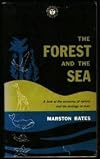
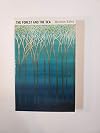
The Forest and the Sea
by Marston Bates
On This Page
Tags
Recommendations























Member Reviews
For the last few months, in preparation for my return to scuba diving this summer, I've been on an ecological kick, starting with Rachel Carson's The Sea Around Us. Recently, I finished The Forest and the Sea by Marston Bates, a zoologist and ecologist contemporary of Carson, who in this work takes a deep dive (pun intended) into the economy of nature and the ecology of man.
Written in 1960, The Forest and the Sea is a journey through Earth's natural ecosystems. Bates weaves a narrative that bridges the gap between scientific understanding and layman curiosity. I liked Bates's writing style. The way he presents information in bite-sized pieces reminded me of Carl Sagan and his seminal work—Cosmos. Bates, like Sagan, has the ability to show more demystify scientific concepts for public consumption which enables any layman to understand the symbiotic relationships that define our environment.
The book traverses global habitats—from the open sea to tropical forests, coral reefs to deserts—each chapter examining the ecological dynamics at play. Bates starts with an exploration of how biological sciences (at the time) were compartmented, and, much like Carson, advocates for a holistic view of life's interconnectedness. This approach underpins his entire narrative, emphasizing the unity and diversity within the natural world and our part in it.
In seeking out lessons for today, the first and last chapters are the most important.
Lessons for Today: The Study of Nature
Chapter 1, "The Study of Nature," sets the stage for understanding our intricate connection with the natural world. Bates begins by examining life's diversity and its interconnectedness, illustrating how ecosystems function from the depths of the sea to the expanse of the forests. This foundational perspective underscores the importance of seeing ourselves as part of a larger biological whole.
He addresses three key themes which are critically important today:
Lessons for Today: Man's Place in Nature
Chapter 16, "Man's Place in Nature," summarizes the intervening 14 chapters and reemphasizes the importance of man's role within the natural world. Here, Bates addresses the ethical, cultural, and practical dimensions of our relationship with nature, exploring possible ways we can live in harmony with the environment.
In summary, The Forest and the Sea provides a compelling (albeit dated) exploration of the relationships between humans and the natural world. Through a careful examination of ecosystems and our place within them, Bates offers invaluable lessons on the importance of biodiversity, the need for a holistic approach to environmental issues, and the critical role of ethical stewardship in shaping a sustainable future. His work, now 60 years on, remains a powerful call to action, urging us to reconsider our relationship with the natural world and to strive for a more sustainable existence. show less
Written in 1960, The Forest and the Sea is a journey through Earth's natural ecosystems. Bates weaves a narrative that bridges the gap between scientific understanding and layman curiosity. I liked Bates's writing style. The way he presents information in bite-sized pieces reminded me of Carl Sagan and his seminal work—Cosmos. Bates, like Sagan, has the ability to show more demystify scientific concepts for public consumption which enables any layman to understand the symbiotic relationships that define our environment.
The book traverses global habitats—from the open sea to tropical forests, coral reefs to deserts—each chapter examining the ecological dynamics at play. Bates starts with an exploration of how biological sciences (at the time) were compartmented, and, much like Carson, advocates for a holistic view of life's interconnectedness. This approach underpins his entire narrative, emphasizing the unity and diversity within the natural world and our part in it.
In seeking out lessons for today, the first and last chapters are the most important.
Lessons for Today: The Study of Nature
Chapter 1, "The Study of Nature," sets the stage for understanding our intricate connection with the natural world. Bates begins by examining life's diversity and its interconnectedness, illustrating how ecosystems function from the depths of the sea to the expanse of the forests. This foundational perspective underscores the importance of seeing ourselves as part of a larger biological whole.
He addresses three key themes which are critically important today:
-
Interconnectedness and Diversity: Bates highlights the complexity and interdependence of life within ecosystems, reminding us of the vital need to preserve biodiversity. This interconnectedness ensures the resilience and functionality of ecosystems, which is essential for their continued ability to support life, including our own.
-
Holistic Perspective: Bates's holistic approach to studying life challenges us to broaden our perspective on environmental issues. He underscores that changes in one part of an ecosystem can ripple through the entire system, often with unforeseen consequences. This lesson is particularly pertinent today, as it calls for comprehensive, globally minded environmental policies that address the interconnected nature of ecological challenges.
- Reflection on Human Impact: Early on, Bates encourages reflection on our role within the natural system. This sets the tone for the remainder of the book: responsible stewardship. He reminds us that it is critical to consider the long-term impacts of our actions, urging a thoughtful and sustainable approach to our interactions with the environment.
Lessons for Today: Man's Place in Nature
Chapter 16, "Man's Place in Nature," summarizes the intervening 14 chapters and reemphasizes the importance of man's role within the natural world. Here, Bates addresses the ethical, cultural, and practical dimensions of our relationship with nature, exploring possible ways we can live in harmony with the environment.
-
Responsibility to Nature: Bates advocates for a balanced and respectful relationship with nature, emphasizing the importance of conservation and sustainable practices. He challenges us to consider the broader ecological consequences of our actions, advocating for a shift towards practices that support the health and vitality of ecosystems.
-
Cultural and Technological Influence: This chapter examines the significant ways in which our cultural values and technological advancements shape our interactions with the natural world. Bates calls for a critical assessment of our technologies and cultural practices, urging us to adopt approaches that are in harmony with ecological principles.
-
Ethical Considerations: Bates's ethical arguments for conservation stress the intrinsic value of nature. He invites us to view conservation not just as a necessity but as a moral imperative, underscoring the importance of respecting and valuing the natural world for its own sake.
-
Rethinking Progress: Bates critiques the prevailing notions of progress that prioritize economic growth and technological advancement at the expense of ecological health. He encourages a redefinition of progress that places ecological balance and the well-being of all life at the forefront.
In summary, The Forest and the Sea provides a compelling (albeit dated) exploration of the relationships between humans and the natural world. Through a careful examination of ecosystems and our place within them, Bates offers invaluable lessons on the importance of biodiversity, the need for a holistic approach to environmental issues, and the critical role of ethical stewardship in shaping a sustainable future. His work, now 60 years on, remains a powerful call to action, urging us to reconsider our relationship with the natural world and to strive for a more sustainable existence. show less
At the time I think this would have been a five star read. Holds up: still both interesting and enjoyable, even though (of course) some bits are a little dated. I love how the author takes the broad, holistic view, including brief explorations even of philosophy, religion, history, and geology. And I managed to learn a lot, too. If only more ppl took it to heart that man is truly part of nature, that we're all integral to one another.
Oceans are all one, the only limiting factor to universal dispersal is the coldness of the arctic passages.
First (?) organic soup created in 1953 by S.L. Miller, a student chemist (I'm going to look that up).
"Getting along in the biosphere has come to mean getting along with man."
'Peripatus' looks like a show more critter worth learning more about....
Coatis, relatives of raccoons, seem to be at least as smart as New Caledonian crows.
121 species of mosquitoes in US & Canada (?!)... most prefer *not* to bite man.
"I get my share of [the energy of] the sun in the supermarket."
"What we see is not necessarily what other animals see." Of course, we've all heard that dogs are color-blind, but consider the birds and insects that can see into the ultraviolet. Camouflage, courtship colors, etc., may indeed be very different than what we think we see, possibly completing spoiling our interpretations.
Learning is "the ability to modify behavior according to the circumstances." Author tossed that in and it reads better in context, but it sure does indicate a line of thought. And learning vs. instinct is just another example of the fallacy of either-or, as has been nature/nurture. show less
Oceans are all one, the only limiting factor to universal dispersal is the coldness of the arctic passages.
First (?) organic soup created in 1953 by S.L. Miller, a student chemist (I'm going to look that up).
"Getting along in the biosphere has come to mean getting along with man."
'Peripatus' looks like a show more critter worth learning more about....
Coatis, relatives of raccoons, seem to be at least as smart as New Caledonian crows.
121 species of mosquitoes in US & Canada (?!)... most prefer *not* to bite man.
"I get my share of [the energy of] the sun in the supermarket."
"What we see is not necessarily what other animals see." Of course, we've all heard that dogs are color-blind, but consider the birds and insects that can see into the ultraviolet. Camouflage, courtship colors, etc., may indeed be very different than what we think we see, possibly completing spoiling our interpretations.
Learning is "the ability to modify behavior according to the circumstances." Author tossed that in and it reads better in context, but it sure does indicate a line of thought. And learning vs. instinct is just another example of the fallacy of either-or, as has been nature/nurture. show less
I first read this book in my teens and was enchanted by the language and powerfully motivated by the message. It literally changed my life, becoming the underpinnings to many decisions thereafter.
An early (1960) intro to Natural History in the style of modern science popularisers. A bit too basic and a bit dated, but well written.
Read in Samoa July 2003
Read in Samoa July 2003
Science
Ratings
Members
- Recently Added By
Lists

Recommended Nature Writing
346 works; 180 members
Author Information
15+ Works 672 Members
Awards and Honors
Awards
Distinctions
Series
Belongs to Publisher Series
Common Knowledge
- Original publication date
- 1960
Classifications
Statistics
- Members
- 323
- Popularity
- 98,993
- Reviews
- 5
- Rating
- (3.96)
- Languages
- English
- Media
- Paper
- ISBNs
- 8
- ASINs
- 21