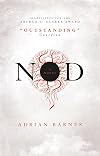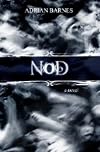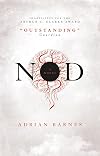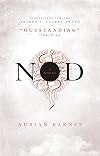
Nod
by Adrian Barnes
On This Page
Description
Dawn breaks over Vancouver and no one in the world has slept the night before, or almost no one. A few people, perhaps one in ten thousand, can still sleep, and theyve all shared the same golden dream.Tags
Recommendations









Member Recommendations
Member Reviews
This novel features an unusual sort of apocalypse: one in which almost everyone entirely loses their ability to sleep and quickly descends into madness, while the few remaining sleepers all experience more or less the same oddly beautiful dream.
There is, I think, room in the world for an extremely realistic take on an insomniac apocalypse, complete with carefully researched medical details. This is not that novel. This one has a slightly surreal feel to it, and no explanations for anything, and is more interested in exploring some half-glimpsed metaphors about language and our relationships to each other and to reality than in giving us a believable post-apocalyptic survival story.
And I enjoyed it, if "enjoyed" is quite the right word show more for this sort of thing. The writing has a fresh, creative, casually inventive feel to it that I really liked. I feel like lately I've been reading a fair number of works that are trying to do something a bit unusual with language and story (or even with apocalyptic narratives) and left me thinking that while I can intellectually appreciate what the author was doing and the artistic energy that went into it, it just didn't quite do it for me as a reader. So it's really nice to have found one, finally, that, for whatever reason, did work this well for me. show less
There is, I think, room in the world for an extremely realistic take on an insomniac apocalypse, complete with carefully researched medical details. This is not that novel. This one has a slightly surreal feel to it, and no explanations for anything, and is more interested in exploring some half-glimpsed metaphors about language and our relationships to each other and to reality than in giving us a believable post-apocalyptic survival story.
And I enjoyed it, if "enjoyed" is quite the right word show more for this sort of thing. The writing has a fresh, creative, casually inventive feel to it that I really liked. I feel like lately I've been reading a fair number of works that are trying to do something a bit unusual with language and story (or even with apocalyptic narratives) and left me thinking that while I can intellectually appreciate what the author was doing and the artistic energy that went into it, it just didn't quite do it for me as a reader. So it's really nice to have found one, finally, that, for whatever reason, did work this well for me. show less
There are a lot -- perhaps too many -- books dealing with dystopias out there these days, but this one's better than most. "Nod" certainly has a fun hook: it forgoes the most obvious triggers for the End of the World (nukes, environmental degradation, alien invasion). Instead, most of humanity perishes because it loses the ability to sleep. The story's told from the point of view of Paul, a Vancouver resident who writes academically inclined books about etymology. The author uses this as a jumping-off point for some fruitful meditations on language and how a complete societal collapse might affect our relationship with it. As the surreal becomes the norm and brutality come commonplace, we see some characters attempt to redefine their show more world at will while others cling gamely to outmoded ways of thinking. We see Paul, who has miraculously retained his ability to sleep and who has spent much of his life delving into archaic words and expressions, attempt to draw on the linguistic past to understand a weird new future. Barnes seems to agree with Samuel Taylor Coleridge's assertion that "Language is the armory of the human mind, and at once contains the trophies of its past and the weapons of its future conquests." In "Nod," we get to see the narrator try to understand the unfamiliar world that he's been thrust into using the linguistic tools available to him. It's a solid thematic premise for an end-of-the-world tale, and generally well-executed.
By now, you've probably figured that "Nod" is the sort of science fiction that often threatens to escape the most restrictive definitions that are applied to this genre and cross the line into literary fiction. What I liked best about it, perhaps, is that it doesn't read like a "serious" author trying to gussy up genre lit: this book is anything but stilted. Barnes's prose is informal, inventive, and playful throughout. The author's a good enough writer that Paul has a genuine voice: "Nod" reads like a good yarn related by your clever best friend. The author makes his most interesting points while making pithy observations and letting you in on his best inside jokes. While it keeps a book that contains scenes of terrible violence and overpowering despair light and readable, this style also seems appropriate to a novel whose fundamental concern is language's power and mutability. Along with its musings on semiotics, it also contains a lovely portrait of Paul's relationship with his long-term girlfriend and potential wife, Tanya, who, having lost her ability to sleep, slowly unravels as sleep deprivation takes its toll on her. "Nod" is also firmly grounded in its setting: Canadians -- especially westerners -- will enjoy the frequent mentions of Vancouver's landmarks and the obvious affection that the author has for the city's natural beauty. For all the blood, gore, and societal decay it features, "Nod" is not, in the end, a depressing book. It's ending is surprisingly optimistic, and might remind some readers of Arthur C. Clarke's "Childhood's End." Recommended to readers, such as myself -- who like to spend time in that increasingly productive grey area between "serious" lit and sci-fi. And to insomniacs, too, I suppose. show less
By now, you've probably figured that "Nod" is the sort of science fiction that often threatens to escape the most restrictive definitions that are applied to this genre and cross the line into literary fiction. What I liked best about it, perhaps, is that it doesn't read like a "serious" author trying to gussy up genre lit: this book is anything but stilted. Barnes's prose is informal, inventive, and playful throughout. The author's a good enough writer that Paul has a genuine voice: "Nod" reads like a good yarn related by your clever best friend. The author makes his most interesting points while making pithy observations and letting you in on his best inside jokes. While it keeps a book that contains scenes of terrible violence and overpowering despair light and readable, this style also seems appropriate to a novel whose fundamental concern is language's power and mutability. Along with its musings on semiotics, it also contains a lovely portrait of Paul's relationship with his long-term girlfriend and potential wife, Tanya, who, having lost her ability to sleep, slowly unravels as sleep deprivation takes its toll on her. "Nod" is also firmly grounded in its setting: Canadians -- especially westerners -- will enjoy the frequent mentions of Vancouver's landmarks and the obvious affection that the author has for the city's natural beauty. For all the blood, gore, and societal decay it features, "Nod" is not, in the end, a depressing book. It's ending is surprisingly optimistic, and might remind some readers of Arthur C. Clarke's "Childhood's End." Recommended to readers, such as myself -- who like to spend time in that increasingly productive grey area between "serious" lit and sci-fi. And to insomniacs, too, I suppose. show less
We’ve just had a somewhat controversial Clarke Award – but then, when hasn’t the Clarke been somewhat controversial? It was back in 2013, when Nod was shortlisted. From what I remember, Nod was seen as a quite baffling choice; although the same could also be said for The Dog Stars, also shortlisted that year, and which I read a year or two ago and thought not very good at all. Whereas Nod… Nod is one of those books written with a strong, idiosyncratic voice – not idiosyncratic like Riddley Walker or Engine Summer – but the first person narrator is chatty and irreverent and likes to pepper his story with witticisms and snide remarks and it’s really fucking annoying. The central premise is nicely done – suddenly no one can show more sleep, except for a handful – and the breakdown of civilisation as sleep deprivation psychosis kicks in, as seen in the narrator’s home town of Vancouver, is well-handled… But the way the book is written, the prose style, is like fingernails on a blackboard for me. I hated it. It was a test of endurance to read it. This is one of those books which illustrates the difference between “this book is good” and “I enjoyed this book”. I hated it, didn’t enjoy it at all, but could see it was put together with skill. My response to it is entirely personal; the book’s quality is intrinsic to it. The two should not be confused. show less
Sure, it sucks when you can’t sleep. You're tossing and turning in bed all night long. Your eyes look like they're held open with toothpicks; your mind replays the day in a neverending loop; you feel worn down like a car tire that’s never been changed. But no matter how tired you are, you're unable to sleep. We’ve all had nights like that.
As awful as a night without sleep makes you feel the next morning, imagine what life would be like if you could never sleep again. If the night before was the last time you ever slipped into unconsciousness. If your mind and body never again got its eight—or even four or three or any—hours of necessary rejuvenation. Imagine that it’s not that you don’t need sleep—you do need sleep, you show more desperately do—and you long for sleep more than you’ve ever wanted anything in your life. The problem is that you can’t ever sleep again.
Now imagine that the entire world is afflicted with the same sickness, incurable, and endless—or for as long as you can live without sleep. Which isn’t long. It’s about thirty days before you brain and body shut down. And before your thirty day expiration date arrives,madness is your certain fate.
That’s the premise of Adrian Barnes’ debut novel Nod: A world in which suddenly nobody sleeps anymore. Or almost nobody: One out of about every 10,000 people still sleep.
Nod takes place in Vancouver, Canada and follows the lives of Tanya and her husband Paul, an etymologist and writer, who is one of the rare Sleepers. Paul is the novel’s narrator. Early on in Nod, Tanya, an Awaker, desperate for sleep as anyone would be after several days of watching the moon make its slow crawl across the sky, demands sex from Paul, because she hopes that will get her to sleep. Tanya and Paul’s touching is coarse, brutal, and primitive, setting the stage for the rest of the novel.
In Barnes’ world, some children can sleep. As the Awakers’ psychosis grows, the Awakers come to believe that drinking the blood of these children will cure their terminal insomnia. The Awakers, banded together in savage, hierarchical packs, hunt the children.
Can the Sleepers protect these children? How can the Sleepers even protect themselves from desperate Awakers while they sleep? Will the Sleepers be able to ride out these terrifying four weeks until the Awakers, rapidly devolving into their Neanderthal progenitors, finally die?
Violent, frightening, textured, and dystopian are words that aptly describe the short-lived world that Barnes has created. Barnes’ writing is beautiful, but sometimes a little too good; the descriptions, both compelling and creepy, occasionally subtract from the story he’s trying to tell:
What else do I see? Packs of dogs, heads hovering low, roam the periphery of things. The long-standing human-canine alliance has been irretrievably severed, I’m sincerely sorry to report—the gnawed bones and matted chunks of hair scattered along the shores of Lost Lagoon testify to this. It’s sad, but then again those plump collies and German shepherds don’t seem too weighed down by nostalgia for bone-shaped vegan treats and belly rubs from the opposably-thumbed as they wander about, licking their chops.
Nod is a must for every insomniac because it shows you that no matter how bad your night of no sleep is, things could be a lot worse. The usual warnings about not reading a scary novel in bed when you want to sleep don’t apply here. Nod is best enjoyed in the place that you want to sleep because you will eventually fall asleep—unlike the doomed souls in Adrian Barnes' novel. show less
As awful as a night without sleep makes you feel the next morning, imagine what life would be like if you could never sleep again. If the night before was the last time you ever slipped into unconsciousness. If your mind and body never again got its eight—or even four or three or any—hours of necessary rejuvenation. Imagine that it’s not that you don’t need sleep—you do need sleep, you show more desperately do—and you long for sleep more than you’ve ever wanted anything in your life. The problem is that you can’t ever sleep again.
Now imagine that the entire world is afflicted with the same sickness, incurable, and endless—or for as long as you can live without sleep. Which isn’t long. It’s about thirty days before you brain and body shut down. And before your thirty day expiration date arrives,madness is your certain fate.
That’s the premise of Adrian Barnes’ debut novel Nod: A world in which suddenly nobody sleeps anymore. Or almost nobody: One out of about every 10,000 people still sleep.
Nod takes place in Vancouver, Canada and follows the lives of Tanya and her husband Paul, an etymologist and writer, who is one of the rare Sleepers. Paul is the novel’s narrator. Early on in Nod, Tanya, an Awaker, desperate for sleep as anyone would be after several days of watching the moon make its slow crawl across the sky, demands sex from Paul, because she hopes that will get her to sleep. Tanya and Paul’s touching is coarse, brutal, and primitive, setting the stage for the rest of the novel.
In Barnes’ world, some children can sleep. As the Awakers’ psychosis grows, the Awakers come to believe that drinking the blood of these children will cure their terminal insomnia. The Awakers, banded together in savage, hierarchical packs, hunt the children.
Can the Sleepers protect these children? How can the Sleepers even protect themselves from desperate Awakers while they sleep? Will the Sleepers be able to ride out these terrifying four weeks until the Awakers, rapidly devolving into their Neanderthal progenitors, finally die?
Violent, frightening, textured, and dystopian are words that aptly describe the short-lived world that Barnes has created. Barnes’ writing is beautiful, but sometimes a little too good; the descriptions, both compelling and creepy, occasionally subtract from the story he’s trying to tell:
What else do I see? Packs of dogs, heads hovering low, roam the periphery of things. The long-standing human-canine alliance has been irretrievably severed, I’m sincerely sorry to report—the gnawed bones and matted chunks of hair scattered along the shores of Lost Lagoon testify to this. It’s sad, but then again those plump collies and German shepherds don’t seem too weighed down by nostalgia for bone-shaped vegan treats and belly rubs from the opposably-thumbed as they wander about, licking their chops.
Nod is a must for every insomniac because it shows you that no matter how bad your night of no sleep is, things could be a lot worse. The usual warnings about not reading a scary novel in bed when you want to sleep don’t apply here. Nod is best enjoyed in the place that you want to sleep because you will eventually fall asleep—unlike the doomed souls in Adrian Barnes' novel. show less
This was a book I stumbled upon in the bookstore one day. I find myself starting in the Sci-Fi section more and more lately. I don't know, something about considering all the weird things that could happen in the "not-too-distant-future" is particularly intriguing to me lately. So what's this one about... It's set in the essential "now." Suddenly, one morning, it turns out almost no-one slept the night before. Only something like 1 in 10,000 people actually got any sleep. Worldwide. The book is told from the perspective of one of the "Sleepers" (as opposed to those who consider themselves the "Awakened") in a sort of journal-diary format. While it starts on Day 18, it then goes back to the beginning and progresses day by day. It's a show more shortish novel, only about 250 pages, and has a good pace, not dwelling on things (including any science, e.g.) for too long.
This is the synopsis from Goodreads: "Dawn breaks over Vancouver and no one in the world has slept the night before, or almost no one. A few people, perhaps one in ten thousand, can still sleep, and they’ve all shared the same golden dream. After six days of absolute sleep deprivation, psychosis will set in. After four weeks, the body will die. In the interim, panic ensues and a bizarre new world arises in which those previously on the fringes of society take the lead. Paul, a writer, continues to sleep while his partner Tanya disintegrates before his eyes, and the new world swallows the old one whole."
Framing the story itself are a series of uncommon or out-of-usage phrases or words that color and assist with the development of the story itself. I was impressed by Barnes' ability to really give us a sense of the actual character of the people populating his book as we watch everything disintegrate - people, personalities, relationships, society, etc. I was pulled along through the story, trying to figure out where it would all go, while fascinated at the various declines and how they played out. I LOVED how Barnes considered various aspects of psychological and physical decline and did not just go with one or the most obvious one. And I was very intrigued by the children .. I'm still not sure if I understand that whole line. Do I? ...
You know, the more I think about this one, the more I am impressed with it. The more I liked it. The more I'm thinking... I may just go back and read it again. Maybe someday soon.
There are a couple of R'ish-rated scenes.. a little more graphic than I was really expecting.. but they are relatively brief and not particularly gratuitous. Although it felt very "raw" while reading it, in retrospect, I think they made perfect sense as part of a sort of anthropological study of the deterioration of the human mind on no sleep.
... All in all, a very strong FOUR of five stars. I might have liked to know a little more about the children. But otherwise, a really impressive study in the form of a very interesting story. :)
Recommended if this is at all intriguing to you. show less
This is the synopsis from Goodreads: "Dawn breaks over Vancouver and no one in the world has slept the night before, or almost no one. A few people, perhaps one in ten thousand, can still sleep, and they’ve all shared the same golden dream. After six days of absolute sleep deprivation, psychosis will set in. After four weeks, the body will die. In the interim, panic ensues and a bizarre new world arises in which those previously on the fringes of society take the lead. Paul, a writer, continues to sleep while his partner Tanya disintegrates before his eyes, and the new world swallows the old one whole."
Framing the story itself are a series of uncommon or out-of-usage phrases or words that color and assist with the development of the story itself. I was impressed by Barnes' ability to really give us a sense of the actual character of the people populating his book as we watch everything disintegrate - people, personalities, relationships, society, etc. I was pulled along through the story, trying to figure out where it would all go, while fascinated at the various declines and how they played out. I LOVED how Barnes considered various aspects of psychological and physical decline and did not just go with one or the most obvious one. And I was very intrigued by the children .. I'm still not sure if I understand that whole line. Do I? ...
You know, the more I think about this one, the more I am impressed with it. The more I liked it. The more I'm thinking... I may just go back and read it again. Maybe someday soon.
There are a couple of R'ish-rated scenes.. a little more graphic than I was really expecting.. but they are relatively brief and not particularly gratuitous. Although it felt very "raw" while reading it, in retrospect, I think they made perfect sense as part of a sort of anthropological study of the deterioration of the human mind on no sleep.
... All in all, a very strong FOUR of five stars. I might have liked to know a little more about the children. But otherwise, a really impressive study in the form of a very interesting story. :)
Recommended if this is at all intriguing to you. show less
Sleep. We do everything we can to avoid it when we’re young, and embrace it willingly when we’re older. But what if some of us could never sleep again? Adrian Barnes attempts to answer this question in his debut novel from Bluemoose Books, Nod.
Nod tells us the story of Paul, a linguist who is writing a book on lost words called Nod, his live-in love Tanya, and Charlie, a mostly harmless local nut who looks upon Paul as something of a friend, even if the feeling is not exactly reciprocated. One night after running into Charles at a local eatery in the West End of Vancouver, Paul wakes to find Tanya cranky and restless – she’s been unable to get a wink of sleep all night. It turns out that she isn’t the only one, and soon people show more begin differentiating the “Sleepers” from the “Awakened”. At first, people take it all with a certain air of optimism – after all, if some people are still sleeping, there must be a solution. And it seems as though children are having none of the sleepless nights their elders are suffering from whatsoever. But that optimism soon peters out as people enter the early stages of psychosis, and the people who are able to sleep become not only rare, but endangered.
The novel is set in and around Vancouver’s West End and Stanley Park, a true urban jewel of old-growth Northwest rain forest a proverbial stone’s throw from the city. Barnes plays with real locations, old mythology, and long-forgotten words to weave a world that dips in and out of reality, using a voice that at times plays with the reader’s sensibilities, reading more like a poetic tripping of the light fantastic rather than a straight narrative piece of fiction. This reminds me somewhat of Neil Gaiman’s ability to come across as an old friend in his prose, and also of some of Clive Barker’s best fantasy (Imajica and Weaveworld). On a classical note, Barnes’s wordplay also reminds me of some of D.H. Lawrence’s shorter works, such as “The Fox”; much like Lawrence, this novel is less interested in where the characters are going than in how they get there.
While this kind of narrative goal can be frustrating (I was particularly disappointed that we are never given the keys to the “golden dream” dreamed by the sleepers – a tantalizing hint of some meaning behind the chaos that never quite materializes), there is, for me, more than enough going on to keep my interest, and it is deftly enough written that I will be looking forward to more of Barnes’s work in the future. Overall, a very strong first outing from a fresh voice – here’s hoping that Barnes continues with more of the same.
Steve’s Grade: A-
I found it somewhat ironic that Nod had no problem keeping me up late at night. Well worth a look for fans of post-apocalyptic or dystopian flavors of science fiction. show less
Nod tells us the story of Paul, a linguist who is writing a book on lost words called Nod, his live-in love Tanya, and Charlie, a mostly harmless local nut who looks upon Paul as something of a friend, even if the feeling is not exactly reciprocated. One night after running into Charles at a local eatery in the West End of Vancouver, Paul wakes to find Tanya cranky and restless – she’s been unable to get a wink of sleep all night. It turns out that she isn’t the only one, and soon people show more begin differentiating the “Sleepers” from the “Awakened”. At first, people take it all with a certain air of optimism – after all, if some people are still sleeping, there must be a solution. And it seems as though children are having none of the sleepless nights their elders are suffering from whatsoever. But that optimism soon peters out as people enter the early stages of psychosis, and the people who are able to sleep become not only rare, but endangered.
The novel is set in and around Vancouver’s West End and Stanley Park, a true urban jewel of old-growth Northwest rain forest a proverbial stone’s throw from the city. Barnes plays with real locations, old mythology, and long-forgotten words to weave a world that dips in and out of reality, using a voice that at times plays with the reader’s sensibilities, reading more like a poetic tripping of the light fantastic rather than a straight narrative piece of fiction. This reminds me somewhat of Neil Gaiman’s ability to come across as an old friend in his prose, and also of some of Clive Barker’s best fantasy (Imajica and Weaveworld). On a classical note, Barnes’s wordplay also reminds me of some of D.H. Lawrence’s shorter works, such as “The Fox”; much like Lawrence, this novel is less interested in where the characters are going than in how they get there.
While this kind of narrative goal can be frustrating (I was particularly disappointed that we are never given the keys to the “golden dream” dreamed by the sleepers – a tantalizing hint of some meaning behind the chaos that never quite materializes), there is, for me, more than enough going on to keep my interest, and it is deftly enough written that I will be looking forward to more of Barnes’s work in the future. Overall, a very strong first outing from a fresh voice – here’s hoping that Barnes continues with more of the same.
Steve’s Grade: A-
I found it somewhat ironic that Nod had no problem keeping me up late at night. Well worth a look for fans of post-apocalyptic or dystopian flavors of science fiction. show less
I'm finding it hard to decide whether to give this book three or four stars. In favour of four: it has a simple yet elegant concept, is genuinely unsettling (especially if, like me, you sometimes have those nights of insomnia when you completely forget how to sleep), and is well-paced. In favour of three: Paul the narrator is a real jerk and got on my nerves, I was hoping for more of a denouement, and the treatment of the female characters does not sit at all well with me. The writing is pretty good, although it suffers by comparison to 'Blindness' by Jose Saramago, a similarly apocalyptic novel it reminded me of somewhat. I liked some of the terms used, especially 'Blemmye'.
The main conceit of this book is that nearly everyone in the show more world stops being able to sleep. This is a stroke of brilliance, as it's hard to imagine a faster or more thorough way to destroy human civilisation. After a few days, the sleepless lapse into madness. After a couple of weeks, their bodies shut down. I think 'Nod' evokes this scenario very effectively in an urban context. Funnily enough, although my first point of comparison for it was 'Blindness', 'Nod' actually reminds me more of the film adaptation than the book. The film 'Perfect Sense' also comes to mind. Potentially because I am more used to apocalyptic films having male protagonists who I find somewhat irritating and unsympathetic. Paul the narrator bothers me because he seemed so heartless. He never cries about any of the appalling tragedies taking place around him. He never feels despair, indeed he scarcely seems to feel anything, but instead observes events from a detached viewpoint and monologues about them. His attempts to save the children who could still sleep don't seem to derive from any specific emotional rationale. Potentially the implication is that his detachment saves him from the sleeplessness, but it isn't made clear. I would have liked to understand his motivations better.
On the other hand, I'm very glad I read 'Nod' because it is genuinely creepy, which is by no means easy to achieve. A piece of advice: do NOT start reading this if you're feeling somewhat stressed and are shortly going to try and fall sleep. It really won't help. In parts, the narrative really does feel like a nightmare, or at least a peculiar dream. It's a great apocalyptic vision and would probably make a compelling film. Despite this I'm going to have to give it three stars, because Tanya deserved better. show less
The main conceit of this book is that nearly everyone in the show more world stops being able to sleep. This is a stroke of brilliance, as it's hard to imagine a faster or more thorough way to destroy human civilisation. After a few days, the sleepless lapse into madness. After a couple of weeks, their bodies shut down. I think 'Nod' evokes this scenario very effectively in an urban context. Funnily enough, although my first point of comparison for it was 'Blindness', 'Nod' actually reminds me more of the film adaptation than the book. The film 'Perfect Sense' also comes to mind. Potentially because I am more used to apocalyptic films having male protagonists who I find somewhat irritating and unsympathetic. Paul the narrator bothers me because he seemed so heartless. He never cries about any of the appalling tragedies taking place around him. He never feels despair, indeed he scarcely seems to feel anything, but instead observes events from a detached viewpoint and monologues about them. His attempts to save the children who could still sleep don't seem to derive from any specific emotional rationale. Potentially the implication is that his detachment saves him from the sleeplessness, but it isn't made clear. I would have liked to understand his motivations better.
On the other hand, I'm very glad I read 'Nod' because it is genuinely creepy, which is by no means easy to achieve. A piece of advice: do NOT start reading this if you're feeling somewhat stressed and are shortly going to try and fall sleep. It really won't help. In parts, the narrative really does feel like a nightmare, or at least a peculiar dream. It's a great apocalyptic vision and would probably make a compelling film. Despite this I'm going to have to give it three stars, because Tanya deserved better. show less
Members
- Recently Added By
Lists

Recommended Apocalyptic Novels
53 works; 24 members

It's the end of the world as we know it!
90 works; 23 members

Arthur C. Clarke Award Winners and Shortlisted Books
219 works; 14 members

2010s
241 works; 3 members

Sleeplessness
16 works; 3 members

Books Read in 2017
4,249 works; 130 members

Singleton Science Fiction
10 works; 3 members
Author Information

2+ Works 594 Members
Some Editions
Awards and Honors
Awards
Common Knowledge
- Original title
- Nod
- Original publication date
- 2012
- People/Characters
- Paul; Tanya; Charles; Zoe
- Important places
- Vancouver, British Columbia, Canada; Stanley Park, Vancouver, British Columbia, Canada
- Epigraph
- And Cain went out from the face of the Lorde and dwelt in the lande of Nod on the east syde of Eden. - Genesis
Adam and his race are a dream of mortal mind, because Cain went to live in the Land of Nod, the land of dreams and illusions. - Mark Baker Eddy, Science and Health
Wynken and Blynken are two little eyes,
And Nod is a little head,
And the wooden shoe that sailed the skies
Is a wee one's trundle bed;
So shut your eyes while Mother sings
Of wonderful sights that be,
And y... (show all)ou shall see the beautiful things
As you rock on the misty sea
- Eugene Field
The object of words is to conceal thoughts. - Brewer, The Dictionary of Phrase and Fable (1894) - Dedication
- For Ethan and Liam
- First words
- It's getting harder and harder to tell the living from the dead.
- Last words
- (Click to show. Warning: May contain spoilers.)...and the smell of limes and
- Original language
- English Canada
Classifications
Statistics
- Members
- 592
- Popularity
- 49,631
- Reviews
- 18
- Rating
- (3.38)
- Languages
- English, Turkish
- Media
- Paper, Audiobook, Ebook
- ISBNs
- 8
- ASINs
- 7