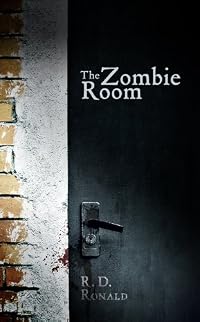
The Zombie Room. R.D. Ronald
by R. D. Ronald 
On This Page
Description
An unlikely bond is forged between three men from very different backgrounds when they serve time together in prison. A series of wrong turns and disastrous life choices has led to their incarceration.Tags
Recommendations












Member Reviews
I finished The Zombie Room with my jaw a bit tight and my shoulders up near my ears. It is not a pretty book, and that is the point. Three men who met in prison stumble back into the world with more loyalty than prospects. Mangle, Decker, and Tazeem decide to work a scam because the straight road is closed to them, and then the floor opens beneath their feet. What they find is not an entertaining puzzle. It is a machine built to grind people down. I kept thinking about the title, how it sounds pulpy at first, and then you realize it is about taking names and faces away until all that remains is obedience. That is a hard idea to sit with.
The friendship is the anchor. I liked how quiet it can be. No speeches about brotherhood, no big show more dramatic hugs. Just the small, stubborn ways people show up for each other when they have almost nothing left. The book lets them be flawed without turning them into jokes. Mangle can be reckless. Decker feels like someone who has been disappointed one time too many and is bracing for the next. Tazeem carries himself like a man who knows there are lines he will not cross, even if the world laughs at him for drawing them. I found myself rooting for them even when I wanted to knock their heads together and tell them to pick another door.
Then there is Tatiana. The synopsis calls out her story, and the novel treats it with the blunt force it deserves. She leaves home for a better life and is taken by people who have no interest in her life at all, only her use. There are scenes that feel like standing in a room with the air turned off. The writing is not showy. It does not need to be. The repeated, ordinary details are the ones that hit the hardest. A phone. A hallway. A door that should open and does not. I am still a little mad about it, which is probably the right reaction.
The pacing is surprisingly nimble for a book this grim. Chapters snap forward, and even when you know a bad decision is coming, you keep turning pages because maybe this time the coin flips the other way. I appreciated how the story resists the neatness that thrillers sometimes fall into. Justice here is not a clean word. Revenge does not feel like a cure. The trio’s search, pushed along by the disappearance of someone they love and the murder of a friend, is full of the knock-on effects that happen in real life. You push one wall and a different one falls. I kind of loved the mess of it. It felt honest.
There is a moment late on that made me pause. I am still not sure how I feel about one turn of the plot. It lands, but just barely, like a glass you set on the edge of a table and walk away from while pretending you meant to do that. I believed the emotion even when the path to it felt tight. And yet the last stretch works. The book earns the ache in your chest. If you are the kind of reader who needs a happy bow, this will frustrate you. If you want a story to look you in the eye and refuse to blink, it delivers.
The violence is not decorative. That mattered to me. The subject is sex trafficking, and there is no way to discuss that without running the risk of exploitation on the page. This story, for the most part, keeps the camera where it should be, on the people who are trapped and the systems that profit. I will admit I had to stop once, stand up, and walk around my apartment the way you walk away from a pot that keeps boiling over. That is not a complaint. It is a measure of how much the author keeps the human cost in front of you.
A few quibbles. I wanted a stronger sense of place at times. The scenery can blur, which might be intentional, the sense that this could be anywhere money and power decide to feast. Still, a sharper backdrop might have made the contrast even more striking when the story swings from grimy back rooms to the polished fronts where clients shake hands. Also, a secondary character I grew attached to gets moved off the board quickly. Maybe that is the point. People vanish in this world. It still stung.
What I keep circling back to is the feeling of found family under impossible pressure. The trust. The way small kindnesses become acts of defiance. There is a scene where the three men choose to lean in rather than run, and I found myself whispering please under my breath like a nervous sports fan. That is when I knew the book had me. It made me care about whether these people got out, even though a part of me suspected the house was already on fire.
I am calling this four and 3/4 stars, but rounded to 5. Gripping, bruising, and unexpectedly tender in the spaces where loyalty lives. I would hand it to a friend who likes their crime fiction with bones and a heartbeat and say, text me when you reach the last third. I will be awake. show less
The friendship is the anchor. I liked how quiet it can be. No speeches about brotherhood, no big show more dramatic hugs. Just the small, stubborn ways people show up for each other when they have almost nothing left. The book lets them be flawed without turning them into jokes. Mangle can be reckless. Decker feels like someone who has been disappointed one time too many and is bracing for the next. Tazeem carries himself like a man who knows there are lines he will not cross, even if the world laughs at him for drawing them. I found myself rooting for them even when I wanted to knock their heads together and tell them to pick another door.
Then there is Tatiana. The synopsis calls out her story, and the novel treats it with the blunt force it deserves. She leaves home for a better life and is taken by people who have no interest in her life at all, only her use. There are scenes that feel like standing in a room with the air turned off. The writing is not showy. It does not need to be. The repeated, ordinary details are the ones that hit the hardest. A phone. A hallway. A door that should open and does not. I am still a little mad about it, which is probably the right reaction.
The pacing is surprisingly nimble for a book this grim. Chapters snap forward, and even when you know a bad decision is coming, you keep turning pages because maybe this time the coin flips the other way. I appreciated how the story resists the neatness that thrillers sometimes fall into. Justice here is not a clean word. Revenge does not feel like a cure. The trio’s search, pushed along by the disappearance of someone they love and the murder of a friend, is full of the knock-on effects that happen in real life. You push one wall and a different one falls. I kind of loved the mess of it. It felt honest.
There is a moment late on that made me pause. I am still not sure how I feel about one turn of the plot. It lands, but just barely, like a glass you set on the edge of a table and walk away from while pretending you meant to do that. I believed the emotion even when the path to it felt tight. And yet the last stretch works. The book earns the ache in your chest. If you are the kind of reader who needs a happy bow, this will frustrate you. If you want a story to look you in the eye and refuse to blink, it delivers.
The violence is not decorative. That mattered to me. The subject is sex trafficking, and there is no way to discuss that without running the risk of exploitation on the page. This story, for the most part, keeps the camera where it should be, on the people who are trapped and the systems that profit. I will admit I had to stop once, stand up, and walk around my apartment the way you walk away from a pot that keeps boiling over. That is not a complaint. It is a measure of how much the author keeps the human cost in front of you.
A few quibbles. I wanted a stronger sense of place at times. The scenery can blur, which might be intentional, the sense that this could be anywhere money and power decide to feast. Still, a sharper backdrop might have made the contrast even more striking when the story swings from grimy back rooms to the polished fronts where clients shake hands. Also, a secondary character I grew attached to gets moved off the board quickly. Maybe that is the point. People vanish in this world. It still stung.
What I keep circling back to is the feeling of found family under impossible pressure. The trust. The way small kindnesses become acts of defiance. There is a scene where the three men choose to lean in rather than run, and I found myself whispering please under my breath like a nervous sports fan. That is when I knew the book had me. It made me care about whether these people got out, even though a part of me suspected the house was already on fire.
I am calling this four and 3/4 stars, but rounded to 5. Gripping, bruising, and unexpectedly tender in the spaces where loyalty lives. I would hand it to a friend who likes their crime fiction with bones and a heartbeat and say, text me when you reach the last third. I will be awake. show less
Okay. So this book came at me sideways. I went in thinking I’d get your standard post-prison crime drama, a few shady deals, a bit of betrayal maybe — but what I got was something grittier, darker, and way more emotionally charged than I was ready for. The Zombie Room doesn’t ask for your trust. It just grabs your wrist and pulls you through it.
Mangle, Decker, and Tazeem don’t feel like plot devices. They feel like guys you might pass in a bar and instinctively avoid, but maybe—if you looked twice—you’d see the cracks. The humanity. The regret. I don’t know how R.D. Ronald did it, but these men, flawed and sometimes morally awful as they are, still had me rooting for them. Or at least hoping they’d figure out how to show more crawl out of the mess they were so clearly in.
And the mess? It’s not small-time. What starts out as a slick little con spirals into this grim, tangled web of human trafficking and institutional rot. It’s bleak. But not gratuitously so. There’s a difference between being dark for shock value and being dark because the world you’re writing about demands it. This book knows the difference.
And then there’s Tatiana. God. Her chapters hit me in the gut. She’s brought to the UK chasing a better future and instead finds herself shoved into a nightmare she can’t even name at first. Some of the scenes involving her were hard to read — not because they were graphic (though some were intense), but because they felt so... real. You could feel the manipulation, the quiet erasure of her personhood, and how fast she goes from hopeful to hollow. Her presence in the story doesn’t just raise the stakes — it reorients the whole thing. Suddenly this isn’t just a story about three criminals trying to stay alive. It becomes something more raw, almost personal. Like justice, if it can even be called that, isn’t just a goal — it’s the only thing left that might matter.
The tension builds in this tight, relentless way. No filler. No unnecessary monologues. And when violence happens — and it does — it doesn’t feel like an action movie. It feels like the result of desperation, fear, rage. I actually found myself flinching a couple times, not because it was overly described, but because I felt like I knew the characters well enough to be scared for them.
If I had one gripe (and this is small), it's that the pacing in a couple chapters felt a bit compressed — like events were stacking too quickly, leaving me breathless in a slightly disorienting way. But even that kind of worked, considering how chaotic everything becomes for the characters.
This isn’t an easy read, but it’s worth every second. It doesn’t hand you comfort or clarity. What it gives you is something jagged, honest, and weirdly hopeful — not in the happy-ending way, but in the "maybe people can still make different choices" kind of way.
Would I recommend it? Yeah. Just... not if you're looking for something fluffy. This one bruises. But I’m glad I let it. show less
Mangle, Decker, and Tazeem don’t feel like plot devices. They feel like guys you might pass in a bar and instinctively avoid, but maybe—if you looked twice—you’d see the cracks. The humanity. The regret. I don’t know how R.D. Ronald did it, but these men, flawed and sometimes morally awful as they are, still had me rooting for them. Or at least hoping they’d figure out how to show more crawl out of the mess they were so clearly in.
And the mess? It’s not small-time. What starts out as a slick little con spirals into this grim, tangled web of human trafficking and institutional rot. It’s bleak. But not gratuitously so. There’s a difference between being dark for shock value and being dark because the world you’re writing about demands it. This book knows the difference.
And then there’s Tatiana. God. Her chapters hit me in the gut. She’s brought to the UK chasing a better future and instead finds herself shoved into a nightmare she can’t even name at first. Some of the scenes involving her were hard to read — not because they were graphic (though some were intense), but because they felt so... real. You could feel the manipulation, the quiet erasure of her personhood, and how fast she goes from hopeful to hollow. Her presence in the story doesn’t just raise the stakes — it reorients the whole thing. Suddenly this isn’t just a story about three criminals trying to stay alive. It becomes something more raw, almost personal. Like justice, if it can even be called that, isn’t just a goal — it’s the only thing left that might matter.
The tension builds in this tight, relentless way. No filler. No unnecessary monologues. And when violence happens — and it does — it doesn’t feel like an action movie. It feels like the result of desperation, fear, rage. I actually found myself flinching a couple times, not because it was overly described, but because I felt like I knew the characters well enough to be scared for them.
If I had one gripe (and this is small), it's that the pacing in a couple chapters felt a bit compressed — like events were stacking too quickly, leaving me breathless in a slightly disorienting way. But even that kind of worked, considering how chaotic everything becomes for the characters.
This isn’t an easy read, but it’s worth every second. It doesn’t hand you comfort or clarity. What it gives you is something jagged, honest, and weirdly hopeful — not in the happy-ending way, but in the "maybe people can still make different choices" kind of way.
Would I recommend it? Yeah. Just... not if you're looking for something fluffy. This one bruises. But I’m glad I let it. show less
There’s a moment halfway through The Zombie Room that made my stomach drop. Not because of gore, though there’s enough of that. Not even because of what was happening, technically, but because of what it meant. That feeling — of dread layered with helplessness — is something this book does very well. Maybe too well.
Mangle, Decker, Tazeem. You think you know what kind of guys these are when you meet them — ex-cons, broken systems, bad choices, all that. But then something happens. You start rooting for them. Not because they’re suddenly good men, but because they’re trying to find something worth holding onto in a world that seems to reward cruelty and nothing else. I didn’t expect to care. I cared.
This isn’t a quiet show more book. The stakes are high. People get hurt. A girl disappears. A friend is killed. There’s human trafficking, sexual violence, and the kind of evil that doesn’t bother hiding its face. But it never feels gratuitous. It feels… angry. The kind of anger that comes from knowing what happens in this book happens outside of it, too.
Tatiana. God. Her story broke me in small, slow cracks. She’s trying to survive something no one should ever have to survive. And while some scenes are hard to read, they never felt exploitative. They felt honest in a way that left me rattled. Her voice matters in this story, even when the system tries to erase it.
It’s not perfect. Some transitions felt abrupt. I got lost in the timeline once or twice. But it didn’t matter. The emotional current kept pulling me forward. There’s something brutal but strangely tender about the way these characters try — and fail, and try again — to do what’s right.
The title makes sense by the end. The “zombie room” isn’t just a place. It’s a metaphor for the numbness that comes from surviving in a world like this. Where money and power protect the worst people. Where justice is rare and messy and often violent. Where being human is a risk.
I didn’t expect to like this book. I did more than like it. I came out of it scraped raw and strangely hopeful. Not because the story is kind — it’s not — but because it remembers that broken people can still choose to fight.
And sometimes, they do. show less
Mangle, Decker, Tazeem. You think you know what kind of guys these are when you meet them — ex-cons, broken systems, bad choices, all that. But then something happens. You start rooting for them. Not because they’re suddenly good men, but because they’re trying to find something worth holding onto in a world that seems to reward cruelty and nothing else. I didn’t expect to care. I cared.
This isn’t a quiet show more book. The stakes are high. People get hurt. A girl disappears. A friend is killed. There’s human trafficking, sexual violence, and the kind of evil that doesn’t bother hiding its face. But it never feels gratuitous. It feels… angry. The kind of anger that comes from knowing what happens in this book happens outside of it, too.
Tatiana. God. Her story broke me in small, slow cracks. She’s trying to survive something no one should ever have to survive. And while some scenes are hard to read, they never felt exploitative. They felt honest in a way that left me rattled. Her voice matters in this story, even when the system tries to erase it.
It’s not perfect. Some transitions felt abrupt. I got lost in the timeline once or twice. But it didn’t matter. The emotional current kept pulling me forward. There’s something brutal but strangely tender about the way these characters try — and fail, and try again — to do what’s right.
The title makes sense by the end. The “zombie room” isn’t just a place. It’s a metaphor for the numbness that comes from surviving in a world like this. Where money and power protect the worst people. Where justice is rare and messy and often violent. Where being human is a risk.
I didn’t expect to like this book. I did more than like it. I came out of it scraped raw and strangely hopeful. Not because the story is kind — it’s not — but because it remembers that broken people can still choose to fight.
And sometimes, they do. show less
The Zombie Room grabbed me by the collar on page one and did not loosen its grip. Three men meet in prison, of all places, and the strange thing is how quickly I cared. Mangle is a bruiser with a soft spot he refuses to name. Decker is the kid trying to act older than his fear. Tazeem is the planner who smiles like he knows the next three moves. They get out, swear they’ll be smarter, then slide back toward small scams the way a shopping cart veers to the left even when you think you’re steering straight. I kept muttering no, no, don’t do that and then turning the page anyway.
The first half is grime and friendship. It has that late night city feel: humming streetlights, corners that know your secrets, a cheap meal shared because show more loyalty tastes better than money. The scheme they cook up is so mundane it’s weirdly believable. Cut a building’s power, juice the bill, reconnect, skim. Petty crime with a spreadsheet. It works until it doesn’t, which is exactly when the book sharpens. One wrong door. One face from the past. The floor drops out and we are looking straight at a trafficking network that makes your stomach go cold.
Tatiana is the anchor I was not expecting. She is not a symbol. She is a person. Deaf, stubborn, and alive in a story that wants to flatten women into plot devices. There’s a detail about how the ring keeps women dull with a mix of drugs and conditioning, an “audiology” setup that won’t work on her, and that small crack in the machine becomes a way in. The trio decide to follow that crack. They are not saints. They want to do one decent thing and not die doing it. That thin line felt honest to me.
A lot of crime fiction pretends it isn’t angry. This one is angry and still finds room for tenderness. Mangle watches out for people and pretends he isn’t. Decker jokes when he is scared and sometimes it helps. Tazeem circles an old rival who might be pulling strings in a club that feels like a trap dressed as velvet. Garden Heights is the city name and it made me laugh darkly because nothing grows here unless it has thorns. The corruption angle lands too. Who do you even go to when the people you should go to might be in on it. That anxiety hums through whole chapters.
The violence is rough but not gory for shock value. A couple lines go purple, sure, but the pace forgives a lot. I liked the buzzy, takedown energy of the last stretch. It is not neat. There is a reveal that made me swear out loud, then nod because the breadcrumbs were there. I’m still not sure how I feel about one choice near the end, yet the final beat lands with that hard, satisfying thud that says the story kept its promise.
Tiny gripes. The timeline wobbles once or twice and I had to reread a page to be sure how much time had passed. Villains sometimes feel like masks instead of faces. But the book’s heart is not in the villains. It is in the friendship and the decision to walk into a nightmare for someone you do not owe. I ate that up.
So yes, solid four to five star zone. Call it four and a half, nudging higher because I am still thinking about Mangle, Decker, and Tazeem, and the way a single good act can remake a life even when nobody gets a parade. Worth your time. Worth the lost sleep. show less
The first half is grime and friendship. It has that late night city feel: humming streetlights, corners that know your secrets, a cheap meal shared because show more loyalty tastes better than money. The scheme they cook up is so mundane it’s weirdly believable. Cut a building’s power, juice the bill, reconnect, skim. Petty crime with a spreadsheet. It works until it doesn’t, which is exactly when the book sharpens. One wrong door. One face from the past. The floor drops out and we are looking straight at a trafficking network that makes your stomach go cold.
Tatiana is the anchor I was not expecting. She is not a symbol. She is a person. Deaf, stubborn, and alive in a story that wants to flatten women into plot devices. There’s a detail about how the ring keeps women dull with a mix of drugs and conditioning, an “audiology” setup that won’t work on her, and that small crack in the machine becomes a way in. The trio decide to follow that crack. They are not saints. They want to do one decent thing and not die doing it. That thin line felt honest to me.
A lot of crime fiction pretends it isn’t angry. This one is angry and still finds room for tenderness. Mangle watches out for people and pretends he isn’t. Decker jokes when he is scared and sometimes it helps. Tazeem circles an old rival who might be pulling strings in a club that feels like a trap dressed as velvet. Garden Heights is the city name and it made me laugh darkly because nothing grows here unless it has thorns. The corruption angle lands too. Who do you even go to when the people you should go to might be in on it. That anxiety hums through whole chapters.
The violence is rough but not gory for shock value. A couple lines go purple, sure, but the pace forgives a lot. I liked the buzzy, takedown energy of the last stretch. It is not neat. There is a reveal that made me swear out loud, then nod because the breadcrumbs were there. I’m still not sure how I feel about one choice near the end, yet the final beat lands with that hard, satisfying thud that says the story kept its promise.
Tiny gripes. The timeline wobbles once or twice and I had to reread a page to be sure how much time had passed. Villains sometimes feel like masks instead of faces. But the book’s heart is not in the villains. It is in the friendship and the decision to walk into a nightmare for someone you do not owe. I ate that up.
So yes, solid four to five star zone. Call it four and a half, nudging higher because I am still thinking about Mangle, Decker, and Tazeem, and the way a single good act can remake a life even when nobody gets a parade. Worth your time. Worth the lost sleep. show less
I didn’t think I’d care this much. Three guys in prison? Okay. But by the time they got out and started planning their little hustle, I was weirdly invested. Mangle’s rough, Decker feels like he’s always thinking ten seconds too slow, and Tazeem—I don't know, there’s something kind of sad behind how sharp he acts.
Once things go sideways and they wind up in the middle of something darker than they ever signed up for—sex trafficking, missing people, stuff no one wants to imagine—it stops being a caper and starts getting personal. I wasn’t ready for how fast it turned. Or how much it got under my skin.
Tatiana’s chapters hit the hardest. She isn’t just background noise or some vague symbol—she’s a person. You feel show more the hope leaking out of her, and you just want her to catch a break. There’s one scene where she realizes what’s really happening to her and it honestly made me close the book for a second. Not because it was bad. Because it felt real.
What I liked is that the friendship between the guys actually mattered. It wasn’t just filler. They argue, mess up, stick together, even when it’d be easier to walk away. They aren’t perfect and the book never pretends they are. But I bought into them, flaws and all.
If I’m nitpicking, yeah, the dialogue clunks in places. Sometimes the plot jumps faster than I could catch my breath. But I didn’t care. I was in it. I wanted them to get some kind of justice. I wanted Tatiana safe. I wanted someone—anyone—to get out okay.
It’s not clean. It’s not soft. But it meant something to me. I’d absolutely recommend it to someone who can handle the heavy stuff. It doesn’t play nice, but it doesn’t lie either. show less
Once things go sideways and they wind up in the middle of something darker than they ever signed up for—sex trafficking, missing people, stuff no one wants to imagine—it stops being a caper and starts getting personal. I wasn’t ready for how fast it turned. Or how much it got under my skin.
Tatiana’s chapters hit the hardest. She isn’t just background noise or some vague symbol—she’s a person. You feel show more the hope leaking out of her, and you just want her to catch a break. There’s one scene where she realizes what’s really happening to her and it honestly made me close the book for a second. Not because it was bad. Because it felt real.
What I liked is that the friendship between the guys actually mattered. It wasn’t just filler. They argue, mess up, stick together, even when it’d be easier to walk away. They aren’t perfect and the book never pretends they are. But I bought into them, flaws and all.
If I’m nitpicking, yeah, the dialogue clunks in places. Sometimes the plot jumps faster than I could catch my breath. But I didn’t care. I was in it. I wanted them to get some kind of justice. I wanted Tatiana safe. I wanted someone—anyone—to get out okay.
It’s not clean. It’s not soft. But it meant something to me. I’d absolutely recommend it to someone who can handle the heavy stuff. It doesn’t play nice, but it doesn’t lie either. show less
This is a dark and gritty story. The characters have a depth that make them feel real. It’s strange how the choices you make in life can drastically alter where you end up. The people in this story are prime examples of that. A look into the underbelly of society and some of the darkest rooms that lie there, The Zombie Room will give you chills. Not a light read, it will captivate you from the first page. It's a bit of a twist, with the 'heroes' being people that popular media would normally not label as such. A very interesting read for those looking to challenge their views on the world and don't mind something dark.
I opened The Zombie Room “just to peek” and looked up an hour later with cold coffee. Three men meet in prison, walk out together, and stick with each other when they probably should not. Mangle is the spark, Decker carries the dents, Tazeem keeps the line. Their small scam tilts into something darker when they brush against a sex-trafficking operation. From there the book stops flirting and stares.
The tone is spare. Scenes move cleanly. A door. A threat said too softly. The plot keeps its feet on the ground even as the stakes climb. What worked for me is the friendship. Not speeches. Favors. Checks in. The kind of loyalty that starts to look like courage when the cost rises. Tatiana’s chapters are the hardest to read and the ones show more I trusted most. The restraint matters. The violence is there because people choose it, not because the author wants to shock me.
Midway through, a disappearance and a murder push the three into a choice. The book does not promise that justice will feel good. It is more honest than that. I caught myself tensing at a couple of turns. One reveal leans close to coincidence, but the emotion lands and the ending has that quiet thud I like. No victory lap. Just consequence.
If I could tweak anything, I would ask for one more scene with a secondary character who fades too soon, and a touch more sense of place in a few passages. Small notes. The momentum never really slips.
Lean, tense, and unexpectedly tender where it counts. show less
The tone is spare. Scenes move cleanly. A door. A threat said too softly. The plot keeps its feet on the ground even as the stakes climb. What worked for me is the friendship. Not speeches. Favors. Checks in. The kind of loyalty that starts to look like courage when the cost rises. Tatiana’s chapters are the hardest to read and the ones show more I trusted most. The restraint matters. The violence is there because people choose it, not because the author wants to shock me.
Midway through, a disappearance and a murder push the three into a choice. The book does not promise that justice will feel good. It is more honest than that. I caught myself tensing at a couple of turns. One reveal leans close to coincidence, but the emotion lands and the ending has that quiet thud I like. No victory lap. Just consequence.
If I could tweak anything, I would ask for one more scene with a secondary character who fades too soon, and a touch more sense of place in a few passages. Small notes. The momentum never really slips.
Lean, tense, and unexpectedly tender where it counts. show less
Members
- Recently Added By
Author Information
2 Works 543 Members
Classifications
Statistics
- Members
- 240
- Popularity
- 134,957
- Reviews
- 18
- Rating
- (4.19)
- Languages
- English
- Media
- Paper, Ebook
- ISBNs
- 4
- ASINs
- 2