On This Page
Description
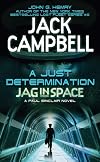
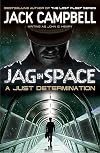
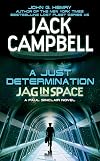
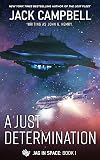
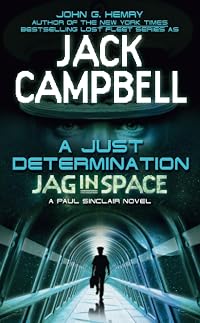
In the first book of his JAG in Space series, New York Times bestselling author Jack Campbell combines lived experience with spaceborne adventure in a U.S. Navy courtroom drama about honor, duty, and the sins that follow humanity even to the stars… When Ensign Paul Sinclair comes aboard the USS Michaelson for his very first tour, he's surprised to be named ship's legal officer. Four weeks of training isn't much to help him advise on legal issues involving a crew of 200. But serving on a show more spacegoing warship requires he learn fast, even surrounded by strangers and juggling expectations from an absentee superior, daunting commanders, and a reckless captain. When the Michaelson comes into catastrophic contact with another vessel, Paul must answer his captain on what the law permits in the dark of space, even if it leads to trouble. But when a court-martial convenes shortly afterward, only he can decide if justice demands he risk his career, too… show lessTags
Recommendations





Member Reviews
I was enthusiastic about this series even though I'm not always a fan of space opera. JAG in SPAAAACE! The world building is excellent and the plot is intriguing. Characters have a lot of potential. Unfortunately, the writing is pretty horrible. I was especially disturbed at the inner monologues... nobody actually talks like that to themselves and in dialogue heavy scenes it was sometimes difficult to tell which character was speaking. The exposition was heavy handed as well. My first real space opera is the far superior Honor Harrington by Weber. I may give the series one more book to improve because I do like the foundation, but…
Interesting blend of hard SF and legal drama. Ensign Paul Sinclair’s first ship assignment is on the USS Michaelson, where, in addition to his other duties, he acts as the ship's legal officer. The naval dialogue seems quite realistic, and were it not for a few references to space stuff, one might think they were aboard a modern day Navy ship. Except there was not one “fuck” in the entire book. So maybe in the future they have eliminated all swearing; yeah, right.
The Michaelson’s captain Wakefield, anxious to see some combat, decides to intercept an alien vessel that is technically outside his patrol zone. He’s the typical Queeg without the steel balls and stolen ice cream. (As an aside, the Caine Mutiny is a must read and show more based oin Herman Wouk’s experiences aboard a WW II mine-sweeper/destroyer. Queeg’s must have been relatively common because my brother-in-law’s first assignment as an ensign was under a similar character.) When the ship fails to heave to and then makes what appears to be a threatening move, the captain asks Sinclair for a legal interpretation of the orders, very broad and suitably vague,** then destroys the ship only to learn it was an unarmed civilian ship, albeit an alien one. (Remember the USS Vincennes shooting down Iran Air Flight 655 in 1988? see http://en.wikipedia.org/wiki/Iran_Air_Flight_655) I’m still puzzled by how an Airbus 300 could have been confused with an attacking F-14. 290 civilians were killed including 66 children.*)
Unlike the captain of the Vincennes, Wakefield is court-martialed and the last third or so of the book is the trial, itself quite interesting if you like legal drama, which I do. Sinclair finds himself in some interesting moral and ethical dilemmas that are sensitively handled.
Billed as a legal thriller, it’s not much of the latter, but the legal aspect is quite good.
*Quote from the Wikipaedia article: When questioned in a 2000 BBC documentary, the U.S. government stated in a written answer that they believed the incident may have been caused by a simultaneous psychological condition amongst the 18 bridge crew of the Vincennes called 'scenario fulfillment', which is said to occur when persons are under pressure. In such a situation, the men will carry out a training scenario, believing it to be reality while ignoring sensory information that contradicts the scenario. In the case of this incident, the scenario was an attack by a lone military aircraft. Just imagine what the U.S. reaction would have been to an Iranian attack downing a U.S. civilian airliner.
** That reminds me of something a candidate for a job once said during an interview. One of the search committee had asked something about mission statements, and the guy (bless him) said that he was familiar with mission statements, that they were “vague yet meaningless.” Direct hit. show less
The Michaelson’s captain Wakefield, anxious to see some combat, decides to intercept an alien vessel that is technically outside his patrol zone. He’s the typical Queeg without the steel balls and stolen ice cream. (As an aside, the Caine Mutiny is a must read and show more based oin Herman Wouk’s experiences aboard a WW II mine-sweeper/destroyer. Queeg’s must have been relatively common because my brother-in-law’s first assignment as an ensign was under a similar character.) When the ship fails to heave to and then makes what appears to be a threatening move, the captain asks Sinclair for a legal interpretation of the orders, very broad and suitably vague,** then destroys the ship only to learn it was an unarmed civilian ship, albeit an alien one. (Remember the USS Vincennes shooting down Iran Air Flight 655 in 1988? see http://en.wikipedia.org/wiki/Iran_Air_Flight_655) I’m still puzzled by how an Airbus 300 could have been confused with an attacking F-14. 290 civilians were killed including 66 children.*)
Unlike the captain of the Vincennes, Wakefield is court-martialed and the last third or so of the book is the trial, itself quite interesting if you like legal drama, which I do. Sinclair finds himself in some interesting moral and ethical dilemmas that are sensitively handled.
Billed as a legal thriller, it’s not much of the latter, but the legal aspect is quite good.
*Quote from the Wikipaedia article: When questioned in a 2000 BBC documentary, the U.S. government stated in a written answer that they believed the incident may have been caused by a simultaneous psychological condition amongst the 18 bridge crew of the Vincennes called 'scenario fulfillment', which is said to occur when persons are under pressure. In such a situation, the men will carry out a training scenario, believing it to be reality while ignoring sensory information that contradicts the scenario. In the case of this incident, the scenario was an attack by a lone military aircraft. Just imagine what the U.S. reaction would have been to an Iranian attack downing a U.S. civilian airliner.
** That reminds me of something a candidate for a job once said during an interview. One of the search committee had asked something about mission statements, and the guy (bless him) said that he was familiar with mission statements, that they were “vague yet meaningless.” Direct hit. show less
A clunky space navy YA: few pleasant characters, overdrawn cartoonish villains, and lapses into preachiness, especially near the end. (Note that I'm carefully distinguishing idealism, which I like, from preachiness, which I don't care for except in 19th century novels.)
I was annoyed thatwhen Paul was trying to decide what, if anything, to do about the unjust charges against his captain, he didn't go talk to the lay minister who identified hirself in the earlier death-of-a-crewman episode. This kind of moral quandary is exactly what chaplains are for.
Better space navy books with YA elements: [a:Elizabeth Moon|10518|Elizabeth Moon|https://d.gr-assets.com/authors/1199059504p2/10518.jpg]'s Serrano Legacy, [a:David Feintuch|304225|David show more Feintuch|https://d.gr-assets.com/authors/1354905102p2/304225.jpg]'s Seafort Saga.
If somebody handed me the sequels, I'd read them; but I wouldn't go buy them. show less
I was annoyed that
Better space navy books with YA elements: [a:Elizabeth Moon|10518|Elizabeth Moon|https://d.gr-assets.com/authors/1199059504p2/10518.jpg]'s Serrano Legacy, [a:David Feintuch|304225|David show more Feintuch|https://d.gr-assets.com/authors/1354905102p2/304225.jpg]'s Seafort Saga.
If somebody handed me the sequels, I'd read them; but I wouldn't go buy them. show less
This one started weak but ended strong.
The basic tale is that a young ensign goes out on his first assignment in the space navy. While the ship is out on its tour, something happens, and it results in an investigation and trial for another officer. The stuff on board the ship and out on the patrol did not thrill me and in several cases it outright annoyed me. However, the investigation and the trial were top notch. The legal stuff was precise, engaging, and it seemed real. The space stuff, no, not really.
Apart from some physics gaffes dealing with zero gravity and how things are different in a vacuum, the two things that bothered me the most had to do with this space navy and its mission. Specifically, it was the United States space show more navy. I’m not necessarily and big-happy-peaceful-earth kind of guy, but having nation to nation conflict in deep space seemed a little pointless.
The other naval detail that bothered me was that the purpose of their mission, specifically to defend a US “sovereign claim” on certain regions of interplanetary space. I found this kind of ridiculous because the value of such a claim would be dependent on the location of planets. I can understand keeping a patrol around a claimed planetary body, but it was clear that this was a fixed region of interplanetary space.
But apart from the senseless of that, it’s counter to longstanding US policy. Much of what the US Navy does in today’s real-world high seas is to defend the concept of the “freedom of the seas”, which is that apart from narrow strip around the nation itself, oceans are open to all ships to travel. The only exceptions are to be for necessary international issues such as wartime trade blockades or enforcing internationally agreed upon sanctions. Much of the 1980’s saber-rattling between the US and Libya was over Libya’s attempt to expand its territorial waters far out into the Mediterranean. It’s also the reason the US regularly sends ships into the Black Sea and other gulfs/seas that other nations view as their own personal playgrounds. So, to have the US space navy enforce a “sovereign claim” to an open tract of space bugged the hell out of me.
Now, having picked at my personal nits here, the book did finish strong. The trial was a good look at the issues around specific orders vs. standing orders along with what to do with vague or contradictory orders. It also dealt with what happens when there is disagreement along the chain of command, and where your duty lies.
So, I really enjoyed the last third of the book, and I had a hard time putting it down. It was just hard to get that far in the first place. As such, I’m still iffy on whether I’m going to give the guy another shot with the second book. show less
The basic tale is that a young ensign goes out on his first assignment in the space navy. While the ship is out on its tour, something happens, and it results in an investigation and trial for another officer. The stuff on board the ship and out on the patrol did not thrill me and in several cases it outright annoyed me. However, the investigation and the trial were top notch. The legal stuff was precise, engaging, and it seemed real. The space stuff, no, not really.
Apart from some physics gaffes dealing with zero gravity and how things are different in a vacuum, the two things that bothered me the most had to do with this space navy and its mission. Specifically, it was the United States space show more navy. I’m not necessarily and big-happy-peaceful-earth kind of guy, but having nation to nation conflict in deep space seemed a little pointless.
The other naval detail that bothered me was that the purpose of their mission, specifically to defend a US “sovereign claim” on certain regions of interplanetary space. I found this kind of ridiculous because the value of such a claim would be dependent on the location of planets. I can understand keeping a patrol around a claimed planetary body, but it was clear that this was a fixed region of interplanetary space.
But apart from the senseless of that, it’s counter to longstanding US policy. Much of what the US Navy does in today’s real-world high seas is to defend the concept of the “freedom of the seas”, which is that apart from narrow strip around the nation itself, oceans are open to all ships to travel. The only exceptions are to be for necessary international issues such as wartime trade blockades or enforcing internationally agreed upon sanctions. Much of the 1980’s saber-rattling between the US and Libya was over Libya’s attempt to expand its territorial waters far out into the Mediterranean. It’s also the reason the US regularly sends ships into the Black Sea and other gulfs/seas that other nations view as their own personal playgrounds. So, to have the US space navy enforce a “sovereign claim” to an open tract of space bugged the hell out of me.
Now, having picked at my personal nits here, the book did finish strong. The trial was a good look at the issues around specific orders vs. standing orders along with what to do with vague or contradictory orders. It also dealt with what happens when there is disagreement along the chain of command, and where your duty lies.
So, I really enjoyed the last third of the book, and I had a hard time putting it down. It was just hard to get that far in the first place. As such, I’m still iffy on whether I’m going to give the guy another shot with the second book. show less
A young man, Paul Sinclair, is fresh out of Space Academy and on a ship for the first time. One of his side duties is to be the ships legal advisor. The captain fires upon a civilian ship outside of US territory and is court-martialed. Sinclair testifies on the captain's behalf, even though he doesn't like him at all, because he believes that the charges brought against the captain do not reflect accurately. Ends up with Sinclair getting involved with an officer on another ship and the captain being reassigned to some backwater office, instead of getting hung.
I found the characters likable, the military presentation believeable, the worldbuilding good, the drama good, it appears this is the same author who signs "Jack Campbell" which seems a little crazy because in the Dauntless book, the captain is everything - whereas here the other officers fill significant roles.
overall will read more by author
overall will read more by author
Too formulaic
Members
- Recently Added By
Author Information

87+ Works 15,383 Members
Some Editions
Series

Common Knowledge
- Canonical title
- A Just Determination
- Original publication date
- 2003-05 (writing as John G. Hemry) (writing as John G. Hemry)
- People/Characters
- Paul Sinclair
Classifications
Statistics
- Members
- 218
- Popularity
- 149,349
- Reviews
- 7
- Rating
- (3.53)
- Languages
- English
- Media
- Paper, Ebook
- ISBNs
- 5
- ASINs
- 2