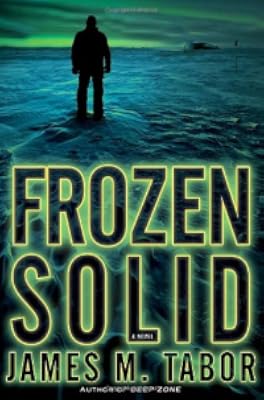
On This Page
Description
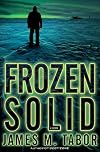
The most dangerous place on EarthA devious and deadly plan to save humanity from itself
A lone scientist battling the clock and ruthless enemies to avert global catastrophe
The Deep Zone was hailed as “an absolutely phenomenal read by the new Michael Crichton” (Brad Thor), a book that “should come shrink-wrapped with a seat belt” (Steve Berry). Now, bestselling author James M. Tabor ups the ante and the action in his second extreme thriller, as brilliant and battle-tested heroine show more Hallie Leland confronts intrigue and murder in the most unforgiving place on Earth.
The South Pole’s Amundsen Scott Research Station is like an outpost on Mars. Winter temperatures average 100 degrees below zero; week-long hurricane-force storms rage; for eight months at a time the station is shrouded in darkness. Under the stress, bodies suffer and minds twist. Panic, paranoia, and hostility prevail.
When a South Pole scientist dies mysteriously, CDC microbiologist Hallie Leland arrives to complete crucial research. Before she can begin, three more women inexplicably die. As failing communications and plunging temperatures cut the station off from the outside world, terror rises and tensions soar. Amidst it all, Hallie must crack the mystery of her predecessor’s death.
In Washington, D.C., government agency director Don Barnard and enigmatic operative Wil Bowman detect troubling signs of shadowy behavior at the South Pole and realize that Hallie is at the heart of it. Unless Barnard and Bowman can track down the mastermind, a horrifying act of global terror, launched from the station, will change the planet forever—and Hallie herself will be the unwitting instrument of destruction.
As the Antarctic winter sweeps in, severing contact with the outside world, Hallie must trust no one, fear everyone, and fight to keep the frigid prison from becoming her frozen grave.
Praise for Frozen Solid
“The Andromeda Strain meets The Thing. Effectively blending horror with the science thriller, Tabor keeps readers on edge from beginning to end.”—Booklist
“We can’t get enough of mad scientist cabals who want to take over the world with the power of genetic engineering.”—io9
“A taut page-turner . . . Tabor’s not the first genre writer to take advantage of the forbidding conditions at the South Pole, but few have done so to better effect.”—Publishers Weekly (starred review)
“A fine thriller.”—Kirkus Reviews
“As you read this chilling novel it won’t be the frigid setting that sends tremors up your spine but rather the dark premise of this horrifying and engrossing story.”—BookIdeas.com
“A fast-paced, visceral thriller with a likeable heroine and some stellar high-stakes action sequences.”—ScienceThrillers.com
“The suspense was never-ending. . . . [There’s a] heart-stopping build-up towards the ending.”—Books4Tomorrow. show less
Tags
Recommendations









Member Reviews
Frozen Solid is an action novel along the lines of James Rollings or Brad Thor. The story is interesting, there is a lot of action starting in the first chapter and it holds together better than many in the genre. For me it started getting a little bit hard to deal with Hallie. I liked her but she seemed to be a burgeoning Mary Sue. She is the only one who seemed to find the answers or even care to look for them. On top of that she had 4 near death experiences, any one of which would have been difficult to survive and she managed to do it all in a matter of a couple days.
Now for many books that I place in this group this isn't uncommon, but usually the danger is shared with more than just our protagonist so it isn't quite so blatant. show more Anyway I enjoyed reading the story and I think there is a good chance I'd read another book by this author. show less
Now for many books that I place in this group this isn't uncommon, but usually the danger is shared with more than just our protagonist so it isn't quite so blatant. show more Anyway I enjoyed reading the story and I think there is a good chance I'd read another book by this author. show less
 This review was written for LibraryThing Early Reviewers.
I am really on the fence between good and not-so-good with James Tabor’s South Pole thriller, Frozen Solid. It wasn’t until after I finished it I found that this was the second novel in a series featuring adventure-seeking scientist Hallie Leland. It might have helped a bit if I had read the first installment, but I think it was pretty much a stand-alone story.
First, the good. Hallie is a very believable character and really the one thing that kept pulling me through a story that at times I felt like abandoning. She is intelligent, resourceful and cleaver, but never was she superhuman or cartoonish. The science was there, but it wasn’t overwhelming and if fit with the story. The overall plot was solid, but not anything unique.
My show more real problem with Frozen Solid was the writing. Tabor seems to wander off with his storytelling, like that grandfather you had who would suddenly stop mid-sentence and pick up some other conversation from a week ago. At times it became difficult to follow who was speaking or who the action was centered on. It made reading – especially the first half – less than enjoyable. Tabor also gave many of the characters very similar names, which made it even more difficult to follow what was going on without a great deal of effort. Ultimately the pacing of the story lurched along rather than flowing smoothly, creating a lot of distraction.
While I found Hallie Leland compelling and the premise of the novel interesting, it has so many flaws that I really can’t recommend it on account of the writing and pacing. Yes, I’m going to go with a bad pun… Frozen Solid left me cold. Sorry. show less
First, the good. Hallie is a very believable character and really the one thing that kept pulling me through a story that at times I felt like abandoning. She is intelligent, resourceful and cleaver, but never was she superhuman or cartoonish. The science was there, but it wasn’t overwhelming and if fit with the story. The overall plot was solid, but not anything unique.
My show more real problem with Frozen Solid was the writing. Tabor seems to wander off with his storytelling, like that grandfather you had who would suddenly stop mid-sentence and pick up some other conversation from a week ago. At times it became difficult to follow who was speaking or who the action was centered on. It made reading – especially the first half – less than enjoyable. Tabor also gave many of the characters very similar names, which made it even more difficult to follow what was going on without a great deal of effort. Ultimately the pacing of the story lurched along rather than flowing smoothly, creating a lot of distraction.
While I found Hallie Leland compelling and the premise of the novel interesting, it has so many flaws that I really can’t recommend it on account of the writing and pacing. Yes, I’m going to go with a bad pun… Frozen Solid left me cold. Sorry. show less
This review was written for LibraryThing Early Reviewers.Extreme weather and extremophiles
I thought James M. Tabor’s fiction debut, The Deep Zone, was flawed, but promising. I’m happy to report that his sophomore novel, Frozen Solid, has lived up to that promise. While Mr. Tabor still has room to grow, this second novel was just as much fun as the first, and far better executed.
Frozen Solid again features his protagonist, Hallie Leland. The government microbiologist has been routed up to Antarctica of all places, just days before the winter-over begins. She’s there to fill in for a deceased scientist—an old friend of Hallie’s, as it happens. Once more, Hallie’s unusual skill set (climbing, diving, laboratory research) is a match for a project’s needs. Unfortunately, her brief show more visit gets off to a terrible start, as more scientists succumb to an unknown ailment. Tensions are running high in a powder keg environment. Meanwhile, Hallie has suspicions about her predecessor’s death and is having problems with the research project. Is someone sabotaging her work? The entire base? And will she be able to fly out in four days, or will she be stuck in Antarctica for months?
Mr. Tabor gets all of his plot elements into position beautifully. I had a few qualms early on in the novel. There was a brief snatch of clichéd and clunky writing. (“I will find you, she vowed. If it takes the rest of my life, I will find you. Wil Bowman will help me. And you will pay.”) And there were some minor plot contrivances. (Some of those clues were awfully easy to find—even when she wasn’t looking for them.) But once the story got going, those early issue fell by the wayside as the novel’s momentum took over. The pacing of the novel was excellent. It moved quickly and was full of excitement. Sometimes the action in thrillers feels like it’s just inserted to keep things moving, but here it all felt organic to the story being told. Let’s face it, Antarctica is an extreme environment, and when you’re diving beneath the ice or staging a colleague’s rescue, it’s exciting stuff.
Plus, there’s Hallie’s area of scientific inquiry. She studies extremophiles—organisms that survive in extreme environments—like miles below the ice. Or, an organism that “survives in sodium concentrations that would kill anything else.” This isn’t a Crichton novel. It isn’t as chock full of science, but I wish that it was, because what was there was fascinating. Hallie’s a girl after my own heart… “In the end, she found herself asking this question: Who do you trust when you can’t trust anybody? The answer came quickly: Not who. What. And the what was science. You could always trust the science.” I trusted Mr. Tabor’s science here. Sure, it’s speculative as hell, but it has the ring of truth and some research behind it. Plus, it was super cool! That’s good enough for me.
I like Hallie as a character. I really enjoy seeing a strong, confident, competent, and believable woman at the center of an action/adventure series. (“She knew this was how disasters began: with a single failure that led to two others, each of which led to more, a cascade of events feeding upon itself.”) This is a lady that doesn’t wait to be rescued. She rescues herself—and frequently others. There are a couple of other characters from the first novel in supporting roles, but as Hallie is out of her normal environment, most of the cast is new, and they’re a fairly intriguing bunch. I’m quite willing to believe that it’s a quirky crew attracted to work in Antarctica. Obviously, the setting is an important part of the tale, and Tabor’s Antarctica is a bit more oppressive and depressive than most depictions. It is atmospheric, that’s for sure. His settings are evocative and well-drawn—none better than the underwater scenes. (Yes, that was totally my favorite part.)
When all is said and done, I’ve seen variations on the novel’s central plot before, but it was well-handled and getting there was more than half the fun. I feel that my early faith in Mr. Tabor’s growth as a novelist has been well –rewarded, and I shall be looking forward to his next offering with even more anticipation and enthusiasm. show less
I thought James M. Tabor’s fiction debut, The Deep Zone, was flawed, but promising. I’m happy to report that his sophomore novel, Frozen Solid, has lived up to that promise. While Mr. Tabor still has room to grow, this second novel was just as much fun as the first, and far better executed.
Frozen Solid again features his protagonist, Hallie Leland. The government microbiologist has been routed up to Antarctica of all places, just days before the winter-over begins. She’s there to fill in for a deceased scientist—an old friend of Hallie’s, as it happens. Once more, Hallie’s unusual skill set (climbing, diving, laboratory research) is a match for a project’s needs. Unfortunately, her brief show more visit gets off to a terrible start, as more scientists succumb to an unknown ailment. Tensions are running high in a powder keg environment. Meanwhile, Hallie has suspicions about her predecessor’s death and is having problems with the research project. Is someone sabotaging her work? The entire base? And will she be able to fly out in four days, or will she be stuck in Antarctica for months?
Mr. Tabor gets all of his plot elements into position beautifully. I had a few qualms early on in the novel. There was a brief snatch of clichéd and clunky writing. (“I will find you, she vowed. If it takes the rest of my life, I will find you. Wil Bowman will help me. And you will pay.”) And there were some minor plot contrivances. (Some of those clues were awfully easy to find—even when she wasn’t looking for them.) But once the story got going, those early issue fell by the wayside as the novel’s momentum took over. The pacing of the novel was excellent. It moved quickly and was full of excitement. Sometimes the action in thrillers feels like it’s just inserted to keep things moving, but here it all felt organic to the story being told. Let’s face it, Antarctica is an extreme environment, and when you’re diving beneath the ice or staging a colleague’s rescue, it’s exciting stuff.
Plus, there’s Hallie’s area of scientific inquiry. She studies extremophiles—organisms that survive in extreme environments—like miles below the ice. Or, an organism that “survives in sodium concentrations that would kill anything else.” This isn’t a Crichton novel. It isn’t as chock full of science, but I wish that it was, because what was there was fascinating. Hallie’s a girl after my own heart… “In the end, she found herself asking this question: Who do you trust when you can’t trust anybody? The answer came quickly: Not who. What. And the what was science. You could always trust the science.” I trusted Mr. Tabor’s science here. Sure, it’s speculative as hell, but it has the ring of truth and some research behind it. Plus, it was super cool! That’s good enough for me.
I like Hallie as a character. I really enjoy seeing a strong, confident, competent, and believable woman at the center of an action/adventure series. (“She knew this was how disasters began: with a single failure that led to two others, each of which led to more, a cascade of events feeding upon itself.”) This is a lady that doesn’t wait to be rescued. She rescues herself—and frequently others. There are a couple of other characters from the first novel in supporting roles, but as Hallie is out of her normal environment, most of the cast is new, and they’re a fairly intriguing bunch. I’m quite willing to believe that it’s a quirky crew attracted to work in Antarctica. Obviously, the setting is an important part of the tale, and Tabor’s Antarctica is a bit more oppressive and depressive than most depictions. It is atmospheric, that’s for sure. His settings are evocative and well-drawn—none better than the underwater scenes. (Yes, that was totally my favorite part.)
When all is said and done, I’ve seen variations on the novel’s central plot before, but it was well-handled and getting there was more than half the fun. I feel that my early faith in Mr. Tabor’s growth as a novelist has been well –rewarded, and I shall be looking forward to his next offering with even more anticipation and enthusiasm. show less
The good news: an over-the-top, non-stop thriller which will keep you up late, so don't read it when you're trying to wind down for the night.
The bad news: deliberate and gross inaccuracies about the South Pole unnecessarily used for dramatic effect.
Microbiologist Hallie Leland arrives at the Pole in early February to replace a dead colleague who had been involved in important research requiring diving in the water below the ice. (Hallie is a master climber and diver, among other attributes). Within hours, she discovers her friend was tortured to death and she witnesses two other women die of sudden and massive hemorrhaging. Things escalate from there (oy - but lots of fun). Intermittent chapters follow Hallie's boyfriend, who does show more intelligence (and wet work) for a secretive government agency (think "Mission Impossible" if Cruise actually resembled Reacher physically); and three scientists who are plotting to infect the world with a virus that will halt population growth.
The South Pole actually has 6 months of sunlight and six months of no sunlight each year, with a few weeks of sunrise and sunset at either end of the long night. IOW, complete darkness for about 4½ or 5 months a year. The sun rises on September 21 and doesn't set at all until March 21. When Hallie arrives in February, the sunset is 6 weeks away, but Tabor changes this so that complete dark is already in effect. This is a major plot detail. In fact, Hallie's dead friend mentions in a video diary that it was already complete dark in early January on her own arrival. The head of the polar station and Hallie's boss at the CDC both mention that the Pole experiences EIGHT months of complete darkness. To someone fond of fiction set in Antarctica, this inaccuracy, which starts on page 1, was immediately off-putting, and I wouldn't have continued reading if I hadn't agreed to read the book for Early Reviewers. Tabor apparently felt the need to use the complete darkness in order to increase drama but still get his heroine out before winterover, when the base is shut off to all travel for several months. In my opinion, any heightened tension was not worth the blow to suspension of disbelief caused by the inaccuracy, and considering the few books set in the locale, this was likewise a disservice to any readers without the background to realize they are getting bad information.
Still, the book IS fun, hard to put down, and a quick read, and I'd pick up another in the series if I was in the mood for this type of thriller. show less
The bad news: deliberate and gross inaccuracies about the South Pole unnecessarily used for dramatic effect.
Microbiologist Hallie Leland arrives at the Pole in early February to replace a dead colleague who had been involved in important research requiring diving in the water below the ice. (Hallie is a master climber and diver, among other attributes). Within hours, she discovers her friend was tortured to death and she witnesses two other women die of sudden and massive hemorrhaging. Things escalate from there (oy - but lots of fun). Intermittent chapters follow Hallie's boyfriend, who does show more intelligence (and wet work) for a secretive government agency (think "Mission Impossible" if Cruise actually resembled Reacher physically); and three scientists who are plotting to infect the world with a virus that will halt population growth.
The South Pole actually has 6 months of sunlight and six months of no sunlight each year, with a few weeks of sunrise and sunset at either end of the long night. IOW, complete darkness for about 4½ or 5 months a year. The sun rises on September 21 and doesn't set at all until March 21. When Hallie arrives in February, the sunset is 6 weeks away, but Tabor changes this so that complete dark is already in effect. This is a major plot detail. In fact, Hallie's dead friend mentions in a video diary that it was already complete dark in early January on her own arrival. The head of the polar station and Hallie's boss at the CDC both mention that the Pole experiences EIGHT months of complete darkness. To someone fond of fiction set in Antarctica, this inaccuracy, which starts on page 1, was immediately off-putting, and I wouldn't have continued reading if I hadn't agreed to read the book for Early Reviewers. Tabor apparently felt the need to use the complete darkness in order to increase drama but still get his heroine out before winterover, when the base is shut off to all travel for several months. In my opinion, any heightened tension was not worth the blow to suspension of disbelief caused by the inaccuracy, and considering the few books set in the locale, this was likewise a disservice to any readers without the background to realize they are getting bad information.
Still, the book IS fun, hard to put down, and a quick read, and I'd pick up another in the series if I was in the mood for this type of thriller. show less
This review was written for LibraryThing Early Reviewers.Written very well, with thoughtful descriptions of the environment and its harshness. Intriguing plot; can't say I disagree with what the bad guys were trying to do!! It was a pretty good idea, in theory anyway
"Frozen Solid" is a very tight thriller, with a wonderful setting--the South Pole.
Hallie Leland, a microbiologist, has been sent down to the South Pole in a last minute arrangement because of the sudden death of a former colleague who was doing important research down there for the NSF. It doesn't take long before Hallie discovers that her friend was murdered. But since most of the "Polies" have been down there for many months, and are all a little crazy, she's not sure who to trust. It also doesn't help that two other women die right before her eyes in a very bloody manner not long after she arrives.
In the meantime, we meet three scientists/doctors in India who are planning a population control experiment called Triage...and of course show more this experiment is taking place at the same facility at the South Pole.
To go along with all of this, a discovery has been made below the ice that could change the world--a near-pollution free fuel source. Unfortunately, this wasn't explored more (and might make for a great sequel).
In many places, "Frozen Solid" felt very much like a Michael Crichton novel. The only problem is that some of the scientific jargon isn't explained much, if at all. Crichton was the master at always having a character who needed terms and concepts explained. Here, Tabor could have used a character tasked with PR or communications to ask the questions we as readers might ask. Nevertheless, the concepts aren't too difficult to understand and make for some chilling (no pun intended) reading.
The best part about the book was the setting. Living in a completely isolated, wickedly frigid environment like the South Pole must be extremely difficult. Tabor's descriptions were fantastic and really helped you "see" the bleakness of the area.
Overall, "Frozen Solid" was a great, quick read. I want to thank LT's Early Reviewer program for allowing me to win it. show less
Hallie Leland, a microbiologist, has been sent down to the South Pole in a last minute arrangement because of the sudden death of a former colleague who was doing important research down there for the NSF. It doesn't take long before Hallie discovers that her friend was murdered. But since most of the "Polies" have been down there for many months, and are all a little crazy, she's not sure who to trust. It also doesn't help that two other women die right before her eyes in a very bloody manner not long after she arrives.
In the meantime, we meet three scientists/doctors in India who are planning a population control experiment called Triage...and of course show more this experiment is taking place at the same facility at the South Pole.
To go along with all of this, a discovery has been made below the ice that could change the world--a near-pollution free fuel source. Unfortunately, this wasn't explored more (and might make for a great sequel).
In many places, "Frozen Solid" felt very much like a Michael Crichton novel. The only problem is that some of the scientific jargon isn't explained much, if at all. Crichton was the master at always having a character who needed terms and concepts explained. Here, Tabor could have used a character tasked with PR or communications to ask the questions we as readers might ask. Nevertheless, the concepts aren't too difficult to understand and make for some chilling (no pun intended) reading.
The best part about the book was the setting. Living in a completely isolated, wickedly frigid environment like the South Pole must be extremely difficult. Tabor's descriptions were fantastic and really helped you "see" the bleakness of the area.
Overall, "Frozen Solid" was a great, quick read. I want to thank LT's Early Reviewer program for allowing me to win it. show less
This review was written for LibraryThing Early Reviewers.Hallie Leland, the main character in Frozen Solid, is a very sympathetic character and refreshing in that she is not one of those tiresome "action hero/sassy (i.e. mean-spirited) characters you so often find now in thrillers. In this story, she is a microbiologist sent to the South POle to try to figure out what is going on after the death of one of her friends.
It is definitely a thriller and keeps you turning the pages--in that regard--I really enjoyed the book. Tabor drew a brilliant, atmospheric picture of the Antarctic that will keep you enthralled. I was less enthralled, however, with some of the cruelty of the bad--uh--character(s). (I'm not going to give anything away because I don't want to spoil it--so I'm not even going to say show more if there is one or more bad folks around.) For a while, I was more tolerant of cruelty in fiction, but more and more I find I really don't want those scenes in my head anymore. The death of Hallie's friend seemed so awful to me that I found it difficult to finish the book, hence my 4 instead of 5 stars. Don't get me wrong--it really was a thrilling read--but I wish some of the things had happened "off camera" because it was a bit too much for me. I believe other readers may not be as squeamish and may enjoy it more.
The story itself though was interesting and it does take you a while to figure out the mystery, all of which is good. :) show less
It is definitely a thriller and keeps you turning the pages--in that regard--I really enjoyed the book. Tabor drew a brilliant, atmospheric picture of the Antarctic that will keep you enthralled. I was less enthralled, however, with some of the cruelty of the bad--uh--character(s). (I'm not going to give anything away because I don't want to spoil it--so I'm not even going to say show more if there is one or more bad folks around.) For a while, I was more tolerant of cruelty in fiction, but more and more I find I really don't want those scenes in my head anymore. The death of Hallie's friend seemed so awful to me that I found it difficult to finish the book, hence my 4 instead of 5 stars. Don't get me wrong--it really was a thrilling read--but I wish some of the things had happened "off camera" because it was a bit too much for me. I believe other readers may not be as squeamish and may enjoy it more.
The story itself though was interesting and it does take you a while to figure out the mystery, all of which is good. :) show less
Members
- Recently Added By
Author Information

1 Work 95 Members
Series

Classifications
Statistics
- Members
- 96
- Popularity
- 335,625
- Reviews
- 21
- Rating
- (3.63)
- Languages
- English
- Media
- Paper, Audiobook, Ebook
- ISBNs
- 6
- ASINs
- 2