On This Page
Description
A recognized master fantasist, Tanith Lee has won multiple awards for her craft, including the British Fantasy Award, the World Fantasy Award for Life Achievement, and the Bram Stoker Award for Lifetime Achievement in Horror. Raldnor, Storm Lord and chosen hero of the goddess Anackire, has passed into legend after bringing peace to the land of Dorthar. But after twenty years, that tenuous peace is threatening to dissolve. Contentious forces are brewing, working through subterfuge and overt show more war to see the new Storm Lord displaced. Kesarh, prince of Istris, has grand ambitions. Though he is only a lesser noble of Karmiss, his shrewdness and cunning ensure him a stake in the tumultuous fight for sovereignty. If he succeeds, he may yet win the power he craves--and an empire to rule. But his plans are not infallible--a daughter, conceived from a forbidden union, could prove to be his downfall. Ashni is a child not quite human, altered by the strange circumstances of her birth and blessed by the goddess Anackire. In a world of assassinations, concealed plots, and political machinations, Ashni must contend with the dangerous plans of her father if she is to fulfill the demands of the goddess...and avoid a war that could destroy the very empire Kesarh wishes to build. show lessTags
Recommendations
















Member Reviews
Storm Lord by Tanith Lee is a saga trained on a single person: Raldnor, who becomes a sort of planetary messiah, and then vanishes into obscurity. I don't know if Lee envisioned sequels when she composed that volume, but this one that follows it (appearing many years later) differs chiefly by being more of an ensemble affair. The office of Storm Lord, hereditary king of the Vis people, continues to be important, but the goddess Anackire is central, and her influence is not reserved for any one avatar or prophet.
Although I wouldn't suggest that Lee was resorting to formula, there is a certain parallel development across the first two volumes of this Wars of Vis series, when compared to her earlier work on The Birthgrave and Vazkor, Son show more of Vazkor. Both sequels pick up with a focus on the abandoned offspring of the protagonists of the original stories, and reach a conclusion where another volume is clearly in the offing. But where I noted that Vazkor has less numinosity than The Birthgrave, I would say that Anackire has decidedly more than Storm Lord.
The issues of gender and sexuality--hardly absent in the earlier book--also become more complex and interesting here. Homosexuality is presented more sympathetically and there is some reflection on both the virtues and ills of celibacy, among other sexual themes and phenomena.
As with its predecessor volume, Anackire packs in an impressive amount of story at both the personal and political levels. Its occasional pronouncements of sword-and-planet theology are sonorous and attractive. And it does result in a set of well-developed surviving characters who seem well able to populate the third book of the series. show less
Although I wouldn't suggest that Lee was resorting to formula, there is a certain parallel development across the first two volumes of this Wars of Vis series, when compared to her earlier work on The Birthgrave and Vazkor, Son show more of Vazkor. Both sequels pick up with a focus on the abandoned offspring of the protagonists of the original stories, and reach a conclusion where another volume is clearly in the offing. But where I noted that Vazkor has less numinosity than The Birthgrave, I would say that Anackire has decidedly more than Storm Lord.
The issues of gender and sexuality--hardly absent in the earlier book--also become more complex and interesting here. Homosexuality is presented more sympathetically and there is some reflection on both the virtues and ills of celibacy, among other sexual themes and phenomena.
As with its predecessor volume, Anackire packs in an impressive amount of story at both the personal and political levels. Its occasional pronouncements of sword-and-planet theology are sonorous and attractive. And it does result in a set of well-developed surviving characters who seem well able to populate the third book of the series. show less
Since I quit reading at about the 50% mark, I couldn’t even begin to blurb this book. I have no clue what happened, because it felt like nothing happened.
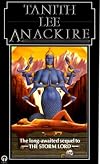
You might wonder why I continued with the series, since I didn’t enjoy the first book, like, at all. Well, first, it’s Tanith, so I wanted to give her a shot. Second, the cover has the badass snake goddess on it so I figured she’d actually make an appearance this time and like, totally destroy people. Third, the blurb on the back sounds awesome and made it seem like this would be a more female-driven book, with hopefully some stronger characters.
I was wrong on those last two counts.
I just now realized this book was written 7 years after the first – maybe the series show more shouldn’t have continued?
There is a helpful recap in the beginning which sums up what happened towards the end of the book and talks a little about the telekinetic powers Raldnor’s people have. I forgot to mention that in the earlier section because it doesn’t really seem to matter in book 1. This recap also says that when the plains people rose up, they used their mind powers to create a big earthquake in the ruling city and raised the goddess. Only, I think they just like, raised a giant statue of her that was buried underground. Also Raldnor conquered the city then took off to find his statue girlfriend and his bastard kid from his seafaring adventure is apparently the ruler now.
Where the first book was about the previous king’s kids, this book seems to be about Raldnor’s kids – he has 3 that I know of. It was disappointing because I didn’t give a damn about Raldnor and I don’t give a damn about his kids.
Again, there’s a rape-esque scene in the beginning, between siblings. It’s one of those “no means yes” situations. Like, I guess it’s not actual rape because the sister did want it, but then later she finds out she’s pregnant (she knows like, immediately, for whatever reason) and kills herself. So then, did she really want it? Was it only shame that drove her to suicide or something more? I don’t know because these characters weren’t compelling enough for me to care.
Oddly enough, those who worship the snake goddess, Anackire, preserved this woman’s body after she died so the baby could be born. I assume this baby ends up being the girl described in the blurb, but I didn’t get far enough to prove that.
The story primarily follows the brother who doinks his sister and one of Raldy’s bastards. Again, neither was likable and the book was mostly just men talking to each other, women remaining sexual objects, and discovering who is a descendant of Raldnor. SNORE. I wanted Anackire, who the book is named after, to rise up and slaughter everyone! Sadly, that didn’t happen before I decided to give up
There was no point in forcing myself to continue, just because I love Tanith. Of course I’m going to keep my copies of this series for my collection, but I won’t be attempting to read them again and I certainly won’t recommend them. show less
You might wonder why I continued with the series, since I didn’t enjoy the first book, like, at all. Well, first, it’s Tanith, so I wanted to give her a shot. Second, the cover has the badass snake goddess on it so I figured she’d actually make an appearance this time and like, totally destroy people. Third, the blurb on the back sounds awesome and made it seem like this would be a more female-driven book, with hopefully some stronger characters.
I was wrong on those last two counts.
I just now realized this book was written 7 years after the first – maybe the series show more shouldn’t have continued?
There is a helpful recap in the beginning which sums up what happened towards the end of the book and talks a little about the telekinetic powers Raldnor’s people have. I forgot to mention that in the earlier section because it doesn’t really seem to matter in book 1. This recap also says that when the plains people rose up, they used their mind powers to create a big earthquake in the ruling city and raised the goddess. Only, I think they just like, raised a giant statue of her that was buried underground. Also Raldnor conquered the city then took off to find his statue girlfriend and his bastard kid from his seafaring adventure is apparently the ruler now.
Where the first book was about the previous king’s kids, this book seems to be about Raldnor’s kids – he has 3 that I know of. It was disappointing because I didn’t give a damn about Raldnor and I don’t give a damn about his kids.
Again, there’s a rape-esque scene in the beginning, between siblings. It’s one of those “no means yes” situations. Like, I guess it’s not actual rape because the sister did want it, but then later she finds out she’s pregnant (she knows like, immediately, for whatever reason) and kills herself. So then, did she really want it? Was it only shame that drove her to suicide or something more? I don’t know because these characters weren’t compelling enough for me to care.
Oddly enough, those who worship the snake goddess, Anackire, preserved this woman’s body after she died so the baby could be born. I assume this baby ends up being the girl described in the blurb, but I didn’t get far enough to prove that.
The story primarily follows the brother who doinks his sister and one of Raldy’s bastards. Again, neither was likable and the book was mostly just men talking to each other, women remaining sexual objects, and discovering who is a descendant of Raldnor. SNORE. I wanted Anackire, who the book is named after, to rise up and slaughter everyone! Sadly, that didn’t happen before I decided to give up
There was no point in forcing myself to continue, just because I love Tanith. Of course I’m going to keep my copies of this series for my collection, but I won’t be attempting to read them again and I certainly won’t recommend them. show less
After the disappointment of book 1 in this series, I wasn't expecting much but found this a far better written volume, probably because it was written several years later. The setting is the same land of Vis but about 28 years after the events of 'The Storm Lord'. In effect it follows the fortunes of some of the children of the previous hero, Raldnor, in one case an unacknowledged illegitmate son, plus a nobleman in the land of Karmiss who is a combination of charisma, total amorality and massive ambition/will to power. This man, Kesarh, provides the drive for the first part of the story where he shows an unhealthy obsession with his twin sister. Although she leaves for the religious community on the island of Ankabek to avoid his show more attentions, he follows and, under the pretext of being ill (self inflicted from a small amount of snake venom), manipulates her into nursing him and later is allowed into her room with the complicity of the chief priestess. He forces himself on her, but, in common with other characters especially in book 1, his sister also "enjoys" it. Afterwards, finding herself pregnant, she commits suicide, but the priests use arcane means to keep her body alive until the foreseen child can be born.
Rather strangely, the hero Raldnor and his girlfriend, who rode off into the sunset in book 1 with her carrying his child, have perhaps translated into pure spirit by some means - that is a rather confused issue. It seems the child wasn't born but instead its spirit has floated on the wind until a suitable vessel should be found - the child of twins who also have the inheritance of both the main races: the darker Vis and the light-skinned Lowlanders, who have telepathic and telekinetic powers. Kesarh gets the child from the priests and sends his right-hand man, Rem, to the land of Lan along with a sex-slave who is 'simple' and therefore not inclined to talk. However, attack by pirates means that they are stranded and the woman wanders off with the baby while Rem is asleep.
Rem, who has witnessed his employer's ruthless behaviour - having certain rivals to the throne of Karmiss murdered in various inventive ways - decides very sensibly not to return to confess his failure. He spends a number of years hiring out as a guard for trader caravans to protect them from bandit attack, and eventually leading a band of guards, and in the meanwhile tries to track down any trace of the lost woman and baby. But although he finds the woman alive and well and now mother of several children, he learns from the husband that she was found with wolves. These friendly wolves ran off with the baby when the villagers acted aggressively, and by the time she made the villagers understand that the wolves were no threat and had kept her and the child alive, they had gone with the child.
As the novel goes on, war is building that will eventually involve most of the various countries. Kesarh is one of the culprits once he becomes king of Karmiss. Rem eventually learns the truth of his father's identity, and is put through the mill in various ways at the hands of enemies, although on the way he does meet his legitimate half brother the ruler of Dorthar. That man, Raldanash, is more of a mystic than a warrior, and as celibacy appeals to him he has not bedded any of the many wives he has had to accept to cement various alliances with other countries. The most recent, who resembles Kesarh's dead sister, comes to the latter's attention and eventually becomes his prisoner though, in common with so many other female characters, passively lets him "have his wicked way" as she is drawn to him despite knowing that he is really a vile man. It is by pure luck that an action of hers indirectly leads to his downfall.
Given that the blurb leads the reader to suppose this would be more of a female dominated novel with some real female characters, the novel disappoints on that level. The girl baby who eventually leaves the wolves to start off her journey to becoming the avatar of the goddess Anackire remains a cipher. The sister of Kesarh and her look alike are passive doormats. There isn't even a nasty witch queen as in book 1. The only positive female character is the wife of Yannul, sidekick to Raldnor in the first book and a hero of that war, but she isn't really characterised as such and is seen through the eyes of Yannul.
Another issue is that this really is a cast of thousands. There are so many people, countries, and similar names that once or twice I had completely lost track if it had ever been clear about a minor character who emerges on a page or two and then disappears. The only people at all characterised are Kesarh, Raldanash and Rem and even they are not that distinct. At least though Rem is a goodie to root for, as is Yannul and his family though they are quite minor characters. Interestingly, Rem is gay and his sexual relationships are consensual, unlike a lot of the other characters though there is an odd element at the end where he suddenly finds he can fancy a woman . There is also some very disturbing sexual sadism involved in the religion of the country which is the main threat, known as Zakoris-in-Thaddra, who are allies of Kesarh's for a while.
The writing is far better than book 1 - there are some really vivid descriptions, good action scenes, far less head hopping - if there was some it didn't jump out at me as in book 1 - and some likeable characters. It still has a lot of flaws as mentioned above, so on balance I would rate this as 3 stars. show less
Rather strangely, the hero Raldnor and his girlfriend, who rode off into the sunset in book 1 with her carrying his child, have perhaps translated into pure spirit by some means - that is a rather confused issue. It seems the child wasn't born but instead its spirit has floated on the wind until a suitable vessel should be found - the child of twins who also have the inheritance of both the main races: the darker Vis and the light-skinned Lowlanders, who have telepathic and telekinetic powers. Kesarh gets the child from the priests and sends his right-hand man, Rem, to the land of Lan along with a sex-slave who is 'simple' and therefore not inclined to talk. However, attack by pirates means that they are stranded and the woman wanders off with the baby while Rem is asleep.
Rem, who has witnessed his employer's ruthless behaviour - having certain rivals to the throne of Karmiss murdered in various inventive ways - decides very sensibly not to return to confess his failure. He spends a number of years hiring out as a guard for trader caravans to protect them from bandit attack, and eventually leading a band of guards, and in the meanwhile tries to track down any trace of the lost woman and baby. But although he finds the woman alive and well and now mother of several children, he learns from the husband that she was found with wolves. These friendly wolves ran off with the baby when the villagers acted aggressively, and by the time she made the villagers understand that the wolves were no threat and had kept her and the child alive, they had gone with the child.
As the novel goes on, war is building that will eventually involve most of the various countries. Kesarh is one of the culprits once he becomes king of Karmiss. Rem eventually learns the truth of his father's identity, and is put through the mill in various ways at the hands of enemies, although on the way he does meet his legitimate half brother the ruler of Dorthar. That man, Raldanash, is more of a mystic than a warrior, and as celibacy appeals to him he has not bedded any of the many wives he has had to accept to cement various alliances with other countries. The most recent, who resembles Kesarh's dead sister, comes to the latter's attention and eventually becomes his prisoner though, in common with so many other female characters, passively lets him "have his wicked way" as she is drawn to him despite knowing that he is really a vile man. It is by pure luck that an action of hers indirectly leads to his downfall.
Given that the blurb leads the reader to suppose this would be more of a female dominated novel with some real female characters, the novel disappoints on that level. The girl baby who eventually leaves the wolves to start off her journey to becoming the avatar of the goddess Anackire remains a cipher. The sister of Kesarh and her look alike are passive doormats. There isn't even a nasty witch queen as in book 1. The only positive female character is the wife of Yannul, sidekick to Raldnor in the first book and a hero of that war, but she isn't really characterised as such and is seen through the eyes of Yannul.
Another issue is that this really is a cast of thousands. There are so many people, countries, and similar names that once or twice I had completely lost track if it had ever been clear about a minor character who emerges on a page or two and then disappears. The only people at all characterised are Kesarh, Raldanash and Rem and even they are not that distinct. At least though Rem is a goodie to root for, as is Yannul and his family though they are quite minor characters. Interestingly, Rem is gay and his sexual relationships are consensual, unlike a lot of the other characters
The writing is far better than book 1 - there are some really vivid descriptions, good action scenes, far less head hopping - if there was some it didn't jump out at me as in book 1 - and some likeable characters. It still has a lot of flaws as mentioned above, so on balance I would rate this as 3 stars. show less
Woot! Finally finished the box of TL books that a friend gave me ages ago. :) This book follows a generation after "The Storm Lord", the first book that I read from the box, so some of the references were a bit hazy for me. I liked how it followed different characters, a gay mercenary, a former war hero and his family, a prince who became king, and some of the women who get passed around as wives and concubines as well as being priestesses in their own right. Only one unexpected and no-consequences rape, but a lot of disenfranchisement for women kept up with the general trend in this world. Huge distances were involved this time (I made a lot of use of the map in the front), with some dues ex machina movements to get characters in the show more right places at the right times. show less
Het meisje uit de Lage Landen leek van vlammen vervult. Haar haren roerden zich, flakkerden, wolkten omhoog in een wapperende gloed van vuur terwijl er toch geen wind stond. Een toren van licht schoot de hemel in vanaf haar voeten. Een oogwenk was er slechts licht, toen kreeg het licht vorm. Het was de vorm van Anackire... Zij torende, zij stuwde naar de hemel. Haar lichaam was een blanke bergpiek, haar slangenstaart een rivier van stromend vuur. Haar gouden hoofd raakte de top van de hemel, en daar flitsten de slangen van haar haren als bliksems. Haar ogen waren tweelingzonnen. De acht armen, wijd gestrekt als eerst de twee armen van het meisje, rustten gewichtloos op de lucht, en de lange vingers bewogen licht... Het meisje dat voor show more de bron stond en niet verteerd was door het vuurwezen dat zij had opgeroepen, leek slechts te dromen. Eindelijk dan kon men zien dat haar gezicht, en dat altijd al, het gelaat was van Anackire... show less
Mar 28, 2025Dutch
Ratings
Members
- Recently Added By
Author Information

321+ Works 30,122 Members
Tanith Lee, September 19, 1947 - May 24, 2015 Tanith Lee was born on September 19, 1947 in London, England, the daughter of ballroom dancers. She attended various primary schools and had a variety of jobs, from file clerk and assistant librarian to shop assistant and waitress. Lee attended an art college for one year, but felt she would be better show more writing her ideas than painting them. Her first professional sale was "Eustace," a 90 page vignette which appeared in The Ninth Pan Book of Horror Stories in 1968. While Lee was working as an assistant librarian, she wrote a children's story that was accepted for publication. Others of her stories were also bought but never published. In 1971, Macmillan published "The Dragon Hoard," another children's book, which was followed by "Animal Castle" and "Princess Hynchatti and Other Stories" in 1972. Lee was looking for a British publisher for her book "The Birthgrave," but was denied at every House she went. She then wrote to American publisher DAW, known for it's fantasy and horror selections, who immediately accepted her manuscript and published the book in 1975. Thus began a partnership between the two that lasted till 1989 and resulted in 28 books. After the publication of her third book by DAW, Lee quit her job and became a full-time freelance writer. Lee has been nominated for the World Fantasy Award, the August Derleth Award and the Nebula. She has had more than 40 novels published, along with over 200 short stories. Lee died peacefully in her sleep after a long illness on May 24, 2015. (Bowker Author Biography) show less
Some Editions
Awards and Honors
Awards
Series

Belongs to Publisher Series
Work Relationships
Is contained in
Common Knowledge
- Canonical title
- Anackire
- Original title
- Anackire
- Original publication date
- 1983
- Dedication*
- Opgedragenaan Oliver Cotton
*Some information comes from Common Knowledge in other languages. Click "Edit" for more information.
Classifications
Statistics
- Members
- 343
- Popularity
- 92,465
- Reviews
- 5
- Rating
- (3.23)
- Languages
- Dutch, English, German
- Media
- Paper, Ebook
- ISBNs
- 9
- ASINs
- 4