On This Page
Description
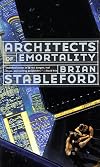
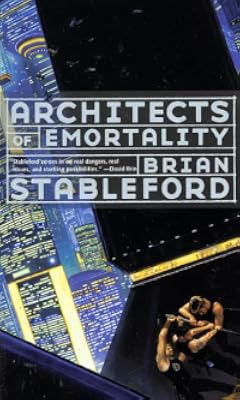
Brian Stableford launched an ambitious future history series with "Inherit the Earth," to widespread praise. "Stableford has created in this novel a totally believable world, and wrapped it around a series of mysterious events, surprise revelations, double crosses, confused motivations, rumors, lies, plots, and counterplots. . . . Tightly controlled and suspenseful throughout," said "Science Fiction Chronicle. " "Library Journal" said, "The ethical questions posed by the prospect of show more conquering the aging process underscore this fast-paced SF adventure, adding depth to a story that will appeal to fans of high-tech SF and conspiracy theories." This future world is a complex society obsessed with the technology of life extension and on the brink of creating true immortals. Now, in "Architects of Emortality," Stableford gives us a story set hundreds of years in the future, filled with people who can hope for 300-year lifespans and a fortunate few whose lives will be in the thousands of years. This society is on the edge of radical change, where people have the time to develop eccentric lifestyles and personal obsessions, a world sometimes reminiscent of the distant future of Michael Moorcock's "Dancers at the End of Time" series. And there has been a series of murders that threaten the future stability of the world, murders executed by bioengineered flowers. Police officers Watson and Holmes investigate, but the central figure quickly becomes the amateur detective Oscar Wilde, a student of history who has taken on the persona of his namesake. And the question is not so much who the murderer is, but how and why. Filled with memorable characters and powerful and striking images of the richly altered world of the future, "Architects of Emortality" is a satisfying and complete story that also adds depth and detail to the evolving series. show lessTags
Recommendations










Member Reviews
(Alistair) This is the second book in Stableford's biotechnological future history (the previous one being Inherit The Earth, which I read last September. Those of you who were around last September may recall that I wasn't really all that impressed with Inherit The Earth at the time - not being overly satisfied by the biotech/nanotech aspects of the story.
Well, I can tell you that, in my opinion, Architects of Emortality is a better book than Inherit the Earth. I'm afraid this is damning with faint praise, however, because in my view this book is the archetype of books that don't meet their potential. Stableford's future history that takes us up to 2495 is interesting, but too thinly portrayed to really fascinate. The characters show show more some promise of interest, but ultimately turn out fairly flat. (Sidenote: did he have to give his detectives the surnames "Holmes" and "Watson"?) And the mystery - for 'tis an SFnal detective story - of who exactly is murdering people with genetically engineered flowers and leaving literary puzzles behind on the cards with them - starts out intriguing but ends weakly.
It looks like we have The Cassandra Complex from this series, as well, but I don't think it'll end up on my reading list any time soon. If you want some good Stableford to read, my advice is to give both of these a miss to start with and read The Empire of Fear.
( http://weblog.siliconcerebrate.com/cerebrate/2008/01/architects-of-emortality-br... ) show less
Well, I can tell you that, in my opinion, Architects of Emortality is a better book than Inherit the Earth. I'm afraid this is damning with faint praise, however, because in my view this book is the archetype of books that don't meet their potential. Stableford's future history that takes us up to 2495 is interesting, but too thinly portrayed to really fascinate. The characters show show more some promise of interest, but ultimately turn out fairly flat. (Sidenote: did he have to give his detectives the surnames "Holmes" and "Watson"?) And the mystery - for 'tis an SFnal detective story - of who exactly is murdering people with genetically engineered flowers and leaving literary puzzles behind on the cards with them - starts out intriguing but ends weakly.
It looks like we have The Cassandra Complex from this series, as well, but I don't think it'll end up on my reading list any time soon. If you want some good Stableford to read, my advice is to give both of these a miss to start with and read The Empire of Fear.
( http://weblog.siliconcerebrate.com/cerebrate/2008/01/architects-of-emortality-br... ) show less
Ratings
Members
- Recently Added By
Author Information

396+ Works 8,055 Members
Author Brian M. Stableford was born in Shipley, Yorkshire, U. K. on July 25, 1948. He received an undergraduate degree in biology from the University of York in 1969 and a Ph.D. in sociology in 1979. Before becoming a full-time writer in 1988, he taught sociology at the University of Reading. He has published over 100 books, including science show more fiction and fantasy works, non-fiction, translations, and learned articles. He has written under the pseudonym of Brian Craig as well as under Brian Stableford and Brian M. Stableford. He has received numerous awards for both fiction and non-fiction including the British Science Fiction Award (1995), the Distinguished Scholarship Award of the International Association for the Fantastic in the Arts (1987), the J. Lloyd Eaton Award (1987), the Science Fiction Research Association's (SFRA) Pioneer Award (1996), and the SFRA's Pilgrim Award (1999). (Bowker Author Biography) show less
Some Editions
Series


Common Knowledge
- Original publication date
- 1999
Classifications
Statistics
- Members
- 220
- Popularity
- 148,169
- Reviews
- 2
- Rating
- (3.25)
- Languages
- English
- Media
- Paper, Ebook
- ISBNs
- 3
- ASINs
- 3